Ken Olsen’s 1977 Prediction: A Miscalculation on the Ubiquity of Personal Computing and the Dawn of the Smart Home

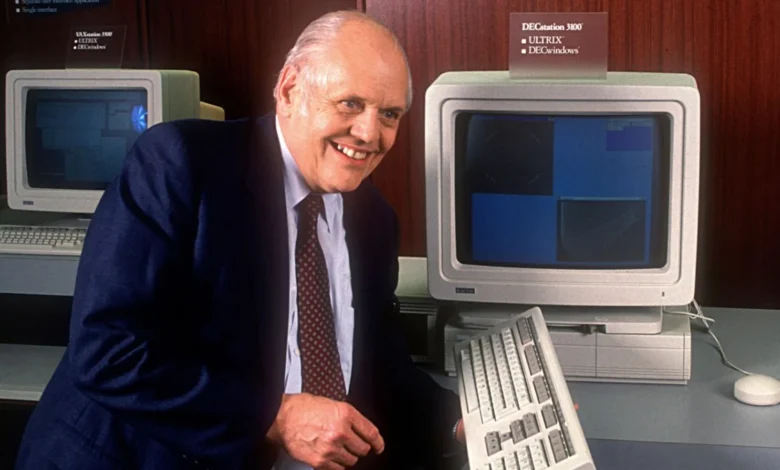
The landscape of modern life is undeniably defined by computing. From the moment we wake to the glowing screens of our smartphones, through our workdays at desktop or laptop stations, and into our evenings interacting with smart home devices, computers are no longer specialized tools but integral components of our daily existence. Most households now boast multiple computing devices, a stark contrast to the nascent stages of the computer industry. It is within this context that certain pronouncements from industry pioneers, made decades ago, now appear as profound miscalculations. One such notable instance involves the late Ken Olsen, co-founder and former CEO of Digital Equipment Corporation (DEC), a company that played a pivotal role in the mid-20th century’s technological revolution.
The Vision of a Computerless Home: Ken Olsen’s Infamous Prediction
In 1977, at a convention of the World Future Society, Ken Olsen, a towering figure in the burgeoning computer industry, delivered a statement that would become legendary for its perceived inaccuracy: "There is no reason for any individual to have a computer in their home." This assertion, made by the leader of a company instrumental in developing minicomputers, seemed counterintuitive and remarkably short-sighted, especially given the rapid advancements in computing power and miniaturization that were already underway.
However, to fully grasp the context and potential nuances of Olsen’s statement, it is crucial to consider two significant caveats that temper the straightforward interpretation of his words as a complete dismissal of personal computing.
Firstly, the computing landscape of 1977 was vastly different from today’s. Computers were generally colossal, expensive machines that required specialized environments and highly trained personnel to operate and maintain. Mainframes, like those produced by IBM, occupied entire rooms and were accessible only to large corporations and government institutions. DEC itself was a pioneer in the minicomputer market, offering machines that were smaller and more affordable than mainframes, but still far from being household items. These minicomputers, while democratizing access to computing power to some extent, remained primarily the domain of businesses, research facilities, and universities. The concept of a single individual owning and operating a computer for personal use was, for many, an abstract notion, akin to owning a personal observatory or a private research laboratory. The infrastructure, cost, and complexity were simply prohibitive for the average consumer.
Secondly, Olsen himself later asserted that his comments were significantly misinterpreted and taken out of context. He contended that his statement was not a blanket rejection of personal computers in homes, but rather a specific reaction to a particular vision of home automation that was being discussed at the time.
Beyond the Desktop: The "Master Computer" and the Genesis of the Smart Home
Olsen’s remarks, according to his later explanations, were directed not at the personal computers we recognize today – the desktop PCs, laptops, and eventually tablets and smartphones – but at the nascent, almost science-fiction concept of a singular, powerful "master computer" that would be responsible for automating all domestic functions. This envisioned system was far more ambitious than simply having a personal workstation for tasks like word processing or calculations. It was, in essence, an early articulation of what we now understand as the "smart home."
The idea being debated, and to which Olsen was likely responding, involved a central, sophisticated computer system that would meticulously control and manage every aspect of a household: lighting, heating, security, entertainment, and potentially even food preparation and inventory. This was a vision of complete, automated domestic management, a concept that, while alluring, presented immense technical and logistical challenges in 1977.
Olsen’s apprehension, therefore, may have stemmed from the impracticality and infeasibility of such a grand, centralized automated system for individual homes at that time. The processing power, the networking capabilities, the sensor technology, and the user interface required for such a sophisticated home automation system were simply not available or were prohibitively expensive and complex to implement. In this light, his statement can be interpreted as a realistic assessment of the technological limitations and economic realities of the era, rather than a denial of the potential for computing in personal spaces.
The Unforeseen Trajectory: From Enterprise to Everyday Life
Despite Olsen’s clarifications and the context of the time, his words have endured as a symbol of a significant misjudgment regarding the future of computing. The trajectory of technological development proved him wrong, not in his specific critique of a centralized home automation system, but in his implied underestimation of the burgeoning personal computer revolution.
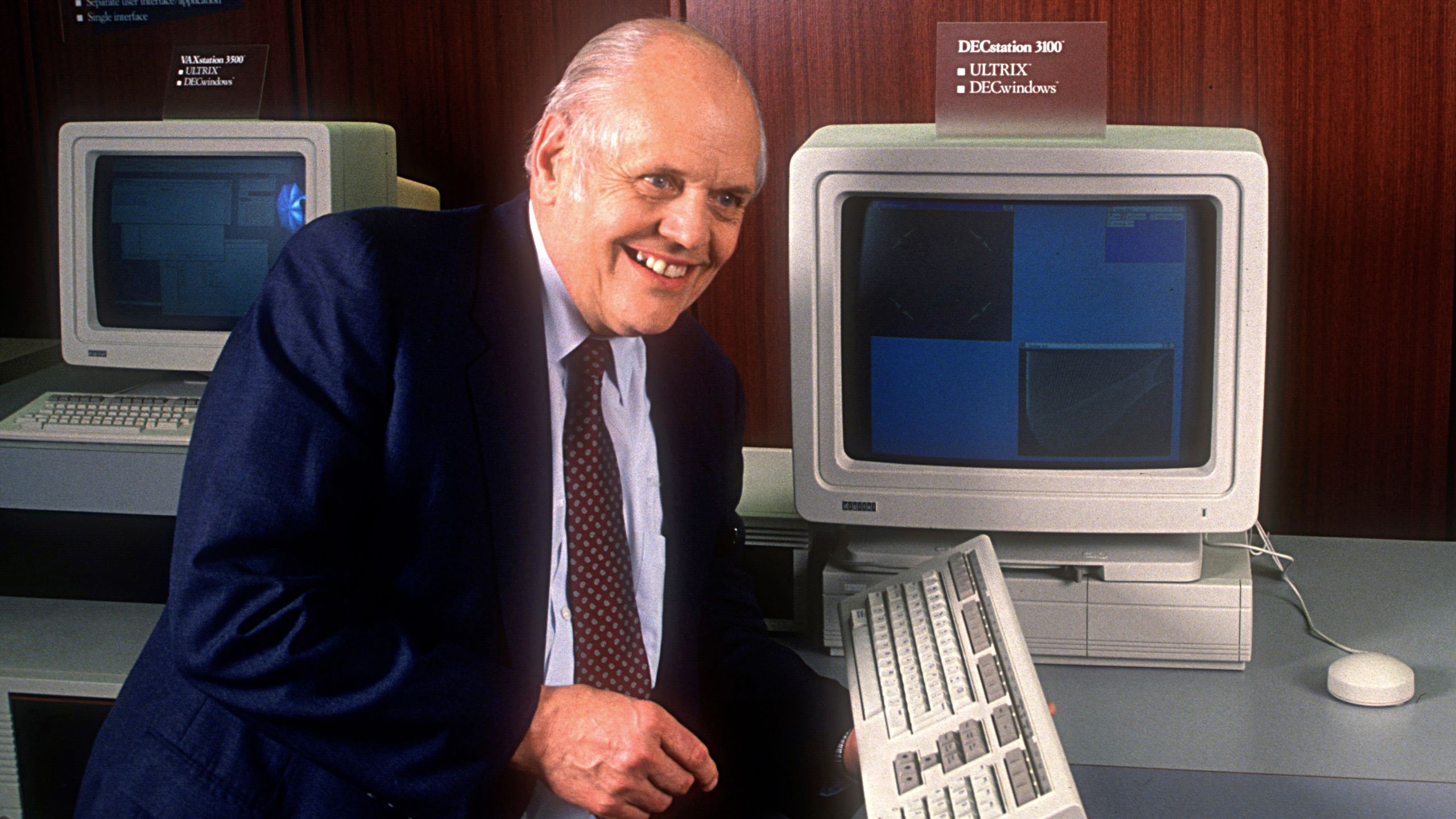
The 1980s and 1990s witnessed an explosion in personal computing. Companies like Apple and IBM, and later a host of others, made computers more accessible, affordable, and user-friendly. The development of graphical user interfaces (GUIs), the advent of the internet, and the exponential growth in processing power and storage capacity transformed computers from specialized tools for industry into indispensable devices for individuals. Laptops, desktops, and later, a proliferation of mobile devices like smartphones and tablets, brought computing power into virtually every aspect of personal and professional life.
The market for personal computers grew exponentially. In 1977, the estimated number of personal computers in use globally was in the tens of thousands. By 1981, that number had surpassed one million, and by the mid-1990s, it was in the hundreds of millions. This growth was fueled by increasing affordability, a wider range of applications, and a growing understanding of the benefits computing could offer to individuals, from education and entertainment to communication and productivity.
The Evolution of the "Smart Home": From Vision to Reality
While Olsen’s initial prediction may have been rooted in the limitations of 1970s technology concerning grand automation schemes, the underlying concept of a smart home has, over the ensuing decades, gradually moved from the realm of science fiction to a tangible reality. The 21st century has seen a significant resurgence and maturation of smart home technologies, driven by advancements in several key areas:
- Miniaturization and Cost Reduction: Components like microprocessors, sensors, and wireless communication modules have become smaller, more powerful, and significantly cheaper. This has enabled the development of a vast array of smart devices, from smart thermostats and lighting systems to security cameras and voice assistants.
- Connectivity and the Internet of Things (IoT): The widespread adoption of the internet and the development of wireless networking technologies (Wi-Fi, Bluetooth, Zigbee, Z-Wave) have created the foundation for the Internet of Things (IoT). This allows devices to communicate with each other and with cloud-based services, enabling remote control and automation.
- Artificial Intelligence and Machine Learning: Advances in AI and machine learning have empowered smart home devices to become more intelligent, learning user habits and preferences to offer personalized automation and proactive assistance. Voice assistants like Amazon Alexa, Google Assistant, and Apple’s Siri have become central hubs for controlling smart home ecosystems.
- The Rise of Smart Speakers and Hubs: Dedicated smart speakers and hubs have simplified the user experience, allowing for intuitive voice control of multiple devices and the creation of complex automation routines.
Challenges and the Promise of Interoperability: The Matter Standard
Despite the impressive progress, the widespread adoption of truly seamless smart home integration has faced its own set of hurdles, echoing some of the complexities Olsen might have foreseen regarding comprehensive automation.
- Interoperability Issues: Historically, smart home devices from different manufacturers have often been incompatible, leading to fragmented ecosystems and frustrating user experiences. Consumers have had to choose between competing platforms, limiting their choices and creating a "walled garden" effect.
- Complexity and Setup: For many, setting up and managing a smart home still involves a degree of technical expertise, with complex pairing processes and troubleshooting required for devices to function correctly together.
- Security and Privacy Concerns: As more devices connect to the internet, concerns about data security and user privacy have become paramount. Vulnerabilities in smart home devices can expose sensitive personal information and create security risks.
- Cost and Investment: Building a comprehensive smart home can still represent a significant financial investment, with individual devices and integrated systems often carrying a premium price tag.
However, the smart home landscape is currently undergoing a significant transformation, largely driven by the emergence of new industry standards aimed at addressing these very challenges. The most prominent among these is the Matter smart home standard.
Matter, developed by the Connectivity Standards Alliance (CSA), which includes major tech companies like Apple, Google, Amazon, and Samsung, is designed to ensure that smart home devices can communicate with each other seamlessly, regardless of the manufacturer or platform. This open-source standard promises to:
- Enhance Interoperability: Matter allows devices from different brands to work together reliably, simplifying the process of building a unified smart home ecosystem.
- Improve Reliability and Security: The standard incorporates robust security protocols and aims to provide a more reliable connection between devices.
- Simplify Setup: Matter is designed to make the setup process for new smart home devices much easier and more intuitive for consumers.
The widespread adoption of Matter is expected to revolutionize the smart home market, breaking down existing barriers and paving the way for a more integrated, user-friendly, and secure connected living experience. This is a crucial step towards realizing the long-envisioned potential of the smart home, a vision that, in its grandest form, Olsen himself seemed to question.
The Legacy of a Remarkable, If Imperfect, Foresight
Ken Olsen’s 1977 pronouncement, while often cited as an example of technological misjudgment, offers a valuable lesson in the complexities of predicting the future. His initial statement, when stripped of its later context, appears to dismiss the entire concept of personal computing. However, a deeper examination reveals that his concerns were likely focused on the practicalities of implementing highly ambitious, centralized home automation systems with the technology available at the time.
The subsequent decades have demonstrated that while Olsen’s specific apprehension about a singular "master computer" automating homes might have been rooted in the limitations of 1970s technology, the underlying drive towards intelligent, connected living was indeed prescient. The evolution from massive mainframes to pocket-sized smartphones, and the burgeoning smart home ecosystem, are testaments to the relentless march of innovation. Olsen’s quote, therefore, serves not just as a cautionary tale of underestimation, but also as a reminder of how rapidly technological paradigms can shift, turning what was once considered an impossibility into an everyday reality, and how even the most astute industry leaders can find their visions challenged by the unforeseen forces of progress. The ongoing development of standards like Matter suggests that the dream of a truly integrated and intelligent home, once met with skepticism, is finally on the cusp of widespread realization, albeit through a more distributed and interoperable approach than initially conceived.