Java Ecosystem Flourishes with JDK 27 Schedule Finalization, Critical Security Updates, and Advancements Across Key Projects

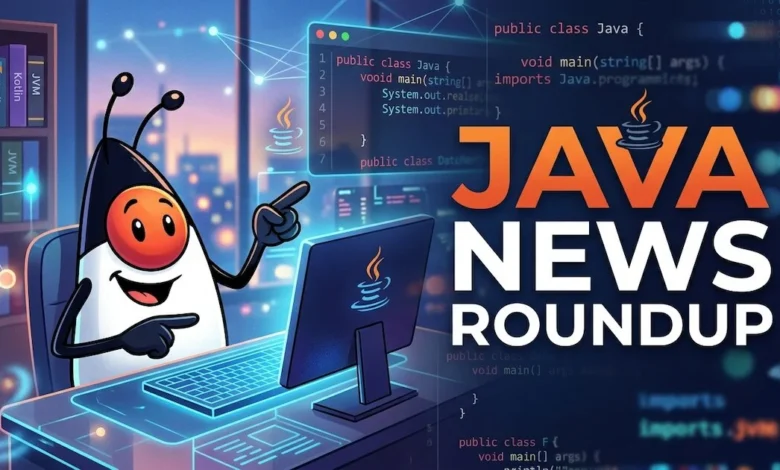
The week of April 20th, 2026, has been marked by significant developments across the Java landscape, highlighted by the official finalization of the JDK 27 release schedule, crucial advancements in OpenJDK Enhancement Proposals (JEPs), and the release of quarterly Critical Patch Updates (CPUs) from Oracle and its downstream distributors. These updates underscore Java’s continuous evolution, its unwavering commitment to security, and the vibrant innovation driven by its expansive community and commercial vendors. From core platform enhancements to essential ecosystem tools and frameworks, the announcements provide a clear trajectory for the platform’s future, ensuring robustness, performance, and developer productivity.
OpenJDK Innovation: JEPs Drive Core Platform Evolution
The OpenJDK project, the bedrock of the Java platform, saw two key JEPs progress, signaling ongoing enhancements to the language and runtime. JEPs (JDK Enhancement Proposals) serve as the formal mechanism for proposing and implementing new features, improvements, and changes to the Java Development Kit, ensuring a structured and transparent development process.
JEP 532, "Primitive Types in Patterns, instanceof, and switch (Fifth Preview)," has achieved "Proposed to Target" status for JDK 27. This elevation signifies that the JEP is considered mature and ready for integration into the upcoming JDK release. The JEP proposes a fifth preview of this feature without any changes, building upon four prior rounds of preview delivered in JDK 23 through JDK 26. This iterative approach is characteristic of significant language features in Java, allowing extensive testing, feedback collection, and refinement before finalization. The core enhancement lies in extending Java’s powerful pattern matching capabilities to include primitive types across all pattern contexts, as well as within the instanceof operator and switch expressions.
The journey of pattern matching in Java has been a multi-year effort, beginning with initial previews in JDK 14 (JEP 305 for instanceof) and evolving through subsequent releases to encompass switch expressions (JEPs 406, 420, 436, 441). The integration of primitive types further streamlines code, making it more concise and readable by eliminating verbose type checking and casting. For instance, developers can now write more expressive switch statements that directly match against primitive values in patterns, reducing boilerplate code and potential errors. This consistency across primitive and reference types simplifies the language model and enhances developer experience. The review period for JEP 532 is slated to conclude on April 30, 2026, paving the way for its inclusion in JDK 27.
Concurrently, JEP 535, "Shenandoah GC: Generational Mode by Default," advanced from "JEP Draft 8379682" to "Candidate" status. This JEP, already earmarked for delivery in JDK 28, proposes a fundamental shift in the default behavior of the Shenandoah Garbage Collector. Shenandoah GC is a low-pause-time garbage collector designed to reduce GC pause times, often achieving pauses of less than 10 milliseconds, regardless of heap size. This makes it particularly attractive for applications with stringent latency requirements. The transition to generational mode by default is a significant optimization. Generational garbage collectors improve efficiency by leveraging the "weak generational hypothesis," which posits that most objects die young. By dividing the heap into different generations (e.g., young and old), the collector can focus its efforts on the young generation, where most garbage collection occurs, thus reducing the frequency and duration of full heap collections. This change is expected to yield improved throughput and potentially smaller memory footprints for applications utilizing Shenandoah GC. The JEP also outlines the deprecation of the non-generational mode, with a clear intent to remove it in a future release, guiding the community towards the more performant and modern generational approach. This strategic move aligns with Java’s continuous efforts to enhance runtime performance and resource utilization.
JDK 27: The Road to General Availability is Paved
A pivotal announcement for the Java development community this week was the formal declaration of the JDK 27 release schedule by Mark Reinhold, Chief Architect of the Java Platform Group at Oracle. Following the conclusion of its review, the schedule sets a clear roadmap for the next Long-Term Support (LTS) release, maintaining Java’s predictable six-month release cadence. While specific dates for each phase (Rampdown Phase One, Rampdown Phase Two, Release Candidate, General Availability) were not explicitly provided in the source, the declaration itself marks a crucial milestone. Historically, "Rampdown Phase One" typically occurs in June, signifying a freeze on new JEPs and a focus on bug fixes. "Rampdown Phase Two" often follows in July, further narrowing the scope to critical bug fixes. The "Release Candidate" build usually emerges in August, leading to "General Availability" in September. This structured process ensures stability and quality for each new JDK release.
The early-access builds for JDK 27 are already progressing steadily, with Build 19 made available this past week. This build incorporates various fixes and updates from Build 18, demonstrating the active development cycle. Developers are encouraged to engage with these early-access builds and report any bugs via the Java Bug Database, contributing directly to the stability and robustness of the final release. The consistent and rapid release cycle, initiated with JDK 9, has significantly accelerated the adoption of new features, allowing developers to benefit from innovations sooner and reducing the burden of large, infrequent upgrades. JDK 27 is poised to continue this tradition, bringing a host of new capabilities and performance improvements to the platform.
Critical Patch Updates: A Cornerstone of Java Security
Security remains paramount in the enterprise software landscape, and Oracle’s quarterly Critical Patch Updates (CPUs) are a cornerstone of maintaining the integrity and security of the Java platform. For April 2026, Oracle released CPU advisories addressing numerous vulnerabilities across various JDK versions. These updates included versions 25.0.3, 21.0.11, 17.0.19, 11.0.31, and 8u491 of the JDK. These patches are essential for mitigating Common Vulnerabilities and Exposures (CVEs) that could potentially be exploited by malicious actors.
The importance of these CPUs cannot be overstated. Enterprises relying on Java for mission-critical applications must promptly apply these updates to protect against known security flaws. Failure to do so can expose systems to data breaches, unauthorized access, and other severe security incidents, leading to significant financial and reputational damage. The quarterly release schedule allows organizations to plan and implement these updates systematically, integrating them into their regular patch management cycles.
Downstream distributors of OpenJDK play a vital role in this security ecosystem by providing their own patched versions, often with additional optimizations and support. BellSoft, with its Liberica JDK, released concurrent CPU patches for versions 25.0.2.0.1, 21.0.10.0.1, 17.0.18.0.1, 11.0.30.0.1, 8u491, 7u501, and 6u501. BellSoft highlighted its significant contribution, stating participation in eliminating 63 issues across all releases, part of an overall total of 954 fixes and backports. This demonstrates the collaborative effort within the OpenJDK community to identify and resolve security vulnerabilities. Additionally, BellSoft released Patch Set Update (PSU) versions, which include both CPU fixes and non-critical bug resolutions, offering a comprehensive update package.
Similarly, Azul, another prominent OpenJDK distributor with its Zulu builds, released its quarterly update aligned with Oracle’s CPU. Zulu versions 26.0.1, 25.0.3, 21.0.11, 17.0.19, and 11.0.31 were made available, addressing their respective lists of CVEs. Azul’s commitment to providing timely and secure builds ensures that organizations using Zulu can maintain a robust and protected Java environment. The coordinated release of these patches across the Java ecosystem is a testament to the community’s vigilance and shared responsibility in safeguarding the platform.
Jakarta EE and Spring Framework: Advancing Enterprise Java
Beyond the core JDK, the broader enterprise Java ecosystem also saw significant advancements.
Jakarta Persistence 4.0 Milestone 2 (JPA 4.0 M2) was released, bringing notable changes since its first milestone. Jakarta Persistence, formerly Java Persistence API (JPA) under Java EE, is a critical specification for object-relational mapping (ORM) in Java applications, allowing developers to map Java objects to database tables. The second milestone introduces specialized expression types such as ComparableExpression and NumericExpression interfaces, which enhance the Criteria API for building dynamic, type-safe queries. These new interfaces provide more precise control over query predicates involving comparable and numeric data types, leading to more robust and less error-prone database interactions. Corresponding metamodel attribute types, ComparableAttribute and NumericAttribute, were also introduced, further improving type safety and introspection capabilities. Furthermore, a new FetchOption interface was added, offering improved control over fetching data with the EntityGraph interface. EntityGraph allows developers to specify which related entities should be loaded along with a root entity, optimizing data retrieval and preventing N+1 select problems. The FetchOption interface provides finer-grained control over these fetching strategies, enabling more efficient and tailored data access patterns. These enhancements reinforce Jakarta Persistence’s role as a modern and powerful ORM solution for enterprise applications.
The Spring Framework, a cornerstone of modern Java development, had a particularly busy week, with multiple projects delivering their first release candidates. This signifies that these projects are nearing their stable general availability releases. The projects include Spring Boot, the dominant framework for building stand-alone, production-grade Spring-based applications with minimal configuration; Spring Security, providing comprehensive security services for Java applications; Spring Integration, facilitating enterprise integration patterns; Spring Modulith, promoting modular application design; Spring AMQP (Advanced Message Queuing Protocol) and Spring for Apache Kafka, offering robust messaging solutions; and Spring Vault, providing a client-side abstraction for HashiCorp Vault. The simultaneous release of release candidates for such a broad suite of Spring projects indicates a coordinated effort towards a new major version, likely bringing significant new features, improvements, and compatibility updates that will impact a vast number of Java developers globally. The rapid iteration and consistent evolution of the Spring ecosystem continue to drive innovation in application development, particularly in areas like microservices, cloud-native deployments, and event-driven architectures.
Open Liberty: Cloud-Native Runtime Evolves
Open Liberty 26.0.0.4, the open-source, lightweight, and cloud-native-ready application server, reached its General Availability (GA) release. This release brings several important updates, underscoring Open Liberty’s commitment to modern Java standards and security. A key feature is the expanded support for JDK 26, ensuring that developers can leverage the latest Java features and performance enhancements when deploying applications on Open Liberty. This forward compatibility is crucial for organizations aiming to stay current with the rapidly evolving Java platform.
Security enhancements are also prominent in this release. Open Liberty now offers enhanced authentication by allowing selection of the JWT (JSON Web Token) signature algorithm directly from the JOSE (Javascript Object Signing and Encryption) header. This provides greater flexibility and control over cryptographic algorithms used for token verification, allowing for adaptation to evolving security standards and practices. Furthermore, the release addresses a critical security vulnerability, CVE-2025-14917, by removing the default Lightweight Third Party Authentication (LTPA) keys password. This vulnerability, present in Open Liberty versions 17.0.0.3 through 26.0.0.3, could have led to weaker-than-expected security when administering security settings. The removal of the default password significantly strengthens the security posture of Open Liberty deployments, requiring administrators to explicitly configure secure authentication mechanisms. These updates collectively reinforce Open Liberty’s position as a secure, performant, and modern runtime for Jakarta EE and MicroProfile applications in cloud environments.
Developer Tools and Libraries: Enhancing Productivity
The ecosystem also saw important maintenance and feature releases for popular developer tools and libraries.
Multik 0.3.1, the multidimensional array library for Kotlin, delivered a maintenance release. While it included a bug fix and dependency upgrades, a significant breaking change was the removal of the Kotlin/Native macosX64 target from all modules. This decision stems from Apple’s declaration of Intel MacBooks as obsolete. For developers relying on Multik for Kotlin/Native projects targeting Intel-based macOS machines, this change necessitates a transition to Apple Silicon (ARM64) or alternative solutions. This move reflects the broader industry shift towards ARM-based architectures in the Apple ecosystem and highlights the need for libraries to adapt to evolving hardware landscapes, even if it introduces breaking changes for a segment of the user base.
Testcontainers for Java 2.0.5 also saw a new release, bringing bug fixes, documentation improvements, dependency upgrades, and valuable new features. Testcontainers is an immensely popular library for integration testing, enabling developers to spin up disposable Docker containers for databases, message brokers, web servers, and other services directly from their tests. This release introduces support for the apache/artemis Docker image within the ArtemisContainer class, expanding the range of messaging systems that can be easily tested. The WeaviateContainer class gained new methods, getHttpPort() and getGrpcPort(), to obtain the defined ports of 8080 and 50051, respectively, improving programmatic interaction with Weaviate instances in tests. Crucially, the release adds support for the !override tag in Docker Compose files. This feature provides greater flexibility when defining test environments using Docker Compose, allowing developers to selectively prevent overrides for specific services or configurations, leading to more robust and predictable test setups. These enhancements further solidify Testcontainers’ role as an indispensable tool for writing reliable and comprehensive integration tests in Java projects.
Finally, IntelliJ IDEA 2026.1.1, a leading Integrated Development Environment (IDE) from JetBrains, received a maintenance release. This update addresses critical issues impacting developer productivity. One significant fix resolves a ClassCastException that occurred during unsuccessful synchronization with Gradle, particularly related to the InternalIdeaModule class and the Gradle ProjectModel interface. Gradle integration is fundamental for many Java projects, and this fix ensures smoother build system interaction within the IDE. Another important resolution tackles an error connecting to a WildFly administration process after server startup, which previously hindered normal application deployment. Restoring stable connectivity to WildFly application servers is crucial for developers working with Java EE/Jakarta EE applications, ensuring seamless deployment and debugging workflows. Such maintenance releases, though seemingly minor, are vital for maintaining the stability and reliability of development tools that developers rely on daily.
Conclusion: A Dynamic and Secure Ecosystem
The events of this past week paint a comprehensive picture of a dynamic and highly active Java ecosystem. From the strategic advancements in OpenJDK, shaping the future of the platform with features like enhanced pattern matching and optimized garbage collection, to the critical security updates from Oracle and its partners ensuring the platform’s integrity, and the continuous evolution of enterprise frameworks like Spring and Jakarta EE, the Java world remains a hub of innovation. The consistent release cadence of the JDK, coupled with robust community contributions to libraries and tools, fosters an environment where developers can build modern, high-performance, and secure applications. The collective effort across vendors, open-source projects, and the developer community ensures that Java continues to be a relevant and powerful choice for a vast array of applications, from cloud-native microservices to large-scale enterprise systems, demonstrating its enduring strength and adaptability.