The journey to this optimization began as Dropbox, a company synonymous with large-scale data management, confronted escalating challenges within its central backend monorepo. This repository serves as the indispensable integration point for a vast array of backend services and shared libraries utilized by numerous engineering teams across the organization. As the codebase expanded organically over time, the repository’s sheer size started to impose considerable friction on daily development workflows. Engineers began to experience clone operations that could stretch beyond an hour, a debilitating bottleneck that directly impacted onboarding new team members and initiating fresh development branches. Furthermore, CI pipelines, crucial for ensuring code quality and rapid deployment, suffered from degraded performance due to the repeated overhead of fetching and building the ever-growing repository data. The looming threat of reaching repository hosting limits also presented a strategic concern, prompting a proactive investigation into the underlying causes of this unexpected growth.
Identifying the Root Cause: Git’s Compression at Scale
Initially, the common assumptions regarding large repository sizes often point to the inclusion of large binary files or accidental commits of unnecessary data. However, Dropbox engineers discovered that these were not the primary culprits in their scenario. Instead, their detailed analysis revealed that the core issue stemmed from how Git’s internal compression heuristics handled a massive and evolving set of related files within the monorepo.
Git, a distributed version control system, employs delta compression as a fundamental mechanism to reduce storage footprint. This technique identifies similarities between different versions of files and stores only the differences (deltas) rather than entire file copies. While highly effective for typical repositories, Dropbox’s engineers observed that at their immense scale, these heuristics were producing suboptimal packfiles. A packfile is a compressed collection of Git objects, and suboptimal generation meant that the repository was growing disproportionately large relative to the actual volume of code changes being committed. This mismatch between anticipated and observed growth rates became the critical indicator, prompting a deeper dive into Git’s internal storage behavior rather than solely scrutinizing the repository’s content.
Ishan Mishra, a senior software engineer at Dropbox, articulated this discovery succinctly, stating, “The growth rate didn’t match what we would expect from normal development activity, even at Dropbox’s scale. That suggested the problem wasn’t just what we were storing, but how it was being stored.” This insight shifted the focus from content pruning to a more intricate, tooling-level optimization.
The Strategic Imperative: Treating Version Control as Infrastructure
Recognizing the profound impact of the monorepo’s size on their development velocity, the Dropbox team elevated the version control system to the status of critical production infrastructure. This philosophical shift underpinned their methodical approach to the problem. They initiated a comprehensive analysis of storage patterns within the monorepo, dissecting how Git was constructing and storing its internal objects.

The technical solution involved implementing optimized repacking strategies and fine-tuning how Git structures object deltas. Specifically, the team focused on improving the "delta window" and "delta depth" parameters. The delta window dictates how many past objects Git considers when looking for a base to delta against, while delta depth controls how many deltas can be chained together. Misconfigured or default settings for these parameters can lead to inefficient storage, where Git creates redundant deltas or fails to find optimal bases, resulting in larger packfiles. By strategically adjusting these parameters, Dropbox aimed to guide Git towards more efficient compression choices, leveraging the inherent similarities across their vast codebase more effectively.
A crucial aspect of this remediation effort was the collaborative partnership forged with GitHub. Given that server-side packing for clone and fetch operations for Dropbox’s monorepo is managed through GitHub’s infrastructure, direct collaboration was indispensable. Dropbox engineers worked closely with GitHub teams to tune these critical parameters within GitHub’s environment. This inter-organizational cooperation highlights the complex interplay between internal engineering challenges and external service provider capabilities in large-scale software development. To mitigate operational risks, all proposed changes were rigorously validated in mirrored environments before their eventual rollout to the production monorepo, ensuring stability and preventing disruptions to ongoing development.
As Shailesh Mishra noted in a LinkedIn post, the core of the problem was a "tooling assumption colliding with repo structure at scale." This perfectly encapsulates the challenge: Git, a robust and widely used tool, exhibited unexpected behavior when pushed to the extreme limits of a highly active, multi-gigabyte monorepo.
Quantifiable Impact and Broader Implications
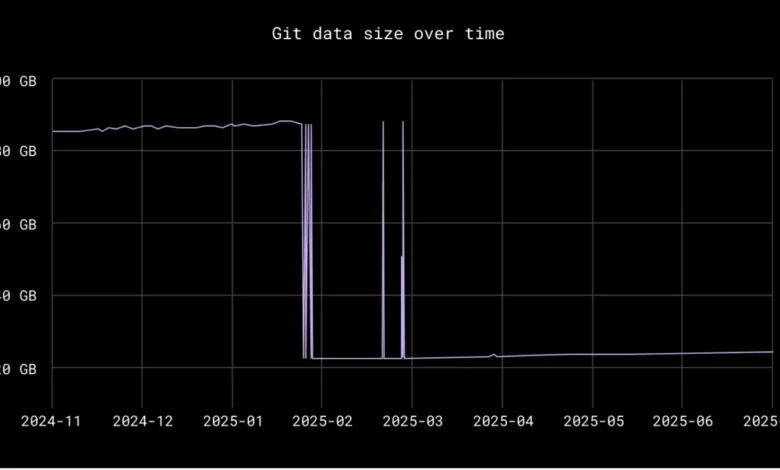
The results of these targeted optimizations were transformative. The repository size plummeted from 87GB to 20GB, a staggering 77 percent reduction that far exceeded initial expectations. The tangible benefits were immediately evident in developer workflows:
- Clone Times: What once took over an hour was reduced to under 15 minutes, dramatically accelerating developer onboarding and the creation of new feature branches. This directly translates to less "waiting time" for engineers, allowing them to focus on productive tasks sooner.
- CI Pipeline Performance: CI pipelines saw significantly faster execution times due to reduced data transfer and processing overhead. In a modern development environment, rapid feedback from CI/CD is paramount for maintaining high code quality and enabling continuous delivery. Delays in CI can cascade, slowing down release cycles and increasing the cost of identifying and fixing bugs.
- Storage and Hosting Limits: The reduced size also alleviated concerns about hitting repository size limits imposed by hosting providers, ensuring long-term scalability and operational resilience.
- Developer Onboarding: Shorter clone times mean new engineers can become productive much faster, reducing the overall ramp-up period and improving the efficiency of hiring processes.
Beyond these immediate, quantifiable improvements, the Dropbox case offers invaluable lessons for the broader software engineering community. The primary learning, as emphasized by the Dropbox engineers, is the critical importance of treating version control systems not merely as tools, but as fundamental infrastructure. Much like databases or network services, VCS performance directly impacts engineering velocity, developer satisfaction, and ultimately, a company’s ability to innovate and deliver products efficiently.
This undertaking combined several critical elements for success: deep tooling-level optimization, fostering cross-organizational collaboration with a key partner like GitHub, and employing a disciplined approach to staged validation to ensure safe and non-disruptive rollout. The success at Dropbox underscores that even mature and widely adopted tools like Git require continuous scrutiny and optimization when pushed to extreme scales. For companies managing similarly large or growing monorepos, the Dropbox experience provides a compelling blueprint for investigating and addressing performance bottlenecks that might otherwise go unnoticed or be misattributed to other causes. It highlights that understanding the internal mechanisms of foundational tools, even those considered "solved problems," can unlock significant gains in developer productivity and operational efficiency. The proactive stance adopted by Dropbox not only solved an immediate operational challenge but also set a new standard for managing large-scale version control systems as critical components of the modern software development ecosystem.