Incredible oscilloscope packs an Nvidia T1000 GPU, 12-core AMD EPYC CPU, 96GB RAM, and 1.6TB NVMe SSD — the 38Kg…

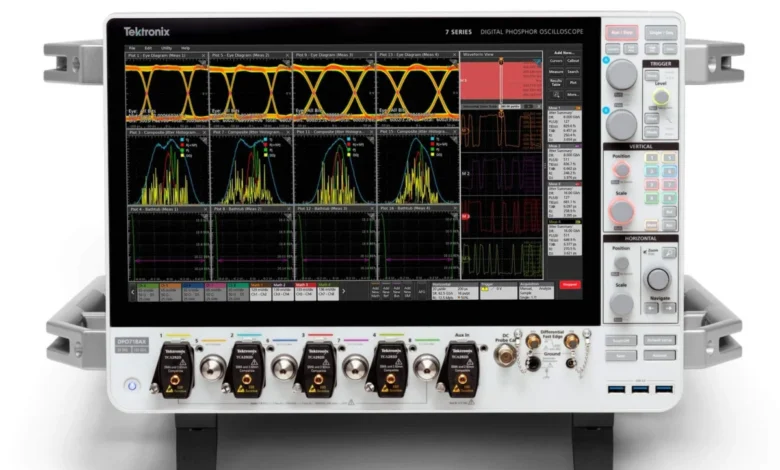
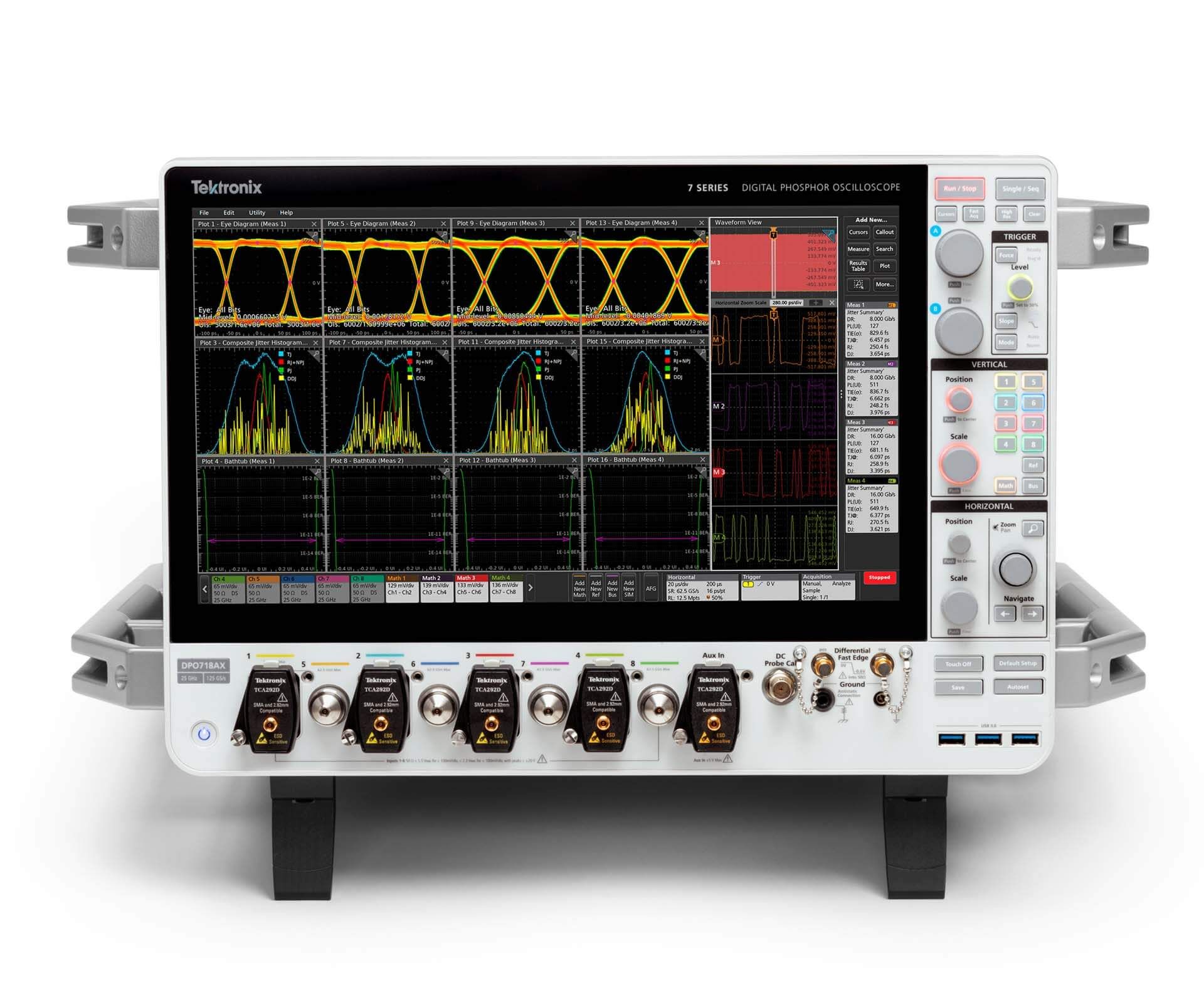
At its core, the DPO718AX is a testament to the increasing demand for high-bandwidth, multi-channel signal processing. By integrating a powerful 12-core AMD EPYC processor alongside an Nvidia T1000 graphics card and 96GB of DDR4 RAM, Tektronix has effectively turned an oscilloscope into a high-performance computer. Housed in a substantial 38.1kg chassis, the unit features a 15.6-inch 1080p touchscreen and a removable 1.6TB NVMe SSD, designed to handle the massive datasets generated by modern high-speed RF and compliance testing.
A Fusion of Measurement and Computation
The decision to equip an oscilloscope with such potent internal hardware is not merely a stylistic choice but a functional necessity. Modern signal analysis—particularly in the domains of telecommunications, semiconductor development, and aerospace engineering—requires real-time processing capabilities that legacy embedded systems can no longer support. The DPO718AX serves as the world’s first eight-channel, 25 GHz oscilloscope, a milestone that requires significant "number crunching" power to visualize and analyze waveform data without latency.
While the inclusion of an AMD EPYC Embedded 3351 processor and an Nvidia T1000 GPU might seem like overkill for a device designed to measure electrical signals, the reality is that the compliance and RF analysis software suite required for modern testing protocols necessitates a robust Windows-based environment. Users have the option of utilizing a removable drive that hosts a Windows 10 LTSC 2021 installation, ensuring that the software remains isolated and stable, away from the core measurement firmware.
Chronology of Development and Design
Tektronix’s 7 Series has long been the gold standard for digital phosphor oscilloscopes (DPOs). The evolution of the line has tracked the rapid advancement of silicon and signal processing. In the early 2010s, oscilloscopes were largely standalone, purpose-built machines with limited memory and processing headroom. By the mid-2010s, manufacturers began integrating more PC-like architectures to support deeper memory buffers and faster processing.
The release of the DPO718AX in September 2026 marks the culmination of this trend. The hardware selection reflects a design philosophy that prioritizes longevity and modularity. By selecting the AMD EPYC 3351, a processor built on the Zen architecture and released in early 2018, Tektronix opted for a platform known for its enterprise-grade reliability rather than the cutting-edge (and potentially volatile) consumer-grade silicon. This choice suggests that for Tektronix, the priority is to maintain a predictable, stable environment for engineers who cannot afford a "blue screen of death" in the middle of a high-stakes, million-dollar testing sequence.
Technical Specifications and Limitations
The technical profile of the DPO718AX provides a clear picture of its intended use case. The 12-core, 24-thread configuration of the CPU offers a base clock that handles background processing and data visualization tasks with ease. However, the system is constrained by its reliance on PCIe 3.0, which limits the throughput speed of the NVMe storage. For most measurement applications, this is not a bottleneck; the primary demand is on memory bandwidth and processing threads, both of which are adequately addressed by the 96GB DDR4 memory configuration.
The Nvidia T1000, while considered an entry-level professional GPU by modern standards, is more than capable of rendering high-resolution, high-frame-rate waveform data on the integrated 15.6-inch display. The ability to push QHD resolution via external DisplayPort outputs further underscores the device’s role as a secondary workstation for lab engineers.
Critics have noted that the hardware components are somewhat dated. While a 12-core EPYC is powerful, it is not the fastest chip on the market. However, in the context of industrial instrumentation, "dated" is often synonymous with "validated." Tektronix must ensure that every component is compatible with its proprietary drivers and compliance software; frequent hardware refreshes would create a maintenance nightmare for enterprise clients who deploy these units for a decade or longer.
The Role of Windows 10 LTSC
A point of significant interest is the use of Windows 10 Long-Term Servicing Channel (LTSC). Unlike standard Windows installations, which receive frequent feature updates, the LTSC version is designed for systems where the primary objective is stability. The oscilloscope does not ship with Windows pre-installed; rather, it is provided on a secondary, removable drive. This separation of concerns allows the oscilloscope to function as a pure measurement device when needed, or as a full-featured Windows workstation when advanced data analysis, report generation, or cloud integration is required.
Because the system supports TPM 2.0, there is theoretical support for Windows 11. However, Tektronix has indicated that the current software suite is optimized for the LTSC environment. For professional engineers, the OS is merely a container for the measurement software. The ability to swap the SSD means that as security requirements or software needs evolve, the user can upgrade the storage or the OS without replacing the entire 38.1kg instrument.
Industry Implications and Market Impact
The market for high-end oscilloscopes is narrow but intensely competitive. Brands like Keysight, Rohde & Schwarz, and Tektronix operate in an environment where precision is non-negotiable. The introduction of an eight-channel, 25 GHz model puts immense pressure on competitors to match this density of channels at this bandwidth.
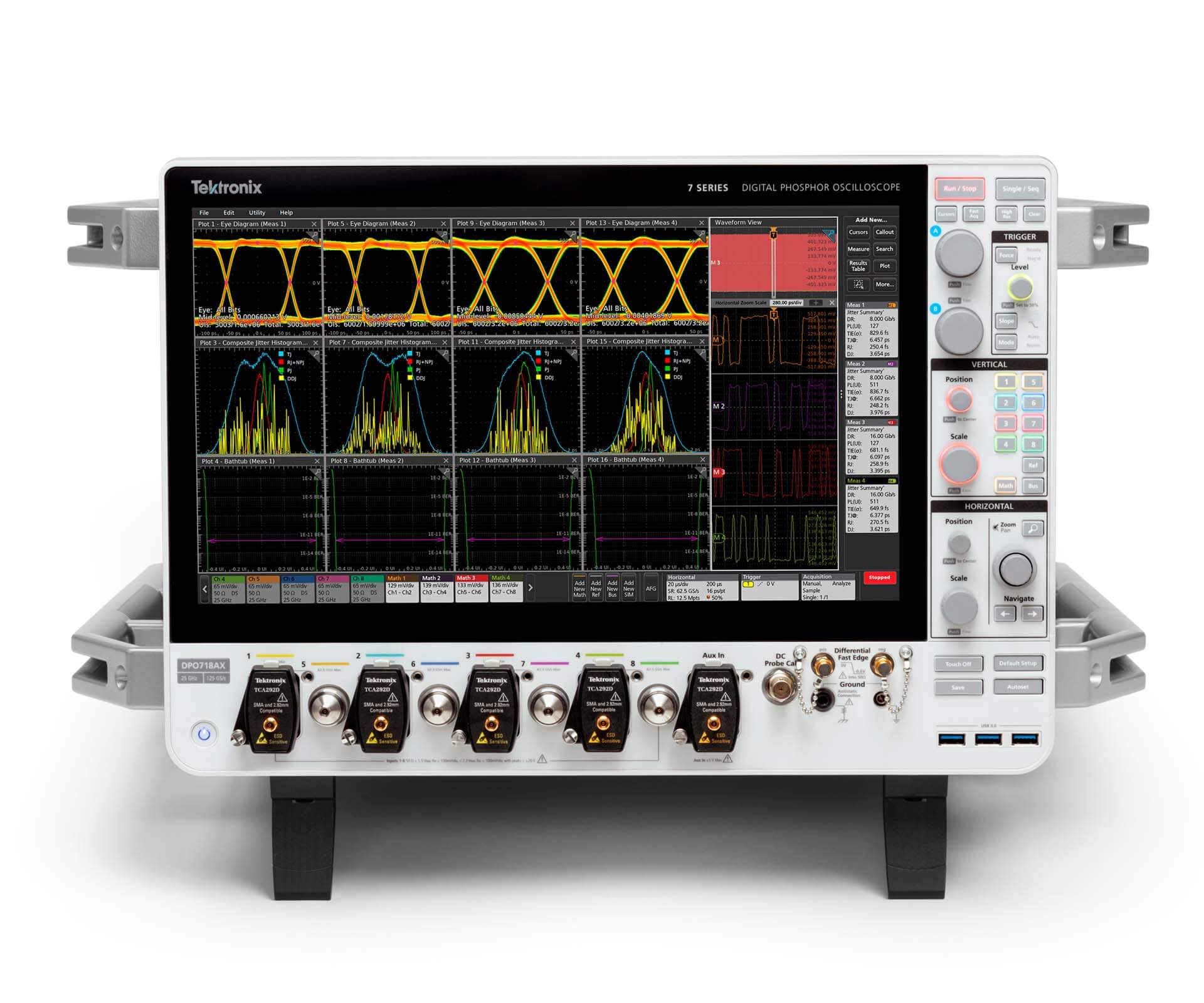
Beyond the raw measurement specs, the DPO718AX highlights the convergence of Test & Measurement (T&M) equipment with IT infrastructure. We are seeing a move away from closed, proprietary architectures toward open, PC-based platforms. This transition is driven by the need for integration into the "Internet of Things" (IoT) and the industrial digital twin environments. Engineers no longer want to export CSV files to a separate computer; they want to perform Python-based analysis, run machine-learning models, and automate testing sequences directly on the instrument.
Analysis of the "PC Replacement" Discourse
Public reaction to the DPO718AX, particularly from tech-focused outlets like CNX Software, has highlighted a curiosity regarding the hardware’s secondary life. If one were to strip away the proprietary measurement hardware, would this make a good PC? The consensus is a resounding "no."
While the 96GB of RAM is impressive, the CPU is under-clocked and the architecture is legacy-focused. Furthermore, the cost—which extends into the six-figure range for fully configured units—makes it a prohibitively expensive PC. Yet, the discourse is important because it illustrates how far instrumentation has come. We have reached a point where the computer controlling the measurement tool is, by itself, more powerful than the average workstation in many corporate offices.
Broader Context and Future Outlook
As we look toward the future of RF analysis and high-speed digital design, the requirements for data throughput will only increase. Future iterations of the 7 Series will likely need to address the limitations of the current PCIe 3.0 architecture. Moving to PCIe 4.0 or 5.0 will be necessary to keep pace with the massive data files generated by 8-channel, 25 GHz sampling.
Furthermore, as cybersecurity becomes a greater concern in sensitive engineering environments, the modularity of the DPO718AX will become a key selling point. The ability to remove the storage drive and physically separate the measurement data from the network-connected computing environment is a vital feature for defense and aerospace contractors.
In conclusion, the DPO718AX is a milestone for Tektronix. By embracing a high-performance PC architecture within its flagship oscilloscope, the company has provided a platform that is as flexible as it is precise. While the individual components may be familiar to PC enthusiasts, their application here is transformative, setting a new benchmark for how we perceive, measure, and analyze the electrical signals that power our modern world. Whether it is being used to validate a new 6G telecommunications protocol or to debug a complex power supply in a satellite, the DPO718AX stands as a robust, albeit heavy, monument to the marriage of high-speed electronics and high-performance computing.