Governing the Enterprise AI Lifecycle: Moving from Pilot Projects to Sustainable Economic Models for Agentic Systems


As artificial intelligence agents transition from experimental pilot programs to mission-critical enterprise assets, the challenge for IT leadership has shifted from technological feasibility to economic sustainability. The rapid proliferation of autonomous systems, which often interact with diverse data sets and external tools at high velocity, has necessitated a new framework for governance. This final installment of the Economics of Agent Optimization series examines the structural requirement for governing AI expenditure, moving beyond simple cost-tracking to a model of active, automated financial oversight within Microsoft Foundry.

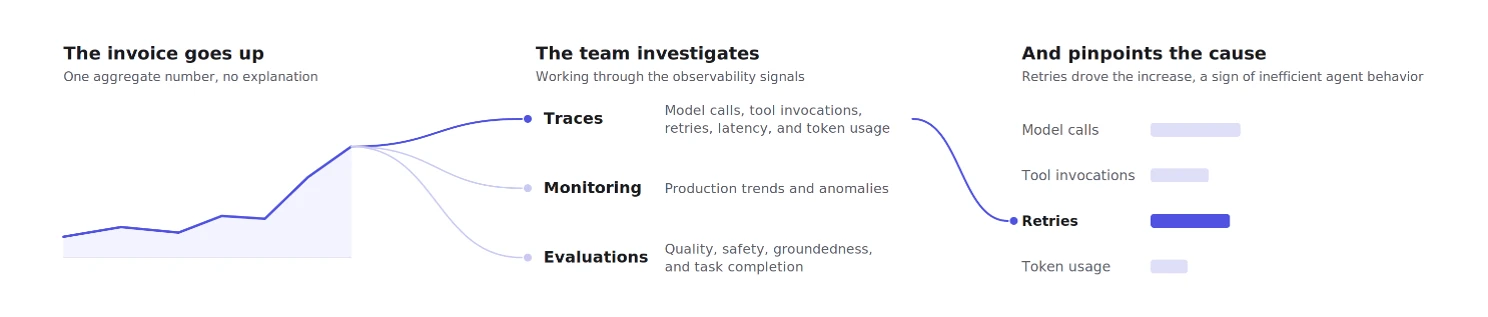
The shift toward autonomous agentic systems represents a fundamental change in how software operates. Unlike traditional, deterministic applications, these agents can trigger multiple LLM requests, engage in iterative retry loops, and consume resources at a scale that can quickly outpace conventional IT budgeting cycles. For the modern enterprise, the absence of a proactive governance layer often results in a "black box" effect, where aggregate costs are only realized after the billing cycle concludes—far too late to mitigate operational inefficiencies or runaway token consumption.
The Evolution of AI Governance: From Smoke Detectors to Circuit Breakers
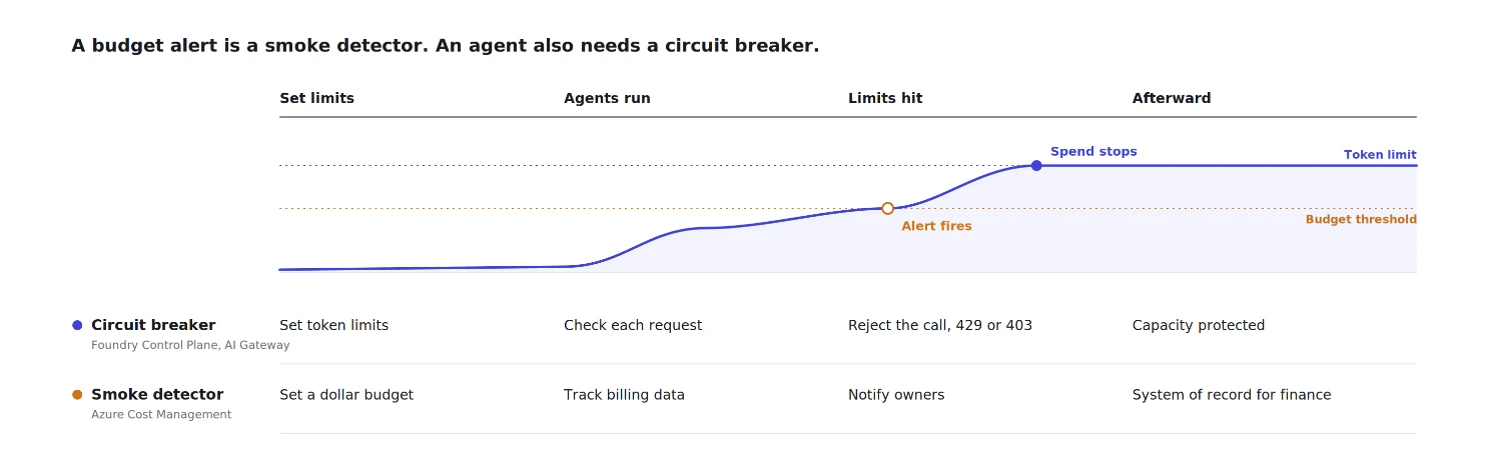
In the early stages of enterprise AI adoption, organizations largely relied on reactive measures—primarily cloud billing alerts—to manage costs. These functioned as "smoke detectors," notifying stakeholders only after the damage was done. However, in an environment where agents operate at machine speed, passive monitoring is insufficient. Industry experts and IT architects now advocate for a dual-layered approach: financial visibility for long-term planning and "circuit breakers" for immediate runtime control.

This governance evolution is structured across three distinct tiers: visibility, boundary enforcement, and value-based assessment. By integrating these layers, organizations can move from a state of uncertainty to a managed investment strategy.
Establishing Visibility at the Point of Origin
The primary barrier to effective AI governance is the lack of granular attribution. In many legacy setups, AI usage is aggregated into single, nebulous line items, stripping away the business context. Microsoft Foundry’s recent updates aim to rectify this by embedding cost metadata directly into the request path. By utilizing project-level tags, finance and engineering teams can now attribute costs with surgical precision, mapping usage to specific business units, individual agents, or unique development workloads.
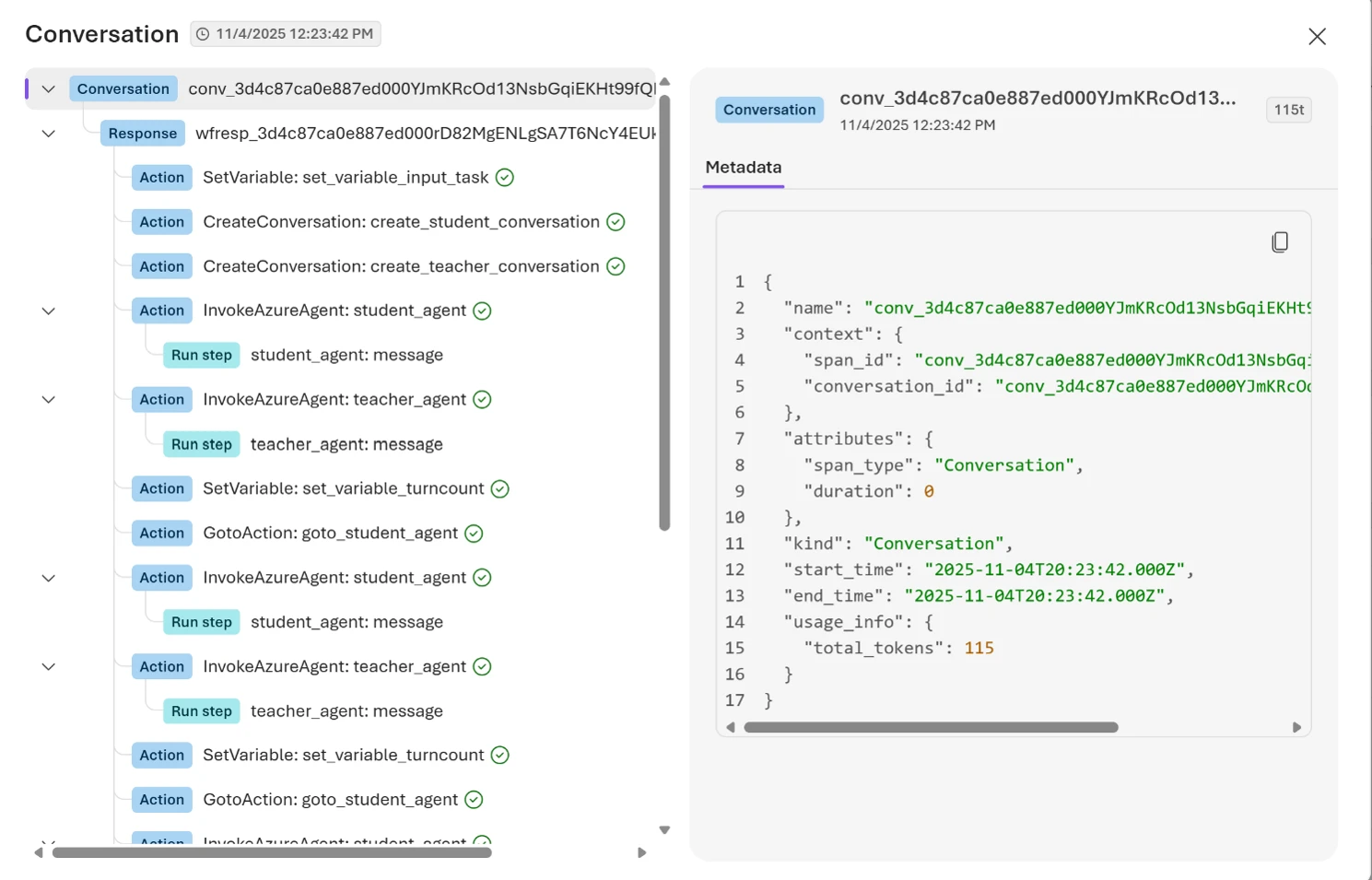
Data captured through the Azure AI Gateway provides a comprehensive audit trail, recording token metrics, latency, and tool invocation counts. This observability is critical for root-cause analysis; when costs spike, teams can distinguish between increased customer demand and inefficient architectural choices, such as redundant model calls or unnecessary processing loops.
Implementing Hard Limits: The Three-Layer Control System
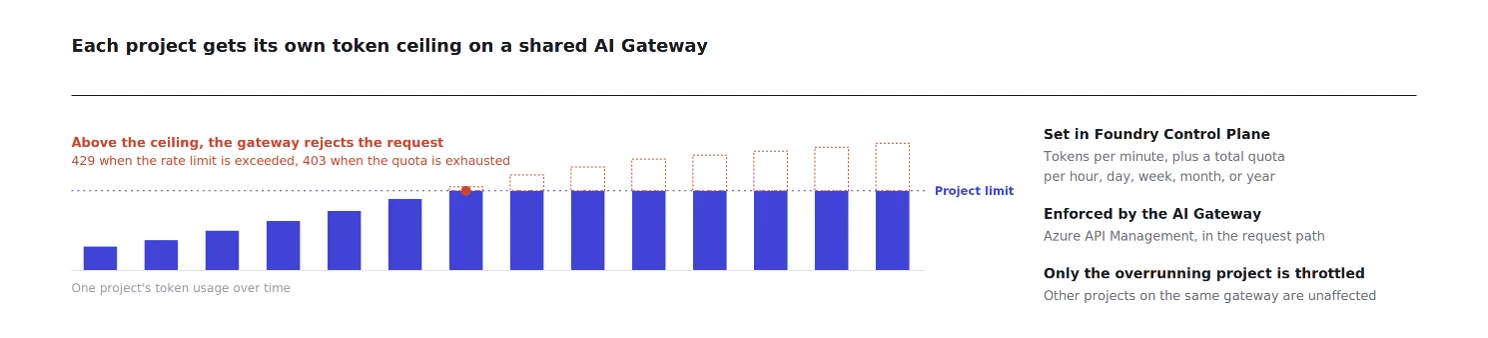
Effective governance requires the ability to enforce constraints at the speed of the application. The current standard for enterprise-grade control involves a multi-layered hierarchy designed to contain costs before they escalate:
- Foundry-Level Rate Limiting: At the most immediate level, Foundry enables developers to set tokens-per-minute (TPM) caps and total token quotas at the project level. By returning a 429 (Too Many Requests) or 403 (Forbidden) response when thresholds are crossed, the system ensures that a single agent or project cannot exhaust a department’s entire resource allocation.
- Cross-Model and Provider Policies: Using the llm-token-limit policy, organizations can standardize consumption controls across disparate model providers and API keys. This abstraction is vital for organizations utilizing hybrid or multi-model architectures, as it ensures that governance policies remain consistent whether an agent is calling a primary LLM or a specialized secondary tool.
- Financial Budgeting and Escalation: Finally, traditional financial budgets serve as the organizational guardrail. By leveraging Azure Cost Management, these budgets integrate with automated workflows, such as Logic Apps or Azure Monitor action groups, to initiate human-in-the-loop interventions or administrative alerts if spending patterns deviate from forecasted models.
Measuring the Return on Investment
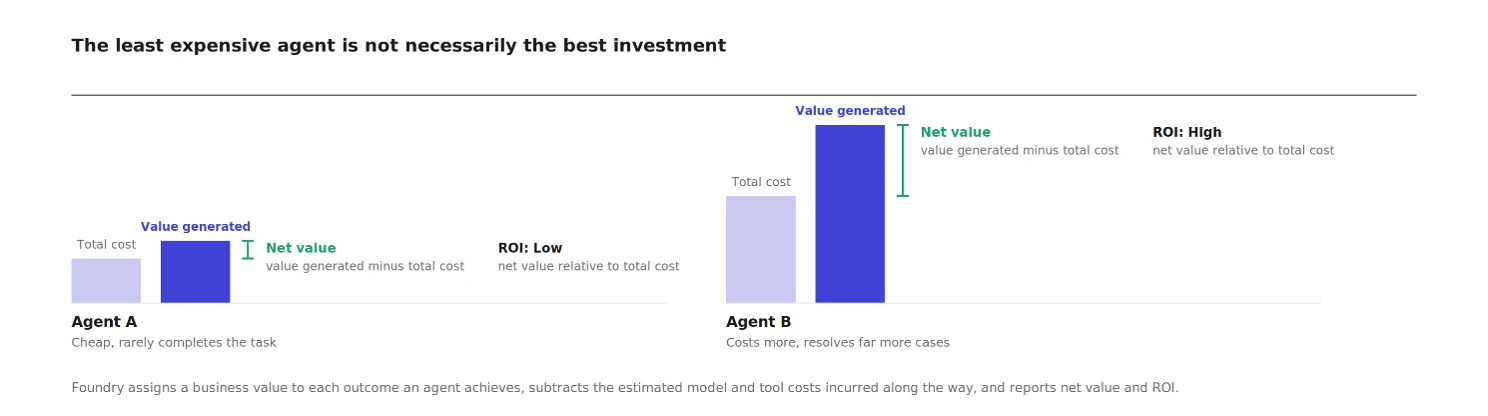
Perhaps the most significant challenge in the current economic climate is proving the business value of AI agents. A low-cost agent that fails to deliver results is inherently less efficient than a higher-cost agent that consistently drives revenue or reduces operational overhead.
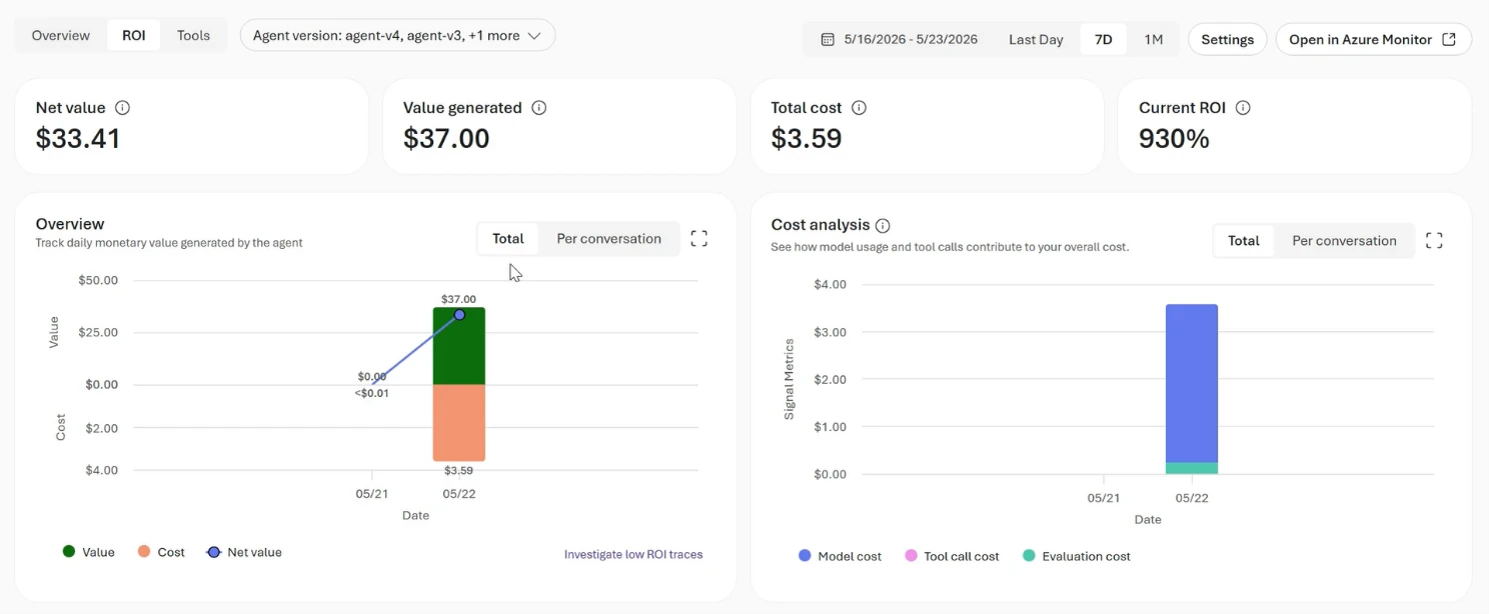
Microsoft’s introduction of ROI-focused metrics within Foundry represents a pivot toward outcome-based governance. By defining key performance indicators (KPIs)—such as successful task completion rates or case deflection metrics—organizations can assign a dollar value to the output of an agent. The platform then correlates these outcomes against the cost of the compute, token usage, and tool latency required to generate them.
This capability transforms the conversation from one focused solely on expenditure to one focused on capital efficiency. If a new version of an agent consumes 20% more tokens but yields a 50% increase in successful customer resolutions, the ROI analysis provides the data-backed justification for that increased spend. Conversely, it allows teams to quickly identify and retire "zombie agents" that consume high volumes of tokens while delivering negligible business utility.
Chronology of the Optimization Framework
The strategy outlined in this series reflects a multi-year effort to professionalize AI operations:
- Phase 1: Foundation (The Three Decisions): Establishing the architectural baseline for AI systems, focusing on model selection, deployment, and infrastructure requirements.
- Phase 2: Runtime Optimization: Implementing real-time interventions, such as model routing and prompt caching, to minimize the cost of individual user requests.
- Phase 3: Workflow Engineering: Extending efficiency across time by utilizing memory management, tool usage optimization, and iterative performance tuning.
- Phase 4: Governance (The Current State): Finalizing the cycle with the implementation of strict financial controls, attribution, and ROI metrics.
Implications for the Enterprise
The shift toward managed AI investment has profound implications for IT departments. It effectively moves AI management from a "shadow IT" concern into the formal FinOps domain. By treating AI as a managed asset, organizations can avoid the "tragedy of the commons," where shared resources are depleted by unoptimized agents.
Furthermore, the integration of these governance tools suggests that the future of AI development will be as much about economics as it is about engineering. Developers are increasingly expected to account for the "cost per outcome" of their models, necessitating a closer collaboration between engineering, product, and finance teams.
Looking Ahead: The Future of Autonomous Economics
While current tools provide significant advancements in controlling spend, the industry is already moving toward more sophisticated automation. The roadmap for Microsoft Foundry includes enhanced, dollar-denominated budget controls that will allow for even tighter alignment between financial planning and technical execution.
The goal of this comprehensive governance structure is not to stifle innovation or force costs to zero, but to provide the predictability required for large-scale enterprise adoption. As agents grow in autonomy and complexity, the ability to contain their growth and prove their worth will be the defining trait of successful AI-first organizations.
By implementing these strategies—making consumption visible, setting rigid request-path limits, and rigorously measuring business outcomes—enterprises can ensure that their AI systems are not just high-performing, but economically disciplined. The era of the "unbound experiment" is closing; the era of the managed AI investment system has begun.
For organizations ready to advance their governance posture, the recommended path is iterative: start by establishing visibility across all active agents, move to enforce hard quotas on high-usage systems, and finally, integrate ROI dashboards to ensure that every token spent is driving measurable value toward the organization’s bottom line.