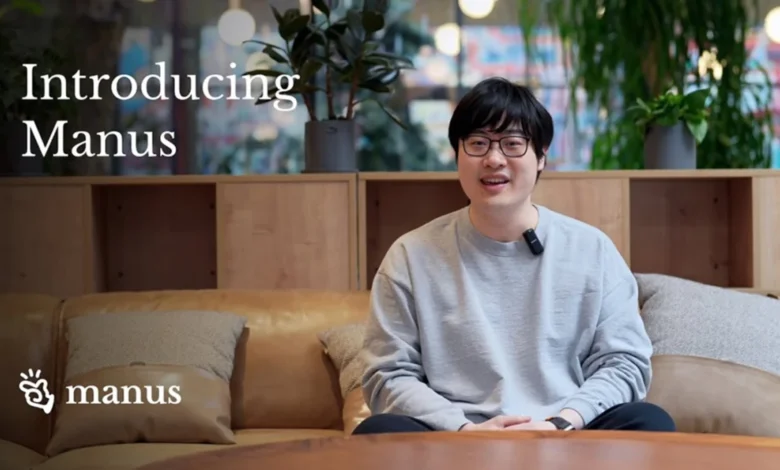
The landscape of artificial intelligence platforms is witnessing a profound structural shift as modular agentic frameworks emerge to tackle complex, multi-step operations. In a move that underscores its renewed independence, AI platform provider Manus has officially launched Manus 2.0, a complete architectural overhaul of its enterprise and consumer ecosystem. Available across web, desktop, and mobile devices, the release arrives just months after the collapse of a high-profile acquisition by tech giant Meta. Rather than a routine numerical patch, the company describes the deployment as an entirely rebuilt foundational environment incorporating a novel agent harness, isolated cloud execution spaces, event-driven orchestration tools, and specialized workspace modules designed for developers, creators, and corporate environments alike.
The release of Manus 2.0 highlights a broader evolution in the artificial intelligence sector, where the primary battleground has shifted from foundational large language models to the sophisticated orchestration layers that govern how models interact with external tools, applications, and data stores. As organizations increasingly move beyond simple chatbot interfaces toward autonomous digital workers capable of completing workflows independently, the demand for robust execution environments, secure identity management, and cost-efficient token routing has intensified.
A Chronology of Independence: The Meta-Manus Divergence
The commercial positioning of Manus 2.0 is inseparable from the turbulent corporate history that preceded it. In December 2025, Meta announced ambitious plans to acquire Manus, a move that would have brought the high-profile AI startup directly into the social media conglomerate’s growing ecosystem of generative intelligence tools. The prospective merger was viewed by industry analysts as a strategic effort by Meta to capture advanced agentic workflows for both consumer applications and enterprise offerings.
However, the transaction encountered regulatory headwinds. In April, China’s National Development and Reform Commission intervened to block the acquisition, citing regulatory and national technology transfer concerns. Following months of negotiations and structural adjustments, the merger was officially called off. By August, Manus announced it was resuming operations as a fully independent entity.
The dissolution of the deal left the two companies competing directly in the rapidly expanding market for agentic platforms. Meta subsequently forged ahead with its own consumer-facing personal AI assistant, Muse, and more recently launched the Meta Enterprise Platform to deliver agentic AI services to commercial clients. The debut of Manus 2.0 serves as a definitive signal that the startup intends to aggressively carve out its own market share in the enterprise software space, directly challenging both independent AI giants and entrenched ecosystem players.
Architectural Foundation and the Cascade Agent Harness
At the core of Manus 2.0 is a complete reimagining of how agents are invoked, coordinated, and scaled within a project. Of primary interest to enterprise technology leaders is the introduction of Cascade, a proprietary agent harness designed to manage resource allocation and task distribution dynamically.
Traditional agent architectures often rely on monolithic prompt structures or inefficiently broad context windows that continuously load extensive toolsets, leading to high computational overhead and escalating token costs. Cascade addresses this challenge by maintaining a lightweight core structure, selectively bringing in specialized capabilities and deep toolsets only when specific project phases demand them.
According to internal benchmarking data released by the company, this modular orchestration yields significant efficiency gains. In a tested configuration, the Cascade harness achieved a 23.2% reduction in token consumption, completed assigned tasks in 28.2% less time, and lowered operational costs by 32% compared to the platform’s previous-generation system. While Manus did not publicly disclose the precise configuration parameters or benchmark task suites used to generate these figures, industry observers note that optimization of the execution runtime is critical for making autonomous agents economically viable at enterprise scale.
Industry analysts emphasize that such orchestration layers are rapidly becoming the primary differentiator for enterprise artificial intelligence deployments. Anushree Verma, Senior Director Analyst at Gartner, notes that the orchestration layer is increasingly central to enterprise value realization. However, Verma cautions that orchestration remains complementary to, rather than a substitute for, the underlying foundational model. The most resilient and effective systems will successfully combine a highly capable model with an efficient runtime environment that invokes intelligence selectively rather than indiscriminately.
Persistent Execution and Cloud Computer Environments
To support long-running processes and continuous business logic, Manus 2.0 introduces a persistent execution environment branded as Cloud Computer. Designed specifically for workflows that require uninterrupted operation beyond a user’s active session, Cloud Computer provides a dedicated computational home for automated services.
Enterprise automation frequently breaks down when tasks require persistent state retention, continuous monitoring, or the maintenance of background services. By offering a dedicated cloud-based environment, Manus enables organizations to establish permanent infrastructure for their automated agents. This persistent runtime allows agents to manage ongoing data pipelines, monitor external server metrics, or execute multi-hour data processing tasks without relying on a local machine remaining powered on and connected to the internet.
Event-Driven Workflows and Intelligent Automation
Expanding far beyond traditional cron-style scheduled tasks, Manus 2.0 introduces advanced event-triggered workflow automations. In previous iterations, agentic triggers were largely bound to manual user prompts or rigid time-based parameters. The updated platform allows agent execution to initiate dynamically in response to real-time events across connected enterprise services.
Under the new framework, triggers can be configured to respond to incoming electronic mail, Slack or Microsoft Teams messages, fluctuations in digital advertising performance metrics, or calendar updates. When an integrated service registers a defined event, the system instantiates the appropriate agent workflow, allowing for near-instantaneous reactions to business developments without human intervention.
Cue: Standalone Personal Agents with Distinct Identities
For individual users and decentralized team workflows, Manus introduced Cue, a standalone application positioned as an alternative to competitive personal agent offerings such as Meta’s Muse. Available across mobile and desktop platforms, Cue operates on the same underlying infrastructure as Manus 2.0 but is tailored specifically for personal assistant use cases.
What distinguishes Cue from traditional virtual assistants is its resource architecture. Each agent within Cue operates with its own distinct identity, complete with a dedicated email address, assigned phone number, digital wallet, and isolated computing resources. This configuration allows agents to independently communicate with external parties, execute financial transactions within pre-defined security limits, and manage complex personal or professional portfolios.
Furthermore, Cue supports multi-agent collaboration. Users can populate a single group chat with multiple agents, each possessing different specialized directives and shared goals. The agents autonomously coordinate their efforts, handing off sub-tasks to one another until the overarching objective is achieved.
Manus Studio and Local Remote Control
The desktop experience has likewise received a major upgrade, transitioning into Manus Studio—a unified workspace designed to bridge the gap between human users and artificial intelligence systems. The workspace integrates document processing, spreadsheet management, PDF analysis, slide generation, website development, software coding, and media production into a single interface. Notably, Manus Studio features specialized modules for video editing and game development, expanding the platform’s utility into creative and technical industries.
Complementing Manus Studio is a new remote control feature tied to the platform’s advanced computer-use capabilities. In an authorized and secure session, the system operates within a visible workspace on the user’s local machine, interacting directly with approved files, web browsers, and desktop applications. The software can autonomously retrieve documents, test software applications, or continue lengthy workflows while the user is away from the device, with all operational steps remaining visually transparent to the human operator.
Enterprise Governance and Security Considerations
While the expansion of autonomous capabilities offers compelling productivity gains, cybersecurity and governance experts warn that autonomy is currently outpacing internal controls. Gartner’s Anushree Verma stresses that enterprises must approach such highly autonomous frameworks with rigorous risk management protocols, treating them as semi-trusted or untrusted automation assets. Organizations are advised to enforce strict operational boundaries through isolated runtime environments, mandatory human-in-the-loop approval gates for consequential actions, detailed telemetry logging, and narrowly defined authority scopes.
These sentiments are echoed by Sakshi Grover, research director for Cybersecurity Services at IDC, who highlights data portability and state management as critical evaluation metrics for corporate adopters. According to Grover, enterprises evaluating agent platforms from Manus, Meta, OpenAI, Anthropic, or other providers must look beyond surface-level features and carefully audit data handling practices.
Grover recommends that organizations thoroughly document where prompts, intermediate task states, generated artifacts, system logs, backups, and connector credentials are processed and stored—including by third-party subprocessors. Furthermore, enterprises should test whether complex workflows can be successfully reconstructed and executed outside of the vendor’s proprietary platform, noting that a simple data export button does not guarantee true operating state portability. For high-impact deployments, Grover advises the implementation of short-lived, narrowly scoped credentials, independent external audit logging, and rapid revocation mechanisms to maintain corporate security posture in the era of autonomous AI.
Related posts: