Google Expands Gemini Spark AI Agent to AI Pro Subscribers in US, Signaling Broader Global Rollout and Enhanced Automation Capabilities

Google’s ambitious personal AI agent, Gemini Spark, has begun its rollout to AI Pro subscribers in the United States, marking a significant expansion of its capabilities beyond its initial launch in May with AI Ultra. This strategic move positions Spark to become a central tool for automating complex tasks across Google’s extensive ecosystem, with a promise of availability for AI Pro members in other countries soon. The expansion underscores Google’s commitment to embedding advanced artificial intelligence deeply into daily productivity workflows, aiming to redefine how users interact with their digital environments.
The Evolution and Core Functionality of Gemini Spark
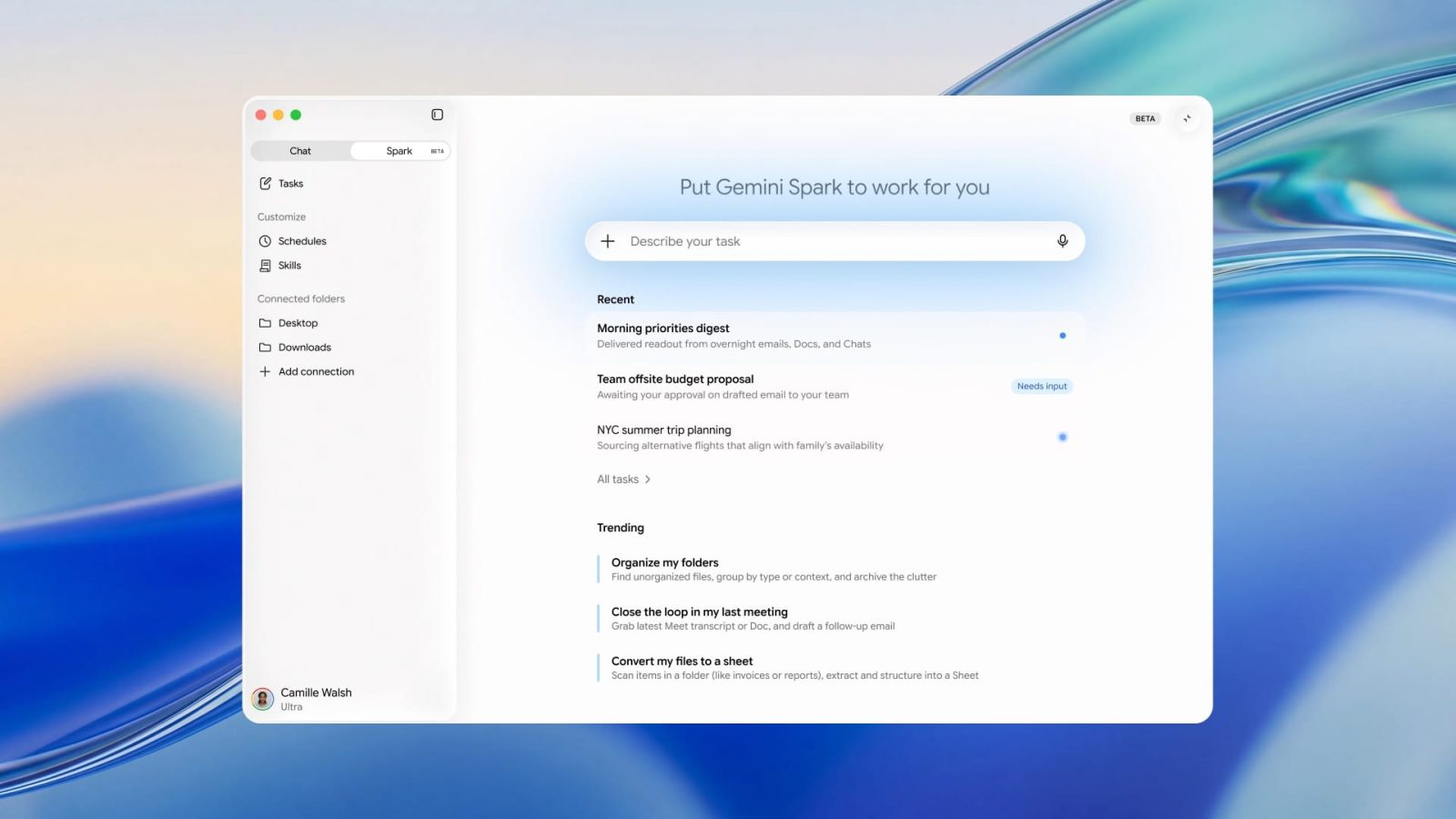
Gemini Spark is designed as Google’s sophisticated personal AI agent, engineered to streamline and automate multi-step tasks that traditionally require manual intervention across various applications. Initially introduced in May, its phased rollout is a testament to the complexity and strategic importance of such an advanced AI system. For users, Spark presents itself as a new, dedicated interface: a distinct tab within the navigation drawer on the web, and a dedicated page on Android and iOS mobile platforms, ensuring accessibility across Google’s primary user touchpoints.
At its core, Spark leverages a suite of integrated technologies, referred to as "Connected Apps," to achieve its automation goals. This integration is crucial, allowing Spark to draw information and execute actions across powerful Google services such as Google Workspace, Google Search, and other proprietary tools. Beyond these applications, Spark boasts "Personal Intelligence," a feature designed to learn from individual user habits and preferences, enhancing its predictive and proactive capabilities. Its remote web browser and computer with code execution further extend its reach, enabling it to interact with the broader internet and perform computational tasks. The inclusion of interactive chats, a visual Canvas for project organization, and location awareness allows for a highly contextual and dynamic operational environment.

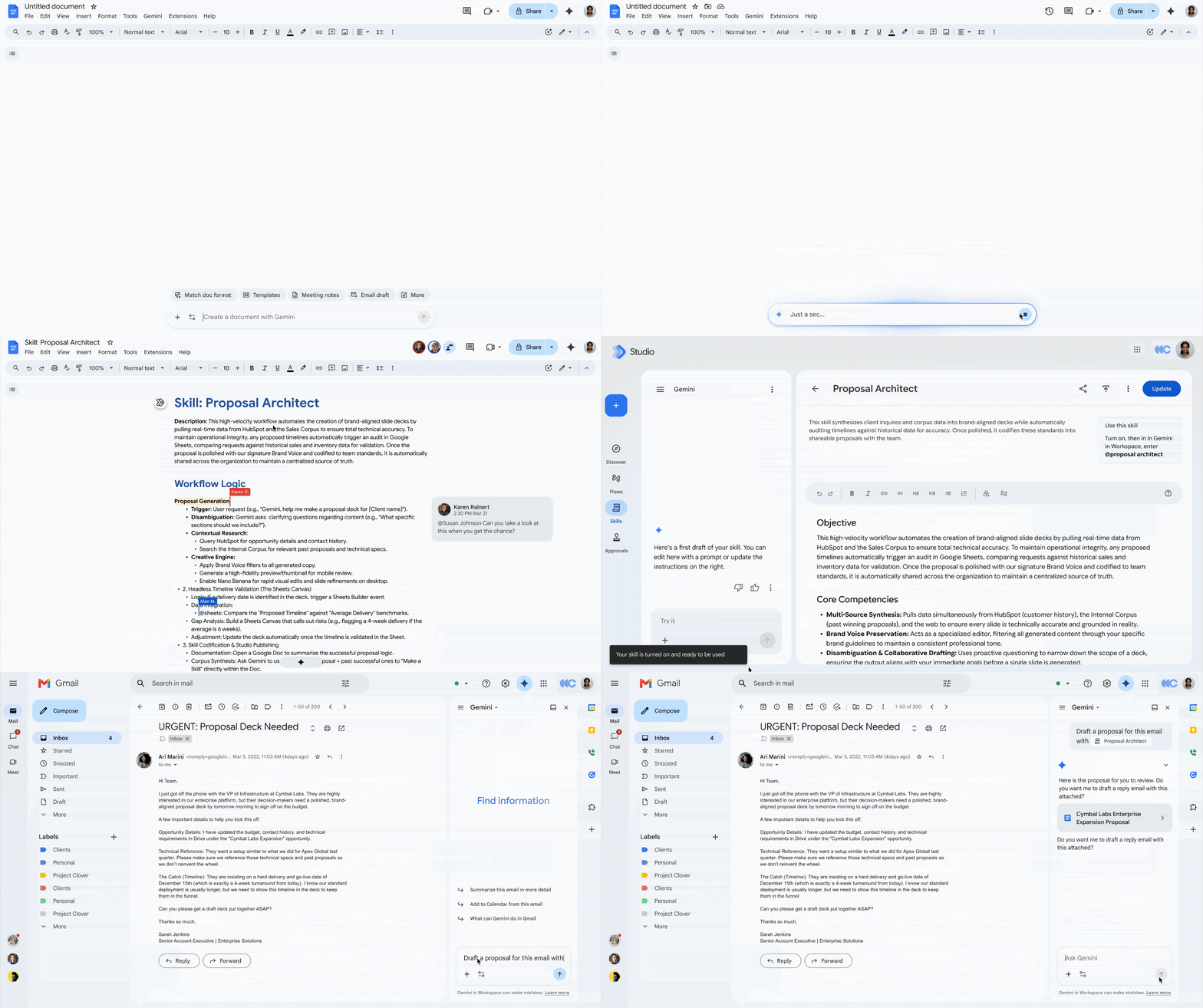
Google has also introduced two pivotal concepts that underpin Spark’s operational framework: "Skills" and "Schedules." Skills represent reusable instructions imbued with additional context, allowing the AI to apply learned patterns to various scenarios efficiently. For instance, a "Skill" could be defined for processing meeting notes or summarizing research papers. "Schedules," on the other hand, are automated triggers based on specific conditions or times, enabling Spark to initiate tasks proactively. An example might be a schedule that triggers a daily summary of unread emails at a specific time or when a new high-priority email arrives. A "Task" is defined as the high-level goal a user wishes to accomplish, with Spark orchestrating the necessary Skills and Schedules to achieve it. Users are permitted to have up to 15 tasks running concurrently, with Spark operating under the same compute-based usage limits that govern other Gemini services, ensuring fair and balanced resource allocation.
Chronology and Strategic Development
The journey of Gemini Spark began in earnest in May with its initial launch, offering its most advanced "AI Ultra" capabilities. This initial phase likely served as a controlled environment for Google to gather crucial feedback and refine the agent’s performance before a broader release. The subsequent rollout to "AI Pro" subscribers in the US marks a significant milestone, indicating Google’s confidence in Spark’s readiness for a wider audience. The explicit mention of "soon" for international availability signals a methodical, region-by-region expansion strategy, likely factoring in linguistic nuances, data sovereignty laws, and localized service integrations.
A notable enhancement since its debut is the expansion of Spark’s functionality, particularly concerning its integration with Google Workspace. This area has received substantial updates, reflecting the agent’s focus on enterprise and professional productivity. Furthermore, Google has introduced a dedicated macOS application for Gemini, which allows users to initiate Spark tasks, such as browsing files, directly from their phone. This cross-device functionality highlights Google’s vision for a seamlessly integrated AI experience that transcends individual platforms, offering unparalleled flexibility and convenience.
Deep Dive into Workspace Integration
The profound integration of Gemini Spark with Google Workspace applications is arguably its most compelling feature, promising a transformative impact on daily productivity for individuals and teams alike. Each Workspace application benefits from Spark’s intelligent automation, though with varying levels of user oversight designed to balance efficiency with data privacy and security.
- Calendar: Gemini Spark can automate complex scheduling tasks. This includes finding optimal meeting times based on participants’ availability, sending out invitations, adjusting existing appointments due to conflicts, and even drafting follow-up emails post-meeting. For busy professionals, this eliminates the time-consuming back-and-forth of coordinating schedules.
- Gmail: Spark’s capabilities extend to email management, allowing it to draft replies, summarize lengthy email threads, filter and prioritize incoming messages, and even manage email campaigns. It can learn a user’s communication style to generate more personalized and effective responses, saving significant time in managing correspondence.
- Docs, Sheets, Slides, & Drive: This suite of applications sees Spark contributing to content creation, data analysis, and presentation development. For Docs, Spark can generate initial drafts, summarize documents, or rephrase content. In Sheets, it can perform data analysis, identify trends, and create visualizations. For Slides, it can help assemble presentations, suggest layouts, and even generate content for slides. Crucially, when it comes to editing shared documents, spreadsheets, and presentations, Gemini Spark requires explicit user review and confirmation of its planned edits. This safeguard is paramount for collaborative environments, ensuring that AI-driven changes are aligned with team objectives and maintain data integrity.
- Google Keep: Spark can assist with note-taking and list management within Google Keep. It can automatically categorize notes, extract key information, or create actionable to-do lists based on user input or detected tasks from other applications.
- Google Tasks: For task management, Gemini Spark can perform bulk actions on private tasks without requiring individual confirmation. This feature, while powerful for efficiency, comes with an important caveat: users are strongly advised to review their requests carefully before submission or manage tasks directly within Google Tasks. This warning underscores the significant access Spark has to personal task data and the potential for unintended consequences if not used judiciously.
Broader Context: Google’s AI-First Strategy and Competitive Landscape
The expansion of Gemini Spark is a critical component of Google’s overarching "AI-first" strategy, articulated by CEO Sundar Pichai years ago. In an increasingly competitive artificial intelligence landscape, Google is leveraging its decades of research in AI and its vast ecosystem of services to maintain a leadership position. The market for personal AI agents and advanced AI assistants is burgeoning, with major players like OpenAI (with ChatGPT and its emerging agentic capabilities) and Microsoft (with Copilot deeply integrated into Windows and Microsoft 365) vying for dominance.
Google’s Gemini platform, which evolved from the earlier Bard, represents its flagship multimodal AI model. The introduction of different tiers like AI Ultra and AI Pro allows Google to cater to various user needs and computational demands, with Spark showcasing the practical application of these advanced models. By integrating Spark so deeply into Workspace and other services, Google aims to create a sticky ecosystem where users find immense value in staying within the Google environment for their productivity needs. This strategy not only enhances user experience but also reinforces Google’s competitive edge against rivals that may not possess such a comprehensive suite of interconnected services. The ability to initiate tasks from a macOS app, for example, demonstrates Google’s commitment to cross-platform functionality, recognizing that users operate across diverse device ecosystems.
Implications and Future Outlook

The widespread adoption of Gemini Spark holds significant implications across several domains:
- Productivity Revolution: For individual users and businesses, Spark promises a substantial boost in productivity by automating repetitive and complex tasks. This frees up human capital for more strategic, creative, and interpersonal work, potentially redefining job roles and daily workflows.
- Data Privacy and Security Challenges: An AI agent with deep access to personal emails, documents, calendars, and tasks raises critical questions about data privacy and security. While Google has implemented safeguards like confirmation for shared document edits, the ability for bulk actions on private tasks without explicit confirmation highlights the need for robust trust mechanisms and transparent data handling policies. Users must be fully aware of what data Spark accesses and how it uses it.
- Ethical AI and Accountability: As AI agents take on more autonomous roles, questions of ethical AI use, bias in decision-making, and accountability for AI-driven actions become paramount. Google will need to continually refine Spark’s algorithms to ensure fairness, transparency, and user control.
- Ecosystem Lock-in and Market Dominance: The success of Gemini Spark could further entrench users within Google’s ecosystem, making it harder to switch to competing services. This could strengthen Google’s market position but also raise concerns about monopolistic practices if competition is stifled.
- Accessibility of Automation: Spark democratizes access to sophisticated automation tools, which were once the domain of expert programmers or large enterprises. This could empower a broader range of users to leverage AI for personal and professional gain.
Looking ahead, the development trajectory of Gemini Spark is likely to involve continuous refinement of its "Skills" and "Schedules," expanding its integration with an even wider array of third-party applications and services. Further advancements in its "Personal Intelligence" could lead to more predictive and intuitive automation, anticipating user needs before they are explicitly stated. The challenge for Google will be to balance the immense power of such an AI agent with user control, transparency, and robust security measures, fostering trust in a technology that will increasingly become an indispensable part of our digital lives. As Gemini Spark expands globally, Google will also need to navigate diverse regulatory landscapes and cultural expectations, ensuring its AI agent is not only powerful but also responsible and universally beneficial.