Google Pixel 11 vs. Google Pixel 11 Pro Face-Off: Is the €200 Price Premium Actually Worth It?

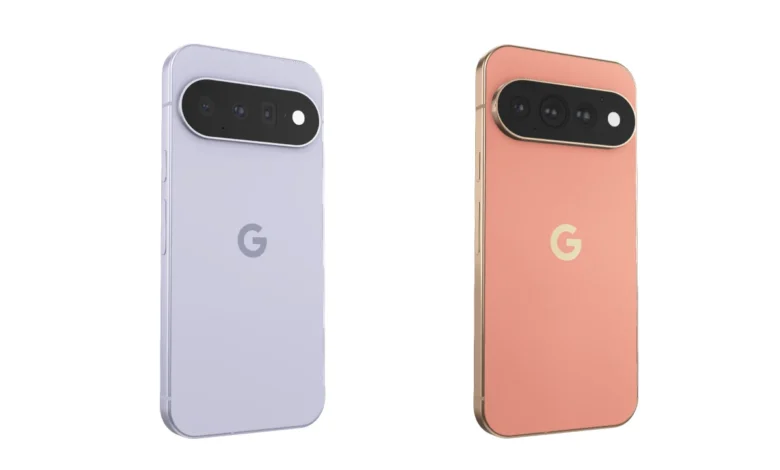
The smartphone market has officially entered its latest product cycle with the global rollout of Google’s flagship lineup, leaving consumers to weigh the nuances between standard and premium tier offerings. Retailing at approximately €900, the standard Google Pixel 11 presents a compelling case for buyers seeking a compact yet powerful device. Meanwhile, its sibling, the Google Pixel 11 Pro, commands a heftier price tag of around €1,100. This €200 price premium invites intense scrutiny over whether the hardware upgrades and advanced capabilities genuinely justify the extra investment. Both devices share a foundational lineage, running on identical silicon and offering similar daily utility, yet subtle divergences in display engineering, camera configurations, and physical finishes set them apart. Evaluating these distinctions requires a comprehensive look at how both flagships perform across critical benchmarks, battery endurance, and real-world imaging scenarios.
Chronology and Market Background

Google’s strategy of releasing paired flagship devices has evolved significantly over successive generations, shifting from experimental hardware iterations to a refined, predictable annual release schedule. The introduction of the Pixel 11 series follows the technological groundwork laid by previous generations, capitalizing on mature 3nm manufacturing processes and deeply integrated artificial intelligence frameworks. Historically, the vanilla Pixel model targeted budget-conscious enthusiasts willing to compromise on telephoto capabilities or display peak brightness. However, recent market trends show consumers demanding Pro-tier longevity and build quality in smaller form factors. By positioning the Pixel 11 and Pixel 11 Pro at identical physical dimensions with a 6.3-inch footprint, Google has directly addressed the demand for compact flagships. Industry analysts note that this strategy aims to capture market share from competitors who relegate high-end features exclusively to oversized "Max" or "Ultra" variants. The official rollout commenced in September, immediately drawing comparisons from reviewers and early adopters alike regarding the tangible value delivered by the Pro moniker.

Design, Build Quality, and Ergonomics

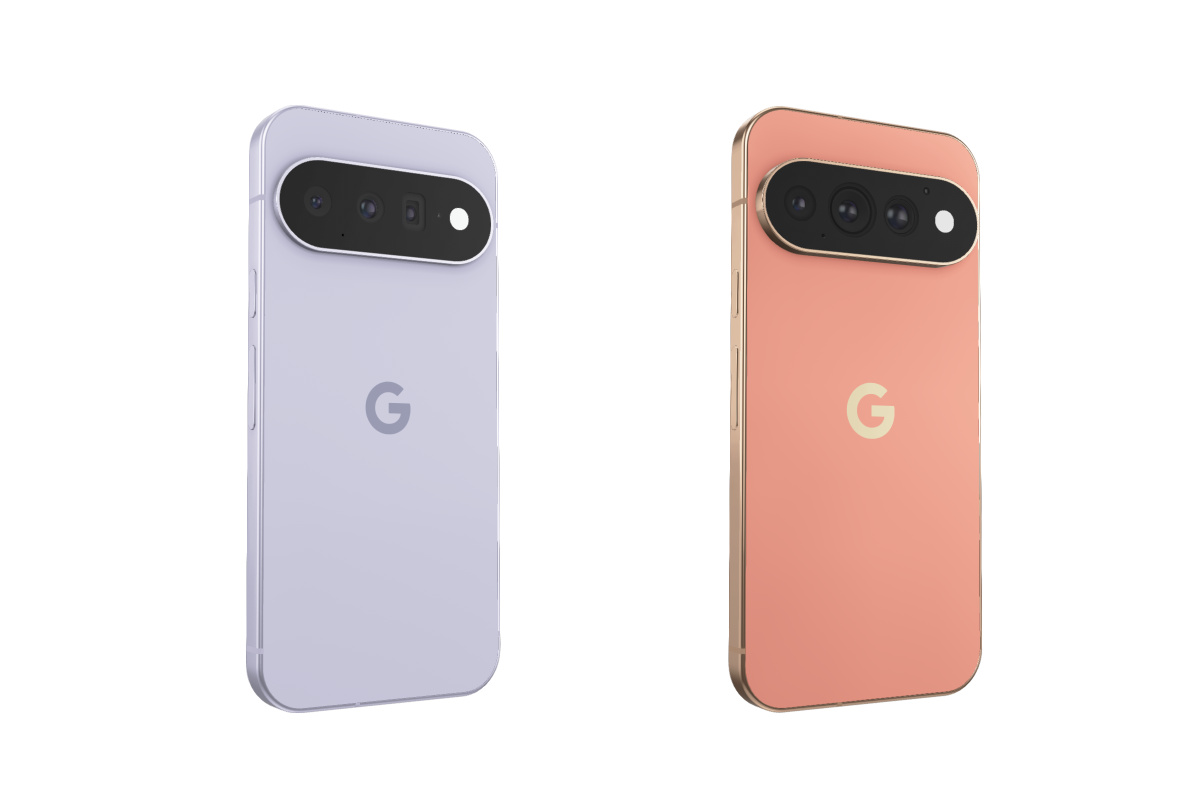
At first glance, telling the Pixel 11 and Pixel 11 Pro apart requires a close examination of tactile finishes and colorways. Both smartphones adhere to contemporary industrial design standards, featuring robust aluminum frames, Corning Gorilla Glass Victus 2 protection on both front and rear panels, and comprehensive IP68 certifications for dust and water resistance. Despite these structural similarities, distinct aesthetic philosophies govern their construction. The vanilla Pixel 11 adopts a matte frame paired with a glossy glass back, utilizing a plainer anodized aluminum finish that naturally enhances grip. Conversely, the Pixel 11 Pro inverts this tactile equation, featuring a glossy frame paired with a frosted, matte-textured rear panel. While the Pro model leans toward a traditional luxury aesthetic favored by executive users, the standard Pixel 11’s slightly lighter chassis and enhanced friction make it notably more secure for one-handed operation. Ergonomically, both devices sit comfortably in the palm, but users prioritizing secure handling without a case may find the base model’s finish preferable.

Display Technology and Visual Performance

The visual interface represents one of the primary points of divergence between the two devices. The standard Google Pixel 11 is equipped with a 6.3-inch LTPS OLED panel operating at a resolution of 1080 x 2424 pixels. It supports HDR10+ content and relies on a fixed refresh rate architecture, oscillating between 60Hz during static viewing and 120Hz during active touch interaction. Official specifications cite a brightness capability of 2,000 nits in automatic mode and a peak threshold of 3,000 nits.

In contrast, the Pixel 11 Pro incorporates a more advanced 6.3-inch LTPO OLED screen boasting a higher resolution of 1280 x 2856 pixels. The LTPO backplane enables a dynamic refresh rate scaling seamlessly from 1Hz to 120Hz, matching the exact frame rate of on-screen content to optimize power consumption. Brightness metrics for the Pro variant are marginally higher on paper, rated at 2,400 nits for automatic adjustment and 3,600 nits at peak output. Independent laboratory testing confirms these figures are largely reflective of real-world capability, with the standard model yielding approximately 2,134 nits auto and 2,842 nits peak, compared to the Pro’s 2,333 nits auto and 3,118 nits peak. While the Pro’s higher pixel density and fluid variable refresh rate technically grant it the victory in this category, the real-world visual disparity during daily tasks remains negligible to the naked eye.

Internal Hardware, Processing Power, and Thermal Efficiency

Beneath the chassis, both smartphones are powered by Google’s proprietary Tensor G6 processor. Built upon the same 3nm manufacturing architecture as its predecessor, the Tensor G6 focuses heavily on power efficiency and on-device machine learning operations, boasting a claimed 50% increase in AI computational power. However, the architectural configuration of the CPU has undergone a curious adjustment, dropping down to a 7-core setup rather than maintaining a larger core count. This cluster consists of one high-performance ARM C1-Ultra core clocked at 4.1 GHz, four ARM C1-Pro cores running at 3.4 GHz, and two additional ARM C1-Pro cores operating at 2.65 GHz.

Graphics processing is handled by Imagination’s IMG CXTP-48-1536 GPU. While previous iterations utilized more modern Series D graphics architecture, the Tensor G6 reverts to the older Series C architecture. This engineering decision has drawn criticism from mobile gaming enthusiasts, as the older architecture lacks native ray tracing support and historically suffers from less optimized software development libraries across Android titles. Memory configurations further separate the two tiers: the vanilla Pixel 11 is offered in 256GB and 512GB storage variants, uniformly paired with 12GB of RAM. The Pixel 11 Pro expands options to include a 1TB tier, pairing the 256GB model with 12GB of RAM while escalating higher storage tiers to 16GB of RAM. Despite these internal variations, benchmark evaluations reveal identical processing and sustained performance scores, with both devices retaining roughly 60% of their theoretical CPU power and 70% of their GPU capacity under prolonged stress testing.

Battery Longevity, Charging Capabilities, and Audio

Power management is dictated by a 4,985 mAh battery inside the standard Pixel 11, while the Pixel 11 Pro houses a marginally smaller 4,850 mAh cell to accommodate its complex display driver hardware. Given that both phones utilize identical processing silicon, screen technology serves as the primary variable for longevity. Empirical testing demonstrates that this discrepancy balances out entirely, resulting in an identical Active Use Score of 15 hours and 40 minutes across standardized endurance trials, culminating in a definitive tie.

Charging infrastructure sees modest updates, highlighted by a welcomed upgrade to 25.0W wireless charging support, while wired charging remains capped at a maximum of 30.0W. Google introduced a new "Extreme" wired charging mode designed to accelerate power delivery during low battery states, though practical testing indicates the performance delta is marginal. Recharging metrics are identical across both models, achieving a 30% charge in 15 minutes, 60% in 30 minutes, and a full 100% replenishment in approximately 80 minutes. Audio output via the hybrid stereo speaker systems—where the earpiece functions as a secondary channel—delivers clean, well-balanced sound profiles with identical acoustic performance scores on both units.

Camera Hardware and Imaging Analysis

Imaging capabilities traditionally serve as the primary justification for purchasing a Google Pixel device, and the generation-11 lineup maintains this tradition while establishing a clear hierarchy between models. The standard Pixel 11 features a modest hardware update to its primary wide sensor, complemented by an ultrawide lens and a 5x telephoto camera. The Pixel 11 Pro, however, implements superior sensor hardware across all four optical modules.

The primary wide camera on the Pro utilizes a larger 1/1.3-inch sensor compared to the standard model’s 1/1.56-inch imager. Similarly, the Pro’s 5x telephoto module features a larger 50-megapixel sensor with a 1/1.95-inch footprint, eclipsing the vanilla model’s 10.9-megapixel 1/3.2-inch unit. Ultrawide photography also favors the Pro, which equips a high-resolution 50-megapixel sensor with autofocus capabilities down to macro distances, whereas the standard Pixel 11 utilizes a basic 13-megapixel fixed-focus ultrawide sensor. Front-facing selfie duties are managed by a 42-megapixel sensor on the Pro compared to a smaller unit on the base model, though both feature autofocus systems.

In daylight conditions, both smartphones produce quintessential Google imagery characterized by dynamic range and color science, though the standard model occasionally exhibits a slightly warmer white balance. The Pro model asserts a consistent, albeit minor, sharpness advantage across the primary and telephoto focal lengths. At 2x digital zoom, both devices yield comparable, average results. However, once magnification reaches 5x and 10x optical and hybrid thresholds, the Pro’s superior telephoto hardware delivers significantly sharper rendering and finer detail preservation.

Low-light performance mirrors these findings. The Pixel 11 Pro’s larger main sensor captures superior shadow detail in dark environments, although the standard Pixel 11 occasionally demonstrates more reliable neutral white balance under complex urban street lighting. Interestingly, the standard model’s ultrawide camera handles noise reduction more effectively in extreme low light than its Pro counterpart, yielding sharper results in select nighttime scenarios. Video recording capabilities are robust across the board, supporting 4K at 60 frames per second on main and telephoto lenses, while the Pro exclusive adds 4K60 support to the ultrawide camera and a cloud-processed 8K mode across all rear modules. Ultimately, the Pixel 11 Pro secures a victory in the multimedia department purely on the strength of its versatile telephoto optics and consistent fine-detail retrieval.

Implications and Strategic Verdict

The market introduction of the Google Pixel 11 and Pixel 11 Pro highlights a mature approach to tier differentiation within the flagship segment. For an additional €200, the Pixel 11 Pro delivers tangible upgrades: an advanced LTPO display with variable refresh rate scaling, superior camera hardware across all focal lengths, up to 16GB of RAM, and expanded storage configurations reaching 1TB. These enhancements cater directly to power users, mobile photographers, and consumers seeking absolute hardware future-proofing.

Conversely, the standard Google Pixel 11 redefines the baseline for flagship value. By retaining the core Tensor G6 processing architecture, identical robust build quality, equal battery endurance, and the clean, feature-rich Android software experience, it offers the essential Google ecosystem advantages without financial overreach. For the average consumer who does not regularly utilize extreme telephoto zoom or advanced pro-grade video recording features, the standard Pixel 11 stands out as the more rational financial choice, proving that premium performance no longer requires committing to the most expensive model in the lineup.