From Marital Dispute to Global Tech Success: The Unlikely Origin Story of SnoreLab and the Future of Sleep Tracking

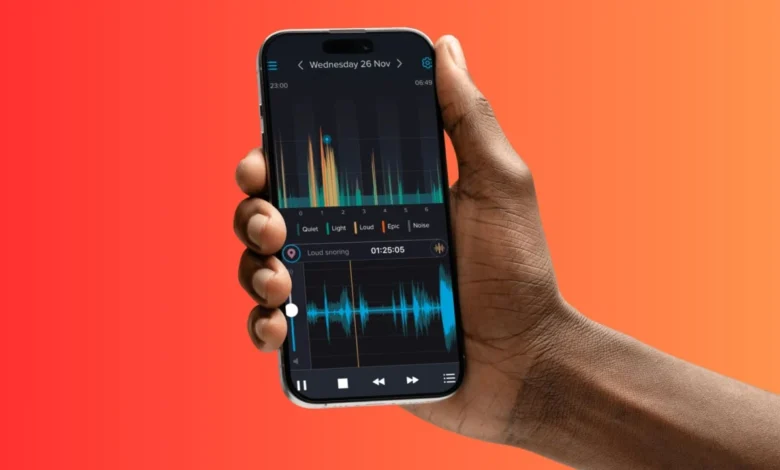
In 2011, a British entrepreneur named Jules Goldberg found himself at the center of a domestic debate that would eventually lead to the creation of one of the world’s most successful health-tech applications. What began as a personal quest to resolve a marital disagreement regarding nighttime snoring evolved into the development of SnoreLab, a platform that has since assisted millions of users in tracking, understanding, and managing their sleep quality. This trajectory, characterized by a self-taught approach to software engineering and a deep-seated passion for the physics of sound, was the focal point of a recent installment of Trending Forward, a YouTube series hosted by industry figures and the co-founders of Digital Trends.
The genesis of SnoreLab serves as a case study in "necessity-driven innovation." At the time, mobile applications were rapidly proliferating, yet the market lacked a reliable, user-friendly tool for quantifying sleep-disordered breathing. Goldberg, who lacked a background in programming, faced a professional and personal crossroads: he could either outsource the development of his vision—a move his personal finances could not support—or acquire the necessary technical skills himself. Choosing the latter, Goldberg spent ten months teaching himself Objective-C, the primary programming language for Apple’s iOS at the time, to build the first iteration of what would become a global wellness standard.
A Chronology of Innovation and Technical Development
Goldberg’s journey from a non-technical founder to a software innovator was not merely a matter of trial and error; it was a disciplined study of acoustics and digital signal processing. By 2012, when the first version of the app launched, it provided users with a capability previously reserved for clinical sleep studies: the ability to record, analyze, and visualize snoring patterns over time.
The development timeline highlights the rapid evolution of consumer health technology:
- 2011: The initial concept is formed following personal challenges with snoring.
- 2012: Development of the first SnoreLab version using self-taught Objective-C.
- 2015-2018: The app gains significant traction, moving from a niche utility to a primary tool for sleep data tracking, eventually leading to the exploration of broader sleep metrics.
- 2020-Present: The integration of advanced sonar-based technology, which allows for the monitoring of breathing and movement without wearable devices, represented in the newer platform, Sleepwave.
The Science of Sound and Data-Driven Wellness
The core utility of SnoreLab lies in its function as a "bathroom scale for snoring." Just as a scale provides quantitative data for weight management without inherently inducing weight loss, SnoreLab provides data that allows users to test the efficacy of various interventions. Goldberg emphasizes that snoring is often a multifaceted issue; it can be caused by anatomical obstructions, positional habits, or more serious underlying conditions such as obstructive sleep apnea (OSA).
The data collected by the application has provided interesting insights into common remedies. For instance, the use of wedge-shaped pillows—originally designed to mitigate symptoms of gastroesophageal reflux disease (GERD)—was identified by early users as an effective method for reducing snoring intensity. Through crowd-sourced data collection, Goldberg and his team were able to validate that elevating the upper body can reduce airway obstruction in specific demographics, providing a data-backed alternative for those looking to manage mild snoring.
However, the technology is strictly categorized as a wellness tool. In a professional context, it serves as a bridge to clinical care. It allows patients to arrive at medical appointments with documented longitudinal data, which can significantly expedite the diagnostic process for sleep specialists. This is particularly relevant given the prevalence of sleep apnea, which the American Academy of Sleep Medicine estimates affects approximately 25 million adults in the United States alone. By providing a record of breathing interruptions and sound intensity, the app helps patients move from subjective complaints to objective, data-supported discussions with healthcare professionals.
The Shift Toward Passive Monitoring: Sleepwave and Beyond
Beyond the primary success of SnoreLab, Goldberg’s work has pivoted toward more sophisticated applications of acoustic physics. His more recent project, Sleepwave, utilizes high-frequency sound waves—inaudible to the human ear—to measure micro-movements of the body and chest. This "active sonar" approach represents a departure from traditional wearable technology.
By leveraging the smartphone’s existing speaker and microphone, the system can track sleep cycles and breathing rhythms without the user needing to wear a smartwatch or a chest strap. This "wear nothing to bed" philosophy addresses a significant friction point in sleep tracking: the discomfort and battery management associated with wearable devices. The technological implications are vast; by turning a standard smartphone into a precise sensor, the barrier to entry for personal health monitoring is lowered, allowing for wider adoption of sleep hygiene practices among the general population.
Broader Impact and Industry Implications
The rise of applications like SnoreLab and Sleepwave illustrates a broader shift in the digital health sector toward "passive monitoring." Analysts have noted that as the population ages and the focus on preventative health intensifies, the ability to monitor vital signs—such as respiratory rate and movement—via non-invasive means will become increasingly critical.
Furthermore, Goldberg’s model of bootstrapping his business without external venture capital funding has allowed for a unique research-heavy approach. By reinvesting revenue directly into R&D, he has maintained the autonomy to pursue long-term projects, such as his ongoing patent research into utilizing sound waves for sinus relief. This approach stands in contrast to the typical venture-backed startup model, which often prioritizes rapid scaling and monetization over deep, iterative scientific exploration.
The conversation hosted by Digital Trends serves as a reminder that the most impactful consumer technologies often stem from the intersection of mundane personal challenges and a willingness to master complex, underlying sciences. For Goldberg, the journey from being told he was a heavy snorer to becoming a leading figure in sleep-tech was fueled by a return to the fundamentals of physics and mathematics.
Looking Toward the Future
As the integration of AI and machine learning continues to accelerate, the potential for these sound-based monitoring systems to provide predictive health insights grows. While Goldberg remains cautious about the distinction between wellness apps and diagnostic medical devices, the path forward is clear: the integration of more sophisticated sensors in everyday consumer hardware will continue to democratize health data.
For those struggling with sleep, the primary takeaway remains consistent: identifying the problem is the first, and often the most difficult, step. Whether through a wedge pillow, positional therapy, or clinical intervention like a CPAP machine, the availability of precise data has fundamentally changed how patients approach the one-third of their lives spent asleep. Goldberg’s ongoing work suggests that we are only beginning to tap into the capabilities of the hardware already sitting on our bedside tables, and that the future of sleep health may be as simple as the sound of our own breathing.
Related posts: