Raspberry Pi 16GB Model Faces Significant Price Hike as Memory Supply Crisis Continues

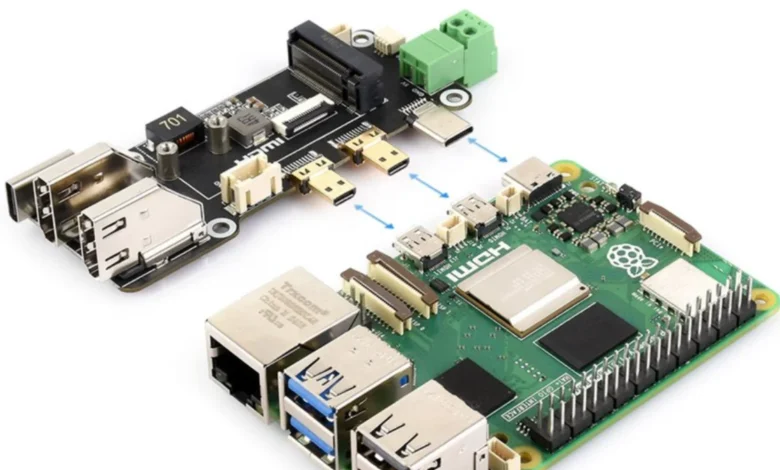
The Raspberry Pi Foundation, long celebrated for democratizing computing through its line of affordable, credit-card-sized single-board computers (SBCs), has confirmed a substantial price increase for its flagship 16GB Raspberry Pi 5. In an official update, CEO Eben Upton revealed that the board’s price has been raised by $80, bringing the total cost to $385. This latest adjustment represents a staggering departure from the board’s original launch price of $120 in January 2025, marking a more than 200% increase in just under two years. This shift reflects a deepening crisis in the global semiconductor memory market, specifically regarding the supply of high-density LPDDR4 DRAM.
A Chronology of Escalating Costs
The current price of $385 is the result of a cumulative series of adjustments rather than a single market correction. The trajectory of the 16GB Raspberry Pi 5’s pricing serves as a case study for the volatility currently plaguing the hardware industry.
- January 2025: The 16GB Raspberry Pi 5 launches at a competitive $120 price point, positioning it as a high-performance option for developers and hobbyists.
- December 2025: The first major shift occurs as the board’s price rises to $145, citing initial tightening in memory supply chains.
- February 2026: A sharp increase adds $60 to the cost, pushing the unit price to $205. At this point, the board was already 70% more expensive than its debut price.
- April 2026: In a bid to manage supply constraints, the foundation introduces a 3GB Raspberry Pi 4 to offer a lower-cost entry point. However, the 16GB Pi 5 sees an additional $100 price hike, bringing it to $305.
- November 2026: The most recent adjustment of $80 settles the price at $385.
During this same period, other product lines have not been immune. The Compute Module 5 (16GB) has seen a $40 increase, and even the entry-level 2GB Raspberry Pi 4 and 5 models were subjected to a $12.50 price increase in October 2026, as the foundation admitted that maintaining previous price levels was no longer financially sustainable given the rising costs of raw components.
The Root Cause: The Global DRAM Bottleneck
At the heart of these increases is a structural deficit in the availability of 16GB DRAM chips. Eben Upton has been transparent about the technical nature of the shortage, noting that it is not merely a matter of price, but of supply availability. The specific density of memory required for the high-end Raspberry Pi 5 variants has become increasingly difficult to secure as major DRAM manufacturers shift their production focus toward high-margin enterprise and server-grade hardware.

The electronics industry is currently navigating a period where demand for memory in AI-driven data centers and high-performance computing (HPC) environments is absorbing a disproportionate amount of available capacity. According to industry analysis from firms like TrendForce, DRAM suppliers are prioritizing server-class products through the final quarter of the year. This prioritization leaves the consumer electronics and SBC sectors at the end of the supply chain, forcing smaller manufacturers like Raspberry Pi to pay premium "spot market" prices to secure necessary components.
Furthermore, the foundation has struggled to diversify its supplier base. While efforts were made throughout 2026 to qualify additional memory vendors, the availability of 16GB modules remains severely constrained. The company’s inability to shift to alternative components—due to the strict firmware integration required for board stability and performance—means they are effectively locked into the current supply market.
Economic Implications and Market Dynamics
The current pricing structure creates a unique dilemma for the consumer. With the 8GB Raspberry Pi 5 priced at $175, the "memory tax" for the additional 8GB required to reach the 16GB threshold now sits at $210—more than the cost of an entirely separate, lower-tier board.
This disparity is further highlighted by the existence of the Raspberry Pi 500+, an all-in-one desktop solution featuring the same processor and 16GB of RAM as the flagship board, bundled with a 256GB NVMe SSD and a mechanical keyboard. At only $25 more than the bare 16GB board, the 500+ offers significantly higher value for desktop users. This creates a scenario where the standalone board has effectively become a niche, industrial-focused product rather than a consumer-facing tool.
Adding to the complexity is the fact that Raspberry Pi boards are hardware-locked. Users cannot purchase a lower-spec board and upgrade the RAM later, as the firmware is designed to operate specifically with the pre-soldered memory capacity provided at the factory. This limitation has led to a surge in demand for "starter kits" from third-party resellers, as consumers seek to maximize their investment by purchasing bundled accessories rather than the board alone at its inflated standalone price.

Future Outlook and Industry Projections
The term "temporary" has been used by the Raspberry Pi Foundation to describe the current crisis, yet industry forecasts suggest that the instability in the memory market could be a long-term fixture. Major manufacturers such as Micron and SK Hynix have provided guidance indicating that global memory shortages may persist through 2028, or in some projections, as far as 2030.
The consensus among market analysts is that the industry is currently in a high-demand cycle for memory, driven by the rapid expansion of artificial intelligence applications and the transition toward more memory-intensive computing architectures. For the Raspberry Pi Foundation, this implies that the current price levels may remain the "new normal" for the foreseeable future, despite their stated intent to roll back prices if and when component costs subside.
For the education sector and entry-level hobbyists, the foundation has attempted to shield the lower end of the product range from the worst of these fluctuations. The 1GB Raspberry Pi 4 and 5 models remain at $35 and $45 respectively, effectively maintaining the "budget" promise of the original brand. However, there is growing concern among industry observers that as the cost of the more powerful models continues to rise, the brand risks alienating its core base of educators and students who rely on the platform to teach fundamental computing and embedded systems engineering.
Conclusion: A Shift in Brand Identity
The trajectory of the 16GB Raspberry Pi 5 signals a maturation of the platform, albeit one forced by external economic pressures. What began as a $35 computer has, in its most powerful configuration, evolved into a nearly $400 piece of professional hardware.
As the Raspberry Pi Foundation looks toward 2027 and beyond, its strategy will likely focus on supply chain resilience and the continued optimization of firmware to maximize the utility of lower-density memory. For now, however, the 16GB model stands as a testament to the volatility of the global semiconductor industry, serving as a cautionary tale of how supply chain constraints can fundamentally alter the accessibility of technology. Prospective buyers are urged by the foundation to stick to authorized, approved resellers to avoid predatory pricing practices that have emerged in response to the limited supply, and to carefully evaluate their actual memory requirements before committing to the premium 16GB tier.
Related posts: