Blue Origin Expands New Glenn Rocket Capabilities with GS3 Upper Stage and Unveils Next-Gen Northstar Engine

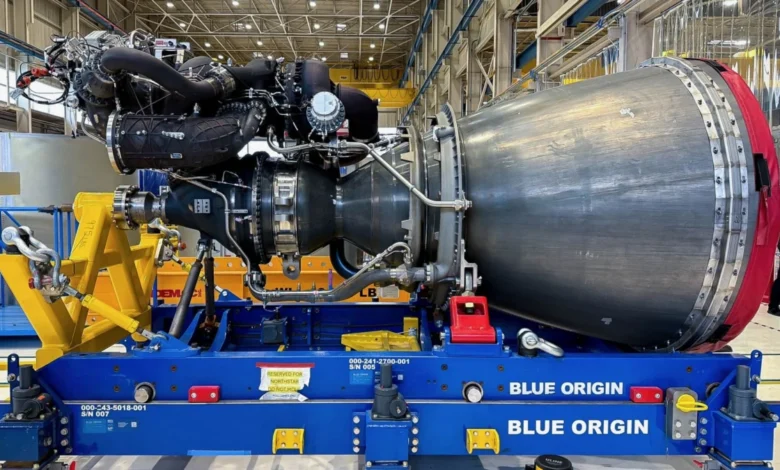
Blue Origin, the aerospace manufacturer and spaceflight services company founded by billionaire Jeff Bezos, has announced a significant evolution of its heavy-lift launch architecture. The company revealed the development of a dedicated third upper stage, designated the GS3, designed to dramatically extend the capabilities of its flagship New Glenn rocket. Alongside the third-stage reveal, Blue Origin introduced the Northstar, a next-generation first-stage booster engine intended to streamline manufacturing, reduce structural complexity, and deliver greater thrust than its predecessor, the BE-4.
These sweeping updates mark a critical juncture for Blue Origin as it positions itself to capture a larger share of commercial satellite deployment, national security payloads, and deep-space exploration contracts. The announcements come at a time of intense operational activity for the company, following a series of maiden flight tests, a high-profile payload deployment anomaly, and a major pad-side mishap that temporarily grounded the fleet while launch infrastructure underwent complete reconstruction.
The New Glenn Architecture and the New GS3 Third Stage
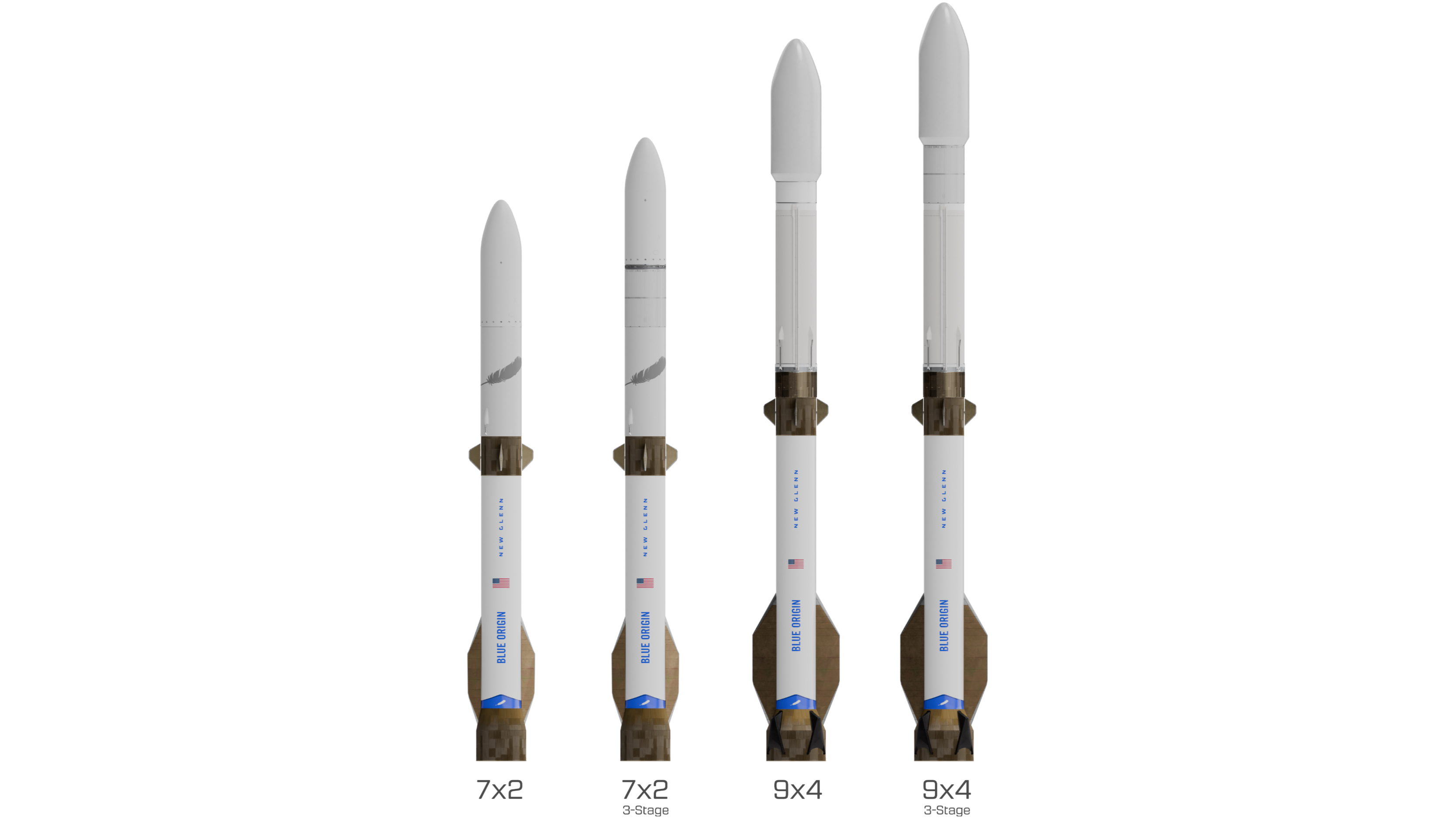
Until now, Blue Origin’s New Glenn has operated as a two-stage heavy-lift vehicle. The standard configuration, known informally as the "7×2" model, features a reusable first stage powered by seven liquid-oxygen and liquid-methane BE-4 engines, topped by a second stage utilizing two BE-3U engines. Standing 322 feet (98 meters) tall, the standard vehicle is capable of delivering up to 14.3 tons (13 metric tons) to geostationary transfer orbit (GTO) and an impressive 50 tons (45 metric tons) to low Earth orbit (LEO).
Last year, the company also unveiled plans for a super-heavy variant dubbed the "9×4," which will feature nine BE-4 engines on its first stage and four BE-3Us on its upper stage. Scaling nearly 400 feet (122 meters) in height, the 9×4 variant aims to push payload capacities even further, targeting 15.4 tons (14 metric tons) to GTO and up to 77 tons (70 metric tons) to LEO.
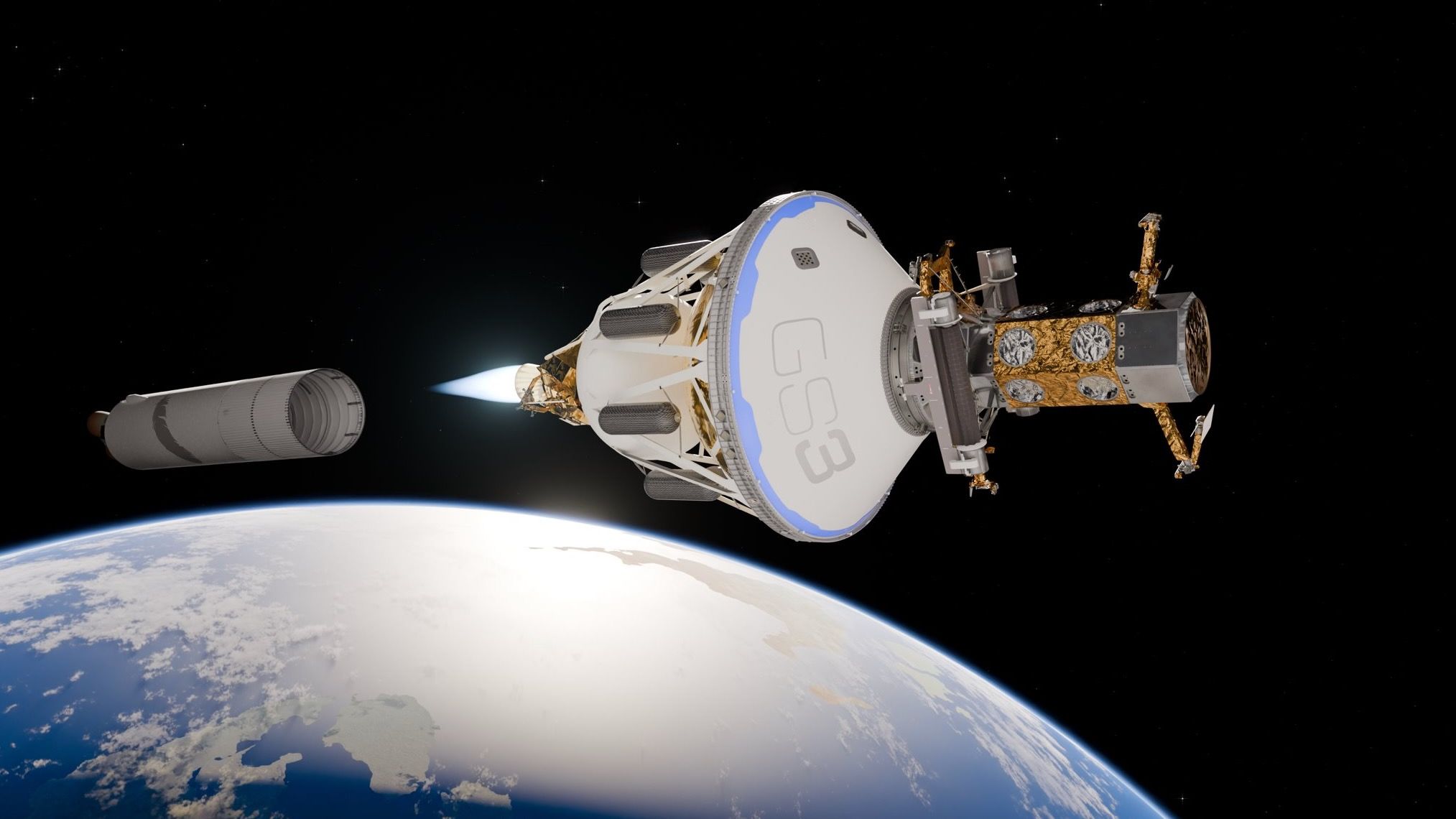
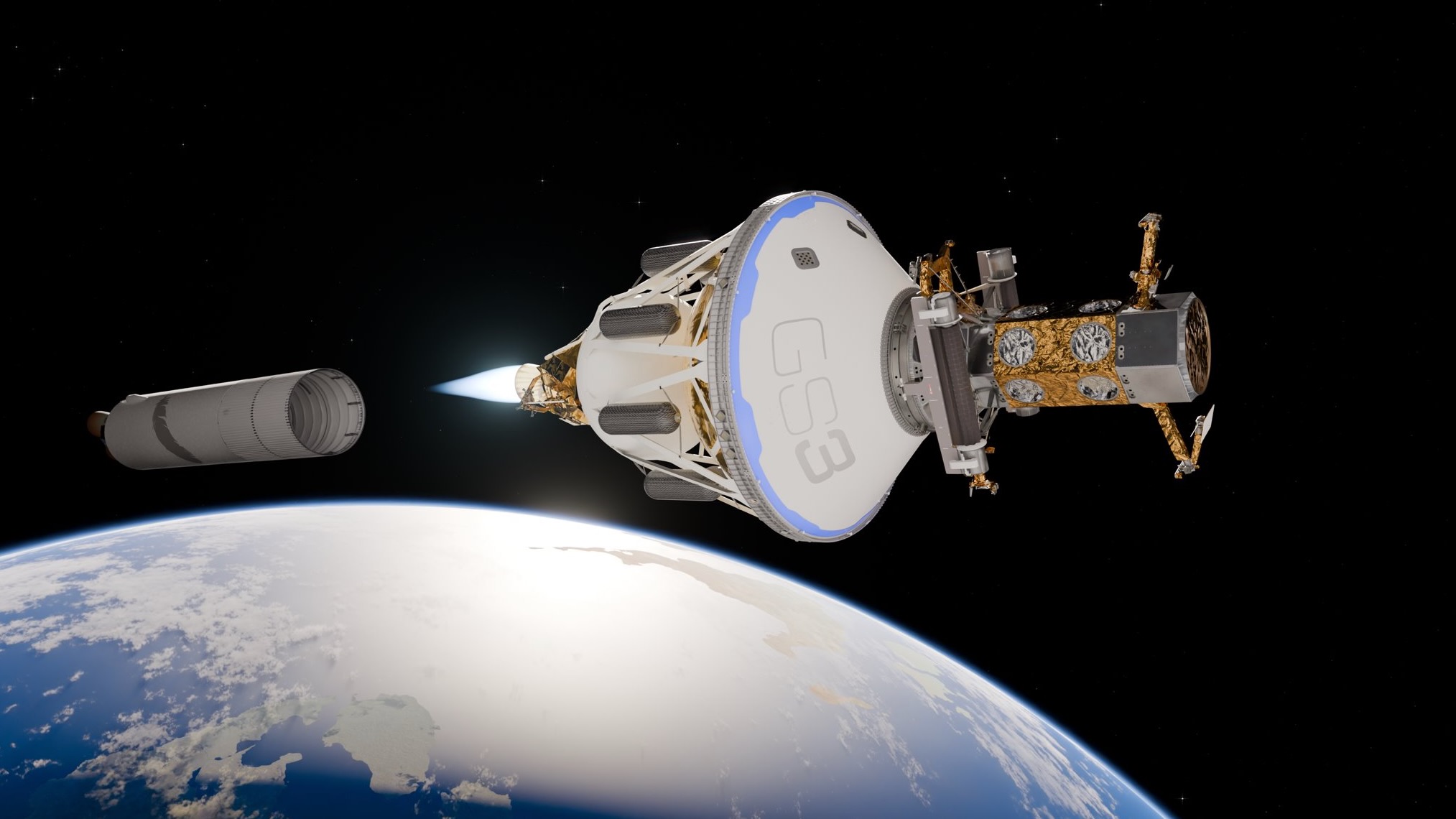
The newly introduced GS3 third stage fundamentally alters the operational envelope of the New Glenn family. Powered by a single BE-7 engine—an advanced liquid-oxygen and liquid-hydrogen powerplant originally engineered for Blue Origin’s Blue Moon lunar lander—the GS3 is built to execute complex orbital maneuvers far beyond traditional low-Earth and transfer trajectories.
According to company technical disclosures, the integration of the GS3 stage enables direct insertion of large satellite constellations straight into geostationary orbit (GEO), bypassing the intermediate transfer stages that typically require months of on-orbit orbit-raising using onboard ion propulsion. Furthermore, the stage provides the high-energy performance required for trans-lunar injection (TLI), granting heavy-lift science and exploration missions the capability to transport substantial cargo masses directly toward the moon and deep space. By handling the heavy lifting of trans-lunar insertion, the GS3 allows spacecraft to preserve their own internal propellants for extensive on-orbit operations and lunar capture phases.
Market Demand and Cislunar Commitments
The commercial appeal of a high-performance third stage is already manifesting in manifested mission logs. Alongside the engineering unveiling, Blue Origin confirmed that an undisclosed government customer has already booked a dedicated GS3 mission targeting cislunar space, with a scheduled launch window in 2028.
While missions utilizing Blue Origin’s NASA-selected Blue Moon human lunar lander are designed to operate independently, the GS3 infrastructure reinforces the company’s broader strategic vision: establishing a permanent logistical backbone supporting sustained human and robotic operations around the moon. Industry analysts note that direct-to-TLI delivery capabilities are increasingly vital as defense agencies, international space coalitions, and commercial entities pivot toward establishing permanent outposts and deep-space infrastructure in the cislunar environment.
Chronology of New Glenn Flight Tests and Recent Setbacks
The introduction of the GS3 upper stage follows a rapid and eventful flight test campaign for New Glenn. The massive launch vehicle made its long-awaited debut in January 2025, successfully clearing the pad and demonstrating fundamental structural integrity. A second flight followed in November 2025, which included a historic milestone: the successful recovery and landing of the towering reusable first-stage booster following a high-performance launch profile for a NASA Mars-bound mission.
The third flight, executed on April 19, encountered significant technical hurdles. While the vehicle successfully cleared the atmosphere, an anomaly during upper-stage operations resulted in the deployment of AST SpaceMobile’s massive BlueBird 7 mobile communications satellite into an incorrect orbit. Despite recovery efforts, the multi-million-dollar spacecraft was ultimately declared lost, prompting internal reviews of upper-stage navigation and trajectory management.
Operational challenges mounted further on May 28, when a routine pre-launch static-fire test of a New Glenn vehicle at Space Launch Complex 36 (SLC-36) at Florida’s Cape Canaveral Space Force Station ended in a catastrophic explosion. The blast resulted in a massive fireball that severely damaged the launch complex.
In the wake of the incident, Blue Origin initiated extensive reconstruction efforts. Rather than merely repairing the damaged facilities, engineering teams re-architected portions of the pad infrastructure to support faster turnaround times, enhanced safety protocols, and the physical footprints of upcoming vehicle variants. Company leadership has indicated that pad repairs are nearing completion, keeping the fourth flight of New Glenn on track for late this year.
Introducing Northstar: A Streamlined Next-Gen Booster Engine
While recovery and rebuilding efforts dominated headlines over the summer, Blue Origin’s propulsion division quietly accelerated development on structural and mechanical improvements. Among these is the introduction of Northstar, a completely redesigned first-stage booster engine intended to eventually complement or succeed the BE-4.
Like the BE-4, Northstar consumes a methalox propellant mixture—liquid oxygen and liquid methane—which burns clean and supports rapid reusability. However, Northstar represents a profound leap in manufacturing efficiency and mechanical simplification.
According to technical briefs released by Blue Origin, the Northstar engine achieves a 30% reduction in overall mass and a staggering 50% reduction in total parts count compared to the BE-4. Despite its streamlined design and reduced structural complexity, Northstar increases baseline thrust from the BE-4’s 640,000 pounds-force up to 715,000 pounds-force.
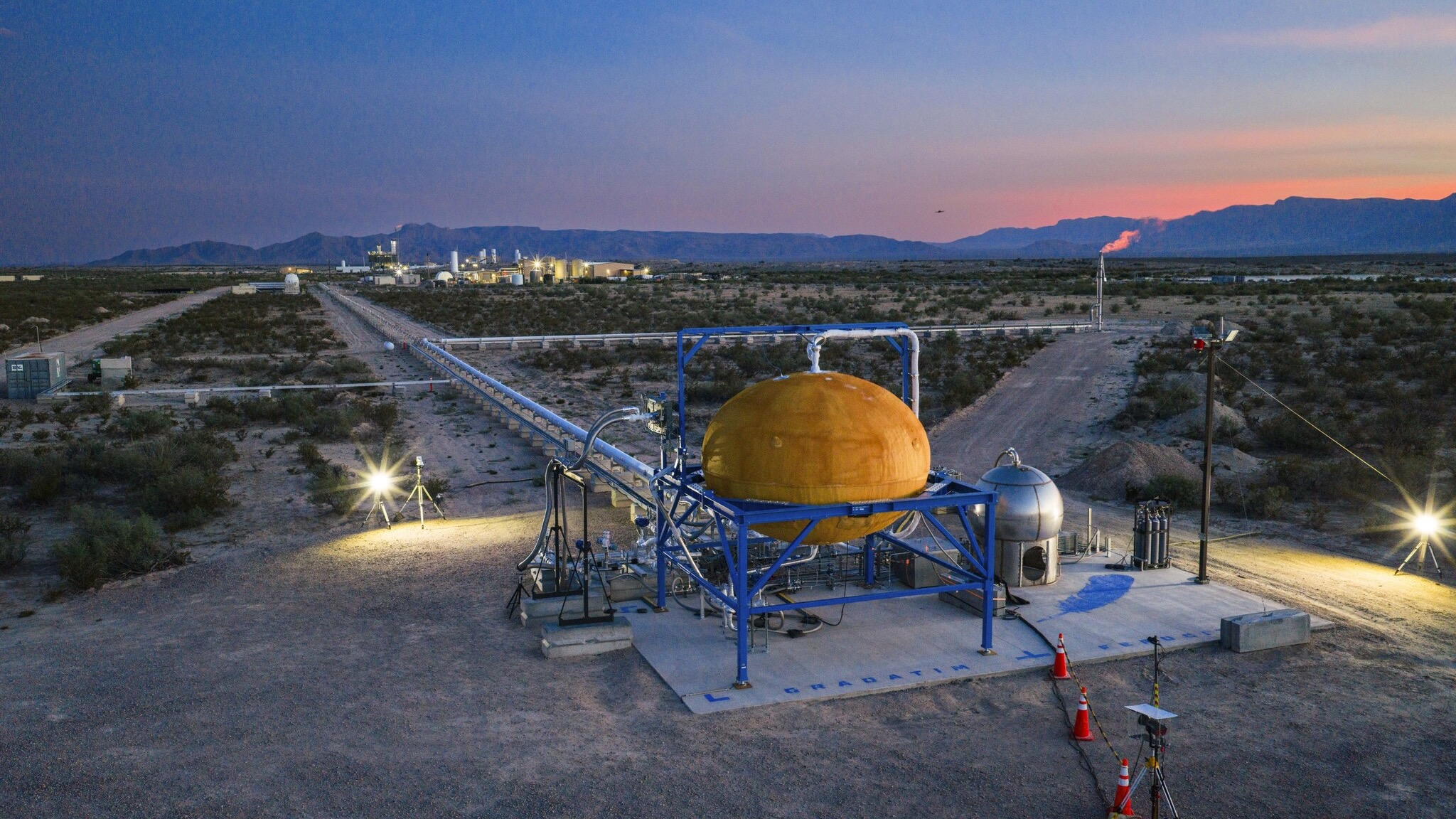
Advanced manufacturing techniques pioneered by Blue Origin have dramatically compressed production cycles. The company reports that a single Northstar engine can now be fully assembled in less than 24 hours. The entire development cycle—moving rapidly from program approval to full-scale engineering and testing—was completed in just 11 months. Although Blue Origin has not yet disclosed a specific maiden flight date for the Northstar engine, the rapid maturation of the hardware points to a swift integration timeline across the New Glenn fleet.
Broader Industry Implications and Strategic Outlook
Blue Origin’s dual announcements regarding the GS3 upper stage and the Northstar engine signal a maturing aerospace titan aggressively addressing the demands of the modern launch market.
Historically, the heavy-lift market has been dominated by legacy launch providers and SpaceX’s ubiquitous Falcon and Starship architectures. By investing heavily in flexible upper-stage architecture like the GS3 and driving down the cost and complexity of first-stage propulsion via Northstar, Blue Origin is seeking to carve out a dominant position in high-value national security, commercial communications, and deep-space logistics markets.
As Cape Canaveral prepares for the resumption of New Glenn launches, the introduction of the GS3 stage expands the theoretical boundaries of what Bezos’s aerospace venture can achieve. Whether delivering constellations directly to geostationary orbits or shipping heavy scientific payloads toward lunar trajectories, Blue Origin is systematically assembling the puzzle pieces required for long-term dominance in the 21st-century space economy.