Apple poised to dominate nearly 30 percent of the global foldable smartphone market by 2027 following strong iPhone Duo debut

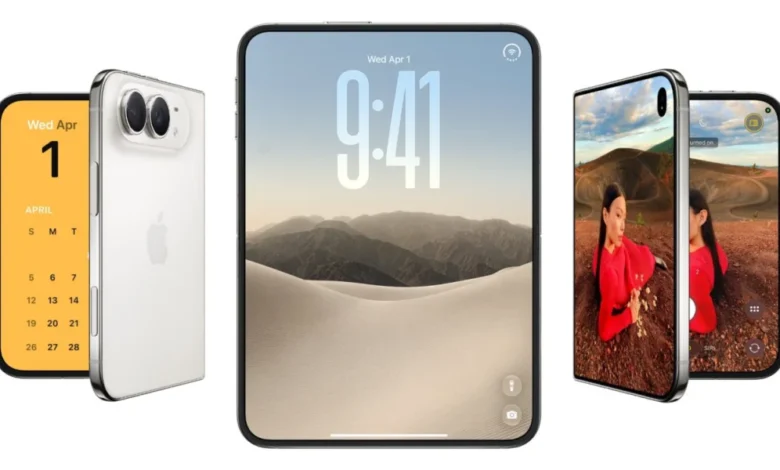
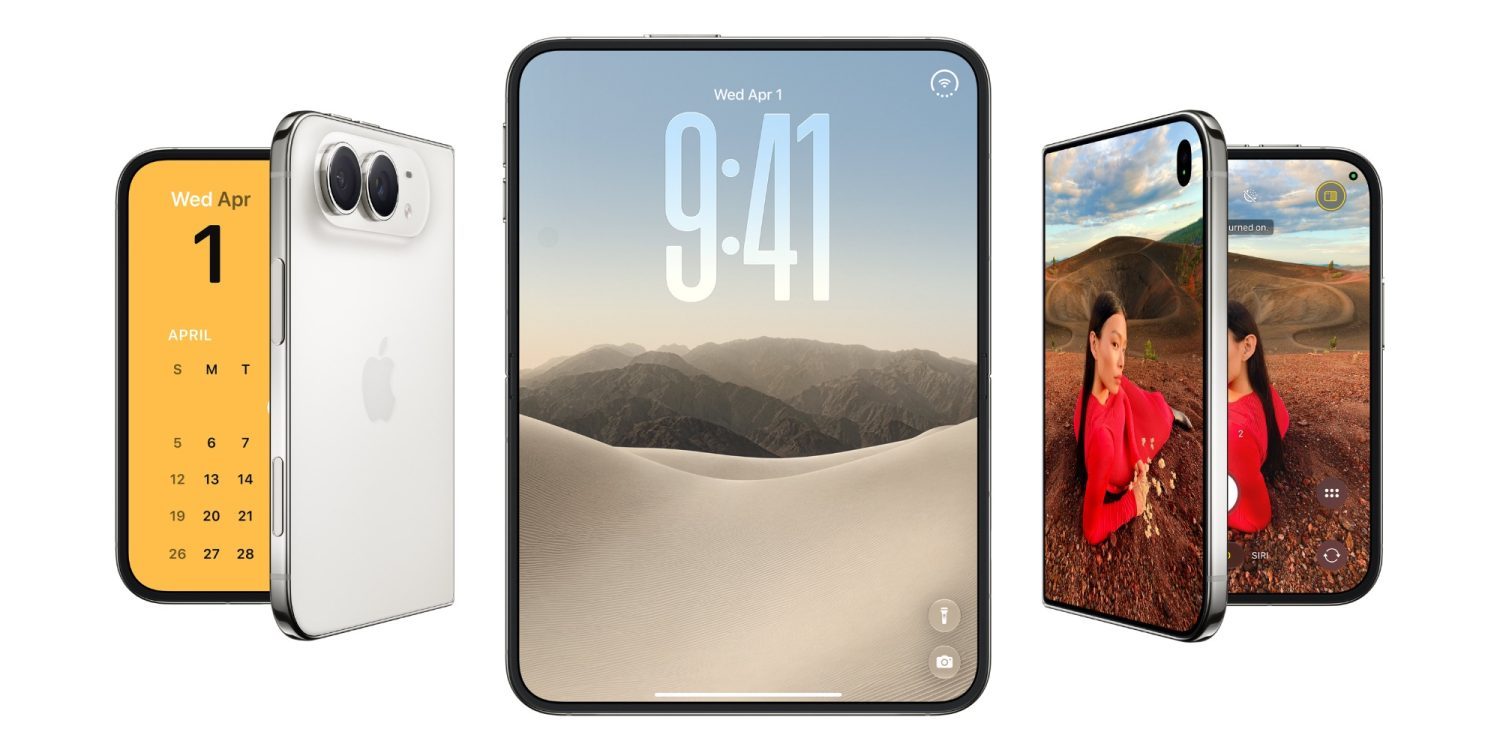
The global foldable smartphone landscape is undergoing a significant transformation, with Apple’s entry into the category serving as a primary catalyst for long-term market expansion. According to the latest data from the market intelligence firm TrendForce, the initial consumer response to the iPhone Duo—Apple’s first foray into foldable hardware—has been robust. Following the device’s release last month, analysts have adjusted their forecasts, projecting that Apple will command a 29.8% share of the foldable market by the end of 2027. This shift indicates a major realignment of power, as the industry transitions from a niche segment dominated by early adopters to a broader, productivity-focused consumer market.
Chronology of the Apple Foldable Entry
The path to the iPhone Duo’s market arrival was marked by years of speculation and internal development, followed by a condensed timeline of public announcements. In early 2026, industry rumors intensified regarding Apple’s intention to diversify its iPhone portfolio. By September 2026, Apple officially unveiled the iPhone Duo, confirming the long-standing theory that the company would prioritize a refined user experience over being the first to market.
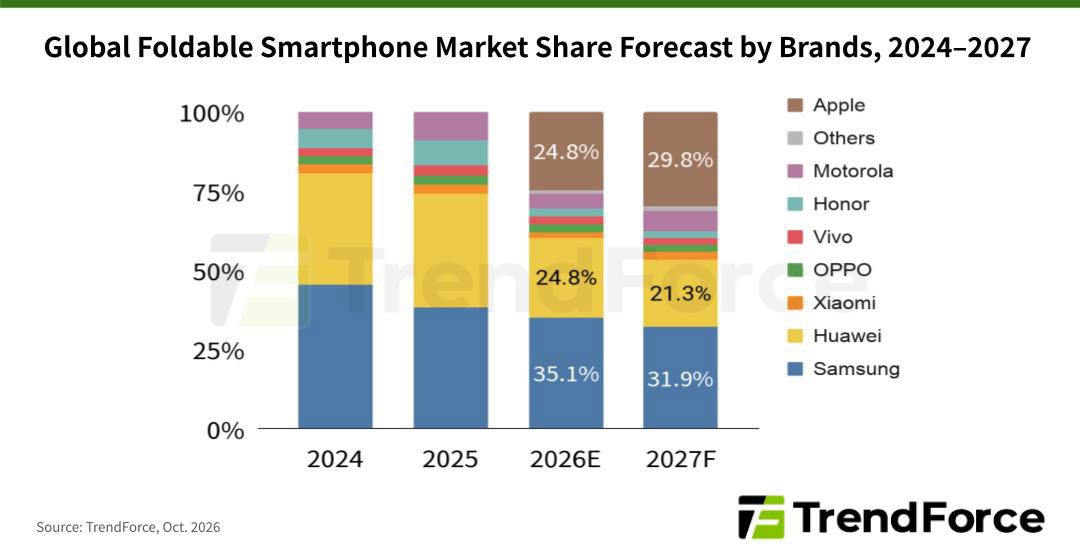
One day following the product’s launch in September, TrendForce published its preliminary outlook, estimating that Apple would ship 5 million units by the end of 2026. At that time, the firm projected that this single device would capture 24.8% of the total foldable market segment within its first few months of availability. With the device now in the hands of consumers for nearly a week as of late October 2026, TrendForce has reaffirmed these projections, noting that the immediate "out-of-the-gate" demand has remained consistent with their initial optimistic modeling.
Supporting Market Data and Projections
The foldable smartphone segment has faced challenges in recent years, particularly regarding hardware reliability and the lack of standardized software optimization. In 2026, the overall market growth was stagnant, with TrendForce reporting a projected growth of just 0.5%. During this same period, Android-based foldable manufacturers saw their year-over-year shipment volumes decline by more than 20%, highlighting a "fatigue" in the current generation of foldable devices.
However, the outlook for 2027 is markedly different. TrendForce anticipates the global market to reach approximately 23.5 million unit shipments, representing a 16.3% increase from the previous year. This growth is largely attributed to Apple’s ability to leverage its vertical integration. By controlling the hardware, the proprietary operating system, and the extensive developer ecosystem, Apple is positioned to solve the primary friction point for foldable devices: software fragmentation.
As of the current projections for 2027, the market hierarchy is expected to shift as follows:
- Samsung: Projected to hold a 31.9% market share, down from 35.1% in 2026.
- Apple: Projected to reach a 29.8% market share in its first full year of competition.
- Huawei: Projected to hold a 21.3% market share, down from 24.8% in 2026.
These figures suggest that while Samsung will retain the top spot, the gap between the market leader and Apple will narrow significantly within a span of just twelve months.
The Role of Ecosystem Integration
The competitive advantage cited by analysts is not necessarily the foldable form factor itself, but the "Apple ecosystem" surrounding it. During the lead-up to the launch, Apple senior vice president of software engineering, Craig Federighi, emphasized that the company’s focus was not on the hinge mechanics alone, but on how developers could leverage the iPhone Duo’s dual-screen capabilities to improve multitasking efficiency.
Unlike previous entrants in the market, Apple has provided a unified API set that allows third-party applications to transition seamlessly between folded and unfolded states. This is a critical development. Industry observers note that prior foldable smartphones often suffered from "app-scaling" issues, where content would look stretched or pixelated when the device was expanded. By enforcing strict design guidelines and providing advanced tools within Xcode, Apple is expected to set a new industry standard for how apps behave on non-traditional screen sizes.
Technological Implications and AI Integration
The impact of the iPhone Duo extends beyond its hardware specifications. Market analysts suggest that the device serves as a primary vehicle for Apple’s latest artificial intelligence features. The expanded screen real estate of the iPhone Duo allows for more complex, multi-window AI workflows, such as side-by-side document comparison, real-time code generation, and advanced video editing—tasks that are significantly more difficult on a standard, single-screen smartphone.
TrendForce’s report underscores that the competitive landscape is shifting from "form-factor innovation"—which characterized the early years of foldable phones—toward "multitasking efficiency." This shift implies that the future of the foldable market will be determined by which platforms can provide the most utility for power users and enterprise clients. As the iPhone Duo becomes a staple in the professional market, it is expected to drive demand for higher-performance mobile computing.
Official Responses and Industry Reaction
While Apple has maintained its traditional policy of not commenting on specific unit shipment projections, the company has actively participated in developer outreach to ensure that major software titles are optimized for the Duo. In briefings held at Apple Park, software architects described the iPhone Duo as a "bridge between mobile portability and tablet productivity."
Samsung and other major competitors have not issued formal responses to the specific TrendForce report. However, industry analysts suggest that the incumbents are likely to increase their research and development spending to counter the loss of market share. Some industry experts suggest that this "Apple Effect" will ultimately benefit the entire foldable category, as increased competition will force component manufacturers to lower costs and improve the durability of flexible OLED panels and hinge mechanisms.
Broader Economic and Market Impact
The entry of a dominant player like Apple into the foldable market validates the technology as a viable long-term successor to the traditional slab smartphone design. For years, the foldable category was viewed as a high-priced experiment. Apple’s participation signals to suppliers, such as display manufacturers and specialized glass makers, that there is a sustainable, high-volume market for these components.

This mass-market adoption is likely to lead to economies of scale. As Apple ramps up production of the iPhone Duo, the cost per unit for foldable components is expected to drop, potentially leading to more affordable foldable devices from all manufacturers in the coming years. Furthermore, the integration of generative AI within these devices is expected to change the way consumers use their phones, moving away from simple media consumption toward more active, creative, and professional tasks.
Future Outlook and Challenges
Despite the optimistic projections, Apple and its competitors face significant challenges in the coming years. Durability remains the primary concern for consumers, particularly regarding the crease that develops on the display surface over time. While the iPhone Duo features advanced materials designed to minimize this issue, the long-term wear and tear of a folding device is a metric that can only be proven over several years of active use.
Additionally, the software ecosystem must continue to evolve. While Apple’s initial developer tools are robust, the success of the iPhone Duo will depend on the continued commitment of third-party developers to maintain specialized versions of their apps for the foldable interface. If developers find the process too cumbersome or the user base too small, the software experience could stagnate.
However, based on the current trajectory, the market for foldable smartphones is poised for a period of rapid acceleration. The next 24 months will be critical, as consumers weigh the benefits of a larger screen against the price premiums traditionally associated with foldable technology. With Apple, Samsung, and Huawei competing for dominance, the foldable market is no longer a peripheral experiment; it is becoming a central battleground for the future of mobile computing.
The transition to this new form factor will likely redefine the "standard" smartphone experience. As the industry moves toward 2027, the focus will remain on whether the productivity gains promised by the iPhone Duo and its competitors can truly replace the necessity of laptops and tablets for the average professional. If current trends continue, the answer appears to be a resounding yes, signaling a permanent change in how we interact with our digital tools.