Activision to Remove Itaewon Crowd Crush Footage from Call of Duty: Modern Warfare 4 Following Public Backlash and Family Outrage

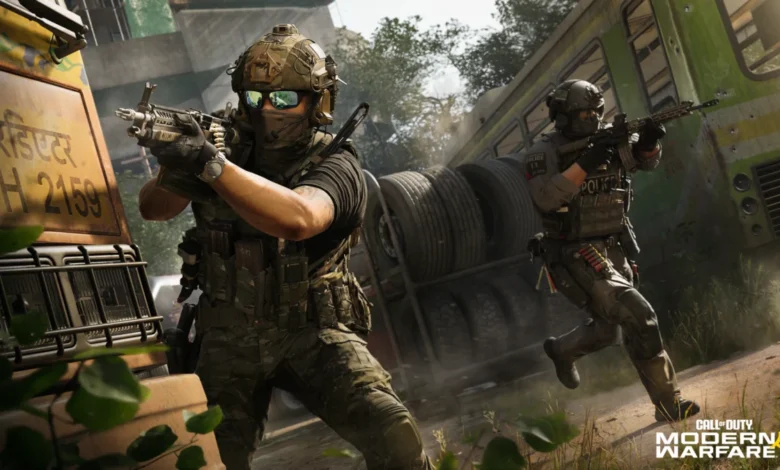
Activision has formally issued an apology to the families and loved ones of the victims of the 2022 Itaewon crowd crush, confirming that it will scrub authentic news footage of the real-world tragedy from its upcoming title, Call of Duty: Modern Warfare 4. The decision follows widespread condemnation from South Korean civic groups, bereaved families, and government officials who discovered that archive footage of the deadly Halloween disaster had been utilized within the game’s fictional opening cinematic.
The controversial content is slated to be completely expunged from the game via an impending software update scheduled to roll out globally on November 12. The publishing giant’s reversal marks a swift, damage-controlling pivot following a wave of international media attention and fierce domestic backlash in South Korea, where the 2022 disaster remains a deeply sensitive and raw national trauma.
Background and Context of the Itaewon Disaster
The inclusion of the footage brought back painful memories of one of the deadliest crowd incidents in modern South Korean history. On the evening of October 29, 2022, tens of thousands of celebrants—predominantly young adults and teenagers—gathered in the narrow, sloping alleyways of the Itaewon nightlife district in Seoul to celebrate the first restriction-free Halloween weekend following the lifting of COVID-19 mandates.
As an overwhelming surge of people packed into a constrained downhill alley near the Hamilton Hotel, a human crush developed rapidly. The cascading pressure caused approximately 160 individuals to lose their lives, with nearly 200 others sustaining injuries. Subsequent government investigations, independent probes, and public inquiries revealed catastrophic failures in crowd control, emergency response coordination, and municipal oversight. The tragedy deeply polarized the nation, instilling an ongoing cultural and political reckoning surrounding public safety, accountability, and the memorialization of victims.
Chronology of the Modern Warfare 4 Controversy
The sequence of events leading to Activision’s capitulation unfolded rapidly over the span of a single week, sparking international debate over the ethical boundaries of incorporating real-world tragedies into interactive entertainment.
- Initial Discovery: Early November 2024 brought the first public revelations regarding the contents of Call of Duty: Modern Warfare 4’s opening cinematic sequence. eagle-eyed players and media outlets noted that brief, flashing news broadcasts used to establish the game’s fictional premise—a North Korean invasion of South Korea—included unmistakable, unredacted news archive footage of the 2022 Itaewon disaster.
- Immediate Outrage: The discovery triggered immediate condemnation within South Korea. The association representing the bereaved families of the victims, alongside the Citizens Countermeasure Meeting, mobilized quickly to issue joint statements demanding the immediate removal of the footage, labeling its usage insensitive and deeply re-traumatizing.
- Initial Corporate Response: Facing early scrutiny, Activision issued a preliminary statement to select outlets, defending the artistic integrity of the project. The publisher asserted that the cinematic "utilises some real world news coverage to establish the game’s fictional narrative" and maintained that the inclusion was "not intended to reference or trivialise the Itaewon disaster or any other real-world tragedy in any way, shape or form."
- Government Intervention and Escalation: The controversy quickly breached the corporate sphere, attracting the direct attention of South Korean federal authorities. Minister of the Interior and Safety Yun Ho-jung addressed the controversy during a high-profile press briefing, categorizing the inclusion of the footage as a form of "secondary harm" to the victims and their families.
- The Formal Apology and Patch Announcement: Following mounting diplomatic, legal, and reputational pressures, Activision relented. Through a formal statement published in Korean and translated by international gaming outlets, the company offered an unreserved apology and promised a patch to permanently purge the footage.
Official Statements and Government Reactions
The gravity of the controversy prompted sharp rebukes from both civil society and government representatives in Seoul. The deployment of real-world casualties as aesthetic set-dressing for a commercial entertainment product crossed ethical red lines that officials argued must not be ignored.
During his press briefing, Minister Yun Ho-jung minced no words regarding the utilization of national tragedies for commercial gain. "Using such a tragedy as material for a game, a form of entertainment or business, is something that should be refrained from as a matter of human ethics," Yun stated. He emphasized that the government viewed the incorporation of the footage not merely as an artistic misstep, but as a direct perpetuation of trauma.
Furthermore, Yun noted that the administration would leave it to relevant regulatory agencies to evaluate whether further sanctions, distribution blocks, or legal penalties should be enforced against the publisher to restrict access within the South Korean market.
Activision, in its revised statement issued on November 5, adopted a significantly more conciliatory tone than its initial defense. "We bow our heads in deep sympathy and apology to the bereaved families and victims who were deeply hurt by this incident, as well as to everyone we have caused concern," the publisher stated.
The company reiterated that Modern Warfare 4 was conceived strictly as a fictional work designed to foster tactical immersion, maintaining that creators never harbored any malicious intent to mock, exploit, or trivialize the Itaewon tragedy. Nevertheless, the acknowledgment that the inclusion caused severe emotional distress served as the primary catalyst for the upcoming November 12 patch.
Broader Impact and Industry Implications
The incident has ignited a broader, industry-wide conversation concerning the ethical responsibilities of video game developers and publishers who utilize documentary footage, historical news broadcasts, and real-world catastrophes to anchor fictional narratives.
In the modern era of high-fidelity gaming, developers frequently lean on real-world aesthetics—including gritty newsreels, documentary footage, and authentic broadcast styles—to heighten the realism and emotional resonance of military shooters and geopolitical thrillers. However, critics and ethics watchdogs argue that blending real human suffering, particularly recent tragedies where grieving families are still processing their losses, crosses the boundary from artistic expression into exploitation.
For Activision, the controversy presents a significant public relations challenge just as marketing and promotional campaigns for Modern Warfare 4 hit their stride. While the publisher’s commitment to deploy a patch by November 12 successfully mitigates long-term friction in the lucrative South Korean market, the episode serves as a cautionary tale for the wider interactive entertainment industry.
As digital media continues to blur the lines between historical reality and virtual simulation, regulatory bodies, consumer advocacy groups, and developers alike will likely face heightened scrutiny over how real-world tragedies are represented in commercial entertainment. For now, the focus shifts to the upcoming patch rollout, which the bereaved families and South Korean authorities hope will finally bring a respectful close to an unmitigated avoidable misstep.
Related posts: