WhatsApp Addresses Critical Security Vulnerabilities Linked to Scam Campaigns and Infrastructure Risks

Meta-owned messaging giant WhatsApp has released a series of security updates to patch multiple vulnerabilities, including a high-profile flaw in its Android application that was actively leveraged by malicious actors to enhance the credibility of scam operations. The discovery, which underscores the evolving sophistication of social engineering attacks, highlights how attackers are increasingly exploiting legitimate platform features—such as "Click to WhatsApp" advertisements—to bypass user suspicion and compromise privacy.
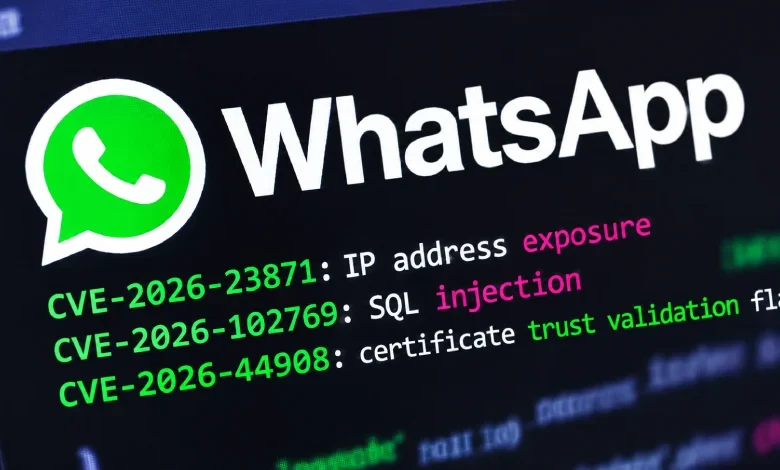
The most concerning of these vulnerabilities, identified as CVE-2026-23871, involves an incomplete validation mechanism regarding external ad-reply URLs within the WhatsApp and WhatsApp Business applications for Android. By deploying crafted media payloads through these URLs, attackers were able to force a target’s device to disclose its IP address upon the rendering of an advertisement reply in a message thread. This technical exposure provides a foundation for more complex attacks, including geo-location tracking and targeted phishing campaigns.
The Anatomy of the CVE-2026-23871 Exploit
The vulnerability exists in versions of WhatsApp for Android prior to 2.26.17.4. The technical failure stems from how the application handles the metadata of incoming "Click to WhatsApp" messages. These ads are designed to allow potential customers to initiate a conversation with a business directly from an external platform.
In this instance, researchers found that the application failed to properly sanitize or validate the external source of the media content linked to these ad-reply buttons. When a user interacted with a compromised ad thread, the application would automatically attempt to fetch content from an attacker-controlled server. This request inherently included the user’s IP address. While a leaked IP address may seem like a minor security event, in the context of a sophisticated scam, it serves as a critical reconnaissance tool.
A WhatsApp spokesperson confirmed that the vulnerability was identified during an internal investigation aimed at dismantling a specific, ongoing scam campaign. "We believe a scammer was using this vulnerability to make their unsolicited messages seem more credible and authoritative," the representative noted. By embedding legitimate-looking interactive elements that triggered server-side requests, the attackers created a false sense of security, leading victims to believe they were interacting with verified corporate entities rather than malicious entities.
Broader Security Landscape and Additional Flaws
While CVE-2026-23871 grabbed headlines due to its integration into active scams, WhatsApp simultaneously addressed two other significant vulnerabilities. The first, CVE-2026-102769, is a sophisticated side-channel vulnerability that could potentially allow an attacker to infer information about a user’s chat database.

This flaw functions through an induced-crash delivery receipt timing side-channel. If a user is active on the platform, an attacker sending a specially crafted message could measure the time it takes for the application to generate a delivery receipt. By analyzing these minute time variations, the attacker could theoretically leak a single bit of information regarding the state of the user’s encrypted local database. While this attack is highly theoretical and requires precise timing, it represents the high level of technical research currently being directed at end-to-end encrypted messaging services. WhatsApp has stated there is currently no evidence that this specific vulnerability has been exploited in the wild.
The third issue, CVE-2026-44908, presented a risk to Meta’s internal infrastructure rather than the end-user device. The vulnerability involved the potential for an actor with internal access to bypass the hardware root of trust using a Versioned Chip Endorsement Key (VCEK) certificate that lacked the appropriate manufacturer signature. Had this been exploited, it could have undermined the integrity of the hardware-based security checks used in Meta’s backend processing. However, Meta’s rigorous adherence to binary transparency ledgers effectively mitigated this risk. The company confirmed that every VCEK certificate published to their third-party ledger correctly chains back to the hardware root of trust, verifying that no unauthorized certificates were injected into the system.
Contextualizing the Risk of "Click to WhatsApp"
The rise of "Click to WhatsApp" ads has been a major growth driver for Meta’s business messaging segment. These ads allow businesses to bridge the gap between social media discovery and direct customer engagement. However, the convenience of these links also creates an expanded attack surface.
Security analysts have long warned that as messaging platforms shift from simple text communication to integrated e-commerce and marketing hubs, they inherit the security challenges of the web. Malicious actors are shifting their focus from traditional email-based phishing to mobile-first messaging platforms, where trust levels are generally higher and users are less likely to inspect a URL’s origin.
By leveraging the "Click to WhatsApp" infrastructure, scammers were able to hide their malicious intent within a legitimate, platform-provided feature. This "living off the land" approach—using the platform’s own tools to facilitate an attack—makes detection significantly harder for automated security filters.
A Chronology of Response and Mitigation
The timeline of these patches reflects the ongoing cat-and-mouse game between platform security teams and cybercriminals.
- Initial Detection: WhatsApp’s internal security research team discovered the exploit while actively investigating reports of fraudulent business messages being sent to users.
- Analysis Phase: Engineers performed a deep-dive forensic analysis on the delivery receipts and the ad-reply processing logic, identifying the specific code paths responsible for the vulnerabilities.
- Patch Development: Development teams worked to implement strict URL validation for ad-reply threads and tightened the logic surrounding delivery receipt generation to prevent side-channel leaks.
- Infrastructure Audit: Simultaneously, the backend team audited the VCEK certificate logs to ensure that no unauthorized hardware keys were utilized within the Private Processing environment.
- Deployment: The patches were rolled out via standard app store updates, with users encouraged to move to version 2.26.17.4 or higher.
Implications for User Security
The events of November 2026 serve as a stark reminder that even the most secure, end-to-end encrypted platforms are susceptible to vulnerabilities that originate in the software logic of the application itself. The primary implication for the general public is the necessity of maintaining updated software.

Mobile security is not a static state but a continuous process. When vulnerabilities are announced, the window between the disclosure and the exploitation by malicious actors is often very narrow. For users of high-traffic messaging apps, the "update" button is the first line of defense against complex exploits that, like the one discovered here, might not be visible to the naked eye.
Furthermore, this incident highlights the growing importance of the bug bounty community. WhatsApp and other tech giants rely heavily on external security researchers and their own internal "red teams" to identify these flaws before they reach critical mass. The fact that these vulnerabilities were identified by internal teams, rather than through reports of mass exploitation, suggests a maturing security posture at Meta.
Future Outlook and Recommendations
As we move further into the era of AI-driven scams and hyper-personalized phishing, users should adopt a "zero-trust" approach to unsolicited business messages, even if they arrive via legitimate-looking ads.
For the average user, the following steps are recommended:
- Enable Automatic Updates: Ensure that the Google Play Store or Apple App Store is configured to automatically download and install updates for WhatsApp.
- Verify Business Accounts: Only interact with businesses that display the "verified" checkmark. If an ad redirects you to an unexpected external URL, do not interact with the content.
- Monitor App Behavior: While most users cannot detect an IP leak, being aware of any unusual battery drain or unexpected network activity can be a sign of a compromised application state.
- Practice Digital Hygiene: Avoid clicking links in unsolicited messages, even those that seem to be legitimate responses to advertisements.
In conclusion, the remediation of these vulnerabilities marks a successful containment of a potentially dangerous scam campaign. By addressing both the client-side application flaws and the infrastructure-level integrity, WhatsApp has reinforced its commitment to platform security. However, as the digital ecosystem grows more complex, the burden remains on the user to stay informed and keep their software current in an increasingly hostile threat landscape. The speed with which these patches were deployed provides a blueprint for how large-scale platforms must respond to the inevitable emergence of new, sophisticated vectors of attack.