White House Devices Open Doors to Global Cyber Underground via Commercial Residential Proxies

Security researchers have uncovered a severe operational security vulnerability originating from within the highest levels of the United States government. Multiple computers and mobile devices connected to the dedicated network of the Executive Office of the President have been identified utilizing residential proxy services. This misconfiguration inadvertently turns secure government internet addresses into public rental exit nodes, allowing external users worldwide to route web traffic through the White House infrastructure and effectively cloak their digital footprints.
The discovery highlights an expanding frontier in digital espionage and cybercrime: the commercialization of unwitting residential and corporate bandwidth. For mere pocket change, anyone on the internet can rent these endpoints to bypass geographic blocks, execute web scraping, or launch malicious attacks while masking their true origins behind the prestigious digital fingerprint of the White House.
Detection and Technical Findings
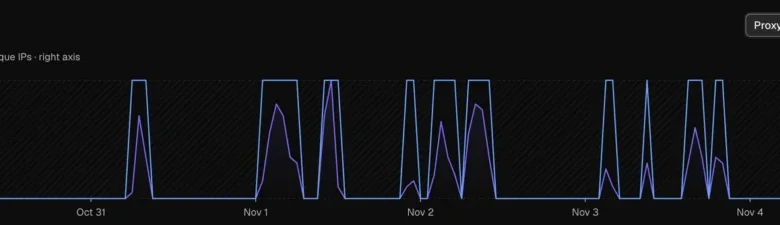
The breach in network hygiene was first flagged by security intelligence firm Layer3 Intel, which observed multiple residential proxy nodes beaconing outbound from Autonomous System Number AS2650—the specific address block reserved for the Executive Office of the President. According to Layer3, this unauthorized proxy activity was persistent across a crucial month-long window, occurring between October 5 and November 3. During this period, security telemetry logged 236 distinct instances where proxies successfully exited through the White House network.
Further analysis by proxy tracking firm Synthient correlated the incoming and outgoing traffic to specific Windows 11 installations running Infatica, a commercial proxy network service. Infatica’s software development kits (SDKs) are frequently bundled into seemingly benign or "free" mobile applications and desktop utilities. When users install these applications—often unaware of the background network sharing terms buried deep within end-user license agreements—their devices are drafted into a global web of proxy nodes.
Layer3’s telemetry revealed that the proxy exit nodes operating from within the White House spanned six distinct IP addresses. The activity exhibited a distinct behavioral pattern, with the vast majority of connections taking place during evening and overnight hours, specifically between 5:00 p.m. and midnight. Even more alarming to investigators, Infatica was not an isolated anomaly. Layer3 Intel reported that a staggering 28 separate residential proxy services were found capable of routing traffic through the White House network infrastructure.
"This is public access," the Layer3 Intel research team stated in a technical breakdown of the incident. "Anybody can obtain it by signing up to a public residential proxy service, paying a few dollars and sending requests through it. We did not selectively target this network or try to make our probes exit from it. We caught this by chance, simply by requesting global rotating access through these services."
Shadowy Origins and Historical Precedents
The involvement of Infatica introduces significant geopolitical and historical concerns regarding cybersecurity. Infatica was founded by Vladimir Fomenko, a Russian national whose previous web hosting venture, King Servers, played a central role in high-profile cyberattacks against American democratic infrastructure. In 2016, King Servers was identified by US intelligence and cybersecurity investigators as the hosting provider for six of the eight internet addresses utilized by Russian state-sponsored actors to breach and compromise voter registration and election databases in Arizona and Illinois.
While commercial residential proxy services operate on a spectrum of legitimacy—with many providers incorporated in jurisdictions like China and Russia—their fundamental mechanics remain identical. They aggregate millions of residential and enterprise IP addresses, packaging them as "clean" traffic for corporate clients who require high anonymity. Because these IP addresses belong to legitimate Internet Service Providers (ISPs) or government networks rather than known data centers, websites and security systems routinely trust them, making them prime real estate for malicious actors seeking to bypass fraud detection algorithms.
The Broader Threat Landscape of Residential Proxies
The commercial residential proxy ecosystem has evolved into a primary engine for cybercrime, facilitating everything from large-scale account takeover campaigns and digital ad fraud to mass data scraping for proprietary artificial intelligence models. However, the integration of these services into secure networks poses much more immediate, localized dangers.
In late 2025, security researchers uncovered a widespread campaign where cybercriminals mass-exploited vulnerabilities within residential proxy software clients. This flaw allowed attackers to pivot from public proxy networks directly into the local networks of the infected devices, probing internal corporate or governmental architectures for unpatched vulnerabilities to deploy secondary malware payloads.
By January 2026, the threat reached a tipping point. Ben Brundage, founder of Synthient, published research detailing how malicious operators were actively weaponizing proxy vulnerabilities to establish botnets—such as the notorious Kimwolf botnet—capable of seizing control of devices residing behind corporate and governmental firewalls. Proxy networks were abruptly forced to issue emergency patches across dozens of platforms.
"Some of these resellers sell bandwidth for as low as 60 cents a Gigabyte, that means for less than a dollar you can gain access into some of the most confidential and trusted networks," Brundage explained in an interview with security journalist Brian Krebs. "The reseller ecosystem further enables this with any criminal able to buy access while skipping KYC [Know Your Customer] processes."
A Systemic Vulnerability Across Government and Corporate Networks
The presence of residential proxies within the White House is not an isolated administrative slip-up, but rather a symptom of a sweeping systemic vulnerability affecting modern organizations. Employees increasingly blend personal devices, remote work setups, and unvetted software applications with corporate and government environments, inadvertently smuggling consumer-grade risks into high-security zones.
Data from proxy tracking and intelligence firm Spur underscores the sheer scale of this digital blind spot. During a January 2026 briefing, Spur revealed that its telemetry had detected active residential proxy nodes operating inside nearly 300 government-owned and operated networks. Furthermore, the analysis found proxy nodes active across 318 critical utility companies, 166 healthcare providers and hospitals, and 141 institutions within the banking and financial sectors.
Reinforcing these findings, a comprehensive study published earlier this year by infrastructure security firm Infoblox revealed that fully 65% of its enterprise customer base had corporate network endpoints querying domains associated with residential proxy services. The ubiquity of these services points to a profound failure of endpoint management and application whitelisting across modern digital infrastructure.
Implications and Immediate Cybersecurity Challenges
As of press time, the White House has not issued a formal public response or comment regarding the Layer3 Intel and Synthient disclosures. The silence leaves a myriad of unanswered questions concerning how many staff devices were compromised, whether sensitive internal networks were exposed to localized pivoting attacks, and what remediation steps the Executive Office of the President’s chief information security officers are deploying.
The implications of this incident extend far beyond routine network hygiene. By allowing commercial proxy services to operate unchecked on federal hardware, government workers are unknowingly contributing to global cybercrime operations while simultaneously exposing classified or sensitive governmental perimeters to foreign intelligence collection.
Security analysts emphasize that mitigating this threat requires a multi-layered approach: strict device management policies that ban unauthorized consumer applications on government-issued hardware, advanced endpoint detection and response (EDR) solutions capable of identifying unauthorized outbound tunneling protocols, and rigorous domain name system (DNS) filtering to block connections to known proxy orchestration servers. Until organizations treat consumer software monetization schemes as the severe security vectors they truly are, high-profile networks will remain vulnerable to rent-a-pixel espionage from the lowest bidder on the dark web.
Related posts: