The establishment of a permanent human presence on the Moon represents one of the most formidable logistical challenges in the history of space exploration. To survive the lunar environment, which is characterized by extreme temperature fluctuations, constant exposure to ionizing radiation, high-velocity micro-meteorite bombardment, and unpredictable seismic activity known as moonquakes, future habitats must be constructed with unprecedented resilience. Historically, the primary obstacle to building on the Moon has been the astronomical cost of transporting construction materials from Earth. Every additional kilogram of cargo added to a spacecraft exponentially increases fuel requirements and launch complexity. Consequently, space agencies and private contractors have pivoted toward In-Situ Resource Utilization (ISRU), a strategy that seeks to leverage indigenous lunar materials to build infrastructure.
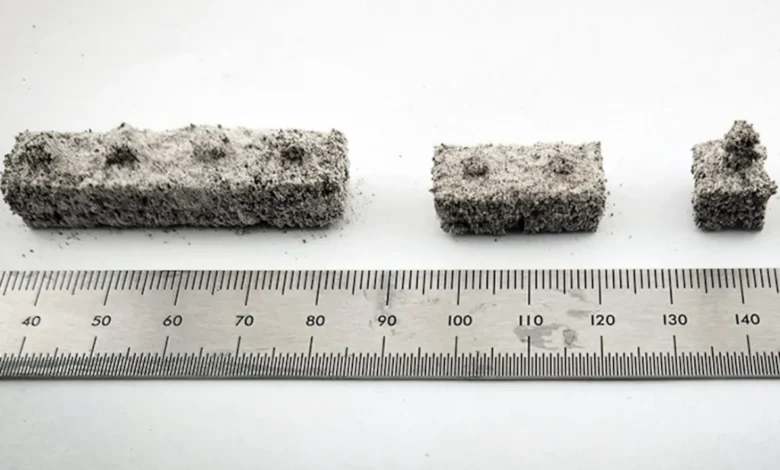
A significant breakthrough in this field has emerged from the University of Arkansas, where a research team led by mechanical engineer Wan Shou and undergraduate researcher Cole McCallum has successfully demonstrated a method for manufacturing modular building blocks directly from simulated lunar regolith. Their research, published in the journal NPJ Advanced Manufacturing, introduces a novel 3D-printing technique that requires no external binding agents, potentially eliminating the need to transport heavy bonding chemicals from Earth.
The Mechanics of Lunar Sintering
Lunar regolith is a complex, pulverized material created by billions of years of cosmic bombardment. Unlike terrestrial soil, it lacks organic matter, moisture, and biological components. It is composed primarily of sharp, jagged shards of mineral and glass, a byproduct of meteorites pulverizing the lunar crust. Because these particles do not naturally adhere to one another, traditional construction methods would typically require the introduction of polymers or cements—all of which would need to be launched from Earth, thereby undermining the economic benefits of using local resources.
McCallum and Shou addressed this by utilizing a technique known as laser powder bed fusion (LPBF). In this process, a thin, uniform layer of regolith simulant—a commercial material scientifically formulated to match the chemical and physical properties of the samples returned by the Apollo missions—is deposited onto a build platform. A high-powered laser is then directed across the surface, precisely melting the microscopic particles at their contact points in a process called sintering. By repeating this layer-by-layer process, the team can create complex, solid structures. Because the regolith binds to itself through thermal fusion rather than chemical adhesion, the finished product remains entirely composed of lunar material.
Chronology of Lunar Construction Research
The quest to utilize lunar soil for habitation is not a new endeavor, but it has accelerated significantly as the timeline for the Artemis program and other international lunar missions has narrowed.
- 1969–1972: The Apollo era provides the first comprehensive samples of lunar regolith, establishing the baseline for physical and chemical studies.
- 2010s: Early experiments in lunar construction focus on "lunar concrete," involving the mixing of regolith with various epoxy resins or sulfur-based binders.
- 2020–2024: NASA’s Moon to Mars architecture emphasizes the necessity of ISRU. Various agencies begin testing 3D printing in microgravity environments aboard the International Space Station (ISS).
- 2025: Research shifts toward "binderless" sintering, acknowledging that the transport of binding agents is a critical bottleneck.
- 2026: The University of Arkansas team publishes their results, demonstrating the viability of modular, LEGO-like interlocking bricks printed from regolith simulant.
Supporting Data and Structural Considerations
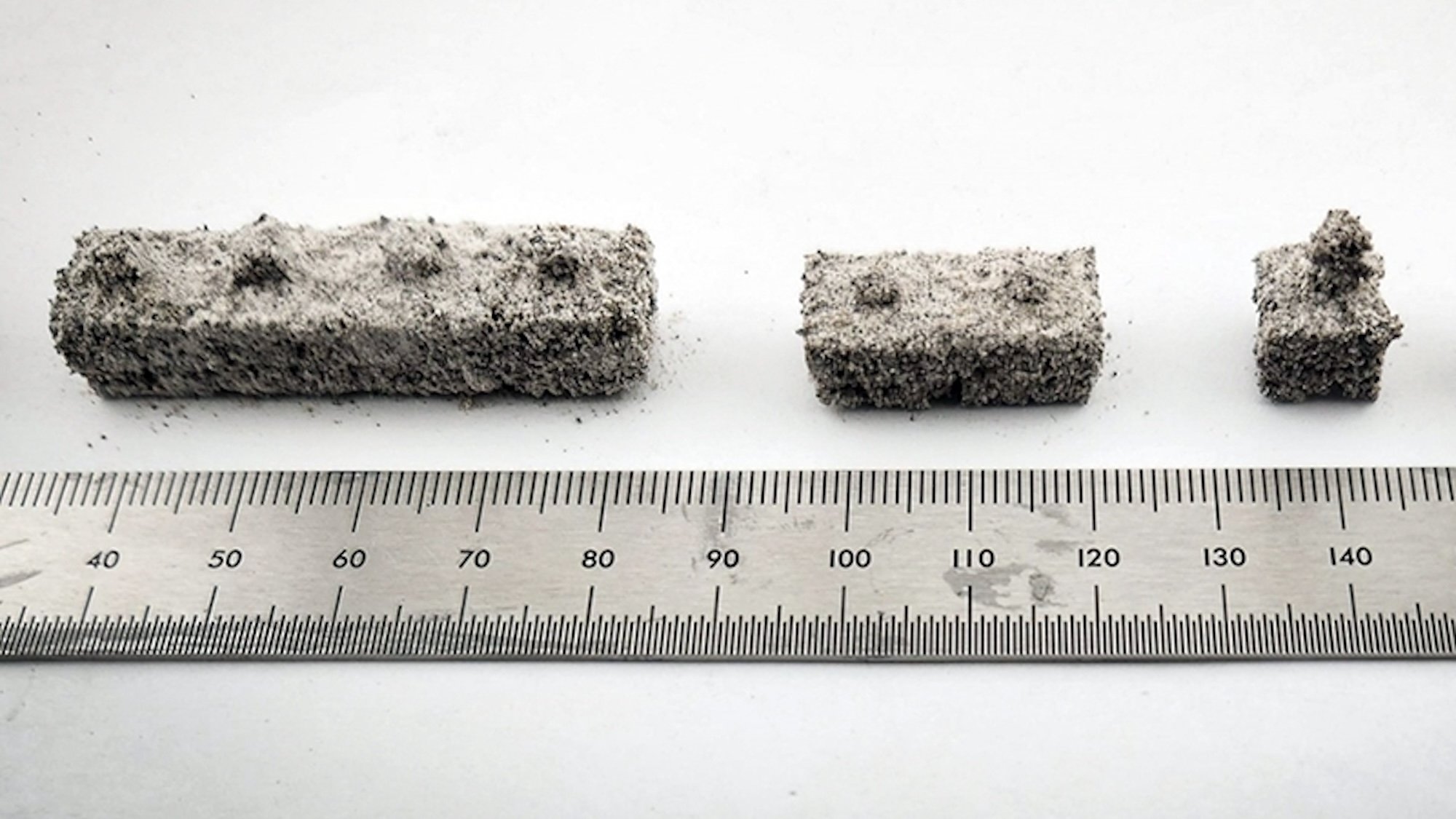
The team utilized two primary designs for their prototypes: a cross-shaped brick and an H-shaped brick. These geometries were specifically chosen for their interlocking capabilities, which mimic the modularity of children’s building blocks. By testing these small-scale models, which measure only a few centimeters in size, the researchers were able to assess the structural integrity of the sintered material.
Current data indicates that while the bricks are capable of supporting their own weight, they remain more porous and less structurally dense than traditional terrestrial building materials. The porosity is a direct result of the laser sintering process, which relies on the thermal properties of the specific mineral content of the regolith. For engineers, this implies that while the material is sufficient for radiation shielding or secondary surface structures, it may not yet be suitable for primary load-bearing walls without further refinement of the sintering parameters.
Official Perspectives and Academic Response
The research has been met with guarded optimism from the broader aerospace engineering community. While the ability to create interlocking bricks without binders is a major conceptual win, experts note that the leap from a lab-based simulation to a lunar environment is significant.
"The work represents a fundamental shift in how we think about lunar architecture," noted a representative familiar with the study. "However, the next phase of this research must address the performance of these bricks in a vacuum. On Earth, the atmosphere provides cooling and pressure stability during the printing process. On the Moon, the lack of an atmosphere, combined with one-sixth gravity, will change the heat dissipation of the laser-sintering process, which could drastically alter the final strength of the bricks."
McCallum himself has been transparent about these limitations. In recent communications, he emphasized that the current prototypes are "self-supported" but advised against their use in high-load scenarios until further testing in extreme conditions can be conducted. The team’s focus is now shifting toward optimizing the laser intensity and scan speeds to reduce porosity and increase the compressive strength of the sintered blocks.
Implications for Future Lunar Settlements
The broader implications of this technology are profound. If construction can be achieved using only locally sourced material, the mission architecture for a lunar base shifts from a "delivery" model to a "manufacturing" model.
- Reduced Launch Costs: By relying on regolith for 90% or more of the building mass, the volume of cargo required for a base would decrease by orders of magnitude.
- Radiation Shielding: A significant advantage of regolith-based structures is their thickness. A base built from thick, 3D-printed regolith bricks could provide a substantial shield against cosmic rays and solar particle events, which are the primary threats to human health on the lunar surface.
- Sustainable Expansion: Modular bricks allow for the organic growth of a colony. As the mission requirements evolve, astronauts can "print" new rooms or corridors as needed, rather than relying on pre-fabricated modules that are difficult to expand or modify.
Analysis of Technical Hurdles
Despite the promise, two major hurdles remain: the vacuum environment and the power requirements. Sintering requires immense amounts of energy to reach the melting points of the mineral components in the regolith. A lunar base would require a robust, dedicated power plant—likely a combination of solar arrays and potentially nuclear fission reactors—to provide the steady, high-wattage electricity needed for continuous 3D printing operations.
Furthermore, the abrasive nature of lunar dust remains a major engineering challenge. Lunar regolith is notoriously difficult on mechanical systems; its jagged, microscopic particles can infiltrate joints and seals, causing rapid wear and failure. Any 3D printer deployed on the Moon must be designed with extreme dust-mitigation systems to ensure the equipment remains operational for long-term construction projects.
Conclusion
The University of Arkansas project serves as a critical proof-of-concept for the future of space colonization. By proving that lunar dust can be transformed into structural elements without the aid of chemical binders, researchers have cleared a major hurdle in the quest for a sustainable human presence on the Moon. While the bricks currently represent a small-scale prototype, the transition to full-scale, autonomous robotic construction is now a visible objective on the horizon. As humanity prepares for its return to the Moon, the ability to build, brick by brick, using the very soil beneath our feet, will be the cornerstone of our success in becoming a multi-planetary species.