SpaceX IPO Signals Mainstream Shift to Orbital Infrastructure as Industry Pivots Toward Very Low Earth Orbit Solutions

The potential initial public offering of SpaceX marks a definitive transition in the global financial landscape, signaling the moment the space industry evolved from a speculative niche into a cornerstone of mainstream capital markets. For over two decades, the company led by Elon Musk has championed a vision of multi-planetary civilization, acting as a vanguard for a sector often dismissed as "science fiction." Today, that perception has undergone a fundamental shift. Investors no longer view orbital ambitions through the lens of distant fantasy; instead, they see a burgeoning infrastructure layer that is becoming increasingly essential to the global economy. With valuations previously pegged at $85 billion and climbing toward $180 billion in private secondary markets, SpaceX has demonstrated that a company can marry an extraordinary long-term mission with near-term utility that the modern world cannot ignore.
This shift in market sentiment is not merely the result of branding or visionary rhetoric. It is grounded in the disruption of the traditional aerospace consensus. By prioritizing rocket reusability and vertical integration, SpaceX forced a global industry to abandon legacy architectures in favor of high-cadence, low-cost launch capabilities. The subsequent deployment of the Starlink constellation further transformed the telecommunications sector, proving that space-based assets could compete with terrestrial fiber and 5G networks. Now, as the industry eyes the next frontier—orbital data centers—the focus is shifting toward the physics and sustainability of the orbits themselves, specifically the move from Low Earth Orbit (LEO) to Very Low Earth Orbit (VLEO).
The Congestion Crisis in Low Earth Orbit
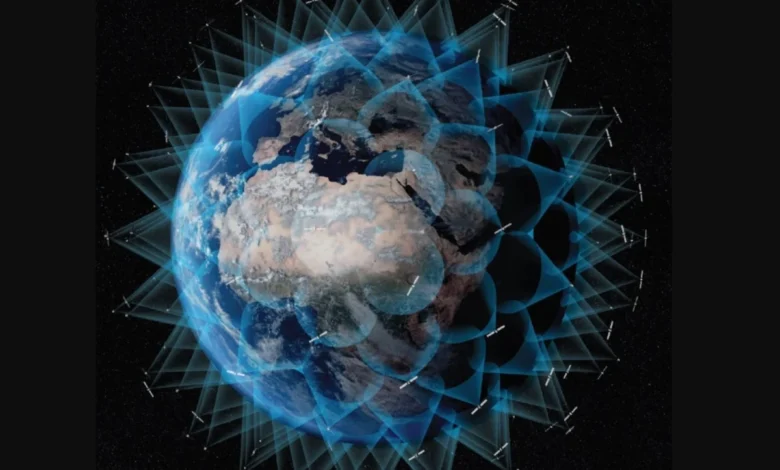
The current landscape of space operations is concentrated in Low Earth Orbit, typically defined as the region between 500 and 700 kilometers above the Earth’s surface. This region is home to the vast majority of the 10,000 active satellites currently in operation. However, the scale of planned deployments is unprecedented. SpaceX alone has filed applications to eventually manage up to 1 million new satellites, and several other sovereign nations and private entities are racing to launch their own megaconstellations.
This rapid expansion has brought the issue of orbital congestion to the forefront of international concern. In 2024, Starlink satellites were required to perform approximately 200,000 collision-avoidance maneuvers; by 2025, that figure is projected to rise to 300,000, representing a 50% year-over-year increase. The mathematical reality of LEO is that as the number of objects increases, the probability of a catastrophic collision rises exponentially.
Beyond active satellites, the United States Space Surveillance Network tracks more than 35,000 pieces of debris larger than 10 centimeters, while the European Space Agency (ESA) estimates there are over 1 million fragments between 1 and 10 centimeters in size. A single collision in LEO can trigger the "Kessler effect," a theoretical scenario proposed by NASA scientist Donald J. Kessler in 1978. In this scenario, the density of objects in LEO becomes high enough that a single collision creates a cascade of debris, leading to more collisions and ultimately rendering entire orbital planes unusable for generations. For a multi-billion dollar orbital data center industry to thrive, the risk posed by the Kessler effect must be mitigated through structural changes in how orbits are selected and managed.
The Economic Imperative: AI and Orbital Data Centers
The push toward orbital data centers is driven by an acute energy crisis on Earth. The rapid advancement of Artificial Intelligence (AI) has placed immense pressure on terrestrial electrical grids. High-performance computing required for training Large Language Models (LLMs) consumes vast quantities of power and generates significant heat, requiring expensive cooling infrastructure.
Eric Schmidt, the former CEO of Google, has noted that AI could eventually account for a staggering 99% of total global electricity generation if current growth trajectories continue. Furthermore, industry estimates suggest that annual global spending on electrical grids will need to double to approximately $970 billion by 2050 to keep pace with demand. In this context, moving data processing to space offers a unique value proposition. In orbit, solar energy is abundant and constant, and the vacuum of space can be utilized for thermal management.
If SpaceX and its contemporaries can successfully deploy orbital data centers, they could potentially control a significant share of the world’s AI infrastructure within the next decade. This would decentralize the global compute load and reduce the carbon footprint of AI development. However, the viability of these expensive hardware assets depends entirely on their safety and longevity, which is why VLEO is becoming a strategic necessity.
Very Low Earth Orbit: The Self-Cleaning Solution
Very Low Earth Orbit (VLEO) refers to the region approximately 200 to 300 kilometers above the Earth. Historically, this region was considered a "dead zone" for long-term satellite operations because of atmospheric drag. At these altitudes, the thin remains of Earth’s atmosphere exert a force on spacecraft, causing them to lose velocity and re-enter the atmosphere within weeks or months if they lack active propulsion.
While drag has traditionally been viewed as a hindrance, it is now being re-evaluated as a critical safety mechanism. In VLEO, any debris generated by a collision or a mechanical failure is naturally cleared from orbit within a matter of weeks by the same atmospheric drag. This makes VLEO the only "self-cleaning" orbit available to humanity. By operating at these lower altitudes, companies can deploy massive constellations with the confidence that they are not contributing to a permanent debris field that could jeopardize future missions.
Moreover, the proximity to Earth in VLEO offers technical advantages. Satellites can achieve higher resolution in Earth observation with smaller, less expensive optics. For telecommunications and data centers, the reduced distance minimizes latency and allows for direct-to-device connectivity with lower power requirements, potentially making reliable phone signals available in the most remote regions of the planet.
Technological Innovation and the Role of NewOrbit
The transition to VLEO requires a departure from traditional propulsion technologies. Standard chemical rockets or even many existing electric propulsion systems are often unable to provide the continuous, efficient thrust needed to counteract atmospheric drag for extended periods.
Anatolii Papulov, CEO and co-founder of NewOrbit, has highlighted that the technology to make VLEO viable is advancing rapidly. NewOrbit has developed a specialized electric propulsion system designed to keep satellites operational in VLEO for more than five years. This longevity is a "game-changer" for the commercial case of VLEO. Previously, the short lifespan of VLEO assets made them a poor investment for high-value infrastructure like data centers. With propulsion systems that can sustain a five-year mission, the cost-benefit analysis shifts, significantly reducing the long-term repair and replacement costs while also lowering insurance premiums due to the reduced risk of collision.
Chronology of the Orbital Transition
To understand the current trajectory, one must look at the timeline of space commercialization:
- 2008: SpaceX successfully launches Falcon 1, the first privately funded liquid-fueled rocket to reach orbit, breaking the monopoly of government agencies.
- 2015: SpaceX achieves the first successful upright landing of an orbital-class rocket booster, proving the viability of reusability.
- 2019: The first large batch of Starlink satellites is deployed, initiating the era of megaconstellations in LEO.
- 2021-2023: Orbital debris events, including anti-satellite missile tests and near-misses, heighten global concern over the Kessler Syndrome.
- 2024: The surge in AI energy demand leads to the first serious commercial proposals for orbital data centers.
- 2025 (Projected): Starlink collision-avoidance maneuvers reach 300,000 per year, prompting regulators to demand new sustainability standards.
- 2026 and Beyond: The focus of new commercial deployments begins to shift toward VLEO as propulsion technologies from companies like NewOrbit mature.
Regulatory Responses and Global Impact
The move toward VLEO and the potential SpaceX IPO are forcing regulators to rethink orbital governance. Organizations such as the Federal Communications Commission (FCC) in the United States and the International Telecommunication Union (ITU) are being urged to treat "orbital sustainability" as a primary design requirement rather than a secondary concern.
Future regulations are likely to include stricter mandates on satellite de-orbiting timelines and "traffic management" protocols that could incentivize companies to operate at lower altitudes. There is also a growing discussion regarding the "carrying capacity" of specific orbital shells. If LEO is deemed "full" or too high-risk, the economic value of VLEO real estate will skyrocket.
The broader implications of this transition extend to global security and economic sovereignty. As space becomes a primary layer for data and AI, the nations and companies that control the most sustainable and efficient orbits will hold significant geopolitical leverage. The SpaceX IPO is not just a financial event for Wall Street; it is a signal that the infrastructure of the future is being built in the vacuum of space, and the survival of that infrastructure depends on our ability to navigate the physics of the atmosphere.
Conclusion: A Lower Future
The evolution of SpaceX from a visionary startup to a public-market titan reflects a wider maturation of the space industry. However, the success of this "mainstream" space era is contingent on solving the looming crisis of orbital congestion. The move toward Very Low Earth Orbit represents a strategic pivot toward sustainability. By embracing the "self-cleaning" nature of VLEO, the industry can continue its rapid expansion while protecting the orbital environment for future generations.
SpaceX has demonstrated the power of moving quickly and thinking at scale. The challenge for the next decade will be to ensure that this growth is sustainable. As high-value assets like orbital data centers become a reality, the industry will find that the most viable path forward is lower than previously imagined. The future of space infrastructure is not just about reaching further into the stars, but about mastering the unique environment just above our heads.
Related posts: