Amazon Elastic Container Service (ECS) Gateway Simplifies Ingress Networking and Containerized Application Management at Scale

Managing containerized applications at scale on cloud infrastructure has long presented platform teams with a persistent balancing act between agility, security, and administrative overhead. For years, operating microservices architectures on Amazon Elastic Container Service (Amazon ECS) meant that every single service required its own dedicated ingress configuration. Platform engineers had to manually provision, wire together, and continuously maintain a complex web of Application Load Balancers (ALBs), AWS Certificate Manager (ACM) certificates, AWS WAF web access control lists (web ACLs), and intricate security groups. As organizations scaled their operations from a handful of monolithic components to hundreds or even thousands of microservices, this per-service provisioning model evolved from a minor administrative task into a massive operational bottleneck. Deployment velocity plummeted, infrastructure costs inflated due to fragmented resource utilization, and the constant threat of configuration drift loomed large over production environments.
To address these systemic challenges at their root, Amazon Web Services (AWS) has announced the official launch of Amazon ECS Gateway, a powerful new account-level resource designed to fundamentally redefine and streamline ingress networking for containerized workloads. By automating the lifecycle management of underlying networking infrastructure—directly within the customer’s AWS account—ECS Gateway establishes a clean, efficient separation of responsibilities between centralized platform engineering teams and decentralized application development units. The new capability promises to eliminate redundant administrative toil, drastically accelerate time-to-market for new microservices, and optimize cloud expenditure through intelligent resource sharing.
The Operational Burden of Legacy Ingress Management
In a typical modern enterprise environment utilizing container orchestration, the division of labor dictates that platform teams establish the guardrails, networking foundations, and security baselines, while application teams focus on writing business logic. However, prior to the introduction of ECS Gateway, this division broke down at the ingress boundary. Whenever an application team wanted to deploy a new microservice to Amazon ECS, the deployment pipeline or the platform team had to spin up a new Application Load Balancer, request and validate a dedicated TLS certificate via AWS Certificate Manager, configure firewall rules using AWS WAF, and hook everything up to target groups and container instances.

This fragmented approach generated substantial technical debt. Each load balancer incurred a fixed baseline hourly cost, even if the underlying container service handled only nominal traffic. Furthermore, updating SSL certificates, modifying security group rules across hundreds of disparate load balancers, and auditing configurations for compliance created an immense operational burden. Platform engineers spent countless hours writing and debugging custom automation scripts, Terraform modules, and CloudFormation templates just to keep ingress plumbing synchronized with rapidly changing application topologies. Configuration drift became an inevitable byproduct of manual or semi-automated provisioning, occasionally leading to security vulnerabilities or unexpected downtime during scaling events.
Industry analysts and cloud architects have long pointed out that while container orchestrators like Amazon ECS excel at managing the lifecycle of tasks and services, the peripheral networking components remained stubbornly coupled to individual services. The release of ECS Gateway directly targets this architectural friction point, shifting the paradigm from per-service networking to a managed, account-level gateway model that can be shared intelligently across vast fleets of containerized applications.
Core Architecture and Operational Mechanics of ECS Gateway
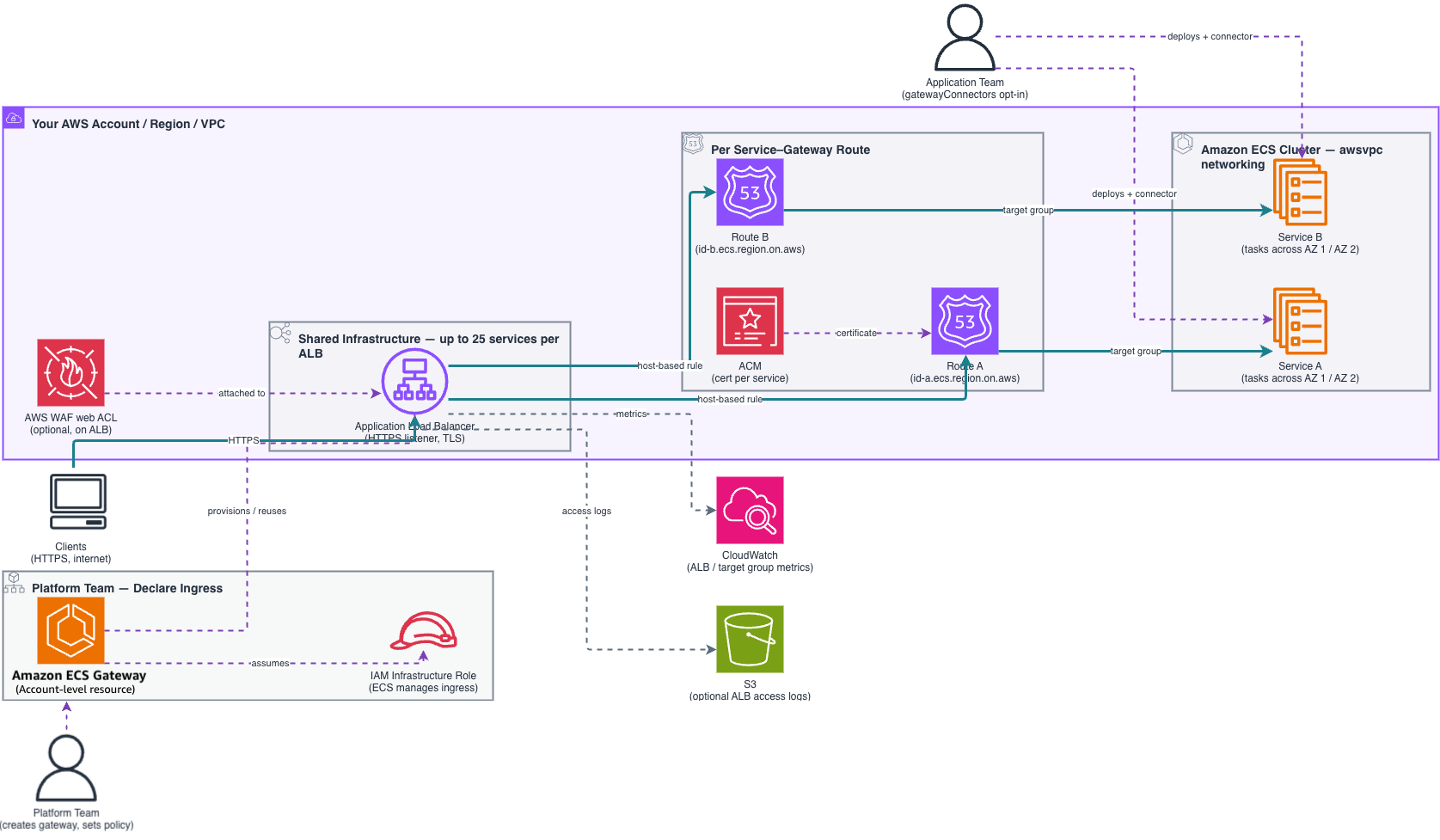
At its mathematical and architectural core, Amazon ECS Gateway introduces a host-based routing model that allows up to 25 distinct container services to share a single Application Load Balancer. This consolidation alone yields immediate financial and operational dividends, preventing the resource waste associated with provisioning dedicated load balancers for low-traffic or internal microservices.
The lifecycle management handled by ECS Gateway is entirely automated. When an organization deploys its first container service and connects it to an ECS Gateway, the system automatically provisions the initial Application Load Balancer within the designated Virtual Private Cloud (VPC) subnets. As application teams continue to launch new services and existing ALBs reach their maximum registration or routing capacity, ECS Gateway seamlessly provisions additional load balancers behind the scenes, scaling capacity up or down dynamically based on actual demand up to a user-defined maximum limit (maxAlbCount). Conversely, when services are decommissioned and load balancers are no longer needed, the system safely deprecates and removes them, ensuring clean resource accounting.

Upon successful provisioning, each connected service immediately receives a unique, ready-to-use DNS hostname and an active endpoint. Behind the scenes, Amazon ECS takes care of orchestrating all necessary peripheral assets:
- Generating and attaching ACM certificates for secure HTTPS traffic.
- Creating precise listener rules that inspect incoming host headers and route traffic directly to the appropriate service target group.
- Provisioning and managing service-level security groups that restrict inbound traffic exclusively to the security group of the associated Application Load Balancer, strictly adhering to the principle of least privilege.
The relationship between gateways and ECS clusters is defined by a flexible, many-to-many architecture. A single ECS Gateway can be associated with up to 10,000 distinct clusters, while an individual ECS cluster can support up to five separate gateway associations. This flexibility empowers platform teams to establish multi-tenant or multi-environment routing strategies—such as maintaining completely segregated public-facing and VPC-internal gateways—while applying granular access controls using AWS Identity and Access Management (IAM) policies.
Step-by-Step Implementation and Developer Workflow
Adopting Amazon ECS Gateway has been designed to fit seamlessly into existing AWS workflows, supporting both graphical console interactions and infrastructure-as-code or command-line operations via the AWS CLI.
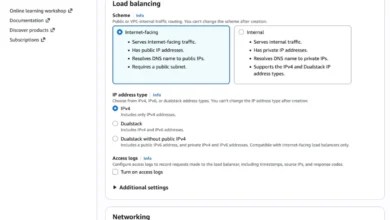
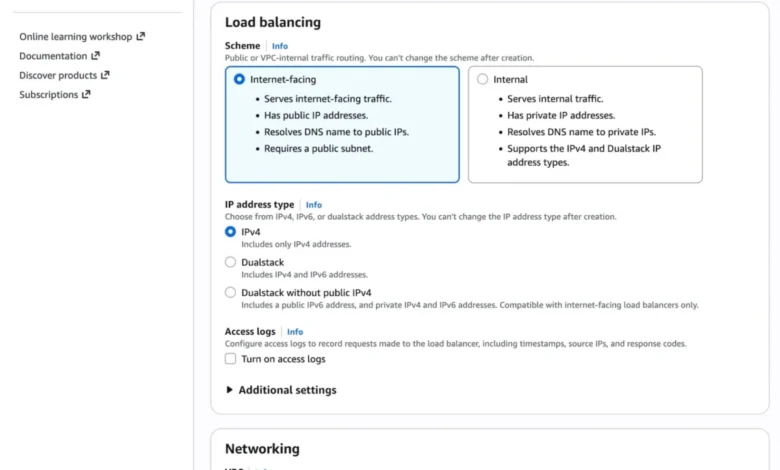
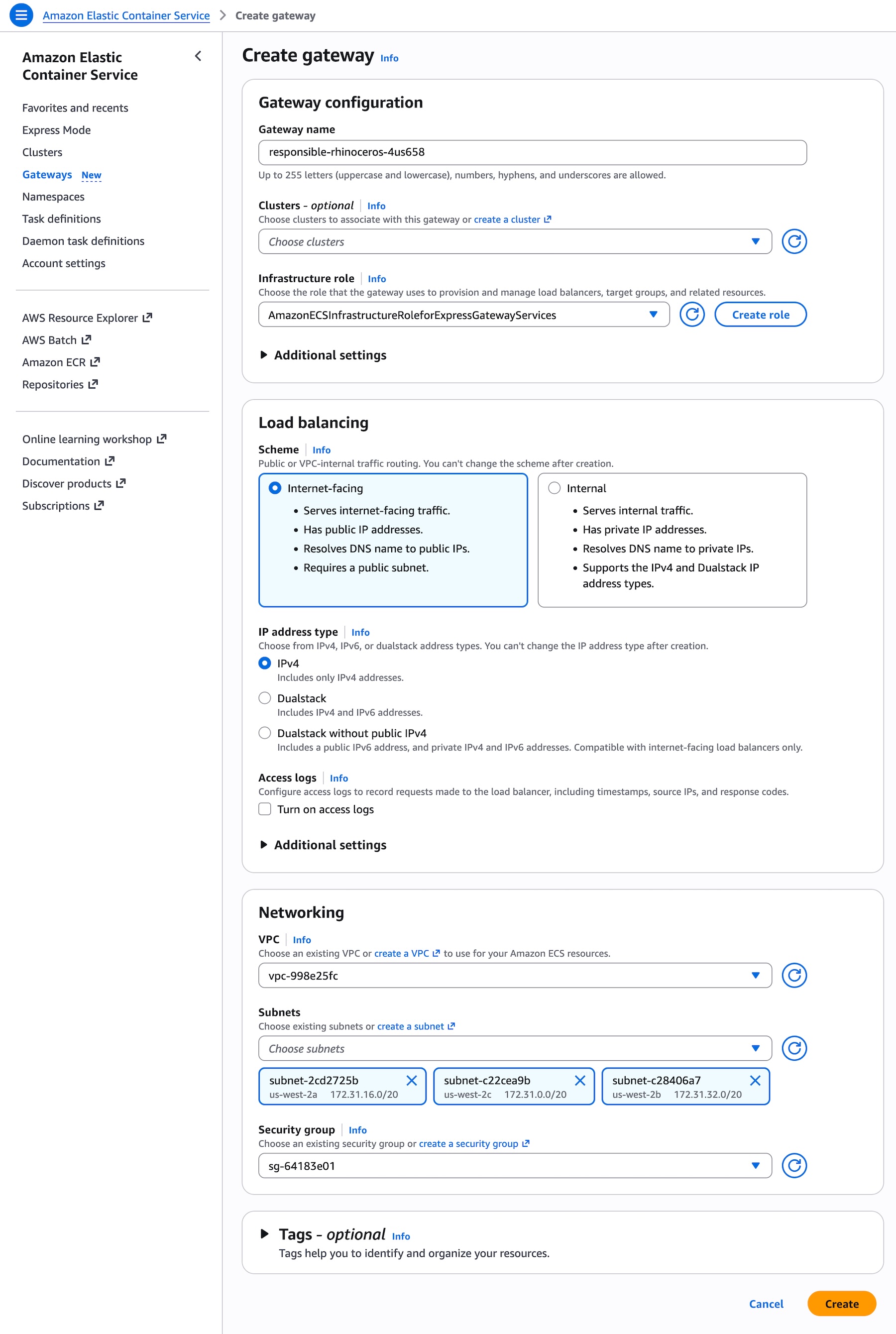
To initiate the process, a platform engineer accesses the Amazon ECS console or utilizes the AWS CLI to execute the CreateGateway command. This requires supplying a unique gateway name, an IAM infrastructure role that permits ECS to manage networking resources on behalf of the account, and a comprehensive configuration block specifying the target VPC, subnets, IP address types (such as IPv4), and the load balancing scheme (either internet-facing or internal VPC routing).
aws ecs create-gateway
  --name my-team-gateway
  --infrastructure-role-arn arn:aws:iam::123456789012:role/ECSGatewayRole
  --configuration '
    "HostSharedAlb":
      "networkConfiguration":
        "subnets": [
          "subnet-080779f9bd887757a",
          "subnet-03d5b2fead6bc6258",
          "subnet-0861210a397d31252",
          "subnet-06539e194023cb77a"
        ],
        "ipAddressType": "ipv4"
      ,
      "scheme": "internet-facing"

  '
Once the foundational gateway resource is established, platform administrators associate it with one or more ECS clusters using the AssociateGatewayWithCluster API call. This makes the gateway capabilities instantly available to any workloads running within those designated clusters.
For application development teams, integrating a service with the gateway is achieved by adding a lightweight gateway connector definition directly into the service creation or update payloads (CreateService or UpdateService). AWS has deliberately engineered ECS Gateway to support incremental adoption. Organizations operating legacy ECS services with pre-existing, dedicated load balancers do not need to undergo risky, disruptive cutovers. Instead, developers can call UpdateService to append a gateway connector alongside existing configurations. This dual-path capability allows engineering teams to thoroughly validate the new gateway routing and health checks in a live environment before safely tearing down legacy load balancer configurations.
aws ecs create-service
  --cluster my-cluster
  --service my-api-service
  --task-definition my-api-service:1
  --gateway-connectors '[ "portName": "api", "filters": "accessTypes": ["PUBLIC"], "healthCheck": ... ]'
Furthermore, modern AI-assisted development tooling is fully supported. Developers and platform engineers looking to manage ECS Gateway programmatically can leverage the AWS Model Context Protocol (MCP Server) and associated plugins within their preferred AI coding environments to query documentation, generate API calls, and accelerate automation scripts.
Strategic Implications and Industry Analysis
The introduction of Amazon ECS Gateway represents a significant maturity milestone in AWS container management strategy, directly addressing competitive pressures from modern service mesh architectures and Kubernetes-native ingress controllers like Gateway API. Historically, teams migrating complex web applications to containers often faced a steep learning curve regarding AWS networking primitives, frequently turning to third-party reverse proxies or complex Kubernetes layers to achieve dynamic service routing.
By baking advanced ingress automation directly into Amazon ECS at the account level, AWS is effectively narrowing the operational gap between managed container services and raw orchestrators. Industry analysts note several key implications of this release:
- Drastic Reduction in Cloud Waste: By allowing up to 25 services to share a single Application Load Balancer, organizations running dozens or hundreds of microservices can eliminate hundreds of idle or underutilized load balancer retainers, translating into immediate, measurable cloud cost savings.
- Acceleration of Deployment Pipelines: Platform teams can now establish centralized, ironclad networking baselines once, allowing product development teams to deploy new services autonomously without waiting for manual ticket fulfillment, load balancer provisioning, or DNS wiring.
- Enhanced Security Posture: Automated security group scoping and centralized integration with AWS WAF and AWS Certificate Manager ensure that security policies are uniformly applied across all microservices, mitigating the risk of human error or exposed administrative ports.
- Simplified Multi-Environment Governance: The many-to-many relationship between gateways and clusters enables enterprise IT administrators to enforce strict boundaries between internal microservice communication and external-facing web endpoints without multiplying administrative complexity.
Availability, Pricing, and Getting Started
Amazon ECS Gateway is generally available starting today across all commercial AWS Regions where Amazon Elastic Container Service is supported.
True to standard AWS utility pricing principles, Amazon ECS Gateway itself is offered at no additional base charge. Customers do not pay a platform fee or subscription cost for utilizing the gateway resource. Instead, organizations pay solely for the underlying AWS infrastructure that is dynamically provisioned within their accounts as services connect to a gateway. This includes standard hourly charges for active Application Load Balancers, CloudWatch logs and metrics generated by the routing layers, AWS Certificate Manager certificates, and standard data transfer rates. Detailed pricing breakdowns and regional availability matrices are publicly accessible via the official Amazon ECS Pricing documentation.
Engineering leaders, platform architects, and DevOps professionals can begin leveraging the new capability immediately by navigating to the Amazon ECS console to configure their first account-level gateway. Comprehensive technical guides, API references, and migration best practices are fully documented in the Amazon ECS Developer Guide, with community support and feedback channels actively monitored by AWS engineering teams via AWS re:Post.