Skyrim lead designer Bruce Nesmith loved that Baldur’s Gate 3 closed off story paths based on your decisions, but…


A Study in Contrasting Design Philosophies
For decades, Bethesda Game Studios has served as the industry standard-bearer for "unhindered" player freedom. Titles such as Skyrim, Fallout 4, and Starfield are built upon a foundation that encourages players to experience the vast majority of available content within a single playthrough. This design ethos—often summarized as "let the player play everything"—prioritizes the removal of barriers, allowing a single character to master the Thieves’ Guild, the Mages’ Guild, and the Fighters’ Guild simultaneously.
Conversely, Larian Studios’ Baldur’s Gate 3 adopts a more rigid, consequence-heavy framework derived from its tabletop Dungeons & Dragons roots. In this model, player choices often result in the permanent closure of specific narrative branches or the alienation of potential allies. While these two approaches have historically been viewed as diametrically opposed—a choice between total freedom and high-stakes narrative reactivity—Nesmith’s recent comments suggest a bridge between these methodologies.
Nesmith noted that while he remains a staunch proponent of the Bethesda model, he found genuine enjoyment in the way Baldur’s Gate 3 forced players to live with the weight of their decisions. "I was pleasantly surprised to see how positive it felt to me to make consequential decisions that closed off gameplay," Nesmith explained. "It felt good because it was done well. I felt like the decisions I made had more meaning in certain ways, because there were actual consequences."
Historical Context and Evolution of the Elder Scrolls
The debate regarding how much "content-blocking" is appropriate in an open-world RPG is not new to the Bethesda development team. A retrospective analysis of the studio’s catalog reveals that the company has experimented with restrictive design choices in the past, even if those elements were gradually de-emphasized in later iterations.

In 2002’s The Elder Scrolls III: Morrowind, the structure of factional play was significantly more restrictive than that of its successors. The game featured explicit oppositional relationships; for instance, rising through the ranks of the Fighters’ Guild often required the direct sabotage or destruction of the Thieves’ Guild. Similarly, the competition between the Mages’ Guild and the occult-focused House Telvanni forced players to curate their alliances carefully.
As the series moved toward Oblivion (2006) and eventually Skyrim (2011), the design shifted toward a "completionist" focus. This evolution was driven by player data indicating that users were hesitant to miss out on high-quality narrative content due to early-game choices. By the time Skyrim was released, the ability to see almost everything in a single session became a hallmark of the Bethesda brand.
However, Skyrim did retain minor vestiges of these restrictive systems. The Civil War questline forces a permanent choice between the Imperial Legion and the Stormcloaks. Furthermore, the Dawnguard expansion requires the player to commit to either the Vampires or the Dawnguard hunters. Additionally, the Dark Brotherhood questline allows for an "alternate path" where the player can choose to destroy the guild entirely rather than join it. While these are exceptions rather than the rule, they demonstrate that the studio has long understood the value of narrative stakes.
The Role of Player Agency and Narrative Structure
The broader implications of Nesmith’s observations center on the balance between "sandbox" freedom and "reactive" storytelling. In the gaming industry, these are often categorized as two distinct genres: the open-world simulation and the narrative-driven RPG.
Bethesda’s games often fall into the former category, sharing structural DNA with simulation-heavy titles like Mount & Blade, where the player is an actor in a living system rather than a protagonist in a pre-written drama. The strength of this approach lies in its capacity for emergence—the ability for players to create their own stories through exploration and interaction with the game’s systems.
However, the immense success of Baldur’s Gate 3 suggests a strong market appetite for "consequential" design. When a player knows that a specific action will permanently change the state of the world or lock away a questline, the stakes of the roleplaying experience are elevated. This creates a "weight" to the player’s agency that is often absent in more permissive designs.
Implications for Future Titles: The Elder Scrolls VI
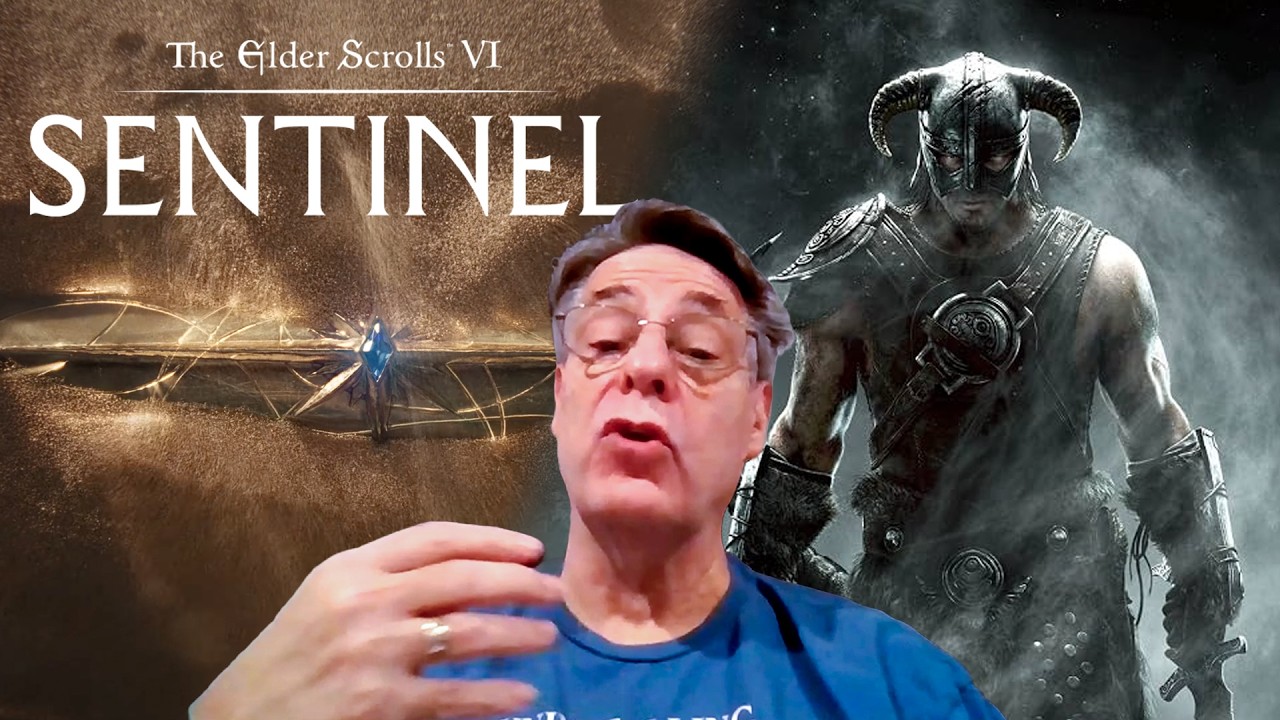
The industry is currently looking toward the development of The Elder Scrolls VI: Sentinel as the next major benchmark for the studio. Nesmith’s comments have sparked speculation regarding whether Bethesda might re-incorporate more rigorous factional opposition into its future titles.
Industry analysts point out that while modern players enjoy the freedom to see all content, there is also a growing demand for "replayability through difference." By implementing more mutually exclusive questlines, developers can encourage players to start new characters, thereby extending the long-term engagement metrics of the title.
Furthermore, the execution of these choices is paramount. Nesmith specifically noted that he enjoyed the restrictions in Baldur’s Gate 3 "because it was done well." This serves as a cautionary note for developers; poorly implemented content-blocking—where a player is locked out of content due to a minor, unclear, or accidental decision—can lead to player frustration. Successful consequence-based design requires that players understand the gravity of their choices before they are made, ensuring that the closure of a path feels like a narrative trade-off rather than a technical limitation.
Technological and Design Trends in RPG Development
The divergence between Bethesda’s traditional approach and the Larian model highlights a broader trend in game development: the shift toward highly curated player experiences. As game budgets balloon and the complexity of asset production increases, studios are looking for ways to maximize the impact of every piece of content created.

By offering branching paths that result in different content, developers can create a game that feels significantly larger than its total file size. For instance, if a player sees only 60% of a game in a single playthrough, the desire to replay the game to see the remaining 40% becomes a powerful retention tool. This is a departure from the "all-in-one" design philosophy that dominated the 2010s, where the primary goal was ensuring the player never felt "left out" of any aspect of the game.
Conclusion: A Synthesis of Philosophies
The lesson articulated by Bruce Nesmith is one of moderation and synthesis. The industry has reached a point where it is no longer necessary to choose between the "sandbox" freedom of a title like Skyrim and the "consequential" depth of a title like Baldur’s Gate 3.
As the next generation of open-world RPGs takes shape, it is highly probable that studios will attempt to incorporate elements of both. The ideal future for the genre appears to be one where the world remains open and expansive, but where individual player decisions carry enough weight to reshape the narrative landscape in meaningful, lasting ways.
For Bethesda, a studio that has defined the open-world experience for over two decades, the challenge will be to maintain the "unhindered fantasy fulfillment" that its fans expect, while simultaneously deepening the stakes of player agency. If Nesmith’s observations are any indication, the studio is actively contemplating how to integrate these high-stakes narrative consequences without sacrificing the freedom that has become its signature trademark. Whether this leads to a shift in the design of the next Elder Scrolls entry remains a topic of intense interest for the gaming community.