Will We Likely Ever Know How Many Shipwrecks Are Sitting On Earth’s Ocean Floor?

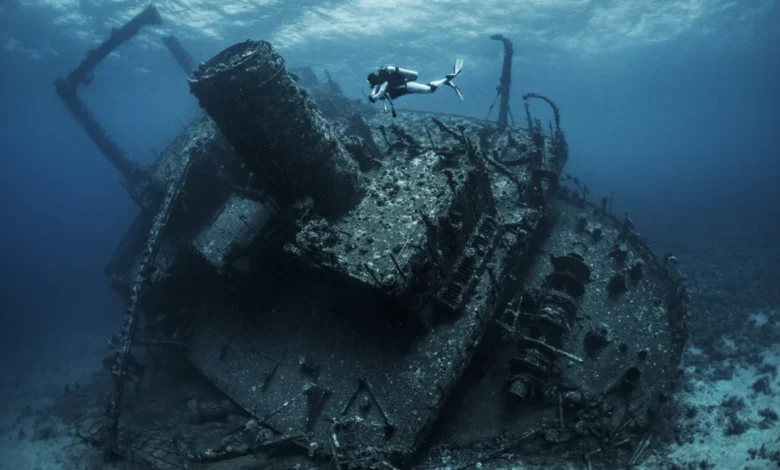
The vast majority of Earth’s surface remains an alien frontier, a liquid expanse that shields the secrets of human history beneath miles of crushing pressure and absolute darkness. According to data provided by the National Oceanic and Atmospheric Administration (NOAA), the world’s oceans cover approximately 139 million square miles, accounting for 70% of the planet’s surface. With an average depth of 12,080 feet, the ocean floor is a repository of millions of years of human maritime activity. Despite the rapid advancement of underwater mapping technologies, only about 28.7% of the seafloor has been surveyed with modern precision. This significant knowledge gap fuels a persistent question among maritime archaeologists, historians, and oceanographers: How many shipwrecks actually lie beneath the waves, and will we ever truly know?
The consensus among experts, including those at the United Nations Educational, Scientific and Cultural Organization (UNESCO), is that the total number of undiscovered shipwrecks is likely in the range of three million. This figure, while staggering, represents a fraction of the total maritime loss throughout human history. To understand why an accurate count remains elusive, one must first look at the sheer scale of the ocean and the limitations of current exploration technology.
A Chronology of Seafaring and Loss
Human interaction with the sea predates written records by tens of thousands of years. While the oldest confirmed shipwreck currently documented dates back approximately 4,500 years—a vessel discovered off the coast of Turkey containing amphorae of oil, wine, and resin—evidence of maritime migration suggests a much deeper history. Anthropological research indicates that hunter-gatherer societies were navigating the waters of Southeast Asia to reach Australia as early as 50,000 years ago.
This implies that for at least five millennia, and potentially much longer, humanity has been losing vessels to the sea. The trajectory of maritime loss can be categorized into three distinct eras:
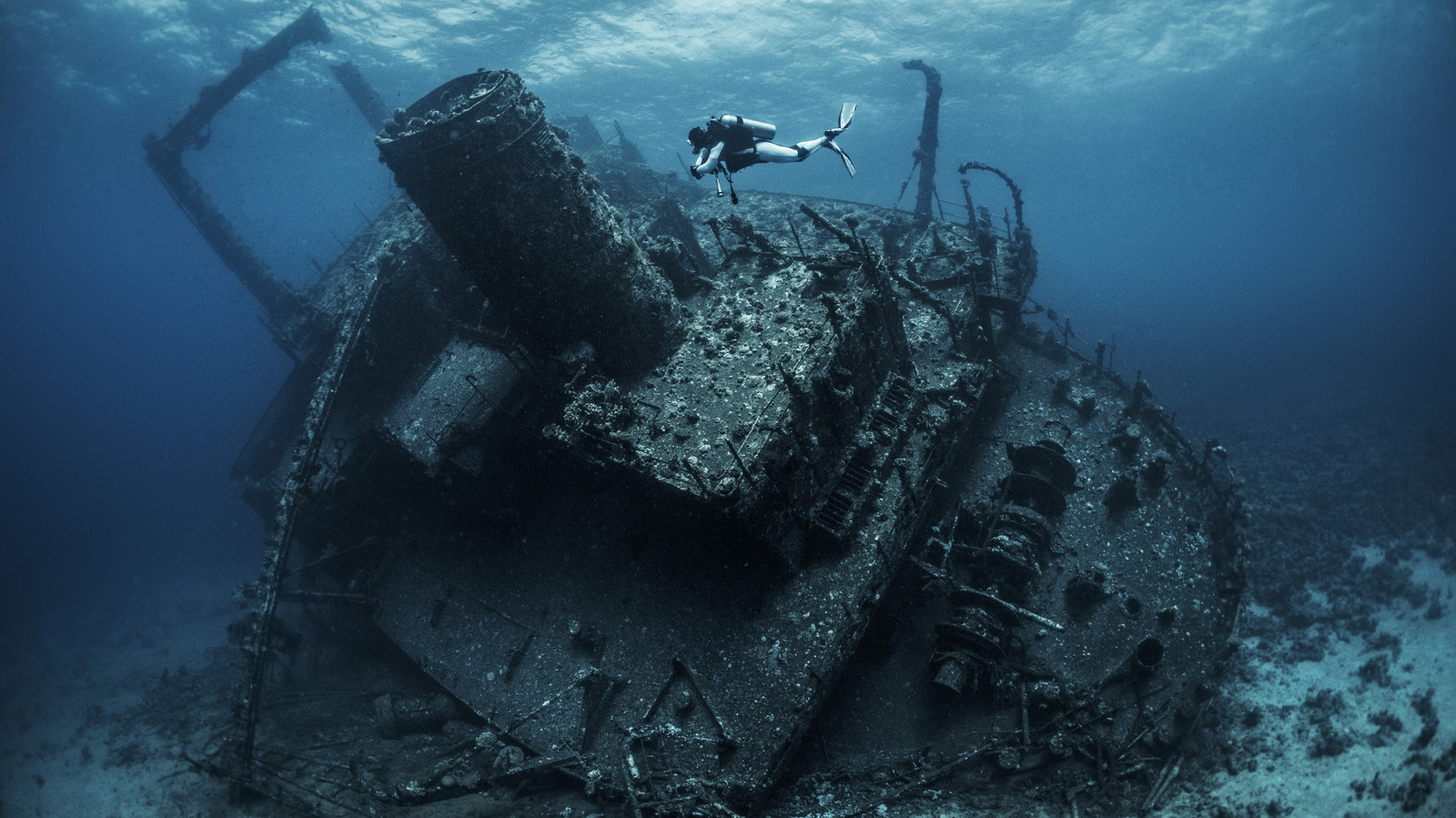
- The Pre-Modern Era (50,000 BCE – 1500 CE): Characterized by coastal navigation and limited records. Shipwrecks from this period are rarely found intact, as wooden hulls decay rapidly in saline environments, often leaving behind only inorganic cargo.
- The Age of Exploration and Trade (1500 CE – 1900 CE): A period of massive expansion in global shipping. This era accounts for a significant portion of the known wrecks, as improved record-keeping began to track vessel disappearances, though many still vanished without a trace in uncharted waters.
- The Industrial and Modern Era (1900 CE – Present): Defined by global conflicts and the rise of massive commercial shipping. This era saw the highest density of shipwrecks within short timeframes, particularly during the two World Wars.
Statistical Realities and Data Disparities
The Global Maritime Wrecks Database (GMWD) maintains records for approximately 250,000 sites. While this number seems large, it accounts for less than 10% of the estimated three million vessels lost. The disparity is explained by both environmental factors and the limitations of historical documentation.
For instance, the NOAA Office of Coast Survey, which has been systematically documenting navigational hazards since 1807, estimates that roughly 10,000 shipwrecks reside within North American waters alone. However, these are largely localized to well-traveled lanes. The deep ocean, defined as depths exceeding 656 feet, remains largely a "black hole" of data. Over 90% of the ocean is classified as deep, and it is here that the majority of the world’s maritime history remains preserved or destroyed by extreme pressures and benthic currents.
World War II serves as the most prominent example of concentrated maritime loss in modern history. With more than 13,000 ships sunk globally during the conflict, these vessels provide a clear, albeit tragic, benchmark for researchers. Unlike ancient wooden vessels that dissolve over time, steel-hulled ships from the 20th century offer a more distinct acoustic and visual signature for sonar-equipped research vessels. Yet, even with these larger targets, many remain unlocated due to the sheer vastness of the Atlantic and Pacific theaters.
Environmental Hazards and Natural "Graveyards"
Certain geographic regions act as natural traps, creating high concentrations of shipwrecks. The "Graveyard of the Pacific," located at the Columbia River Bar, is one such notorious location. The convergence of the powerful Columbia River current with the volatile Pacific Ocean has claimed over 2,000 vessels. These sites are not merely historical points of interest; they are dynamic environments where shifting sands can cover and uncover wrecks over the course of decades.
The interaction between ocean currents, temperature, and maritime traffic creates a high-stakes environment where weather events—typhoons, hurricanes, and squalls—regularly add to the tally of lost vessels. As the climate changes, the increasing intensity of these storms suggests that the ocean will continue to claim ships, ensuring that the total number of wrecks will only rise.
The Technological and Ethical Challenges
The quest to locate these wrecks is hindered by more than just depth. Cost is a prohibitive factor; deep-sea exploration requires expensive Remotely Operated Vehicles (ROVs) and Autonomous Underwater Vehicles (AUVs). These missions are often funded by governments or private institutes with specific goals, such as archaeological research or the salvage of high-value cargo.
Furthermore, there is a complex ethical landscape surrounding shipwreck discovery. UNESCO maintains a Convention on the Protection of the Underwater Cultural Heritage, which encourages the preservation of sites in situ. The concern is that the pursuit of a "final count" might lead to the desecration of war graves or the looting of historical artifacts. Consequently, many discovered wrecks are mapped and then left undisturbed, adding to the data pool but rarely resulting in public display or full excavation.
Implications for Historical Understanding
The inability to fully account for every shipwreck has profound implications for our understanding of human history. Every lost ship represents a lost narrative—a record of trade, cultural exchange, or individual tragedy. When a vessel disappears, the lost cargo often provides the only evidence of the economic ties between ancient civilizations. As ships dissolve into the sediment, we are losing the "material record" of our ancestors.
The shift toward modern digital ocean mapping, such as the Seabed 2030 project, aims to map the entire seafloor by the end of the decade. While this initiative is focused on bathymetry for navigation and climate science, it will inevitably lead to the discovery of thousands of new wrecks. Even then, experts caution that many ships—especially those made of wood or those that sank in remote, high-energy zones—may have been reduced to scattered debris fields that defy conventional detection methods.
Ultimately, the ocean serves as both a tomb and a vault. We may never possess an exhaustive ledger of the ships that have vanished into the abyss, and perhaps that is the nature of the maritime experience. The mystery of the deep is not merely a failure of technology or record-keeping; it is a fundamental aspect of humanity’s relationship with a planet that is, in many ways, still waiting to be discovered. As we continue to push the boundaries of underwater exploration, we will certainly add to our count of known shipwrecks, but the true number will likely remain a ghost statistic, hidden forever beneath the waves.