A modest gamma-ray burst revealed a dazzling afterglow that defies standard cosmic models

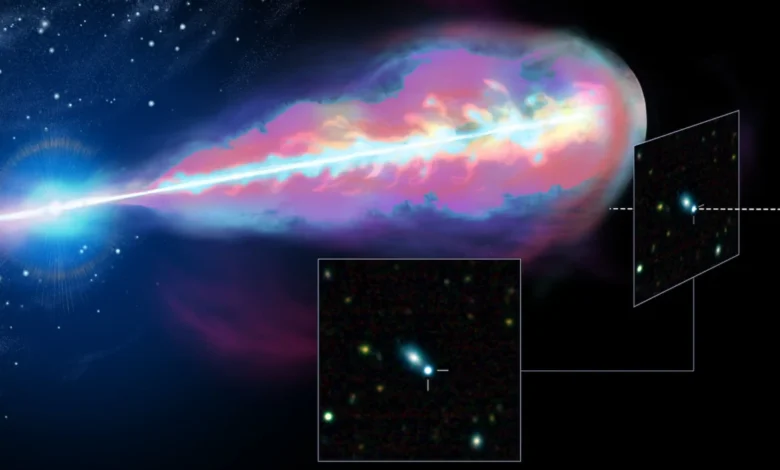
In the vast, often violent theater of the cosmos, few events are as cataclysmic as a gamma-ray burst (GRB). These fleeting explosions, usually marking the final, dramatic collapse of a massive star, release more energy in a matter of seconds than our Sun will produce over its entire ten-billion-year lifespan. On March 10, 2026, NASA’s Fermi Gamma-ray Space Telescope detected an event cataloged as GRB 260310A. What began as a seemingly unremarkable, low-energy flash eventually revealed itself to be one of the most brilliant and complex cosmic light shows observed in the last two decades. New research published in The Astrophysical Journal Letters suggests that this event, which initially baffled observers, was not a weak explosion, but rather a hyper-energetic jet viewed from an off-axis perspective, providing astronomers with a rare, anatomically detailed look at how these stellar titans expire.
A Chronology of a Cosmic Anomaly
The story of GRB 260310A began in the early hours of March 10, 2026. When the Fermi telescope first captured the gamma-ray signature, the initial telemetry indicated a relatively modest event. Gamma-ray bursts are categorized into short and long-duration events, typically defined by the duration of their high-energy emission. GRB 260310A presented a brief flash of light, lasting less than a minute. Under standard astrophysical assumptions, such a short, low-energy burst would be dismissed as a minor stellar hiccup.
However, the event refused to follow the expected decay pattern. Within hours of the initial detection, ground-based observatories noted that the object’s afterglow—the lingering emission caused by the jet colliding with ambient interstellar gas—began to brighten with unexpected intensity. This surge was so significant that the event briefly outshone its entire host galaxy. By the time researchers turned their attention to the X-ray spectrum weeks later, they discovered a second, sustained brightening phase that remained observable for several months, a behavior rarely seen in typical stellar collapses.
The Physics of the Off-Axis Perspective
The research team, led by astronomers at Italy’s National Institute of Astrophysics and involving international collaborators, spent months reconciling the initial "weak" data with the subsequent "bright" afterglow. The resolution to this paradox lies in the geometry of the jet.
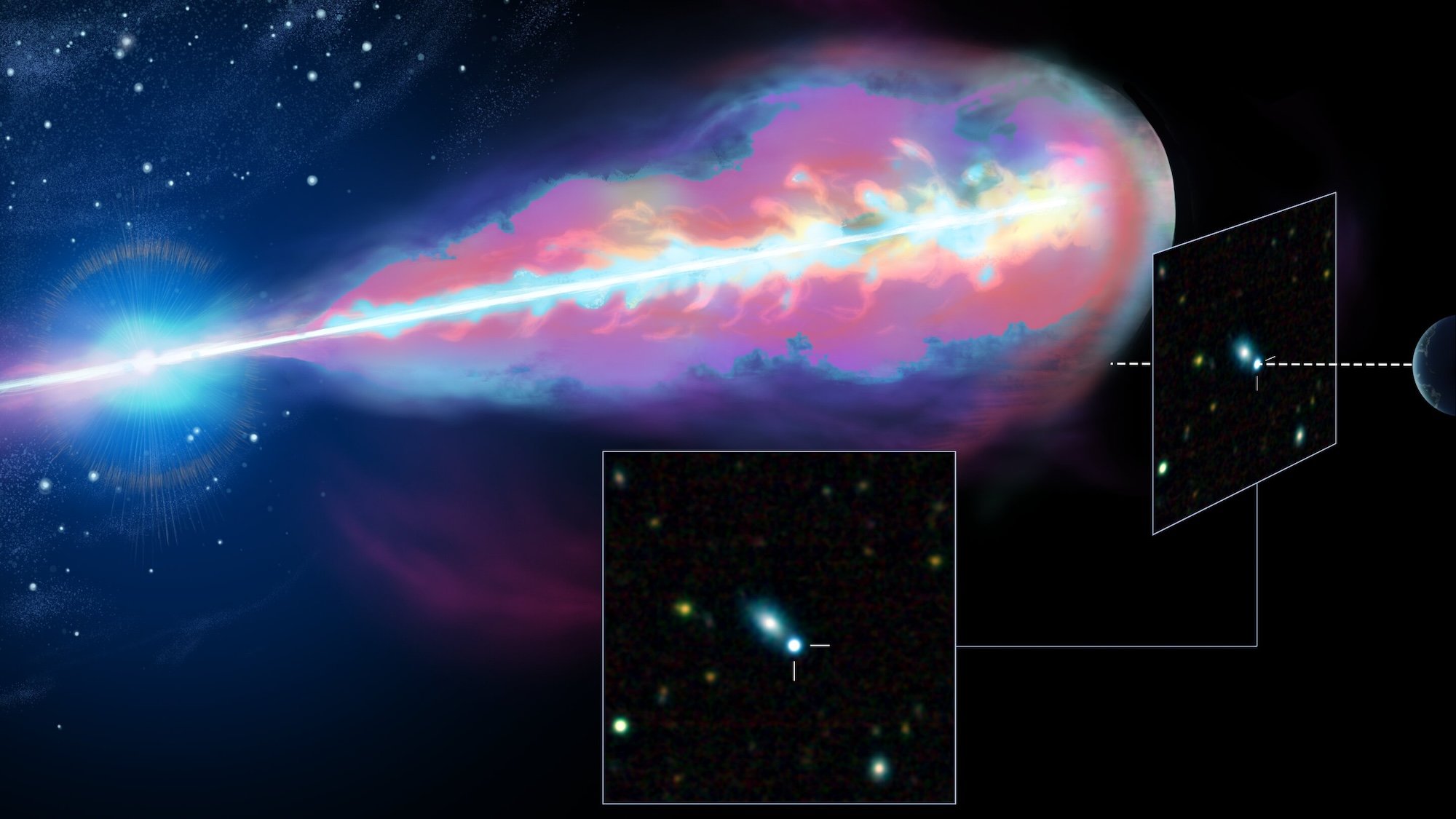
Most GRB modeling is calibrated based on observations where the observer is looking directly down the barrel of the jet. In these instances, the light is highly concentrated and intense. Yu-Han Yang, a co-author of the study, noted that the team realized they were witnessing the event from a side angle. Because the jet was tilted away from Earth, the early gamma-ray readings appeared muted. As the jet’s forward momentum slowed over time, its light spread out into a wider cone, eventually sweeping across the line of sight of Earth-based telescopes.
This perspective shift acted as a natural prism, allowing scientists to scan the structure of the jet. The data suggests that the jet of GRB 260310A was not a uniform beam, but rather a complex, stratified structure. It consisted of a narrow, ultra-fast, and highly energetic core, enveloped in a broader, slower-moving outer shell. The early, faint emissions detected by Fermi were merely the light from these "outer wings," while the later, intense X-ray brightening represented the arrival of light from the jet’s dense, high-energy core.
Comparative Data and Observational Significance
To quantify the significance of GRB 260310A, researchers compared its luminosity against the historical record of known bursts. While the gamma-ray emission was statistically average, the visible light and X-ray measurements placed the event in the top one percent of all recorded bursts in terms of brightness. Furthermore, its radio-frequency output ranked within the top five percent.
Roberto Ricci, a radioastronomer at the National Institute of Astrophysics, emphasized that such "oddballs" are essential for refining existing astrophysical models. "We see hundreds of GRBs every year, but the oddballs are the most informative ones," Ricci stated. The ability to distinguish between the jet’s core and its exterior is a breakthrough in understanding the internal dynamics of star collapse. Previously, most models relied on the assumption that jets were largely uniform. GRB 260310A provides empirical evidence that these jets are far more stratified than previously understood.
Broader Implications for Stellar Evolution
The death of a massive star is the primary mechanism for the formation of black holes and neutron stars. By studying the structure of the jets launched during these events, scientists can infer the internal conditions of the progenitor star just before its collapse. The existence of a "narrow core" versus a "wide outflow" suggests that the engine powering the explosion—likely a central black hole accretion disk—operates with high precision and varying energy distribution.
This discovery has immediate implications for the next generation of deep-space surveys. As astronomers prepare for data from the Vera Rubin Observatory, the ability to interpret off-axis bursts will become increasingly vital. The Rubin Observatory, with its massive field of view and rapid response capabilities, is expected to catalog thousands of transient events, many of which will likely be viewed from non-ideal angles. The methodology developed to analyze GRB 260310A will serve as a foundational template for future researchers attempting to reconstruct the physics of these distant, obscured events.
Challenges in Modeling Complex Transients
Despite the success in explaining the behavior of GRB 260310A, the scientific community acknowledges the difficulties inherent in such research. Modeling the interaction between a relativistic jet and the surrounding interstellar medium requires massive computational power and high-resolution data across multiple wavelengths—radio, optical, and X-ray.
"We could explain individual features of this burst, but fitting them all into the same picture proved much harder," Ricci admitted. The challenge lies in the fact that the light detected on Earth is a delayed and distorted reflection of events that occurred billions of years ago in a different galaxy. Deciphering the physics requires disentangling the intrinsic energy of the explosion from the environmental factors, such as the density of the gas the jet slammed into.
The Future of Gamma-Ray Astronomy
The study of GRB 260310A serves as a reminder of the limitations of "first-look" astronomy. Often, the most interesting scientific data arrives well after the initial trigger. The collaborative effort that brought together the Fermi telescope, the Large Binocular Telescope, and various radio arrays highlights the necessity of multi-messenger and multi-wavelength observations.
As the scientific community continues to move toward more integrated observation networks, the expectation is that events like GRB 260310A will transition from "anomalies" to "standardized examples." Understanding the structural variance in these jets allows for a more nuanced understanding of how matter behaves under extreme gravity and high-velocity conditions—conditions that cannot be replicated in any laboratory on Earth.
In conclusion, while GRB 260310A may have appeared as a faint, brief flash to the initial sensors, it was in reality a titanic release of energy. By viewing the event from the side, astronomers gained a privileged vantage point that revealed the stratified architecture of the jet. This insight not only corrects our understanding of the specific burst but also provides a vital roadmap for how we interpret the explosive deaths of stars across the universe. As we look toward the horizon of 2026 and beyond, the data gathered from this event will undoubtedly remain a touchstone for the study of high-energy astrophysics, proving once again that in the cosmos, the most modest appearances often hide the most profound realities.