New Insights into Mount Vesuvius Eruption Timeline Refine Geochronological Accuracy for Volcanic Hazards

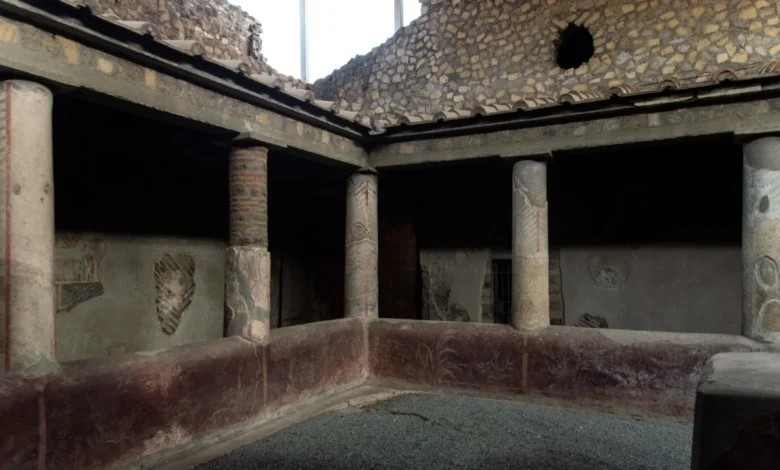
Two millennia ago, the Roman author and lawyer Pliny the Younger meticulously chronicled one of the most cataclysmic natural disasters in recorded history: the eruption of Mount Vesuvius in 79 CE. His eyewitness account, captured in letters to the historian Tacitus, provided the foundational framework for understanding the destruction of Pompeii, Herculaneum, and the Roman villa site of Oplontis. For centuries, this historical narrative has served as a benchmark for archaeologists and geologists alike. Today, a groundbreaking study published in the journal Science Advances utilizes advanced argon-argon dating techniques, calibrated against this historical timeline, to provide a new, unprecedented level of precision in determining the age of volcanic events.
The Intersection of History and Geochronology
The research team, led by geochronologists at the University of California, Berkeley, and the University of Padua, has successfully recalibrated the argon-argon dating method. By analyzing potassium-rich sanidine crystals sourced from the Oplontis archaeological site, researchers have achieved a level of precision that aligns geological data with the historical record more closely than ever before.
Argon-argon dating relies on the predictable radioactive decay of potassium-40 into argon-40. Because this rate of decay is constant and well-understood, scientists can measure the ratio of these isotopes within volcanic minerals to determine when the material last solidified. By applying this method to the Vesuvius eruption, the team has effectively bridged the gap between the qualitative accounts of antiquity and the quantitative requirements of modern earth science.
A Chronological Deep Dive into the 79 CE Event
The 79 CE eruption was not a single, isolated explosion but a multi-phased event that began with the ejection of pumice and ash. The samples analyzed in the new study were recovered from Oplontis, a suburban settlement located near the modern-day town of Torre Annunziata.
In 1998, Dr. Andrea Marzoli of the University of Padua collected pumice samples from the lowest stratigraphical layers of the site. In stratovolcanoes like Vesuvius, magma chambers are often stratified by density. During the initial eruptive phases, the magma at the top of the chamber—which is richer in soluble elements like potassium—is ejected first. Consequently, the material found at the base of the ash deposits provides the most accurate window into the eruption’s onset.
For nearly three decades, these samples remained in archival storage, serving as a time capsule for future scientific advancement. Recently, a team of graduate researchers—Caroline Hasler, Anthony Fuentes, and Andy Tholt—re-examined these materials, subjecting them to modern mass spectrometry to refine the age estimate of the eruption.
Supporting Data and Technical Precision
The distinction between accuracy and precision is critical to this study. Accuracy pertains to how closely a measurement approaches the "true" historical age, while precision refers to the reproducibility of that measurement.
The researchers tested eight distinct sanidine samples. Previous analyses had placed the eruption at approximately 1,938 years ago. However, the new methodology, informed by both the refined isotopic data and a rigorous review of Pliny the Younger’s correspondence, suggests an age of 1,946 years. This result boasts a precision of 0.7 percent and an accuracy of 0.4 percent, representing a significant leap forward in the field of geochronology.
This validation provides more than just a historical footnote; it offers a vital calibration point for radiocarbon dating. Radiocarbon dating, the standard for materials younger than 55,000 years, often requires independent verification to account for fluctuations in atmospheric carbon levels. By anchoring these dates to a precisely dated volcanic event, scientists can create a more cohesive timeline for both geological and archaeological sites globally.
Implications for Modern Volcanic Risk Mitigation
The primary motivation for this level of precision is the mitigation of risk for populations living in the shadow of active volcanoes. Cities such as Naples, Italy, located near the Campi Flegrei and Vesuvius; Mexico City, near Popocatépetl; and various settlements near Yogyakarta, Indonesia, remain under constant monitoring.
"If you want to put together the eruptive history of a volcano in relatively recent time, precision and accuracy really count," said Paul Renne, a co-author of the study and professor at UC Berkeley. The ability to distinguish between events that occurred decades or even years apart allows scientists to model the frequency and magnitude of eruptive cycles. Understanding the "eruptive tempo" of a volcano is essential for emergency management and long-term urban planning.
By proving that highly useful precision can be achieved within the historical realm, the research team has opened the door for similar studies on other volcanoes. This methodology could, for instance, help confirm the exact timing of prehistoric eruptions that may have influenced human migration patterns or the collapse of ancient civilizations.
Expert Perspectives and Future Applications
The broader scientific community views the study as a successful "proof of concept" for Bayesian statistical approaches in geochronology. By integrating multiple data streams—including isotopic measurements, stratigraphic observation, and historical documentation—researchers can minimize the margin of error that previously plagued older dating techniques.
Dr. Renne emphasized that while new technology continues to emerge, argon-argon dating remains the "gold standard" for volcanic geochronology. "We’re hoping to really unify as many geologic dating methods as we can by using the same mathematics, the same Bayesian approach, and just bringing more data, more raw observations into that mix," he noted.
The successful utilization of the Oplontis samples underscores the importance of sample preservation in the scientific community. The fact that samples collected in 1998 could yield such significant findings in 2026 highlights the necessity of maintaining robust geological archives. As analytical tools continue to evolve, these stored materials may become even more valuable, allowing future generations of scientists to revisit past data with higher-resolution technology.
Broader Impact on Historical and Geological Synthesis
The synthesis of archaeology and geology demonstrated in this research has profound implications for how we interpret the past. Pliny the Younger’s letters, long treated as a secondary historical source, are now being treated as a primary "data point" for the physical sciences. This interdisciplinary cooperation not only validates the historical record but also provides the precision necessary to correlate global events.
For instance, understanding the causal links between volcanic eruptions and climate change—such as the cooling effects of massive ash clouds—requires exact timelines. If scientists can align the precise date of a volcanic event with climate markers found in ice cores or tree rings, they can better understand how humanity might respond to future climate fluctuations.
The study concludes that the future of geochronology lies in this multi-faceted approach. By combining the "hard" data of radioactive isotopes with the "soft" data of historical narratives, the scientific community is building a more resilient and accurate map of Earth’s history. As the researchers continue to refine their models, the legacy of the 79 CE eruption will continue to serve as a vital instrument in the ongoing effort to understand the volatile forces that shape our planet.
In the immediate term, the results from the Science Advances study provide a roadmap for geologists tasked with monitoring active volcanic zones. As these populations continue to grow, the ability to predict, analyze, and prepare for volcanic activity with higher precision is not merely an academic endeavor—it is a public safety imperative. Through the work of researchers like Marzoli, Renne, and their team, the past remains our most reliable guide to the future.
Related posts: