How to navigate the landscape of modern crowdfunding for emerging consumer technology

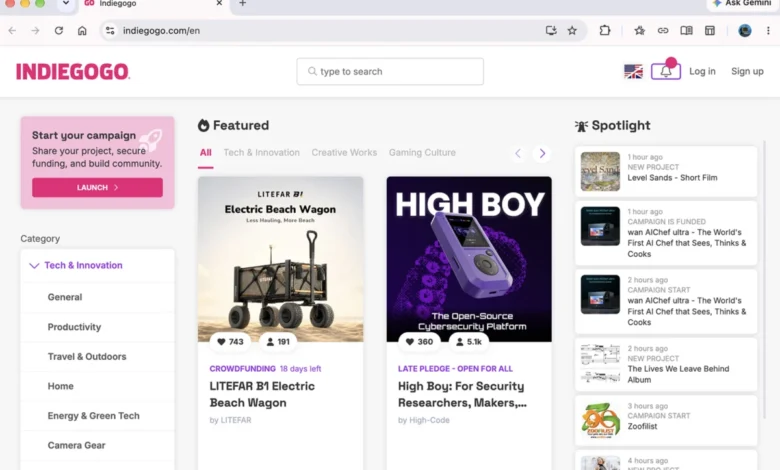
The ecosystem of consumer hardware innovation has shifted significantly over the past decade, moving away from the closed-door development cycles of industry titans like Apple, Google, and Samsung toward a more democratic, albeit risk-laden, model of public funding. Platforms such as Kickstarter and Indiegogo have become the primary theaters for this transition, acting as launchpads for startups that seek to bypass traditional venture capital in favor of direct-to-consumer financial support. While these platforms have facilitated the birth of thousands of products ranging from AI-integrated pet companions to sustainable off-grid energy solutions, the transition from a digital campaign to a physical, mass-produced commodity remains a complex engineering and logistical challenge.
The Evolution of the Crowdfunding Model
Crowdfunding platforms emerged in the late 2000s as a mechanism to democratize project financing. Kickstarter, founded in 2009, established the "all-or-nothing" funding model, which mandates that a project must meet its total financial goal within a set timeframe for the funds to be released. This mechanism serves as a risk-mitigation tool for creators, ensuring they possess the necessary capital to begin production before they are contractually obligated to fulfill orders.
Indiegogo, which launched a year earlier, introduced a more flexible model that allows creators to keep partial funds even if they fall short of their stated goal. This difference in philosophy creates distinct risk profiles for backers. According to historical data from both platforms, the most successful campaigns are characterized by high-fidelity prototypes, transparent manufacturing schedules, and a clear, iterative development roadmap.

Supporting Data and Success Metrics
Recent statistics indicate that while the volume of tech-related projects continues to grow, the success rate is not uniform. Data from Kickstarter suggests that roughly 37% of all projects launched on the platform successfully reach their funding targets. However, within the technology category, that success rate fluctuates depending on the complexity of the hardware. Projects involving simple mechanical designs often see higher success rates than those requiring complex software integration or proprietary electronics.
A critical, often overlooked statistic is the "fulfillment gap." Among successfully funded projects, industry analysis suggests that approximately 10% to 15% of hardware campaigns face significant delays—often exceeding one year—or fail to deliver a final product entirely. These failures are rarely due to a lack of initial interest, but rather the "production valley of death," where the transition from a laboratory prototype to a mass-manufactured unit reveals unforeseen costs, supply chain bottlenecks, or quality control failures.
A Chronology of the Crowdfunding Life Cycle
To understand the trajectory of a successful campaign, one must observe the typical 12-to-18-month life cycle of a product launch:
- The Conceptual Phase (Months 1–3): Creators finalize designs and create high-fidelity renderings or basic prototypes. Marketing assets, including demonstration videos, are produced.
- The Campaign Window (Months 4–6): The project goes live. This is the period of maximum public visibility. Backers provide the necessary capital, and early adopters often receive tiered rewards.
- The Prototyping and Tooling Phase (Months 7–12): Following a successful funding round, the creators must invest in industrial molds and manufacturing tooling. This is the most volatile period, where hardware specifications are often adjusted to meet mass-production standards.
- Manufacturing and Quality Assurance (Months 13–16): Assembly lines are activated. Quality control teams conduct testing to ensure that the production units match the performance of the original prototypes.
- Fulfillment and Distribution (Months 17+): Finished goods are shipped to logistics centers and then delivered to the initial backers.
Expert Perspectives and Stakeholder Responsibility
The platforms themselves have increasingly clarified their roles to manage user expectations. In official documentation, both Kickstarter and Indiegogo emphasize that they are not retailers; they are intermediaries. The legal responsibility for the delivery of the product rests entirely with the project creator.

Industry analysts note that this lack of oversight is a deliberate design choice to encourage innovation. "The absence of traditional retail safeguards is precisely what allows for the rapid iteration of experimental tech," says an independent consultant in hardware development. "However, this places the burden of due diligence squarely on the backer. Investors must view their contribution not as a retail purchase, but as a high-risk venture capital stake."
Analyzing the Risks of Early Adoption
When evaluating a campaign, potential backers are encouraged to apply a rigorous standard of analysis:
- Manufacturing Track Record: Does the team have previous experience in hardware engineering? A team that has successfully shipped a previous product is statistically more likely to overcome the hurdles of mass production.
- Prototype Validity: Are the photos and videos of the product showing an actual working device, or are they high-quality digital renders? If the creator cannot demonstrate the product in a non-controlled, real-world environment, the risks are significantly higher.
- Transparency in Logistics: Does the campaign page provide a clear, step-by-step timeline that includes manufacturing, testing, and shipping? Vague timelines are often an early indicator of poor project management.
- The "Price-to-Value" Ratio: If a product is priced significantly lower than competitors that are already on the market, backers should be wary. Scaling production is expensive, and suspiciously low price points often suggest that the creator has underestimated the cost of goods sold (COGS), which can lead to project bankruptcy mid-production.
The Broader Impact on Consumer Tech
The proliferation of crowdfunded hardware has altered the expectations of the modern consumer. There is a growing appetite for "niche" tech—products that address specific problems for smaller user bases that major tech conglomerates, driven by the need for massive scale, often ignore. Examples include specialized travel adapters, niche medical devices, and custom-designed retro gaming hardware.
Furthermore, this model has provided a testing ground for sustainable innovation. Many projects currently gaining traction focus on repairability, modularity, and circular manufacturing—principles that are gradually influencing the design philosophies of larger, established companies. As consumers become more sophisticated in their understanding of these platforms, the quality of project management and transparency from creators has also begun to rise, creating a more professionalized environment for startup innovation.

Final Considerations for the Modern Backer
Before pledging funds, it is essential to perform a cost-benefit analysis. While the financial incentive—often a discount of 20% to 50% off the eventual retail price—is a significant draw, it must be weighed against the potential for total loss.
The most prudent approach is to treat crowdfunding as an opportunity to support the development of a concept that would otherwise never exist. For those seeking immediate utility, waiting for the product to reach retail shelves remains the safer alternative. However, for the technology enthusiast who values being at the forefront of development, the rewards of participating in the creation of new technology remain unparalleled. By maintaining a critical eye and conducting thorough research into the individuals behind the screen, backers can continue to play a vital role in the future of global innovation.