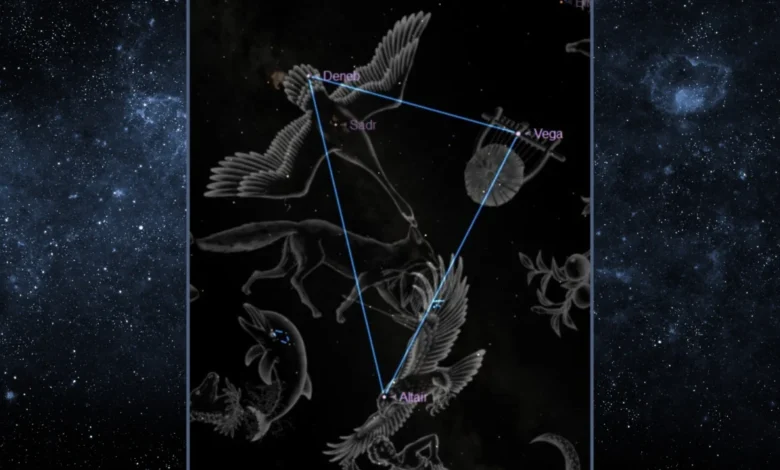
As the crisp, clear evenings of September settle in and twilight descends earlier each day, amateur astronomers and casual stargazers alike often look up expecting the celestial canopy to reflect the shifting seasons. Yet, high above the darkening horizon, commanding the night sky with unwavering brilliance, three familiar stars remain firmly in place: Vega, Altair, and Deneb. Together, they form the iconic asterism known universally as the Summer Triangle.
This prominent geometric alignment persists overhead well into the autumn months, remaining remarkably visible shortly after dusk even as late as mid-November. The enduring presence of this celestial landmark during cooler weather introduces a compelling astronomical paradox: if these stars continue to define the night sky deep into the fall season, why does the astronomical community persist in calling it the Summer Triangle rather than adopting an autumn moniker?
Understanding this nomenclature requires looking past the static Gregorian calendar and examining the dynamic mechanics of Earth’s rotation, the seasonal behavior of star paths, stellar physics, and the rich history of modern astronomical popularization.
The Mechanics of the Seasons: Why the Triangle Belongs to Summer
The classification of the Summer Triangle as a warm-weather asterism is rooted not in its autumnal visibility, but in its behavior across the span of a night during the warmest months of the year. During June, July, and August, the Triangle accompanies observers from dusk until dawn. As night falls, the trio emerges in the east-northeast; by midnight, they reach a towering position near the zenith, directly overhead; and as daybreak approaches, they slowly descend toward the west-northwest horizon.
In contrast, as the Earth progresses along its orbit into autumn and winter, the behavior of the night sky shifts due to the changing angle of our planet’s nightside. While the Summer Triangle is still proudly positioned overhead during September and October dusks, it does not linger all night. By the time the early-morning hours arrive in the autumn months, the Triangle has already slipped far below the western horizon, yielding prime overnight real estate to the approaching winter constellations like Orion, Taurus, and Gemini.
Thus, the designation "Summer" refers to its all-night dominance during the summer months, serving as a reliable companion for warm-weather stargazers from twilight to sunrise.
Cosmic Proportions: Distance, Luminosity, and True Scale
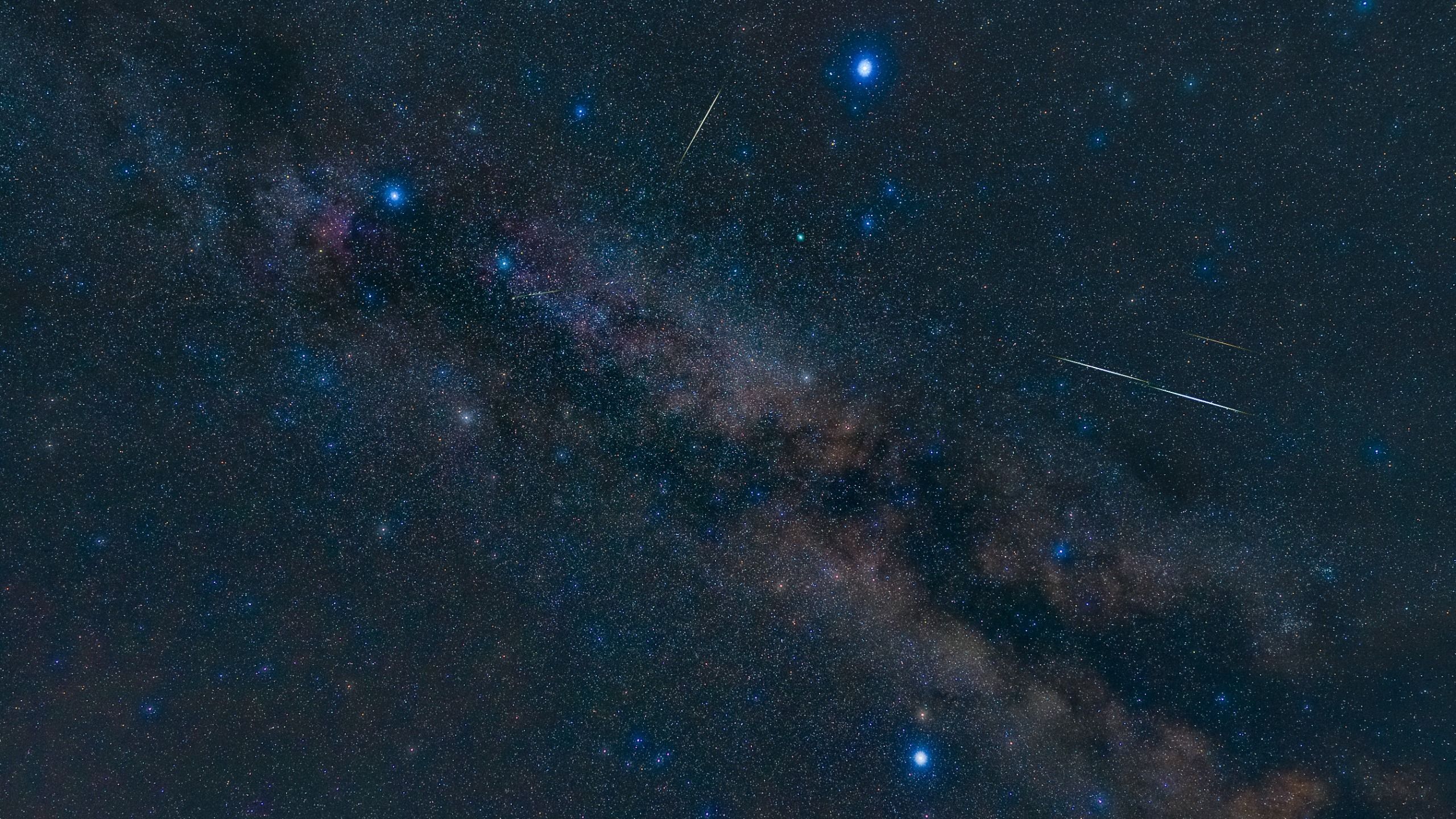
A deeper exploration of the Summer Triangle reveals a fascinating trick of perspective. Vega, Altair, and Deneb appear roughly balanced in brightness to the naked eye, leading casual observers to assume they share similar physical properties. In reality, these three luminaries exist at drastically different distances from Earth, rendering their apparent brightness a cosmic illusion.
The closest of the three is Altair, situated approximately 16.7 light-years away from our solar system. Vega follows closely behind at a distance of roughly 25 light-years. Both stars are relatively close neighbors in our local galactic stellar neighborhood. Deneb, however, shatters this scale by lying at a staggering distance estimated conservatively at 1,600 light-years, with some professional estimates ranging from 1,400 to upwards of 2,600 light-years away.
This immense distance means that when stargazers look at Deneb tonight, the photons hitting their retinas began their journey nearly two millennia ago, around the twilight days of the Roman Empire. Deneb maintains its prominent first-magnitude status (specifically +1.3) despite this immense abyss because it is an extraordinarily rare and luminous blue supergiant star. Astrophysicists calculate that Deneb shines with an intrinsic luminosity at least 55,000 times greater than that of our sun. While Vega and Altair function essentially as stellar penlights shining from down the cosmic street, Deneb operates as a colossal stellar lighthouse positioned across the vast expanse of the Orion Arm.
Linguistic Nuances: The Pronunciation of Vega
Discussions surrounding the constituent stars of the Summer Triangle frequently touch upon nomenclature and pronunciation, a linguistic detail that gained widespread public attention following the release of the 1997 science fiction drama film "Contact." Based on the acclaimed 1985 novel by astronomer Carl Sagan, the film stars Jodie Foster as Dr. Ellie Arroway, a researcher who detects an extraterrestrial radio transmission originating from the vicinity of Vega.
Throughout the cinematic adaptation, the star’s name is pronounced "Vey-gah," a phonetic choice that bears a striking phonetic resemblance to the Chevrolet Vega, a popular subcompact automobile manufactured during the 1970s. However, professional astronomers and astronomical educators adhere to a distinctly different traditional pronunciation.
In standard astronomical circles, Vega is pronounced "Vee-gah," with the primary vocal emphasis placed firmly upon the long "ee" sound in the first syllable. The late George Lovi (1939–1993), a widely respected authority on star names and celestial nomenclature, frequently used a memorable mnemonic to correct casual mispronunciations for public audiences: "Vee-ga is a star and Vey-gah is a car."
Historical Origins: Who Named the Summer Triangle?
Despite its status as one of the most recognizable unofficial patterns in the night sky, the precise origin of the name "Summer Triangle" has been the subject of considerable historical debate among astronomy historians.
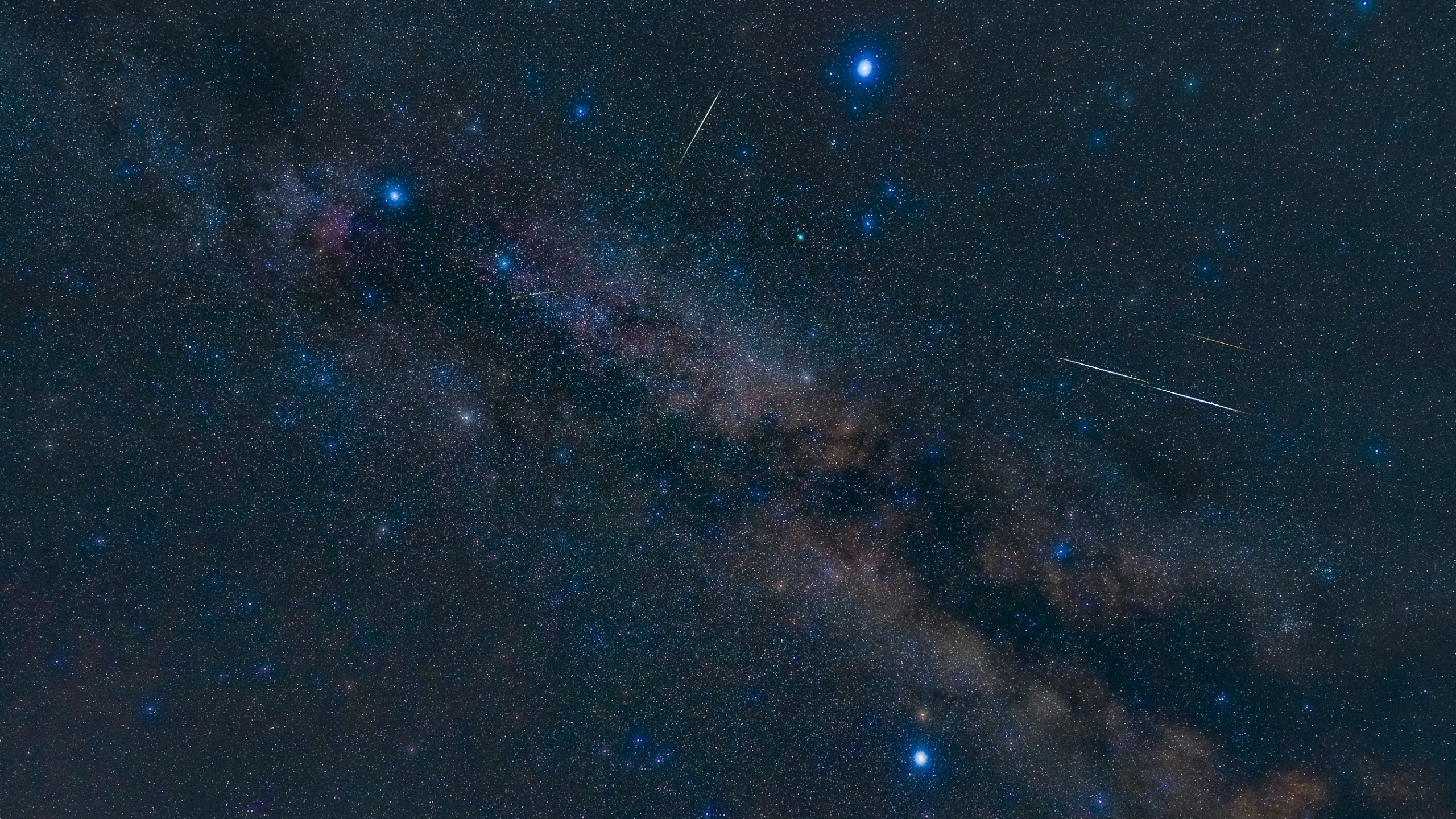
Several prominent sources attribute the popularization of the term to the legendary British astronomer and broadcaster Sir Patrick Moore (1923–2012). Moore frequently recounted a pivotal moment in science communication history, writing, "During a 1958 television broadcast on the BBC, I introduced the nickname of the Summer Triangle, and everyone now seems to use the term, even though it is completely unofficial."
However, historical records demonstrate that the term and its variants appeared in print prior to Moore’s 1958 broadcast. In his influential 1952 sky guide, "The Stars — A New Way to See Them," German-born American author and illustrator H.A. Rey (1898–1977)—best known for creating the "Curious George" children’s book series—referred to the grouping as a "right triangle." Just two years later, in his 1954 children’s educational book "Find the Constellations," Rey explicitly utilized the moniker "Summer Triangle."
Other historians suggest the term gained wider currency earlier still, integrated into U.S. military navigator training manuals during World War II to help pilots and sailors orient themselves under the night sky. Furthermore, European astronomy records indicate that Austrian astronomer Oswald Thomas (1882–1963) referred to Vega, Altair, and Deneb as the "Grosses Dreieck" (Great Triangle) in the late 1920s, later refining it to "Sommerliches Dreieck" (Summerly Triangle) by 1934.
Implications for Modern Stargazing and Education
The enduring prominence of the Summer Triangle in both academic discussions and backyard astronomy underscores the vital role that asterisms play in science outreach. Because the International Astronomical Union (IAU) officially recognizes only 88 formal constellations with rigid boundaries, unofficial patterns like the Summer Triangle, the Big Dipper, and the Winter Hexagon serve as crucial gateways for public engagement.
For modern educators, planetariums, and science communicators, the Summer Triangle offers a multifaceted teaching tool. It bridges the gap between naked-eye stargazing and advanced astrophysics, allowing astronomy instructors to explain complex concepts such as stellar parallax, absolute versus apparent magnitude, the life cycles of massive supergiant stars, and the historical evolution of star catalogs.
As autumn transitions steadily into the freezing expanse of winter, the Summer Triangle will eventually sink further toward the western horizon, making way for new seasonal constellations. Yet, its historical journey from a German astronomical observation in the 1920s to a household term cemented by mid-century broadcasters and educators ensures that Vega, Altair, and Deneb will continue to command human curiosity for generations to come, regardless of what the seasonal calendar dictates.