SpaceX Achieves Major Milestone with Starship Flight 13 Launch and Successful Deployment of Functional Starlink Satellites

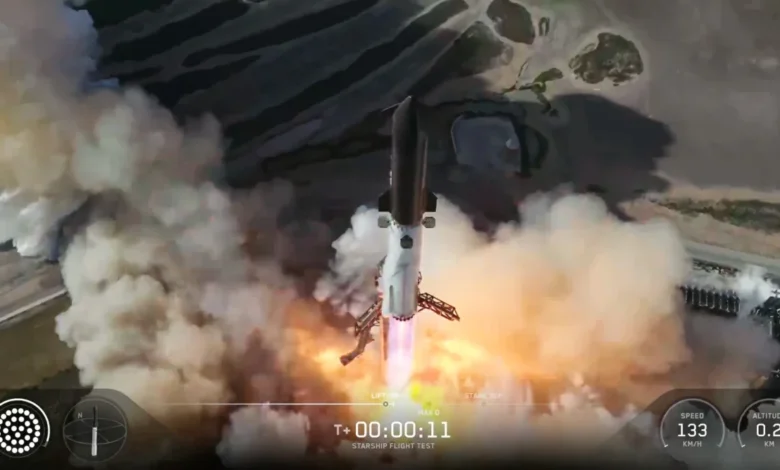
SpaceX successfully launched its Starship launch vehicle on its 13th suborbital test flight on July 24, marking a significant transition from purely experimental testing to operational utility. Lifting off from the company’s Starbase facility in Boca Chica, Texas, at 6:51 p.m. Eastern, the mission—designated Flight 13—demonstrated critical improvements in vehicle reliability and achieved a historic first: the deployment of functional Starlink V3 satellites into a suborbital trajectory for systems testing. While the mission encountered some hurdles with the Super Heavy booster’s landing burn, the Starship upper stage completed its most successful reentry to date, splashing down intact in the Indian Ocean.
The launch followed a 24-hour delay caused by dense cloud cover over the Texas coast. Although SpaceX officials confirmed that the weather did not pose a safety risk to the vehicle itself, the mission profile required clear visibility for high-fidelity ground-based imaging systems to track the vehicle’s ascent and capture engineering data. This emphasis on data collection has become a hallmark of the Starship development program, which relies on iterative testing to refine the world’s most powerful rocket.
Technical Evolution: The Arrival of Starship V3
Flight 13 represented the second outing for the Starship V3 architecture. This upgraded version of the spacecraft features several structural and internal enhancements designed to move the platform closer to its final orbital configuration. The V3 variant is characterized by improved propellant tank capacity, upgraded avionics, and a more robust Thermal Protection System (TPS).
One of the primary objectives of Flight 13 was to validate fixes implemented after Flight 12, which experienced several engine-related anomalies. Specifically, SpaceX engineers focused on the reliability of the Raptor engines during the high-stress environments of stage separation and the "boostback" maneuvers. The V3 ship also features a refined payload bay door—often referred to as the "Pez dispenser"—which was put to its most rigorous test yet during this mission.
The Starlink V3 Deployment Milestone
The centerpiece of Flight 13 was the deployment of 20 Starlink V3 satellites. In previous test flights, SpaceX utilized mass simulators—inert blocks of metal designed to mimic the weight and balance of a payload—to test the ship’s handling. On Flight 13, however, the cargo consisted of fully functional satellites.

Shortly after the Starship upper stage reached its coast phase, the payload dispenser successfully released the 20 units. Although the vehicle was on a suborbital trajectory, the satellites were activated to perform a battery of critical tests. Over a 20-minute window, the satellites deployed their solar arrays and communication antennas. Most significantly, SpaceX confirmed that the satellites established both radio-frequency (RF) and laser-interlink communications.
Michael Nicolls, a senior executive at SpaceX, confirmed the success of the payload operations via social media, stating that the team had successfully downloaded key telemetry from all 20 satellites. This test proves that Starship is capable of the precision deployment required for its future role as the primary backbone of the Starlink constellation, which currently relies on the smaller Falcon 9 rocket.
Flight Chronology: From Liftoff to Splashdown
The mission began with a nominal liftoff, as the 33 Raptor engines on the Super Heavy booster propelled the nearly 400-foot-tall stack through the period of maximum aerodynamic pressure (Max-Q). Following a successful hot-staging maneuver—where the upper stage ignites its engines while still attached to the booster—the Super Heavy began its return journey toward the Gulf of Mexico.
As with Flight 12, SpaceX opted not to attempt a return to the "Mechazilla" launch tower arms, choosing instead to target a soft splashdown in the ocean to further test landing precision. However, the booster phase was not without incident. During the final landing burn, several Raptor engines failed to ignite. SpaceX reported that this caused the booster to impact the water at a higher velocity than intended. Despite the hard impact, the booster provided valuable data on engine restart constraints in high-dynamic environments.
Meanwhile, the Starship upper stage continued its journey. In a significant technical demonstration, the ship performed a relight of a single Raptor engine while in the vacuum of space. This burn lasted approximately 14 seconds, providing the necessary data for future deorbit burns required for orbital missions.
The reentry phase proved to be the most successful in the program’s history. Starship navigated the intense heat of atmospheric reentry, with its improved heat shield tiles appearing to hold firm. Approximately 65.5 minutes after liftoff, the vehicle performed its landing flip and executed a soft splashdown in the Indian Ocean. In a departure from previous flights where the ship exploded upon contact or shortly after, the Flight 13 vehicle remained intact, floating on the surface and continuing to transmit imagery and telemetry.

"This is the first time we’ve put an intact Starship in the water," said SpaceX spokesperson Dan Huot during the live webcast. He described the event as a "dream scenario" for the engineering teams tasked with analyzing the durability of the heat shield and the structural integrity of the hull after the stresses of reentry.
Overcoming the July 16 Launch Abort
The success of July 24 was preceded by a tense week at Starbase. An initial launch attempt on July 16 was aborted just seconds after engine ignition. An investigation into the scrub revealed that four of the 33 engines on the Super Heavy booster failed to reach the required spin parameters.
The root cause was identified as an "off-nominal spin response" in the liquid oxygen turbopumps. Engineers discovered that moisture had accumulated within the pump housings during the pre-launch chilling process. When this moisture came into contact with the ultra-cold cryogenic propellants, it froze, creating ice that hindered the rotation of the turbopumps.
SpaceX moved quickly to rectify the issue, replacing the affected engines and implementing new purging protocols to ensure the pumps remain dry during the fueling process. One of the removed engines was sent to SpaceX’s test facility in McGregor, Texas, where it successfully completed a full-duration firing, confirming that the issue was environmental rather than a fundamental design flaw in the Raptor hardware.
Supporting Data and Mission Specifications
The sheer scale of the Starship system continues to set it apart from any other launch vehicle in history. The following data points highlight the technical demands of Flight 13:
- Total Thrust: Approximately 17 million pounds at liftoff, nearly double that of the NASA Space Launch System (SLS).
- Propellant Load: The vehicle utilizes a combination of sub-cooled liquid methane (CH4) and liquid oxygen (LOX).
- Starship V3 Dimensions: The upper stage stands roughly 50 meters tall, with a diameter of 9 meters.
- Payload Capacity: While Flight 13 carried 20 satellites, the final orbital version of Starship is expected to carry over 100 Starlink satellites per launch.
- Reentry Velocity: The vehicle hit the upper atmosphere at speeds exceeding Mach 20, testing the limits of the ceramic thermal tiles.
Strategic Implications and the Path to Orbit
The success of Flight 13 has significant implications for both SpaceX and its primary customer, NASA. Under the Artemis program, NASA has contracted SpaceX to provide a modified version of Starship to serve as the Human Landing System (HLS) for the Artemis III and IV missions, which aim to return astronauts to the lunar surface.

The ability to successfully relight engines in space and survive reentry are "gatekeeper" technologies for the lunar mission. Furthermore, the deployment of functional satellites signals to the commercial market that Starship is nearing operational readiness.
Industry analysts suggest that the "intact splashdown" is the most vital takeaway from Flight 13. By recovering a ship that has survived the "plasma hole"—the period during reentry where communication is usually lost due to ionized gas—SpaceX can inspect the physical hardware to see exactly where the thermal protection system was most strained. This will likely lead to even further refinements for Flight 14.
Future Outlook: Flights 14 and 15
Following the conclusion of Flight 13, attention has turned to the rapid cadence of the Starship program. SpaceX President Gwynne Shotwell previously indicated that if Flight 13 met its primary objectives, the company would move toward its first true orbital attempt with Flight 14.
An orbital mission would require the vehicle to reach a velocity sufficient to remain in space, followed by a controlled deorbit burn to target a specific landing zone. Beyond that, Flight 15 is rumored to be the first Starship launch from the company’s new facilities at Kennedy Space Center in Florida. The move to Florida would signify the transition of Starship from a R&D project in the Texas desert to a mainstream orbital workhorse operating alongside the Falcon 9 at the world’s busiest spaceport.
As SpaceX continues to analyze the mountains of data recovered from the Indian Ocean splashdown, the aerospace community remains focused on the rapid evolution of the Starship platform. With each flight, the company moves closer to its goal of a fully reusable, rapidly deployable heavy-lift vehicle that could fundamentally change the economics of space exploration.
Related posts: