World’s Most Powerful Solid Fuel Rocket Gravity-1 Completes Third Successful Mission from Sea-Based Launch Platform

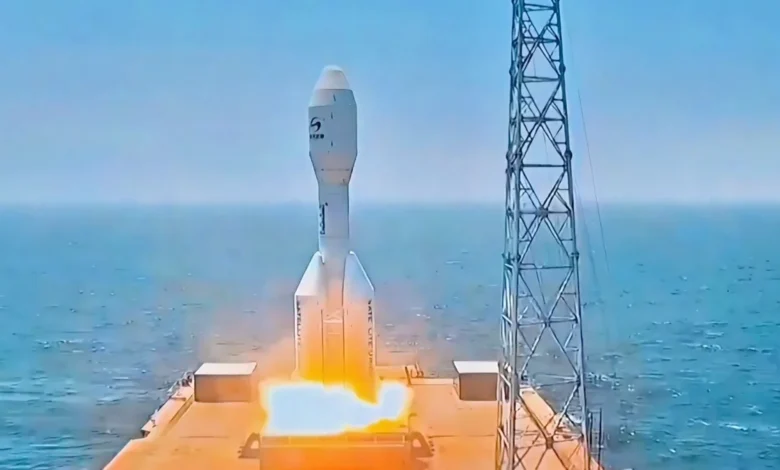
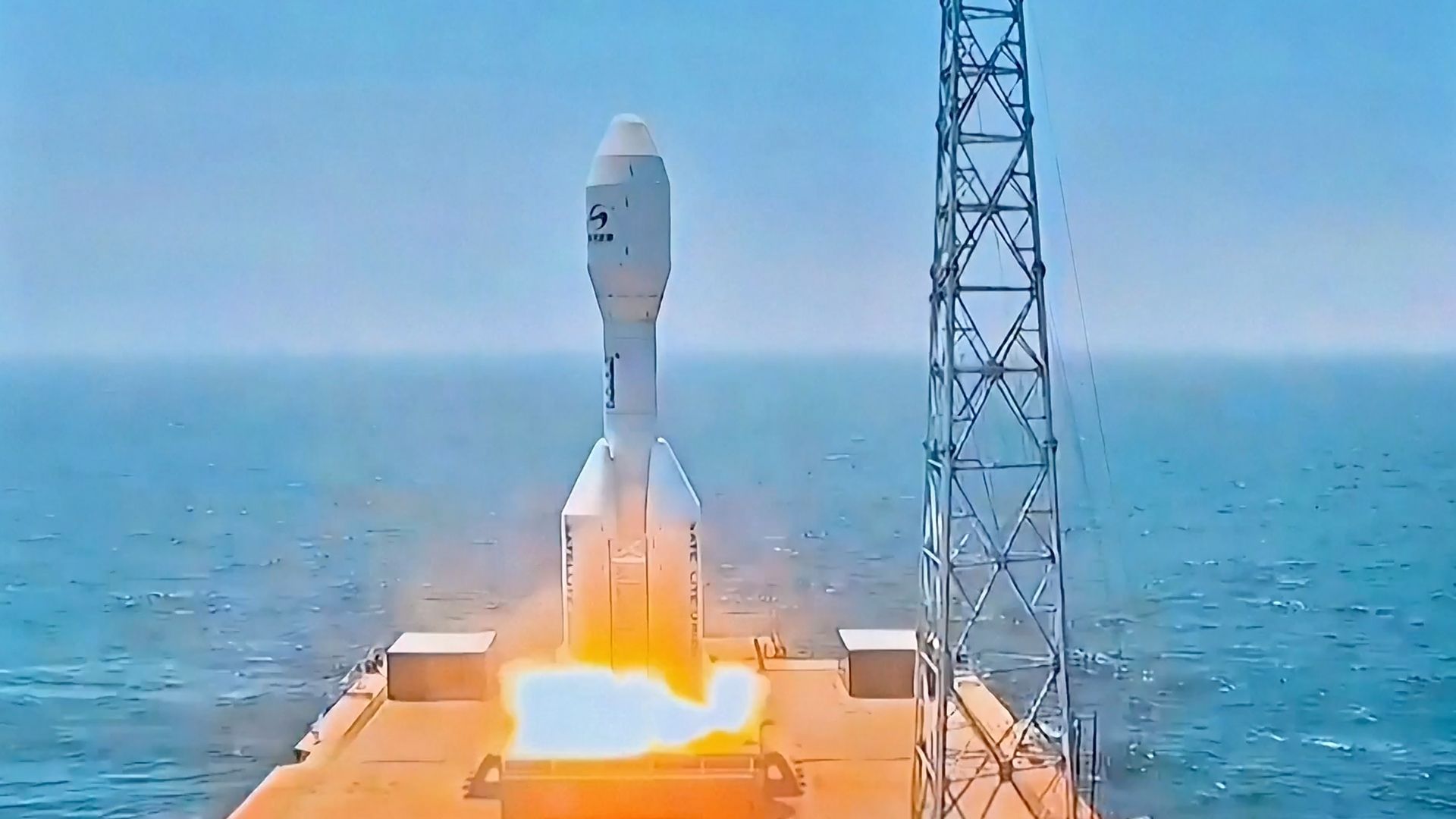
In a significant milestone for the global commercial space industry, the Gravity-1 rocket, currently the world’s most powerful solid-fuel launch vehicle, successfully completed its third mission on Tuesday night. The mission, operated by the Chinese aerospace firm Orienspace, saw the uniquely designed rocket lift off from a mobile launch platform stationed in the waters off the coast of Shanghai. This successful deployment further solidifies the role of sea-based launches in China’s rapidly expanding space infrastructure and highlights the increasing reliability of high-capacity solid-propellant technology.
The launch occurred at 10:54 p.m. EDT on July 21, 2026 (which corresponded to 10:54 a.m. Beijing time on July 22). According to reports from the state-run news agency Xinhua, the mission was a total success, with the rocket’s upper stage successfully deploying all nine satellite payloads into their predetermined orbits. While specific technical details regarding the functions of these nine satellites were not immediately disclosed by Orienspace or government officials, the mission is widely understood to be part of a broader effort to bolster China’s low Earth orbit (LEO) satellite architecture.
Technical Profile of the Gravity-1 Launch Vehicle
The Gravity-1 rocket is a departure from the traditional aesthetic of long, slender orbital boosters. Standing approximately 100 feet (30 meters) tall, the vehicle is characterized by a "squat and stubby" appearance, a result of its unique configuration designed to maximize thrust and payload capacity while maintaining structural stability for sea-based operations.
To put its size into perspective, Gravity-1 is less than half the height of SpaceX’s Falcon 9, which stands at roughly 230 feet (70 meters). However, height is not the primary metric of the rocket’s capability. Gravity-1 utilizes a sophisticated three-stage core assisted by four powerful strap-on boosters. Critically, all components of the propulsion system—both the core stages and the boosters—utilize solid rocket motors.
The use of solid fuel offers several logistical advantages, particularly for commercial operators. Solid rockets are generally easier to store and transport than their liquid-fueled counterparts, which require complex cryogenic cooling systems and volatile fueling procedures shortly before liftoff. The "ready-to-fire" nature of solid fuel allows for rapid response times, making Gravity-1 an ideal candidate for emergency satellite replacement or quick-turnaround commercial missions.
In terms of lift capacity, Gravity-1 is capable of delivering up to 14,300 pounds (6,500 kilograms) of payload to low Earth orbit. This makes it the undisputed leader in the solid-fuel category. For comparison, while the liquid-fueled Falcon 9 can haul significantly more (over 50,000 pounds), the Gravity-1 occupies a specialized niche, providing a high-thrust, high-capacity solution for medium-sized constellations and heavy individual payloads that do not require the massive scale of a heavy-lift liquid rocket.
A Chronology of Success: From Maiden Flight to Operational Maturity
The July 2026 mission marks the third consecutive success for Orienspace’s flagship vehicle, maintaining a 100% success rate since its debut. The rapid development and deployment cycle of the Gravity series reflect the accelerating pace of the Chinese private space sector.
- Inaugural Flight (January 2024): Gravity-1 made its debut with a spectacular sea-based launch that immediately caught the attention of the international space community. This mission proved the viability of the "squat" aerodynamic design and the effectiveness of the four-booster configuration.
- Second Mission (October 2025): The second flight served to validate the consistency of the manufacturing process and the reliability of the sea-launch logistics. By launching from the ocean for a second time, Orienspace demonstrated that sea-based platforms were not a one-off experiment but a core component of their operational strategy.
- Third Mission (July 2026): The most recent launch confirmed the vehicle’s readiness for high-cadence operations. By successfully deploying nine satellites at once, Orienspace showcased the rocket’s ability to handle complex multi-payload deployments, a necessity for building modern satellite constellations.
The Strategic Importance of Sea-Based Launches
The decision to launch Gravity-1 from a ship off the coast of Shanghai is a strategic choice driven by safety, flexibility, and physics. China’s traditional inland launch sites, such as Jiuquan or Xichang, often require boosters to fall over land, necessitating the evacuation of downrange areas to mitigate the risk to civilian populations.
By utilizing sea-based platforms, Orienspace can position the launch site far from populated areas, allowing for safer ascent trajectories. Furthermore, sea launches provide the flexibility to adjust the launch point based on the desired orbital inclination. Launching closer to the equator, for instance, allows a rocket to take greater advantage of the Earth’s rotational speed, effectively increasing the payload capacity of the vehicle without requiring additional fuel.
Xu Guoguang, the chief designer of Gravity-1, emphasized that the success of these solid-fuel missions is a stepping stone for even more ambitious projects. "Sea launch of solid-propellant rockets paves the way for future launch of liquid rockets at sea," Xu stated in an interview with CGTN. He further noted that the company is exploring even more stable platforms, such as converted offshore drilling rigs, which could provide a permanent, ultra-stable maritime infrastructure for heavy-lift missions.
Orienspace and the Future Roadmap: Gravity-2 and Gravity-3
While Gravity-1 has secured its place as a leader in the solid-fuel market, Orienspace is already looking toward the next generation of orbital technology. The company’s roadmap includes the development of Gravity-2 and Gravity-3, vehicles that will move away from an all-solid design in favor of hybrid and liquid-fueled systems.
Gravity-2, which is currently in an advanced stage of development, is expected to feature a liquid-fueled core stage paired with solid rocket boosters. This configuration aims to combine the high initial thrust of solid fuel with the efficiency and precision of liquid engines for the later stages of flight. Reports suggest that Gravity-2 could see its maiden flight as early as late 2026.
Following Gravity-2, the company plans to introduce Gravity-3, an even larger vehicle designed to compete in the heavy-lift market. These future iterations are expected to incorporate reusability features, reflecting a global trend toward lowering the cost of access to space through the recovery and refurbishment of first-stage boosters.
Broader Implications for the Global Space Economy
The success of Gravity-1 is more than just a win for Orienspace; it represents a shift in the competitive landscape of the global space economy. As the demand for satellite internet constellations—such as the "Thousand Sails" or G60 Starlink projects—continues to grow, the industry requires a diverse array of launch options.
The ability to rapidly deploy mid-sized batches of satellites via solid-fuel rockets provides a level of orbital agility that was previously unavailable. While liquid-fueled rockets remain the workhorses for heavy payloads and deep-space missions, the reliability and simplified logistics of the Gravity-1 platform offer a compelling alternative for commercial satellite operators who prioritize schedule certainty and cost-effectiveness.
Furthermore, the integration of private enterprises into the Chinese space ecosystem marks a significant evolution. For decades, the sector was dominated exclusively by state-run entities. The rise of companies like Orienspace, LandSpace, and Galactic Energy suggests a maturing market where private innovation is actively encouraged to complement national space goals.
Conclusion
The third successful mission of Gravity-1 underscores the viability of high-capacity solid-fuel rockets and the strategic utility of maritime launch operations. By achieving a perfect flight record over its first three missions, Orienspace has transitioned from a promising startup to a formidable player in the international launch market.
As the company prepares for the upcoming launch of a batch of internet satellites in the coming months and the debut of the liquid-core Gravity-2, the eyes of the aerospace world will remain fixed on the East China Sea. The "stubby" rocket that many once viewed as an architectural oddity has proven itself to be a cornerstone of modern orbital delivery, proving that in the race for space, reliability and innovative logistics are just as vital as raw power.