NASA Invites Media to Virtual News Conference on Nancy Grace Roman Space Telescope Mission Preview and Launch Details

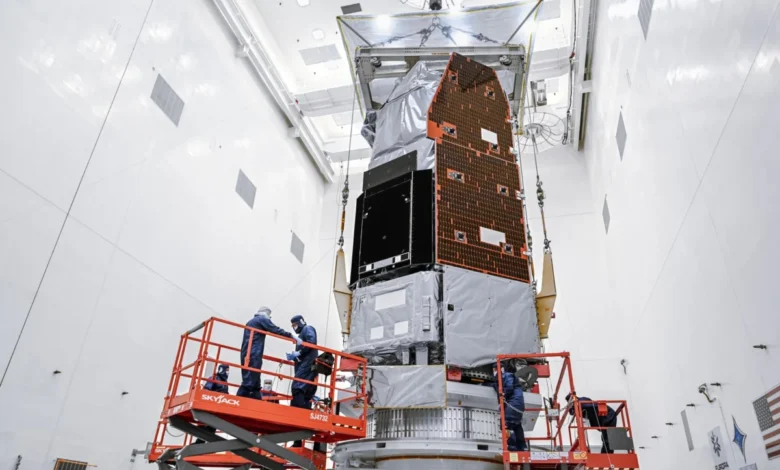
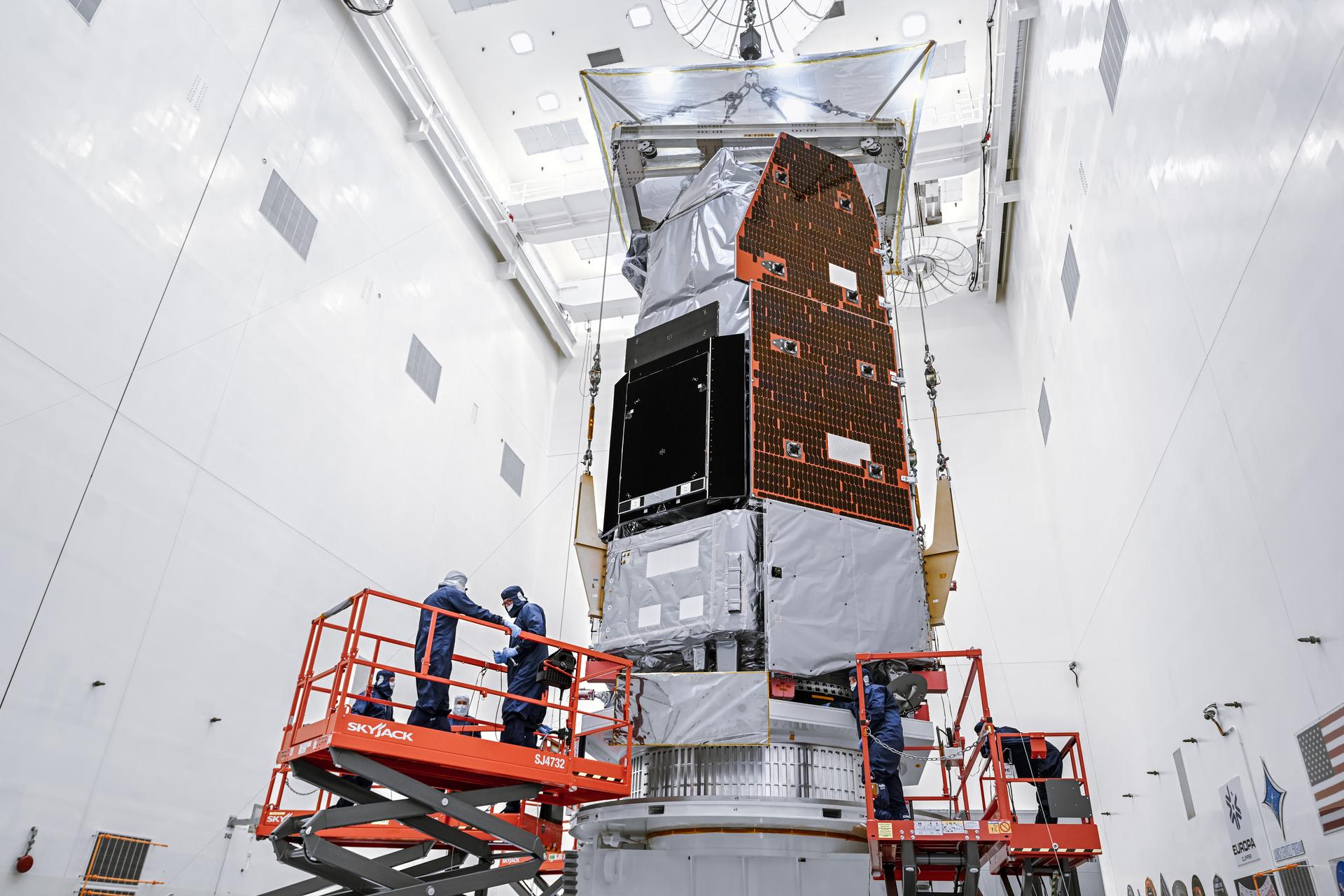
NASA has officially scheduled a virtual news conference for 2 p.m. EDT on Wednesday, July 29, to provide a comprehensive preview of the Nancy Grace Roman Space Telescope mission, a flagship observatory designed to settle fundamental questions in the realms of cosmology and exoplanetary science. The briefing comes ahead of the mission’s highly anticipated launch from the Kennedy Space Center in Florida, currently slated for Sunday, August 30, 2026. This mission represents the next great leap in NASA’s astrophysics fleet, promising to capture images with the same depth and clarity as the Hubble Space Telescope but with a field of view 100 times larger. By surveying vast swaths of the sky in infrared light, Roman will allow scientists to observe billions of galaxies and thousands of planets, fundamentally altering the human understanding of the universe’s evolution and the search for habitable worlds.
The upcoming news conference will feature a panel of senior NASA officials, mission scientists, and project managers who will discuss the observatory’s current status, the complexities of the launch window, and the scientific milestones expected during its primary five-year mission. NASA will stream the event live across its official digital platforms, including NASA+, the agency’s website, and various social media channels. For members of the media, the briefing offers a critical opportunity to engage with the technical experts responsible for the telescope’s development at the Goddard Space Flight Center and the Jet Propulsion Laboratory. Participation by phone requires an RSVP to the agency’s media relations office no later than two hours before the start of the event.
The Visionary Behind the Name: Nancy Grace Roman
The telescope is named in honor of Dr. Nancy Grace Roman, NASA’s first chief astronomer and the woman often referred to as the "Mother of Hubble." Dr. Roman was a tireless advocate for space-based observatories, recognizing as early as the 1960s that the Earth’s atmosphere blurred the view of distant stars. Her leadership was instrumental in the planning and funding of the Hubble Space Telescope, which revolutionized astronomy after its launch in 1990. By naming this new wide-field observatory after her, NASA acknowledges her legacy of expanding the boundaries of human knowledge through technological innovation.
The Nancy Grace Roman Space Telescope, formerly known as the Wide-Field Infrared Survey Telescope (WFIRST), was the top-ranked large-scale space mission in the 2010 Astronomy and Astrophysics Decadal Survey. Its primary objective is to address essential questions regarding dark energy, dark matter, and the distribution of galaxies across the cosmos. While the James Webb Space Telescope (JWST) is designed to look deep into specific, small patches of the sky to see the first stars and galaxies, Roman is designed to take the "big picture" approach, mapping the universe on a scale that was previously impossible.
Technical Specifications and the Power of the Wide Field Instrument
At the heart of the Roman Space Telescope is a 2.4-meter (7.9-foot) diameter primary mirror, the same size as Hubble’s mirror. However, Roman’s optical design allows it to capture a much larger area of the sky in a single exposure. This "wide-field" capability is achieved through the Wide Field Instrument (WFI), a 300-megapixel camera that provides a field of view of 0.281 square degrees. To put this in perspective, a single image from Roman will contain as much detail as 100 Hubble images stitched together, but it will take only a fraction of the time to acquire.
The WFI will operate in the near-infrared spectrum, covering wavelengths from 0.48 to 2.3 microns. This range is crucial for peering through cosmic dust clouds that obscure visible light and for observing distant galaxies whose light has been "redshifted" by the expansion of the universe. Over the course of its mission, Roman is expected to generate massive amounts of data—roughly 20 petabytes—which will be made available to the global scientific community. This "open data" policy is expected to fuel thousands of independent research projects, ranging from the study of stellar populations in the Milky Way to the identification of the most distant quasars.
Advancing Exoplanet Science: The Roman Coronagraph Instrument
Beyond its survey capabilities, the Roman Space Telescope will carry a high-contrast Coronagraph Instrument (CGI). This is a technology demonstration that aims to test the most advanced methods ever flown in space for "blocking out" the overwhelming glare of a star to see the faint planets orbiting it. Direct imaging of exoplanets is notoriously difficult; a star is typically billions of times brighter than the planets that surround it, much like trying to see a firefly hovering next to a searchlight from miles away.
The Roman Coronagraph will utilize a series of complex masks, prisms, and self-flexing mirrors to suppress starlight to a level of one part in a billion. This level of precision is a thousand-fold improvement over previous space-based coronagraphs. While the CGI is primarily a technical testbed, it is expected to characterize the atmospheres of "Jupiter-like" gas giants around nearby stars. The lessons learned from this instrument will be foundational for future missions, such as the proposed Habitable Worlds Observatory, which will aim to find and image "Earth-twins" and search for chemical signatures of life, such as oxygen and methane.
Investigating the Dark Universe: Energy and Matter
One of the most profound mysteries in modern physics is why the expansion of the universe is accelerating. Scientists attribute this acceleration to a mysterious force called "dark energy," which makes up approximately 68% of the universe’s energy-matter content. Another 27% is composed of "dark matter," an invisible substance that provides the gravitational "glue" holding galaxies together. Regular matter—everything we can see, from planets to people—makes up only about 5%.
Roman is specifically designed to investigate these phenomena through three distinct methods:
- Weak Gravitational Lensing: By measuring the subtle distortions in the shapes of billions of distant galaxies caused by the gravity of intervening dark matter, Roman will create a high-resolution map of the universe’s large-scale structure.
- Galaxy Clustering: By mapping the positions of millions of galaxies in three dimensions, scientists can trace the history of cosmic expansion and determine how dark energy has fought against gravity over billions of years.
- Supernova Survey: Roman will detect thousands of Type Ia supernovae at vast distances. Because these stellar explosions have a known intrinsic brightness, they serve as "standard candles" to measure cosmic distances and the rate of expansion over time.
Mission Timeline and Global Collaboration
The journey to the August 30 launch has been a decade-long endeavor involving thousands of engineers and scientists. The project is managed by NASA’s Goddard Space Flight Center in Greenbelt, Maryland, with significant contributions from the Jet Propulsion Laboratory (JPL) and Caltech/IPAC in California. The Space Telescope Science Institute (STScI) in Baltimore, which also manages Hubble and Webb operations, will serve as the science operations center for Roman.
The mission is also a testament to international cooperation. Contributions have been provided by the European Space Agency (ESA), the Japan Aerospace Exploration Agency (JAXA), the French space agency CNES, and the Max Planck Institute for Astronomy in Germany. On the industrial side, BAE Systems Inc., L3Harris Technologies, and Teledyne Scientific & Imaging have been the primary partners in constructing the spacecraft and its sensitive instruments.
Following the launch on a commercial heavy-lift rocket from Kennedy Space Center, the telescope will travel to the second Lagrange point (L2), located approximately 1.5 million kilometers (1 million miles) from Earth in the direction opposite the Sun. This stable orbital position allows the telescope to keep the Sun, Earth, and Moon behind its sunshield, providing the cold and dark environment necessary for sensitive infrared observations. After a period of commissioning and calibration lasting several months, the first science images and data sets are expected to be released in early 2027.
Broader Impact and Scientific Implications
The launch of the Nancy Grace Roman Space Telescope marks a shift in the strategy of space-based astrophysics. While previous missions have focused on "pointed" observations of specific targets, Roman’s strength lies in its statistical power. By observing millions of objects simultaneously, it will allow astronomers to conduct "big data" science in space.
For example, Roman’s Galactic Bulge Time-Domain Survey will monitor hundreds of millions of stars in the center of our galaxy every 15 minutes for months at a time. Through a technique called gravitational microlensing—where the gravity of a foreground planet acts like a magnifying glass for a background star—Roman is expected to find over 2,500 exoplanets. This will include "rogue" planets that wander through space without a host star and small, rocky planets that are difficult for other telescopes to detect.
Ultimately, the Roman Space Telescope will provide the connective tissue between the discoveries of the past and the questions of the future. It will work in tandem with the James Webb Space Telescope and ground-based observatories like the Vera C. Rubin Observatory in Chile to provide a multi-faceted view of the cosmos. As the July 29 news conference approaches, the scientific community and the public alike stand on the precipice of a new era of discovery, one that promises to reveal the hidden architecture of the universe and our place within it. Media members and the general public are encouraged to follow the briefing and the subsequent launch preparations as NASA prepares to send this revolutionary "wide-eye" into the stars.