Google is expanding access to Gemini 4 Carbon for AI Pro subscribers in Antigravity as part of a broader model tier restructuring

Following a whirlwind month of rapid-fire artificial intelligence model deployments, Google has officially announced a significant restructuring of its Antigravity platform access tiers. The search giant is making its powerful Gemini 4 Carbon model available to subscribers of its AI Pro service, which costs $19.99 per month. This move represents a notable democratization of Google’s high-end generative AI capabilities, as Carbon was previously locked behind the more expensive AI Ultra tier, priced at $99.99 monthly.
The announcement, communicated by Google leadership earlier today, underscores a strategic shift in how the company manages its computational resources and user-facing model distribution. By moving Carbon into the mid-tier AI Pro bracket, Google is effectively signaling a transition in its product lifecycle management, where once-exclusive models become standard offerings for power users. Simultaneously, Google confirmed that its Hydrogen model will now be available to all Antigravity users, fulfilling a previously stated roadmap commitment to provide broader access to its mid-range model architecture.
A Chronology of Recent Antigravity Updates
The landscape of Google’s Antigravity platform has been characterized by extreme volatility and frequent updates throughout November 2026. This latest development follows a flurry of activity that has seen the platform iterate on its core infrastructure and model availability on a near-daily basis.
The week began with intense pressure on the platform’s capacity, leading to a critical infrastructure milestone on Saturday. During that period, the development team implemented a series of caching optimizations. According to internal metrics shared by the team, these engineering enhancements successfully increased the effective user quota—the amount of work a user can complete within their allotted usage limits—by approximately 22%. To celebrate these efficiency gains and accommodate the new model rollouts, Google performed a total reset of all Gemini quotas for every user on the Antigravity platform.

This reset was not an isolated event but rather part of a larger trend of capacity management. As the platform matures, Google has been forced to balance the high computational demand of its "Orchestrator" and "Executor" frameworks with the physical limitations of its data center clusters. The Saturday quota reset served as a "clean slate" mechanism, ensuring that as more users gained access to advanced models like Carbon, the system remained performant and responsive.
Technical Enhancements to the Orchestrator Interface
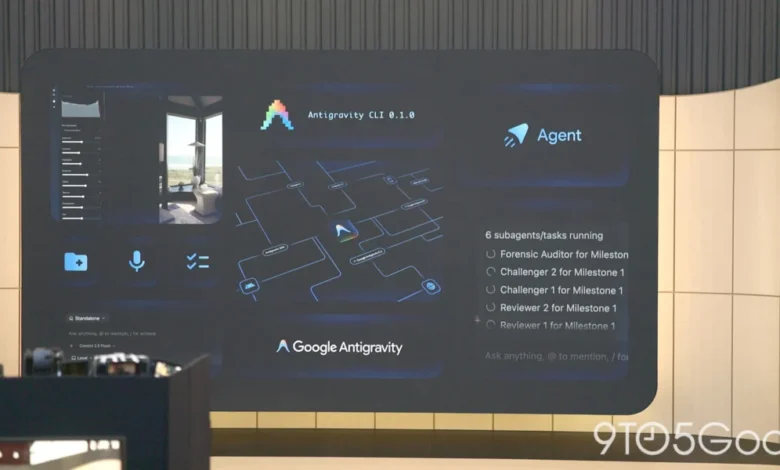
Beyond model availability, Google has refined the user experience within the Antigravity environment. A primary focus of this update is the Orchestrator—the engine responsible for managing, directing, and executing complex AI tasks across different model sets.
Users can now access a granular control panel by navigating to Settings > Models > Orchestrator Settings. This interface upgrade provides a more intuitive environment for selecting specific model pairings and defining effort levels. The flexibility offered here is significant; users can now explicitly dictate which model acts as the Orchestrator and which serves as the Executor.
Varun Mohan, a key figure in the project, highlighted the utility of these settings in recent communications, noting that users can now tailor their workflow to specific requirements. For instance, a user might pair "Neon High" as the orchestrator with "Hydrogen High" as the executor, effectively creating a customized inference pipeline. This level of transparency and manual control is indicative of Google’s intent to move Antigravity beyond a simple chat interface and toward a professional-grade development and automation platform.
Strategic Implications of Model Tiering
The decision to migrate Gemini 4 Carbon from the Ultra tier to the Pro tier carries several implications for the competitive landscape of generative AI. By lowering the entry barrier for high-performance reasoning, Google is challenging its competitors to justify the high price points of their own premium offerings.

The $99.99/month AI Ultra tier, while still existing, now faces a repositioning. With the flagship-adjacent Carbon model shifting down, it is anticipated that Google will soon introduce new, even more capable models to fill the void at the top of the hierarchy. This "cascading" model deployment strategy—where state-of-the-art models eventually filter down to lower tiers—allows Google to maximize the lifetime value of its compute clusters.
Furthermore, the scheduled removal of Gemini 4 Argon and Gemini 3.8 Flash from the Antigravity platform on November 30, 2026, marks the end of an era for those specific model architectures. By sunsetting older or less efficient models, Google is forcing a consolidation of its user base onto the most modern, efficient, and cost-effective versions of its Gemini suite. This practice not only optimizes data center power usage but also ensures that the user experience is consistent with the latest safety and capability benchmarks.
Market Context and Future Outlook
The broader context of these changes lies in the ongoing "compute war" between major AI laboratories. As Google continues to refine its infrastructure, the Antigravity platform acts as a sandbox for high-frequency iteration. The ability to deploy models, adjust quotas, and iterate on orchestration logic in real-time is a competitive advantage that few other companies can match at this scale.
Industry analysts suggest that the 22% increase in quota efficiency achieved over the weekend is a testament to the effectiveness of Google’s new caching layers. If such improvements can be sustained, the company could theoretically support a much larger user base without a linear increase in hardware deployment. This is crucial for the long-term sustainability of the AI Pro tier, which has become the primary vehicle for Google to recoup its massive R&D investments.
Looking ahead, the November 30 deadline for the removal of Argon and Flash will likely trigger another wave of internal system rebalancing. Users who have relied on these models for specific workflows are being encouraged to transition their "Orchestrator Settings" to the newer Carbon or Hydrogen variants to ensure compatibility. The proactive communication from the engineering team, including social media updates and clear changelogs, aims to mitigate the friction inherent in such rapid platform evolution.

Summary of Platform Status
As of late November 2026, the Antigravity ecosystem remains in a state of rapid flux. The current status can be summarized as follows:
- Model Access: Gemini 4 Carbon is now available to $19.99/month AI Pro subscribers.
- Universal Access: The Hydrogen model is now standard for all users.
- Quota Management: Total system-wide quota resets were completed following a 22% efficiency gain in task processing.
- Interface Control: The Orchestrator settings have been moved to a dedicated, more user-friendly menu, allowing for custom model/effort pairings.
- Deprecation Schedule: Gemini 4 Argon and 3.8 Flash are scheduled to be removed from the environment on November 30.
The trajectory of Antigravity suggests that Google is moving toward a more modular and user-defined AI experience. By treating the AI interface not just as a chatbot, but as an extensible, configurable workspace, Google is attempting to capture the professional market—specifically developers, data scientists, and power users who require precise control over the models they employ.
The next few weeks will be critical as users adapt to the new model tiers and the removal of legacy versions. For now, the combination of improved quota efficiency and expanded model availability suggests that Google is prioritizing user retention and platform stickiness as it navigates the final month of a record-breaking year for artificial intelligence innovation. The company’s commitment to "upgrading models across tiers" indicates that further shifts in the cost-to-capability ratio are highly probable, keeping the market for premium AI subscriptions in a state of constant, intense competition.