The Resurgence of Cassette Tapes: A Deep Dive into Modern Players and Analog Revival

Everything old eventually becomes new again, and there’s probably no better example of that than the humble cassette tape, a format once consigned to the annals of music history. Yet, it has staged a surprising and undeniable comeback, significantly aided by a new generation of consumers, particularly Gen Z buyers, who are increasingly flocking to physical media as a tangible alternative to the ephemeral nature of streaming and the ubiquitous, always-online culture. While cassette tape sales still represent a relatively small fraction of the overall music market, especially when juxtaposed against the booming vinyl industry, the staggering fact that sales increased by over 400% between 2015 and 2022 is a phenomenon that cannot be overlooked by industry observers or music enthusiasts alike. This remarkable resurgence has, in turn, spurred a renewed demand for playback hardware, prompting a select group of companies to re-enter the market with brand-new cassette players designed for the modern listener.
The Unfolding Chronology of a Niche Revival
The cassette tape, first introduced by Philips in 1963, revolutionized personal audio, offering portability and recordability previously unavailable to the masses. Its golden age spanned from the late 1970s through the 1990s, becoming synonymous with mixtapes, boomboxes, and the iconic Sony Walkman. However, with the advent of the compact disc (CD) in the 1980s, offering superior sound quality and durability, and later the digital revolution of MP3s and streaming services in the late 1990s and early 2000s, the cassette tape rapidly faded into obsolescence. Production of new blank tapes dwindled, and playback devices became relics.
The seeds of its comeback were subtly sown in the early 2010s, initially driven by underground music scenes, independent labels, and niche artists who appreciated the format’s low production cost and unique aesthetic. These early adopters often used cassettes for limited-edition releases, tour merchandise, and as a distinct artistic statement. Cultural touchstones also played a role; the prominent use of a cassette mixtape in Marvel’s "Guardians of the Galaxy" films, starting in 2014, exposed the format to a massive mainstream audience, imbuing it with a sense of cool nostalgia.
By 2015, industry reports began to track a nascent but consistent growth in cassette sales. This momentum accelerated dramatically, culminating in the over 400% increase observed by 2022. This period also coincided with a broader trend of physical media appreciation, largely spearheaded by vinyl’s massive resurgence, which demonstrated a clear consumer appetite for tangible music formats. For many, particularly younger generations, cassettes offer a novel experience, a counterpoint to the endless digital scroll, and a connection to music that feels more personal and deliberate. This desire for physical ownership, coupled with the format’s relative affordability compared to vinyl, cemented its position as a growing, albeit still niche, market segment.
Supporting Data and Market Dynamics
While the percentage growth of cassette sales is impressive, it’s crucial to contextualize it within the broader music industry landscape. In 2022, for instance, cassette sales in the U.S. reached approximately 440,000 units, generating revenues in the low single-digit millions of dollars. This figure pales in comparison to vinyl, which sold millions of units and generated hundreds of millions in revenue, or streaming, which dominates global music consumption with billions of dollars annually. However, the significance lies in the trajectory and the demographic shift.
The primary drivers behind this revival are multi-faceted. Gen Z, having grown up in a purely digital world, finds novelty and tactile satisfaction in physical media. For them, cassettes are not relics of the past but new, "retro" objects that offer a unique aesthetic and a more engaged listening experience. There’s a deliberate act involved in selecting a tape, inserting it into a player, and flipping it over, which stands in stark contrast to the passive consumption of streaming playlists. This demographic is also keen on collecting, and cassettes offer an accessible entry point into physical media collecting due to their lower price point compared to vinyl records.
For independent artists and smaller labels, cassettes represent an economical and distinctive way to distribute music and merchandise. The cost of manufacturing cassettes is significantly lower than vinyl, making it a viable option for limited runs and emerging artists. This symbiotic relationship between artists and a growing fan base further fuels the market. Moreover, the "lo-fi" aesthetic often associated with tape recordings appeals to certain musical genres and artistic expressions, adding another layer of appeal.
Industry analysts suggest that this trend reflects a deeper desire for tangible experiences and a pushback against the perceived ephemerality and data overload of the digital age. Manufacturers, observing this shift, have begun to respond with purpose-built hardware that blends vintage aesthetics with modern conveniences.
The New Wave of Cassette Players: A Blend of Retro and Modern
The return of the cassette tape necessitates hardware to play it, and a few enterprising companies have risen to the occasion, offering brand-new tape players that cater to different segments of this burgeoning market. These modern players often attempt to strike a balance between evoking nostalgia and integrating contemporary features, though they frequently face inherent challenges in matching the audiophile-grade performance of meticulously maintained vintage units.
A common technical metric where modern units often fall short compared to well-calibrated vintage decks is "wow and flutter" (W&F). W&F refers to speed variations in the tape transport mechanism, which can result in undesirable, audible fluctuations in pitch and frequency, particularly noticeable on sustained notes. While vintage units, especially high-end ones, were engineered to minimize W&F, the components and manufacturing tolerances of new, often mass-produced players can make this a particular weakness. However, for many users drawn to the format’s inherent character, these imperfections are part of the charm, contributing to a warmer, more "analog" sound.
We Are Rewind Cassette Player: The Stylish Revivalist
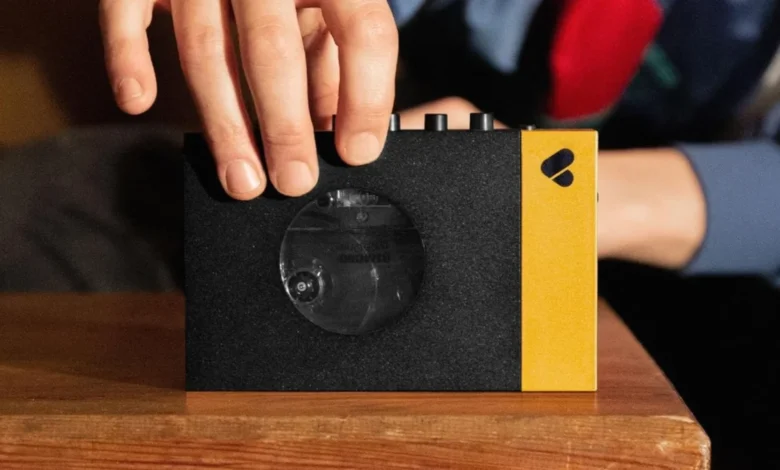
The We Are Rewind Cassette Player has become a recognizable face in the modern Walkman-style player landscape since its launch in late 2023, garnering considerable press coverage. Priced at approximately $160, this device reinterprets the iconic portable player concept with a sleek, retro-futuristic design. Its minimalist aluminum body, available in a palette of colors ranging from vibrant orange to understated gray, clearly targets consumers who value aesthetics as much as function.
Beyond its striking appearance, the We Are Rewind (often shortened to WAR) Cassette Player is a genuinely solid product for those entering the tape ecosystem in 2026. While the format itself dictates that sound will never be "pristine," the WAR player delivers an enjoyable sound signature that faithfully reproduces the source material, complete with its inherent characteristics. A significant modern enhancement is the inclusion of Bluetooth connectivity, allowing users to pair the player with TWS (True Wireless Stereo) earphones or high-quality wireless speakers, bridging the analog experience with digital convenience. Powering this portability is a 2,000mAh rechargeable battery, offering a respectable 10 to 12 hours of playback on a single charge. A notable feature for enthusiasts is the stereo 3.5mm input jack, enabling users to record audio onto blank tapes, though the absence of an input level control is a minor drawback for precise recording. It’s primarily designed as a portable device, and its output is not optimized for direct connection to a full-fledged hi-fi system, limiting its use to headphones or earphones.
Fiio CP13: The Accessible Entry Point
Part of the enduring appeal of cassette tapes lies in their affordability compared to other analog formats like vinyl. The Fiio CP13 capitalizes on this, offering an analog listening experience at a price point of $90 or less, making it highly accessible. Despite its budget-friendly cost, the CP13 does not compromise severely on its core function.
While it omits advanced features like an auxiliary input for recording and Bluetooth connectivity, these omissions are often considered minor for its target audience. The absence of Bluetooth, in particular, aligns well with the resurgence of wired headphones, which are increasingly favored by Gen Z for their sound quality and retro aesthetic, perfectly complementing the CP13’s vintage vibes. Fiio, a brand well-regarded for its audio products, including some of the best modern CD players, ensures that the CP13 performs competently where it matters most: sound reproduction. Users can expect a balanced sound profile that accurately reflects the source material without artificial enhancement. While it won’t magically transform tapes into high-fidelity recordings, it provides an enjoyable and sufficiently bright sound for modern ears. Some reviewers have noted units playing slightly fast, a common issue that Fiio addresses with a readily available video tutorial for adjustment. Wow and flutter, though predictably more pronounced than on top-tier vintage units, may not be a significant impediment depending on the musical genre; fast-paced rock or electronic music is often more forgiving than slow, sustained piano melodies. For its price, the Fiio CP13 remains a compelling option, offering a straightforward, no-frills entry into the world of cassette playback.
We Are Rewind Blaster GB-001: The Boombox Reimagined
Beyond the personal Walkman, the boombox held an equally iconic status in music culture, particularly in the 1970s and 80s, playing a pivotal role in the rise of hip-hop before crossing into the mainstream and achieving cinematic immortality. We Are Rewind (WAR), recognizing a void in the market for communal cassette experiences, launched the Blaster boombox in 2025, aiming to rekindle that magic for contemporary consumers.
The We Are Rewind Blaster GB-001, affectionately nicknamed "Curtis," is a substantial unit priced at around $580. It houses a powerful audio system with four speakers (two woofers and two tweeters per side) delivering 104 watts of power, which translates into a surprisingly beefy and punchy sound quality that complements the inherent characteristics of tape playback. While some reviews suggest it may not offer the most hi-fi presentation, with occasional notes of reduced mid- and high-end clarity and a directional sound field that might not optimally fill a large room, its overall sonic profile is distinctly engaging for its intended purpose. The Blaster foregoes AM/FM radio, but compensates with visual flair in the form of delightful VU meters that react to the music, alongside modern connectivity options like Bluetooth and an auxiliary input. Crucially, it supports both Type I (normal) and Type II (chrome) tapes via a top-mounted selector, a feature important for enthusiasts. Recording functionality is also included. Power is supplied by a 3,000mAh lithium-ion battery, promising up to 10 hours of playback, making it genuinely portable despite its size. The Blaster GB-001 is positioned as a premium nostalgia item, perfect for reliving the communal listening experience of a boombox in personal spaces.
Teac W-1200: The Serious Deck for Audiophiles
For those serious about integrating cassette playback and recording into a home hi-fi system, the Teac W-1200 stands out as virtually the only brand-new dual-well cassette deck available on the market. Unlike the portable and semi-portable offerings from Fiio and We Are Rewind, the W-1200 is a proper component designed for enthusiasts focused on recording and high-fidelity audio reproduction. As such, it is the most feature-rich among the modern-day tape players.
Priced around $600, the W-1200 offers a comprehensive suite of features. Key highlights include USB audio output, allowing users to digitally archive their cherished cassette collections; a microphone input with a mixer for creative recording; two independent tape mechanisms, which enable simultaneous recording onto two tapes or convenient tape-to-tape dubbing; and pitch control for fine-tuning playback speed. Unique among modern units is its inclusion of proper noise reduction (Dolby B), a critical feature for accurately playing back and recording tapes that utilized this common noise reduction standard from the format’s heyday. An old-school fluorescent display showcases audio levels and tape counters, adding to its retro charm and functional appeal. While its W&F performance, though solid, may not surpass meticulously serviced vintage decks, the W-1200 provides a reliable and feature-packed solution without the uncertainties and maintenance demands associated with acquiring and maintaining vintage equipment. Its decent frequency response during playback ensures that it will not be the limiting factor in a home audio setup, making it an excellent choice for those seeking modern convenience paired with serious analog capabilities.
Broader Impact and Future Implications
The resurgence of cassette tapes is more than a fleeting trend; it represents a cultural statement against the digital age’s intangibility. For many, collecting and listening to cassettes is a deliberate act of engagement, a way to connect with music on a deeper, more physical level. It fosters a sense of discovery, encourages listening to full albums as intended by artists, and provides a tangible artifact in an increasingly virtual world.
Economically, this revival offers new revenue streams for artists, especially independent ones, through merchandise and limited releases. It also benefits small labels and, of course, the hardware manufacturers like Fiio, We Are Rewind, and Teac who are innovating in a dormant market. The sustainability aspect of producing new physical media, however, remains a point of discussion, though the argument for longevity and reusability often surfaces.
Looking ahead, the cassette tape is likely to remain a vibrant, albeit niche, format. It is unlikely to challenge the dominance of streaming or even match the sheer volume of vinyl sales. Instead, it will continue to carve out its own space, coexisting with other formats by appealing to specific demographics and use cases—from collectors and DIY artists to those simply seeking a nostalgic, tactile, and affordable analog experience. The current crop of modern players, with their blend of retro aesthetics and contemporary features, will undoubtedly play a crucial role in sustaining and growing this unique segment of the music industry.
Our Methodology
The primary criterion for inclusion in this curated list of modern cassette players was their availability as brand-new units from conventional retailers such as Amazon or directly from the manufacturer. Refurbished or vintage units, regardless of their quality, were explicitly excluded to focus on accessible, contemporary options for new buyers. Our selection process involved leveraging our team’s direct experience with relevant products where applicable, cross-referencing these insights with comprehensive reviews from reputable industry publications, and analyzing market trends to identify the best and most reliable choices for individuals looking to embrace the cassette tape format in 2026. This rigorous approach ensures that the recommendations are pertinent and practical for today’s consumer.