The prospect of harvesting precious resources from near-Earth asteroids has transitioned from the realm of science fiction into a tangible, albeit high-risk, engineering objective. As private firms accelerate development, the economic implications of extraterrestrial resource acquisition are coming into sharp focus. A recent study, "Will AstroForge Collapse the PGM Market?" authored by system dynamicists Robert Nachtrieb and Steven Smith of MIT, provides a quantitative look at the potential market volatility that could follow the successful retrieval of Platinum Group Metals (PGMs) from space.
PGMs—a family of six chemically related metallic elements including platinum, palladium, rhodium, ruthenium, iridium, and osmium—are vital to the modern global economy. Their high melting points, corrosion resistance, and catalytic properties make them indispensable in automotive catalytic converters, electronics, chemical manufacturing, and the burgeoning hydrogen fuel cell industry. Currently, however, these materials are notoriously scarce and difficult to extract.
The Terrestrial Bottleneck
The global PGM market is defined by extreme geographical concentration. More than 80% of known planetary reserves are located in deep-shaft mines within South Africa and Russia. This concentration creates significant supply chain vulnerabilities, as evidenced by the price fluctuations that often follow geopolitical instability in these regions.
Traditional mining is an energy-intensive and hazardous endeavor. To recover just a few grams of platinum, miners must often process a ton of rock, navigating deep-shaft environments that require extensive ventilation, cooling, and heavy industrial machinery. These operational costs, combined with the extreme scarcity of the deposits, maintain prices at tens of millions of dollars per ton. Because these metals are essential for the transition to a greener economy—specifically for hydrogen-based technologies—the high cost of PGMs serves as a significant barrier to the mass adoption of sustainable energy systems.
The Asteroid Mining Proposition
Metallic (M-type) asteroids represent the remnant cores of ancient protoplanets. These bodies contain concentrations of PGMs that are orders of magnitude higher than the richest terrestrial deposits. A single kilometer-wide metallic asteroid could potentially hold more PGMs than have been extracted throughout the entirety of human history.
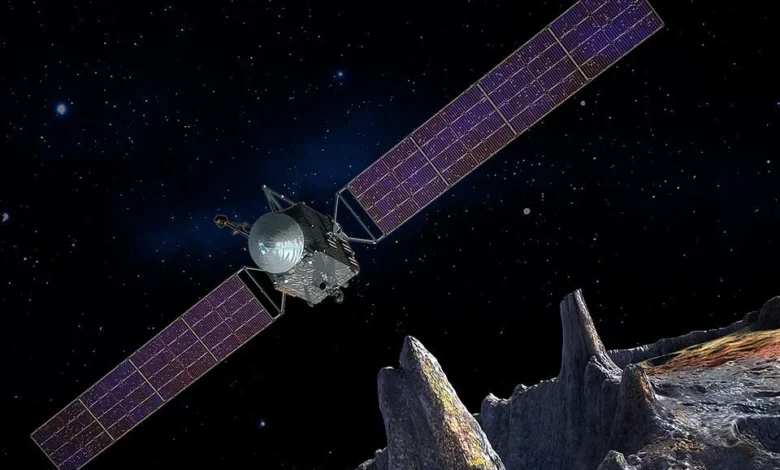
California-based startup AstroForge is at the forefront of this nascent industry. Unlike legacy space initiatives that envisioned multi-billion-dollar infrastructure, AstroForge utilizes a leaner, "new space" architecture. The company focuses on agile, low-cost probes designed to rendezvous with metallic asteroids. Their proposed extraction method involves magnetic anchoring followed by high-power laser ablation. This process vaporizes the asteroid’s surface, allowing an onboard refinery to separate valuable PGMs from the bulk nickel and iron. Only the concentrated, high-value material is returned to Earth in a heat-shielded capsule, optimizing the payload-to-profit ratio.
Chronology of the Economic Forecast
The MIT simulation models the market dynamics over a 20-year period following the first successful return of extraterrestrial material. The researchers identify two distinct phases:
- The "Space Gold Rush" (Years 1–5): During the initial phase, space-based metals will enter a market characterized by high terrestrial prices. Because supply remains limited, asteroid mining firms will capture significant profit margins, potentially reaching eight times current industrial profitability. This period is expected to trigger a massive influx of private capital as investors seek to capitalize on the high-margin environment.
- Equilibrium Collapse (Years 6–20): As production scales, the global supply of PGMs will eventually surpass historical terrestrial output. The MIT model suggests that this will lead to a market saturation point. High-cost terrestrial mines in North America will likely be the first to cease operations, followed by the major South African and Russian facilities, which will struggle to remain competitive against the high-purity, lower-cost influx of space-mined metals. The study predicts a 75% decline in global market prices over fifteen years.
Implications for Global Industry
The transition from terrestrial mining to space-based extraction has profound implications for global environmental and industrial policy. Terrestrial mining is frequently associated with environmental degradation, including acid mine drainage, arsenic pollution, and the destruction of local ecosystems. Furthermore, the human cost of deep-shaft mining, including high accident rates and occupational health hazards, is substantial.
Transitioning to space-based sourcing offers a path toward "decoupling" industrial growth from environmental destruction. Furthermore, the plummeting cost of PGMs could act as a catalyst for the green energy transition. As hydrogen fuel cells and electrolyzers become more affordable due to cheaper precious metal components, the widespread adoption of clean energy technologies becomes more economically viable for developing nations.
Engineering Challenges and Market Reality
While the economic theory is compelling, the engineering hurdles remain immense. AstroForge and similar startups are navigating a rigorous development cycle. The company has already experienced high-profile testing setbacks, which are considered typical for the "new space" industry. Critics of asteroid mining often point to the "law of unintended consequences," noting that the sudden collapse of the PGM market could trigger economic instability in countries that rely heavily on mining exports.
Governmental and international regulatory bodies are also struggling to keep pace with the technology. The legal framework surrounding the ownership of space resources remains a "legal void," with various international treaties—such as the Outer Space Treaty of 1967—offering ambiguous guidance on the commercial exploitation of celestial bodies. As private companies move closer to successful extraction, international consensus on the "space commons" will become a critical point of diplomatic negotiation.
Analysis of Future Scenarios
The Nachtrieb-Smith paper serves as a critical warning and a roadmap for stakeholders. If the model proves accurate, the primary challenge for the coming decade will not just be the technology of extraction, but the management of the global market transition.
For the mining industry, the outlook is one of disruption. Legacy mining companies will likely face existential threats, forcing them to pivot or lobby for protectionist policies. For the tech sector, however, the implications are overwhelmingly positive. The abundance of precious metals could revolutionize consumer electronics, aerospace manufacturing, and the automotive sector.
Ultimately, the successful extraction of asteroids would represent a fundamental shift in the human relationship with material scarcity. By moving the primary source of our most critical industrial materials off-planet, humanity may effectively end the era of mineral-driven resource wars and environmental destruction on Earth. Whether this shift occurs in two decades or fifty remains a matter of ongoing engineering refinement, but the economic trajectory suggested by the MIT model indicates that the "space gold rush" is a transition that governments and markets must begin to prepare for today.
As of late 2024, the focus for firms like AstroForge remains on achieving a successful "first return" of materials. Each launch window represents an opportunity to validate the core technology. Should these missions succeed, the economic shift described by Nachtrieb and Smith will move from a theoretical simulation to an inevitable market reality, fundamentally altering the value of the materials that power our modern world.