Why the Gymnastics Plank is Surpassing Traditional Core Exercises for Functional Strength and Longevity


The pursuit of core stability has long driven fitness innovation, moving far beyond the era of repetitive sit-ups and crunches. While the standard forearm or high plank remains a staple in fitness routines worldwide, fitness professionals and movement specialists are increasingly turning to a more demanding variation borrowed from artistic gymnastics: the gymnastics plank. Unlike its static, traditional counterpart, this advanced hold emphasizes full-body isometric tension, upper-body weight distribution, and a pronounced hollow-body shape designed to maximize muscular recruitment.
Fitness experts note that while the ideal plank variation depends heavily on individual physical capabilities, the gymnastics plank offers unparalleled benefits for stability, endurance, and overall functional strength. Beyond simply targeting the abdominal wall, this movement actively engages the shoulders, arms, wrists, quadriceps, hips, and glutes. Trainers who work with diverse demographics—ranging from younger athletes to adults over the age of fifty—have increasingly integrated this movement into their programming to build robust core strength, improve posture, and alleviate chronic lower back pain.
Understanding the Mechanics of the Gymnastics Plank
Executing a gymnastics plank requires precise physical positioning and a deliberate shift in body weight compared to a standard plank. Practitioners typically begin on the floor, utilizing a yoga mat for comfort, before transitioning into a high-plank position on the hands. However, unlike a conventional high plank where the body weight is distributed neutrally, the gymnastics variation requires the practitioner to actively shift their weight forward.

By rolling further onto the tops of the feet and driving the shoulders forward past the wrists, the center of gravity changes, placing intense demand on the upper body, forearms, and wrists. To complete the iconic gymnastics "hollow" shape, practitioners must execute a slight posterior pelvic tilt by tucking the hips under and forcefully pushing the upper back toward the ceiling. This scapular protraction creates a rounded upper-back profile that maximizes engagement through the core and serratus anterior muscles.
Fitness coaches generally recommend starting conservatively with a 20-second isometric hold, gradually increasing duration as neuromuscular control and strength improve. Because the wrists and forearms bear a significantly higher load in this variation, practitioners are advised to monitor joint comfort closely. While muscular fatigue and tension are expected, sharp joint pain indicates the need to modify the movement, such as dropping to the elbows or terminating the set.
Anatomical Breakdown and Muscle Recruitment
The primary advantage of the gymnastics plank lies in its comprehensive, full-body recruitment through isometric contraction—a type of muscle action where tension is generated without changing the length of the muscle fiber. This mechanism is central to gymnastics training, which prioritizes relative strength, power, endurance, and balance over sheer muscle mass.
When performing a gymnastics plank, practitioners are instructed to focus on the "three Bs": belly, butt, and back. This deliberate, conscious contraction ensures that nearly every major muscle group in the body is activated simultaneously.

-
Upper Body and Grip Strength: Shifting the body forward places primary emphasis on the shoulders, rotator cuffs, arms, and wrists. The prolonged isometric load on the hands, forearms, and wrists significantly enhances grip strength. Recent longevity and geriatric health studies have underscored grip strength as a vital biomarker for overall health and life expectancy, making wrist- and forearm-strengthening movements increasingly critical as individuals age.
-
Anterior Chain Activation: Rolling forward onto the tops of the feet activates the front of the body, particularly the quadriceps and hip flexors, rather than backloading the glutes and hamstrings. This anterior chain dominance contributes to a tighter, more controlled core position.
-
Deep Core Stabilization: While the movement prominently engages superficial muscles such as the rectus abdominis—commonly known as the "six-pack"—its true value lies in targeting deeper stabilizing structures. These include the transverse abdominis, which acts as a natural lifting belt to compress the abdomen and protect the spine, as well as the obliques and pelvic floor muscles.
Integration into Fitness Programs for Aging Populations
The degradation of skeletal muscle mass and strength—a process known clinically as sarcopenia—accelerates significantly after the age of fifty. Consequently, fitness professionals specializing in older demographics are constantly evaluating bodyweight exercises that mitigate functional decline without imposing excessive spinal loading.
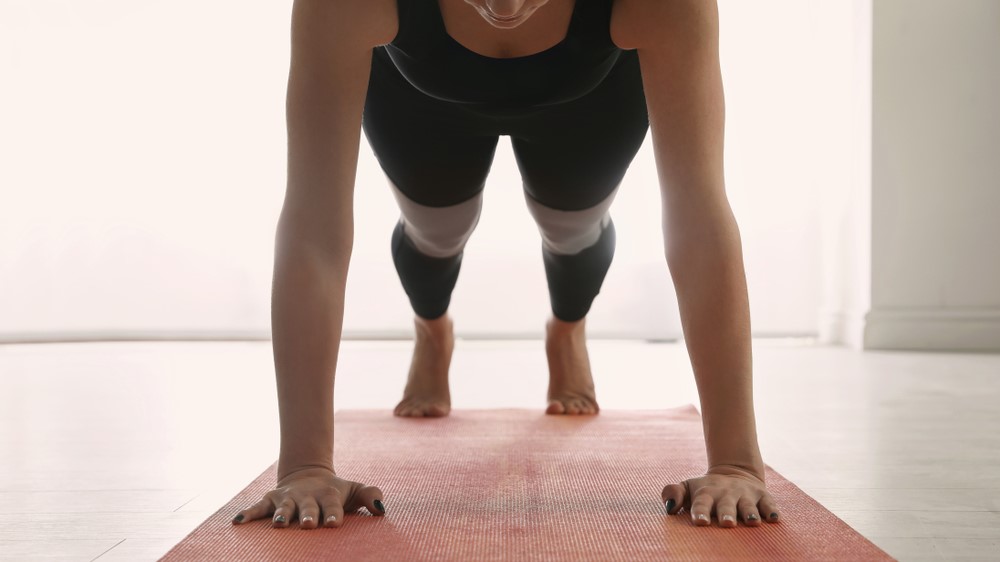
Traditional weighted exercises can sometimes exacerbate lower back discomfort in aging populations if core endurance fails. In contrast, bodyweight isometric holds like the gymnastics plank offer a scalable, highly effective alternative. By strengthening the deep core stabilizers and improving scapular stability, the exercise helps maintain spinal alignment during daily activities. Furthermore, the emphasis on wrist and upper-extremity loading aids in preserving bone mineral density and joint integrity in the hands and arms, reducing the risk of age-related frailty and fractures.
The Broader Implications for Functional Fitness
The growing popularity of gymnastics-inspired movements in mainstream fitness reflects a broader shift toward functional training. Functional fitness emphasizes exercises that train muscles to work together safely and efficiently in daily life, mimicking common movements performed in home, work, or recreational environments.
Isometric holds, including planks, hollow body holds, and handstands, form the bedrock of gymnastics conditioning because they require absolute neuromuscular control. By challenging the central nervous system to maintain stability under fatigue, these movements improve postural awareness and kinetic chain efficiency.
As fitness enthusiasts continually seek methods to level up their conditioning routines without necessarily adding heavy external resistance, bodyweight variations that leverage mechanical advantage—such as the forward weight shift in the gymnastics plank—offer a sustainable pathway to advanced strength. Whether integrated into a dedicated core routine, a mobility session, or a full-body conditioning circuit, the gymnastics plank represents a sophisticated evolution of a timeless fitness staple, bridging the gap between elite athletic training and accessible, longevity-focused exercise.