Trump Mobile T1 Phone Receives Sudden 50 Percent Price Hike to $749 Despite Rebranded Hardware

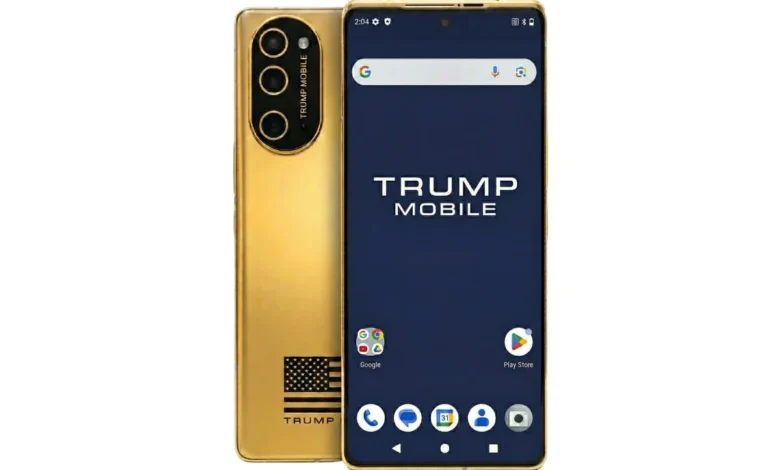
The consumer technology landscape has witnessed numerous unconventional branding exercises over the years, but few have navigated the intersection of politics and consumer electronics quite like the Trump Mobile T1 Phone. Originally introduced to the market with significant publicity in the previous calendar year, the device officially commenced commercial shipping this June at an initial retail price point of $499. However, consumers who delayed their purchases are now facing a substantial economic adjustment. In a quiet update that bypassed formal press announcements, the manufacturer has increased the cost of the device by 50 percent, bringing the new standard retail price to a notable $749.
This unexpected upward price revision places the smartphone in a heavily contested segment of the global mobile market. Industry analysts and technology observers have scrutinized the pricing strategy, particularly given the device’s hardware origins and its positioning relative to competing manufacturers. For a device that fundamentally relies on a pre-existing hardware platform from 2024—specifically, a rebranded architecture originating from HTC, distinguished primarily by a customized gold-toned aesthetic and prominent branding—the new $749 price point demands a rigorous examination of value, specification parity, and long-term software support.
Chronology and Product Lifecycle
Understanding the current trajectory of the Trump Mobile T1 Phone requires a detailed review of its timeline from announcement to the present market adjustment. The device first emerged in the public sphere last year through a high-profile marketing campaign that targeted supporters of the political figure and brand. This initial reveal generated substantial media coverage, positioning the handset as an alternative consumer electronic choice for politically engaged buyers.
Following months of anticipation and logistical development, the device transitioned from concept to commercial availability this June, hitting the market at a competitive baseline of $499. This initial price point positioned the phone near the upper tier of mid-range devices, where it competed against established hardware lines from major manufacturers. For the first several months of its commercial availability, the $499 price remained static, establishing a baseline expectation among potential buyers.
The turning point occurred recently when the official sales portal quietly updated the listed price to $749. This abrupt 50 percent increase was implemented without a corresponding upgrade to the internal hardware, packaging, or accessory bundle. The lack of public communication regarding the price adjustment has led to increased scrutiny from consumer advocacy groups and technology journalists alike, who frequently monitor retail stability within the consumer technology sector.
Hardware Specifications and Comparative Analysis
To evaluate the merit of the $749 price tag, it is essential to examine the technical specifications of the Trump Mobile T1 Phone within the context of the contemporary smartphone market. Technical teardowns and hardware analyses previously confirmed that the device is structurally and internally identical to an HTC smartphone model released in 2024. The cosmetic alterations are primarily external, featuring a specialized gold-colored finish and the integration of the Trump brand identity.
The device is built around a 6.78-inch AMOLED display panel that supports a 120Hz refresh rate, offering fluid visual transitions and standard contemporary viewing performance. Processing power is supplied by the Snapdragon 7 Gen 3 chipset, a capable mid-range silicon platform designed to handle daily productivity tasks, media consumption, and moderate mobile gaming. The configuration includes a generous allocation of 512GB of internal storage, providing ample space for applications, media, and documents.
In the photographic department, the handset features a triple-camera array on the rear panel, led by a 50-megapixel primary sensor. This is complemented by an 8-megapixel ultra-wide-angle lens and a 50-megapixel telephoto camera capable of 2x optical zoom. For self-portraits and video calling, the front-facing camera utilizes a 50-megapixel sensor. Power management is handled by a 5,000 mAh battery cell, which supports wired charging speeds up to 30W. The device operates on Android 15 out of the box.
Despite these competent specifications, the valuation of $749 places the device in direct competition with flagship-tier offerings from industry leaders such as Samsung, Google, and Apple, as well as high-performance value flagships from Chinese original equipment manufacturers. Competitors in the $700 to $800 price bracket routinely offer superior processing silicon—such as flagship-tier Snapdragon 8 series chips—higher-wattage fast charging capabilities, and sophisticated multi-year software maintenance commitments. Furthermore, the absence of any official corporate communication or roadmap concerning future Android version updates or security patches for the T1 Phone introduces a significant variable regarding long-term device usability and security compliance.
Market Implications and Consumer Considerations
The sudden price escalation of the Trump Mobile T1 Phone highlights several broader implications for politically branded consumer goods. In the modern commercial ecosystem, branding exercises that merge partisan identity with utilitarian technology often command a premium. However, economists and retail analysts note that there is a distinct threshold where the novelty premium encounters resistance from rational consumer behavior.
At $499, the device could be partially justified by enthusiasts as a collector’s item or a novelty communication tool that delivered adequate mid-range performance for daily use. At $749, the calculus shifts dramatically. Consumers purchasing a smartphone at this price point typically prioritize technical longevity, software update guarantees, camera versatility, and hardware pedigree. Because the T1 Phone utilizes hardware originally developed in 2024 by HTC and lacks a publicly stated software support lifecycle beyond its initial Android 15 installation, security-conscious users may find the financial outlay difficult to reconcile.
Moreover, the lack of traditional distribution channels means that potential buyers cannot easily examine the device in a physical retail environment before purchase. Transactions are conducted primarily through specialized online enrollment and direct-to-consumer portals, limiting hands-on evaluation opportunities that are standard when purchasing devices from mainstream manufacturers.
Industry Reception and Future Outlook
The reception of the Trump Mobile T1 Phone within the technology journalism sector has been characterized by a division between the analysis of its political novelty and the objective evaluation of its hardware metrics. Independent hardware teardowns have previously demystified the internal components, confirming that the manufacturing execution relies on established original design manufacturer (ODM) partnerships rather than custom silicon or proprietary mechanical engineering.
As the smartphone market continues to mature, consumers have grown increasingly sophisticated regarding price-to-performance ratios. The integration of 512GB of storage is a positive inclusion, yet it must be weighed against the broader software support vacuum. In the current mobile ecosystem, operating system upgrades and routine security patches are critical components of total cost of ownership. Without assurances regarding how many years of software maintenance the device will receive, buyers assume a higher risk profile, particularly at the revised $749 valuation.
Ultimately, the market trajectory of the Trump Mobile T1 Phone will depend on the willingness of its target demographic to absorb a 50 percent price premium for a rebranded device with a distinct political association. While brand loyalty and political affiliation can drive initial sales spikes, the sustainability of a consumer electronics product relies heavily on word-of-mouth endorsement, competitive pricing, and technological relevance. As the device moves further into its commercial lifecycle at the elevated price point, market analysts will be watching closely to determine whether ideological alignment can permanently override traditional consumer purchasing metrics in the highly competitive smartphone sector.