The Economics of Agent Optimization: Governing Enterprise AI at Scale as a Managed Investment System


The rapid proliferation of autonomous AI agents within the modern enterprise has shifted the primary challenge for IT leadership from simple experimentation to rigorous fiscal management. As organizations transition from isolated, proof-of-concept pilots to widespread deployment, the necessity for robust governance has become the defining characteristic of sustainable AI adoption. This final installment of the Economics of Agent Optimization series explores the critical intersection of observability, cost containment, and value realization, detailing how enterprises can manage AI not merely as a technical capability, but as a disciplined, high-return investment system on Microsoft Foundry.

The Governance Paradox of Agentic Systems
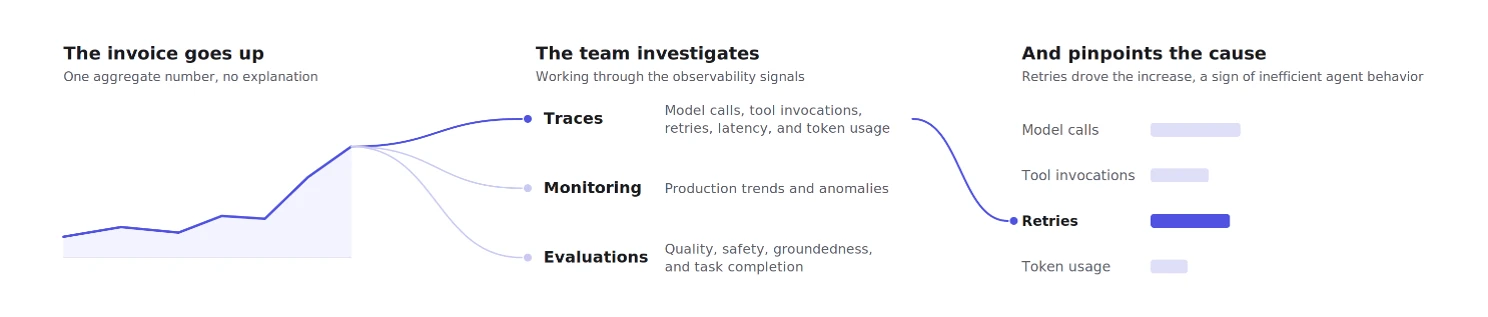
In traditional software development, resource consumption is largely static or predictable. However, agentic systems—which leverage LLMs to interact with data, tools, and autonomous decision-making loops—operate at a velocity and complexity that traditional cost-tracking tools are ill-equipped to handle. When an agent is trapped in a recursive retry loop, it does not pause to wait for a monthly billing report; it consumes tokens and capital in real-time.
For the Chief Information Officer and the FinOps team, the primary governance question is no longer just "what are we spending," but "how do we control the blast radius of an autonomous system?" Effective governance requires a transition from reactive, retrospective billing analysis to proactive, request-path intervention. This shift is essential to avoid the "hidden cost" trap, where aggregate invoice totals mask systemic inefficiencies occurring at the individual agent or tool-call level.

A Chronology of AI Optimization Strategy
The strategic journey toward mature AI governance, as outlined throughout this series, has evolved through three distinct phases. In the initial phase, the focus was on structural architecture—defining the core decisions that dictate whether a system remains performant or drifts into technical and financial debt. The second phase shifted to the runtime environment, utilizing model routing and prompt caching to right-size requests at the moment of execution. The third phase concentrated on temporal workflow optimization, employing memory management and context engineering to ensure that agentic "reasoning" remains efficient over extended interactions.
Now, in this fourth phase, the strategy addresses the permanent, ongoing governance of the spend. By integrating observability signals directly into the development lifecycle, enterprises can create a feedback loop that links engineering choices to financial outcomes. This maturity model represents a shift from "AI as a feature" to "AI as a managed investment portfolio."
Technical Architecture for Financial Control
The architecture of modern AI governance relies on three primary pillars: visibility, boundary enforcement, and value attribution.
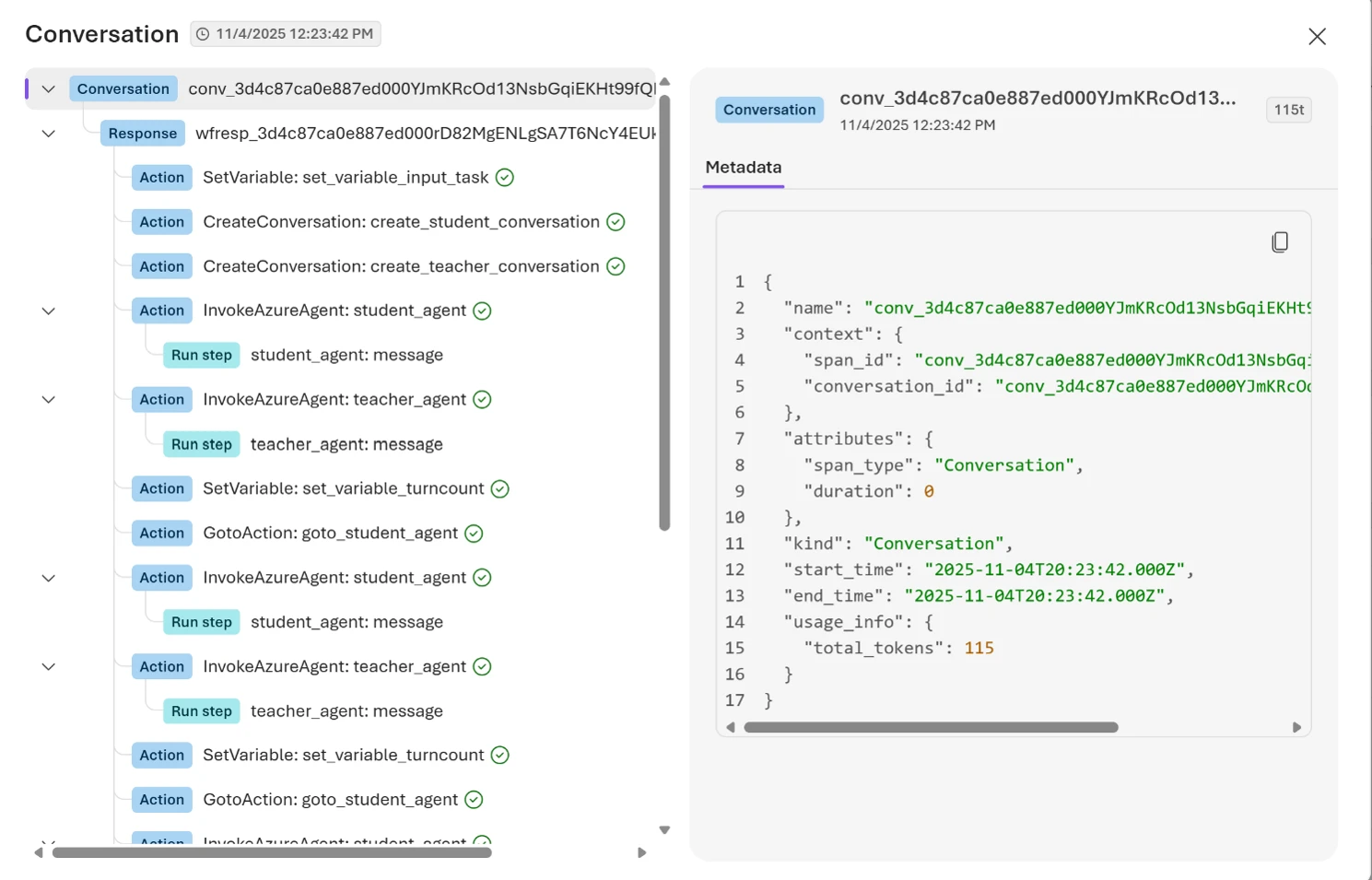
Visibility is established through granular telemetry. By utilizing Foundry’s native cost management capabilities, teams can decompose aggregate AI spend into specific projects, models, and usage patterns. This transparency allows for accurate cost allocation, enabling FinOps teams to map expenditures directly to the business units or products responsible for them.
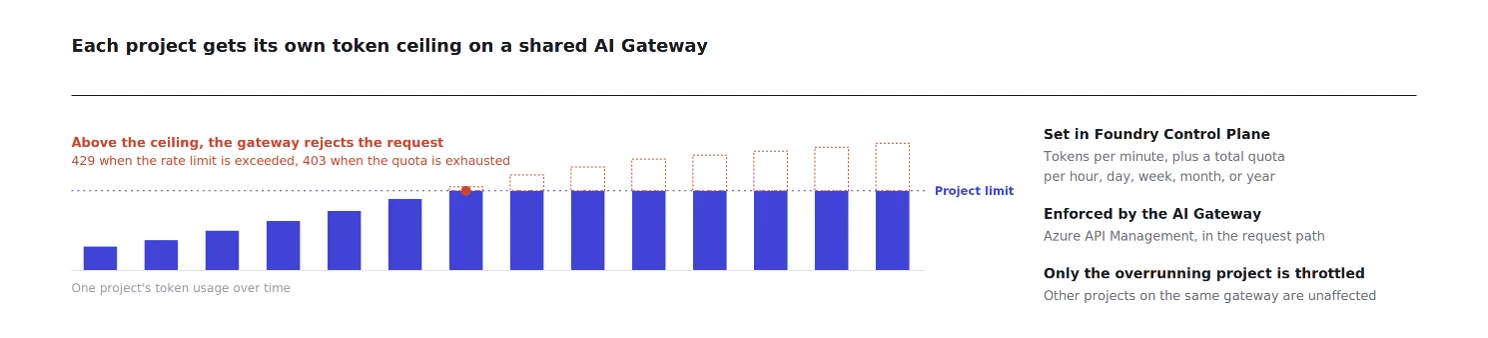
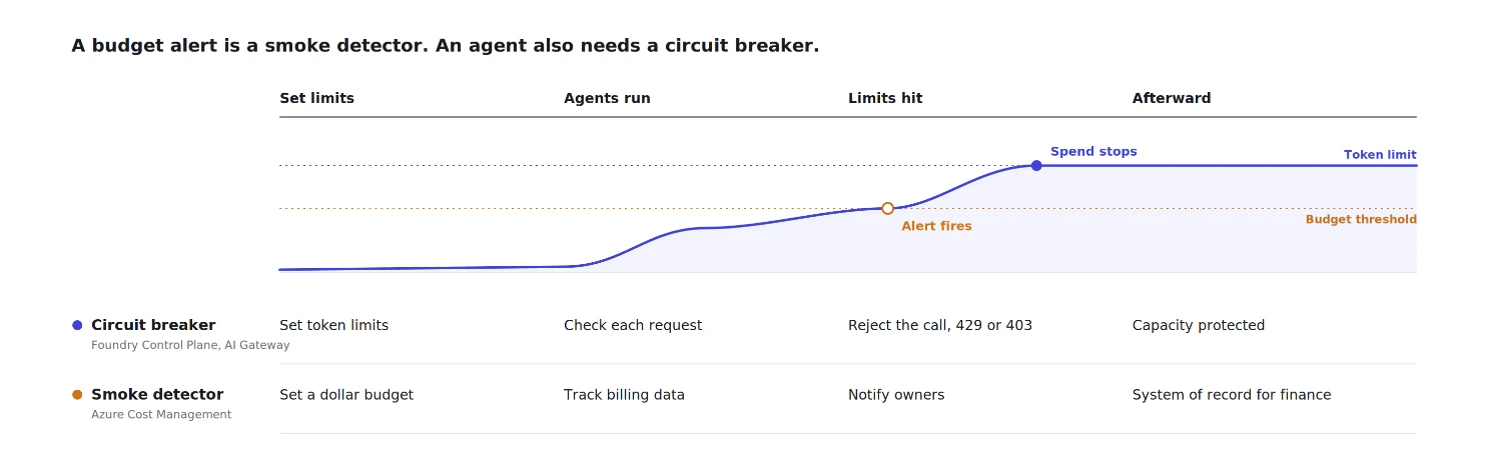
Boundary enforcement is the second pillar, and it marks a critical departure from traditional cloud budget alerts. While a budget alert acts as a "smoke detector"—notifying stakeholders after a threshold is breached—a circuit breaker acts as an automated shut-off valve. Through the integration of the AI Gateway within Azure API Management, organizations can implement token-level quotas. When a project hits its designated limit, the system can trigger a 429 (Too Many Requests) or 403 (Forbidden) response, effectively preventing an runaway agent from depleting a department’s entire quarterly budget in a single afternoon.
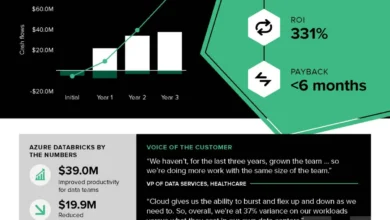
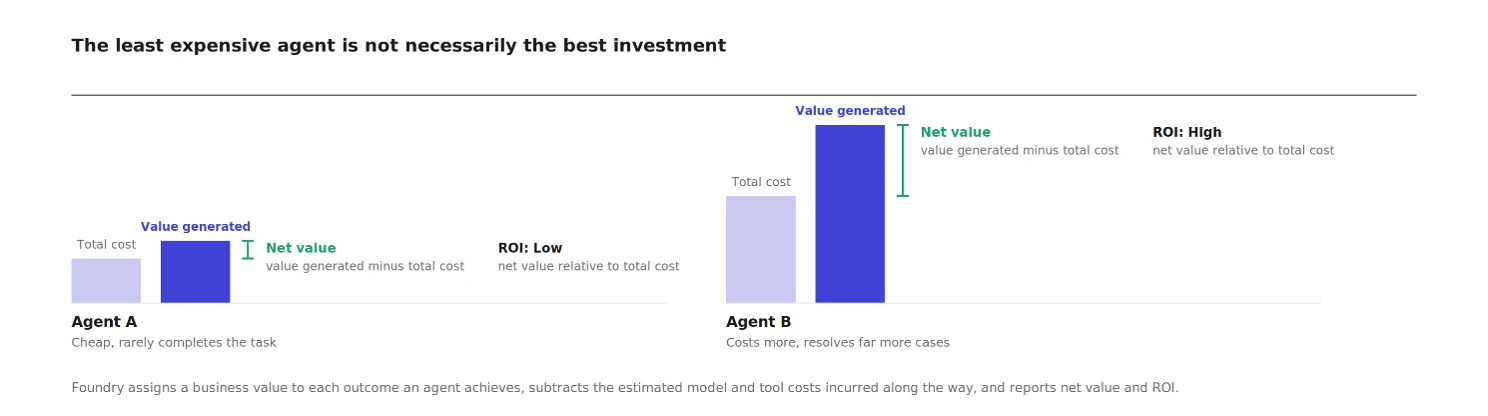
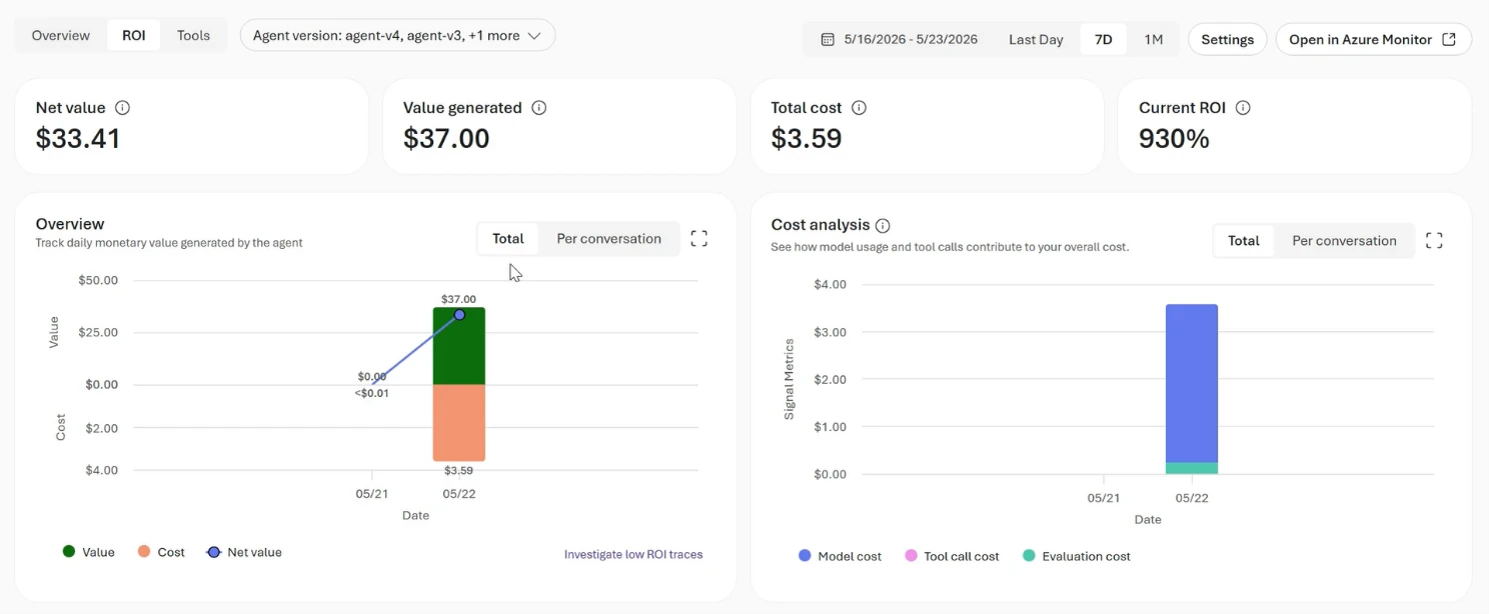
The third pillar is the proof of return. In the current enterprise climate, the goal is not to reach zero cost, but to achieve maximum value per unit of spend. New features in Foundry, currently in private preview, allow organizations to assign monetary value to business outcomes—such as a resolved customer support ticket or a successfully automated supply chain entry. By calculating the ROI of an agent, stakeholders can move past the debate over "cheap models" versus "expensive models" and instead prioritize the agent that delivers the highest net value to the organization.
Market Implications and Industry Response
The broader implications of this transition are significant. As organizations scale their AI footprint, the lack of governance is increasingly viewed by financial auditors as a material risk. Analyst firms have noted that enterprises currently lack the "middle layer" of management between the cloud provider and the end-user application. By embedding cost-control logic directly into the AI infrastructure, Microsoft is effectively creating an operating system for agentic enterprise software.
Market observers suggest that this approach addresses the primary anxiety of the CFO: that AI represents a bottomless, unconstrained expenditure. By providing tools that connect high-level business goals to low-level token consumption, IT leaders can present a defensible, data-driven narrative to the executive board. This capability is expected to be a competitive differentiator for enterprises that successfully scale their AI initiatives while maintaining fiscal discipline.
Operationalizing the Governance Cycle
To successfully implement these controls, enterprises should adopt a systematic, four-step governance cycle:
- Attribution: Tagging every agentic project to ensure usage metrics are correctly mapped to specific business units.
- Circuit Breaking: Implementing request-path limits to prevent runaway costs, shifting the control point from the billing department to the API gateway.
- Value Mapping: Defining clear KPIs—such as latency reduction, accuracy, or case deflection—and assigning them a measurable value to calculate ROI.
- Optimization/Retirement: Using the resulting ROI dashboards to make objective decisions. If an agent’s cost-to-value ratio is unfavorable, it must be either re-engineered through context optimization or decommissioned.
Future Trajectory: Toward Dollar-Denominated Governance
While the current state of the art relies on token-based quotas, the industry is rapidly moving toward dollar-denominated governance. Because token costs fluctuate based on model provider pricing and tier-based incentives, the future of the Foundry ecosystem involves bridging the gap between technical metrics and financial accounting.
Microsoft’s roadmap suggests that forthcoming updates will provide even deeper integration between Azure Cost Management and the AI Gateway, enabling real-time conversion of token usage into currency-based budget tracking. This will allow for "soft" and "hard" limits set in actual capital terms, simplifying the dialogue between developers and financial controllers.
Conclusion: The Discipline of AI Investment
The maturity of an organization’s AI capabilities is directly proportional to its ability to govern those capabilities. As we have examined in this series, the economics of agent optimization are not merely about squeezing efficiency from an LLM; they are about establishing a professional, repeatable process for deploying autonomous systems.
By running AI as a managed investment system, companies ensure that their resources are concentrated on agents that provide tangible, measurable benefits. This discipline protects the organization from the volatility of AI consumption while fostering an environment where innovation can thrive within defined, safe, and accountable boundaries. For the enterprise of tomorrow, the ability to balance the rapid speed of agentic autonomy with the deliberate pace of fiscal governance will determine which firms lead in the era of intelligence and which struggle to contain their own digital transformation.