SK Hynix and Intel in Early-Stage Discussions Over Potential US Memory Chip Manufacturing Partnership

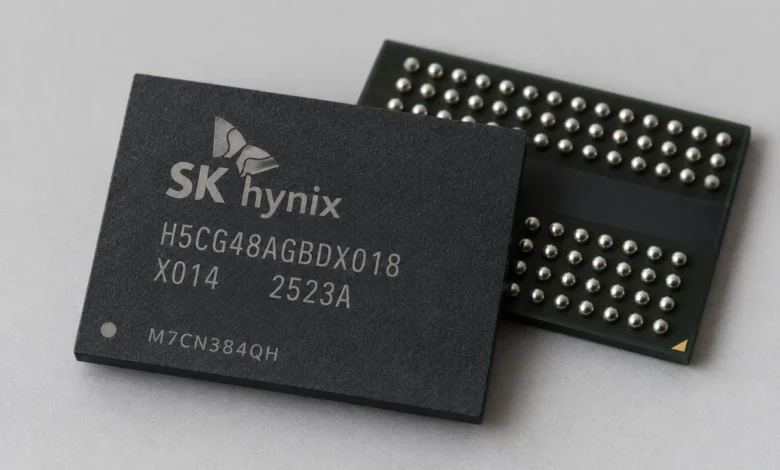
Global semiconductor supply chains could be on the brink of a major structural realignment as South Korea’s SK Hynix and American technology titan Intel explore a potential manufacturing partnership. According to insider reports initially published by Reuters, the two semiconductor giants are engaged in exploratory talks that could result in SK Hynix producing memory chips on United States soil for the first time in its corporate history.
This high-stakes maneuver comes at a critical juncture for both corporations. Intel has faced mounting operational and financial hurdles surrounding its ambitious foundry expansion plans, while SK Hynix is scrambling to keep pace with an unprecedented surge in global demand for advanced memory components, fueled primarily by the explosive growth of artificial intelligence applications. Although the discussions are currently described as preliminary and non-binding, the mere prospect of a collaboration has already sent positive signals to the financial markets, driving an immediate uptick in the share prices of both companies.
The contours of the proposed arrangement remain fluid, but industry insiders have pointed toward two distinct operational models currently under consideration. In the first scenario, SK Hynix would lease a designated segment of Intel’s massive, under-construction semiconductor fabrication facility located in New Albany, Ohio. This approach would allow the South Korean memory giant to leverage existing American manufacturing infrastructure without bearing the entire upfront capital expenditure of greenfield construction.
Alternatively, the two companies could establish a formal joint venture. This tripartite or multi-party arrangement could potentially include prominent, unnamed cloud computing and hyperscaler firms that are desperately seeking to lock down secure, domestic memory chip supplies to power their expanding data center operations. By anchoring the project with guaranteed off-take agreements from major cloud service providers, the partnership would mitigate much of the financial and logistical risk typically associated with establishing a new manufacturing base.
A Troubled Timeline for Intel’s Ohio Hub
To understand the weight of these discussions, one must examine the rocky trajectory of Intel’s manufacturing ambitions in the American Midwest. In 2022, Intel made waves across the global technology sector by announcing a massive investment of up to $100 billion to construct a cutting-edge semiconductor manufacturing complex in Licking County, Ohio. The project was championed by federal lawmakers and industry analysts alike as a cornerstone of the bipartisan CHIPS and Science Act, designed to bring critical semiconductor manufacturing back to American shores and reduce reliance on Asian supply chains.
However, the realization of Intel’s Ohio mega-site has suffered from severe delays. While initial public projections pointed toward commercial production commencing as early as 2025, economic headwinds, shifting market dynamics, and internal strategic re-evaluations have pushed the timeline back significantly. Current estimates indicate that production at the Ohio facility will not begin until at least 2030. For Intel, which has experienced a bruising series of financial quarters and strategic pivots regarding its foundry business model, partnering with a powerhouse like SK Hynix could inject much-needed momentum, financial validation, and operational expertise into the beleaguered site.
Regulatory Hurdles and National Security Sensitivities
Despite the potential mutual benefits, significant regulatory and geopolitical hurdles stand in the way of a finalized agreement. Chief among these is the stance of the South Korean government, which exercises strict regulatory oversight over domestic semiconductor technologies deemed critical to national security and economic sovereignty.
It remains unclear precisely which generation or type of memory chips SK Hynix intends to manufacture in the United States should a deal materialize. Should the negotiations center on advanced memory technologies—such as High Bandwidth Memory (HBM), which is essential for training and running large language models, or advanced forms of Dynamic Random-Access Memory (DRAM)—the South Korean government could voice strong opposition. Under South Korea’s Industrial Technology Protection Act, technologies categorized as "national core technology" are subject to rigorous export and transfer controls to prevent intellectual property leakage and safeguard national economic competitiveness.
When pressed for comment by media outlets, representatives for SK Hynix maintained a guarded posture. In an official statement, the company noted that it is "reviewing various measures, including establishing additional production bases, to strengthen the competitiveness of its memory business," while quickly adding that "no matters have been determined at this stage." This measured response aligns closely with characterizations of the talks as strictly exploratory.
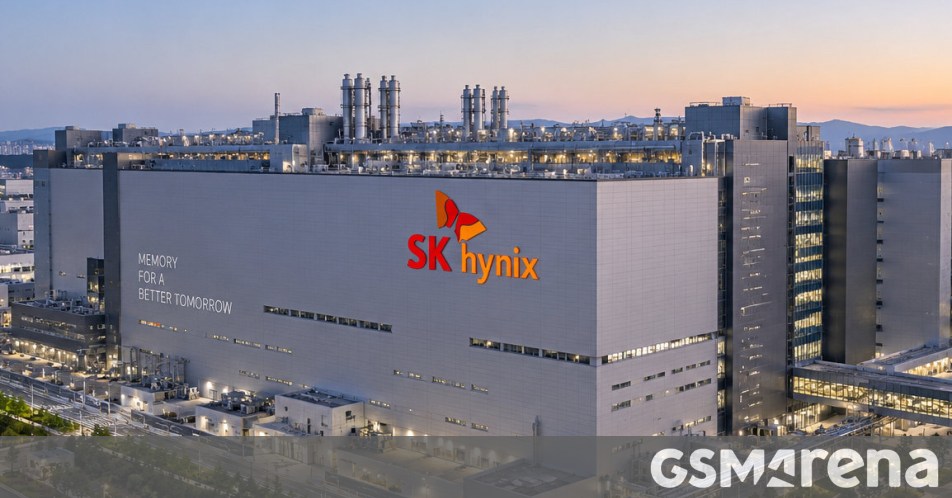
Intel has similarly declined to comment directly on the reported negotiations, emphasizing instead that the corporation remains fully committed to its ongoing capital investments in the Ohio manufacturing campus. Meanwhile, South Korea’s Ministry of Trade, Industry and Energy adopted a neutral stance, stating that while any commercial decision ultimately rests at SK Hynix’s "sole discretion," any transaction involving designated national core technologies will inevitably trigger a formal governmental review process.
Surging Demand and the Geopolitical Pressure Cooker
The impetus behind SK Hynix’s willingness to entertain US manufacturing is driven by a combination of intense commercial pressure and external geopolitical leverage. Semiconductor manufacturing in the United States carries a significantly higher cost baseline compared to domestic operations in South Korea, driven by labor costs, regulatory compliance, and supply chain logistics. Historically, these cost differentials made domestic-only expansion more attractive.
However, the unprecedented global AI boom has fundamentally altered the calculus. Customers across the enterprise technology spectrum are demanding closer proximity to their supply chains, while various national governments are enacting policies that favor localized semiconductor production. Back in July, SK Group Chairman Chey Tae-won publicly acknowledged this shifting landscape, telling reporters that the conglomerate needed to establish a manufacturing footprint in the United States, asserting that the company should build a local factory if feasible.
This corporate urgency is further compounded by external policy pressures from Washington. US Commerce Secretary Howard Lutnick has taken a hardline stance on international semiconductor trade, recently threatening to impose steep 100-percent tariffs on imports from South Korean and Taiwanese chipmakers unless those corporations make substantial, tangible commitments to ramp up their domestic production capabilities within the United States. In this light, a partnership with Intel to utilize or co-manage facilities in Ohio could serve as a strategic masterstroke for SK Hynix, insulating the company from punitive tariff regimes while satisfying the demands of American customers and regulators.
Parallel Investments at Home
Even as SK Hynix explores overseas expansion options, the company is maintaining its deep-rooted commitment to its domestic manufacturing base in South Korea. The South Korean government has actively urged major technology conglomerates to consolidate and expand their operations within national borders, specifically encouraging SK Hynix to develop a new, centralized cluster of chipmaking facilities in the country’s southwestern region.
Demonstrating alignment with these domestic priorities, SK Hynix recently announced a staggering $38 billion capital expenditure plan dedicated to constructing advanced DRAM and NAND flash memory fabrication facilities in South Korea. This massive domestic outlay underscores the dual-track strategy pursued by memory leaders: satisfying nationalistic and local supply chain demands in key overseas markets like the United States while preserving South Korea’s status as the undisputed heartland of global semiconductor innovation.
Implications for the Global Semiconductor Ecosystem
The exploratory talks between SK Hynix and Intel highlight a broader, ongoing transformation in the global semiconductor landscape. For decades, the industry operated on a deeply specialized, geographically concentrated model—with design concentrated in the US, memory manufacturing anchored in South Korea, and logic fabrication heavily reliant on Taiwan.
The convergence of geopolitical tensions, national security industrial policies, and supply chain vulnerabilities exposed by recent global crises has rendered that legacy model increasingly unsustainable. If SK Hynix successfully finalizes a pact with Intel, it will mark a watershed moment: the partial localization of critical South Korean memory production onto American soil, intimately intertwined with a storied US chipmaker attempting an industrial turnaround.
As negotiations proceed behind closed doors, industry observers, market analysts, and government regulators will be watching closely. The outcome of these talks will not only shape the corporate fortunes of SK Hynix and Intel over the coming decade but will also set a crucial precedent for how international technology alliances navigate the complex intersection of commercial viability, national security, and geopolitical pressure.