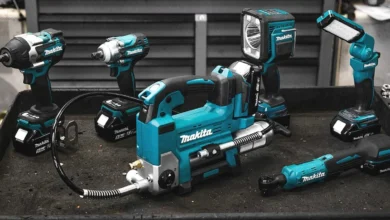
Entering the world of automotive repair and vehicle maintenance can be an intimidating endeavor for the uninitiated. Modern vehicles are complex machines comprised of thousands of precision-engineered components, ranging from delicate sensors to heavy, high-torque engine blocks. While the barrier to entry has historically been high due to the specialized nature of these parts, the rise of accessible diagnostic technology and online instructional resources has empowered a new generation of DIY mechanics. Equipping a home garage does not require a professional-grade capital investment; rather, it demands a strategic selection of essential tools that balance durability, versatility, and cost-effectiveness.
The Evolution of the Home Garage
Historically, vehicle maintenance was a necessity born of mechanical limitations; as engines grew more complex in the late 20th century, the "do-it-yourself" demographic shifted toward basic fluid changes and minor repairs. Today, however, the industry has seen a resurgence in home mechanics, driven by the increasing cost of professional shop labor—which currently averages between $100 and $200 per hour depending on the region and vehicle make.
For the novice, the primary challenge is not the complexity of the repair, but the ability to access and manipulate fasteners and assemblies safely. Establishing a foundational toolkit is the first step in this process. According to industry experts, a well-curated kit should prioritize tools that minimize the risk of fastener damage and maximize user safety.
1. The Precision of Socket Sets
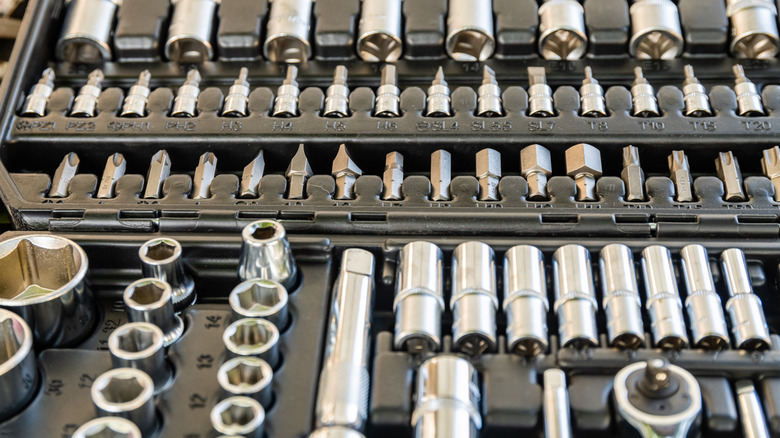
At the heart of every automotive repair project is the socket set. Because vehicle architecture relies heavily on nuts and bolts to secure everything from plastic trim to critical suspension components, the ability to apply consistent torque is essential.

When selecting a socket set, mechanics must prioritize design geometry. Standard hex (six-point) sockets are the industry standard for high-torque applications. The six-point design provides a larger contact surface area on the bolt head, significantly reducing the likelihood of rounding off or stripping the fastener. In contrast, 12-point sockets, while useful for specific applications in confined spaces, are prone to slippage when high force is applied. Furthermore, building a collection that includes both "deep" and "shallow" sockets is vital. Deep sockets are necessary for reaching fasteners on long threaded studs, while shallow sockets are essential for work in low-clearance areas, such as engine bays or behind dashboard panels. Investing in high-quality chrome vanadium or chrome molybdenum steel ensures that these tools can withstand the high-torque environments common in automotive work.
2. The Versatility of Screwdrivers
While the automotive industry has largely transitioned away from screws in favor of bolts, screwdrivers remain an indispensable component of any mechanical toolkit. Their utility extends beyond the mere turning of screws; they serve as critical prying tools for releasing plastic clips, disconnecting electrical harness tabs, and aligning panels during reassembly.
The material composition of screwdrivers is a critical factor for long-term reliability. Professional-grade drivers are typically forged from S2 tool steel or chrome vanadium, offering a superior balance of hardness and toughness. When building a set, mechanics should look for ergonomic handles that allow for high-torque applications without causing hand fatigue. A comprehensive kit should include various sizes of Phillips and flathead drivers, as well as specialized bits like Torx or hex keys, which are increasingly common in modern vehicle assembly.
3. The Necessity of Breaker Bars
There is a distinct difference between a standard ratchet and a breaker bar, a distinction that often determines the success or failure of a repair. A ratchet is a precision instrument designed for speed and convenience; using it to break loose a seized or rusted bolt—particularly those on a vehicle’s undercarriage—often results in the internal mechanism of the ratchet failing.
A breaker bar, by contrast, is a non-ratcheting tool designed specifically for high-leverage applications. By utilizing a longer handle, a breaker bar multiplies the force applied by the user, allowing them to overcome the high static friction of corroded fasteners. This tool is often the difference between a successful DIY repair and a trip to the professional mechanic. When combined with penetrating oils, such as those formulated with molybdenum disulfide, a breaker bar can safely remove bolts that have been seized for years.

4. Advanced Lighting Solutions
Visibility is perhaps the most overlooked element in automotive repair. Engine bays are notoriously dark, cramped spaces where shadows can easily obscure critical components or, more frustratingly, conceal a dropped nut or bolt. While a handheld flashlight is a standard accessory, the modern DIYer should invest in hands-free lighting.
Rechargeable LED light bars have become the standard in professional shops. These devices provide a wide, uniform beam of light, often featuring magnetic bases or integrated hooks that allow the mechanic to position the light precisely where it is needed. Lantern-style LEDs that can be hung from the hood latch or rested on the engine cover provide ambient, shadow-free lighting that is essential for tasks like oil changes or belt inspections. By ensuring proper illumination, the mechanic reduces the risk of error and improves the efficiency of the workflow.
5. The Soft-Faced Hammer
The final essential, yet frequently misunderstood, tool is the soft-faced hammer. In the heat of a repair, there is often a temptation to use a standard steel claw hammer to force a stubborn part into place. This is a common error that can lead to catastrophic damage to vehicle components, including shattered plastic housings or marred metallic surfaces.
Soft-faced hammers, typically featuring heads made of rubber, plastic, or polyurethane, are designed to deliver kinetic energy without the risk of cosmetic or structural deformation. They are vital for tasks such as seating stubborn brake rotors, realigning trim panels, or nudging components that require a "persuading" force. By choosing a hammer with an appropriate shore hardness, the mechanic can strike a part with the necessary impact while ensuring the integrity of the vehicle’s finish remains intact.
Broader Implications and Safety Considerations
The shift toward DIY vehicle maintenance carries significant implications for the automotive aftermarket industry. Retailers have responded by creating entry-level tool bundles that provide these five essentials in a single, cost-efficient package. However, tool acquisition is only one side of the equation.
Safety remains the paramount concern. Automotive repair involves working with pressurized systems, high-temperature fluids, and heavy metallic components suspended by jacks or stands. Regardless of how well-equipped the toolkit is, the DIY mechanic must adhere to strict safety protocols:
- Proper Support: Never rely on a hydraulic jack alone; always use jack stands on a level, stable surface.
- Documentation: Utilize factory service manuals or verified digital databases to understand torque specifications and assembly sequences.
- Safety Gear: Personal protective equipment (PPE), including safety glasses and mechanic’s gloves, should be considered as essential as the tools themselves.
- Expert Oversight: For beginners, performing initial repairs under the supervision of an experienced mechanic can provide invaluable hands-on learning and ensure that safety-critical components, such as brakes and steering, are serviced correctly.
As vehicles continue to integrate more sophisticated electronics and lightweight materials, the role of the DIY mechanic is evolving. While some repairs may eventually require specialized diagnostic software, the mechanical fundamentals—the removal and installation of hardware—will remain the foundation of automotive maintenance. By investing in these five practical categories of tools, the home mechanic not only gains the ability to maintain their vehicle independently but also acquires a set of skills that provides long-term value and mechanical self-sufficiency.