The Dark Forest of AI: Why World Model Pioneers Are Keeping Their Cards Close to Their Chest

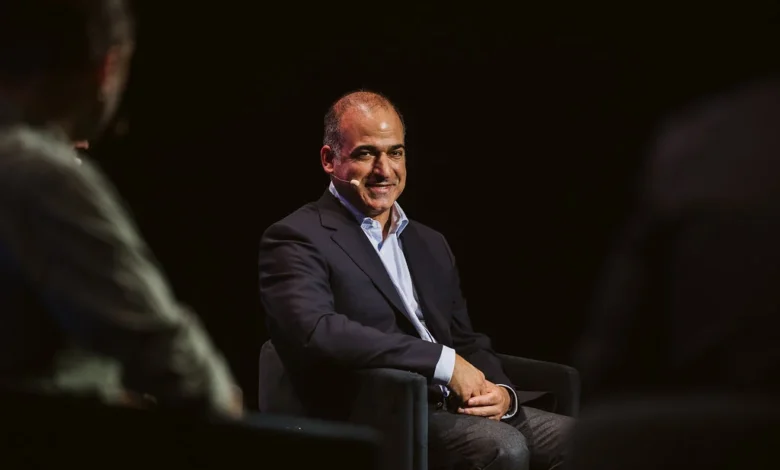
The artificial intelligence sector is currently fixated on a high-stakes guessing game. While generative text models and multimodal chatbots dominate public discourse, a quieter, heavily funded sub-sector is racing to build the next paradigm of machine cognition: world models. Moderating a panel on this exact topic at the recent All In conference offered a rare window into one of the most mysterious, heavily capitalized frontiers in technology. At the center of this movement are luminaries like Yann LeCun’s AMI Labs and Fei-Fei Li’s World Labs. Yet, despite commanding massive valuations and profound academic buzz, these organizations rank remarkably low on traditional monetization scales, wrapped in a veil of absolute corporate secrecy.
To understand the friction in the world model space, one must first look at the technology itself. Unlike statistical language models that predict the next token in a sequence, world models are engineered to automate spatial intelligence. They construct internal representations of physical environments, bridging the gap between digital computation and the tangible world. Theorists and engineers view this capability as the foundational architecture for the next generation of autonomous systems, ranging from advanced robotics and interactive simulation video to sophisticated self-driving vehicle networks.
The Strategic Silence of the Pioneers
Despite the monumental scope of these applications, pressing industry insiders on commercialization timelines yields remarkably few concrete details. Michael Rabbat, co-founder of AMI Labs and the company’s vice president of world models, offered a characteristic response when queried about specific commercial roadmaps during the panel.
"We’ll talk about it when we’re ready to talk about it," Rabbat stated, maintaining a guarded stance. In subsequent follow-up communications, he elaborated that the organization remains firmly entrenched in the foundational research and development phase, declining to make public declarations regarding product timelines.
Given that AMI Labs has been operational for less than a year, a posture of strict confidentiality is standard procedure within deep-tech incubation. However, this protective barrier extends far beyond a single startup. It defines the entire ecosystem. World Labs, another prominent player in the space, offers its Marble platform as a primary showcase of spatial capability. The platform generates explorable environments suitable for video game development, visual effects, and preliminary robotic simulations. Yet, industry observers note that these offerings function more as proofs of concept than turnkey commercial products designed for immediate mass-market integration.
This informational vacuum creates operational challenges even for direct partners and data suppliers within the supply chain. Alex de Vigan, CEO of Physicl—a specialized data provider supporting the world model industry—noted the difficulties of operating without clear directives from major labs. Speaking on the sidelines of the same conference, de Vigan expressed a desire for greater transparency from his enterprise clients.
"I wish they would tell us more," de Vigan said. "We could build more useful data if we knew what they were working on." He acknowledged that while Physicl’s datasets are clearly instrumental to ongoing training regimens, the exact mechanical utility and target parameters of the data remain shielded by non-disclosure agreements and strategic isolation.
The Versatility Problem and the Threat of Preemptive Competition
The inherent ambiguity surrounding world models stems largely from their extreme versatility. In its most rudimentary form, a world model functions as a navigable, predictive map of physical space, echoing the operational logic behind autonomous driving software deployed by firms like Waymo. However, the underlying mathematical architecture required to navigate vehicular traffic can theoretically be adapted to direct humanoid robotic arms in manufacturing facilities, or to translate hours of raw medical footage into interactive diagnostic simulators.
AMI Labs has already signaled interest across a strikingly diverse array of sectors, including advanced manufacturing, biomedicine, robotics, and clinical software through its partnership with Nabia. While no single organization possesses the bandwidth to simultaneously conquer every market vertical with equal efficiency, the refusal to narrow down a specific commercial beachhead is a deliberate tactical choice.
In the current venture capital climate, billions of dollars flow freely into foundational AI research based on long-term technological horizons. As long as capital remains readily accessible, startups face negligible immediate pressure to consolidate their business models around a single profitable product. Furthermore, exposing a definitive product roadmap carries existential risks.
If a leading lab were to publicly announce the imminent release of a commercialized humanoid robotics operating system or a revolutionary cinematic rendering engine, it would instantly alert the broader market. Such a revelation would trigger immediate strategic pivots from rival startups, specialized neolabs, and dominant platform giants like OpenAI and Anthropic. In essence, the easy capital that allows these firms to build in peace also arms their eventual competitors. By concealing their ultimate destination, world model developers delay the onset of intense market rivalry.
The Dark Forest Dynamic of Modern Tech
This dynamic reflects a classic economic paradox. The same financial ecosystem that fuels prolonged, stealthy research and development also ensures that once a viable commercial path is proven, a multitude of well-financed adversaries will rapidly converge upon it. Consequently, silence becomes a rational defensive strategy.
Within science fiction literature, particularly the works of author Cixin Liu, this phenomenon is conceptualized as the "dark forest" hypothesis: in a vast, uncertain environment where the intentions of other actors are unknown, the safest survival strategy is to remain completely hidden, emitting no signals that might attract hostile attention. For the architects of spatial intelligence, the woods are filling up rapidly, and keeping the lights off remains the most effective way to survive until dawn.