SpaceX Starship Flight 13 Successfully Deploys Next-Generation Starlink V3 Satellites and Achieves Milestone Splashdown

SpaceX has reached a pivotal milestone in its quest for a fully reusable launch system with the successful execution of its 13th Starship flight test. The mission, launched from the company’s Starbase facility in Boca Chica, Texas, achieved several critical firsts, most notably the orbital deployment of operational next-generation Starlink V3 satellites and the most controlled maritime landing of the Starship upper stage to date. This flight test was specifically designed to address technical anomalies observed during previous missions while pushing the boundaries of the vehicle’s payload capacity and re-entry survivability.
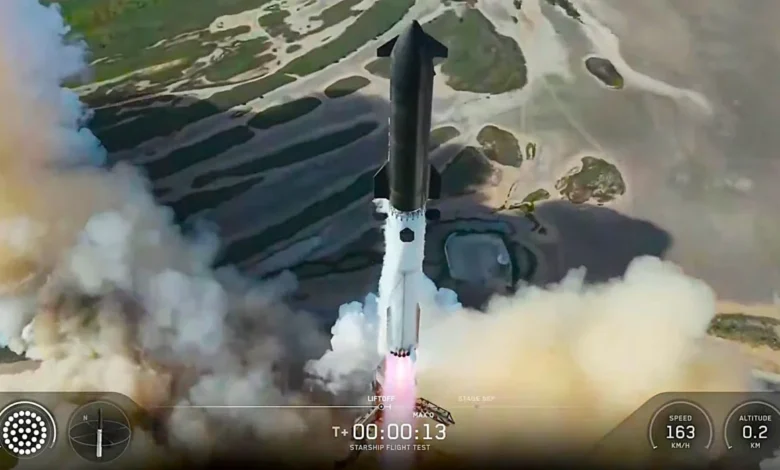
The 407-foot-tall (124-meter) rocket, comprised of the Super Heavy booster and the Starship upper stage (referred to simply as "Ship"), ascended from the launch pad at 5:51 p.m. CT (10:51 p.m. UTC). The launch followed a week-long delay caused by a dramatic last-second abort during a previous attempt, highlighting the rigorous safety and performance checks SpaceX employs during its iterative development process. As the vehicle cleared the tower, all 33 Raptor engines on the Super Heavy booster ignited, providing the 17 million pounds of thrust necessary to propel the world’s most powerful rocket into the atmosphere.
Mission Chronology and Launch Sequence
The countdown to Flight 13 was marked by high stakes following the scrubbed attempt on July 17. During that initial window, the launch sequence was halted at the moment of ignition when four Raptor engines failed to start. Subsequent inspections revealed concerns regarding six specific engines on the booster, which SpaceX engineers promptly replaced. This rapid turnaround—diagnosing, replacing, and re-testing major engine components within a week—serves as a testament to the vertically integrated manufacturing capabilities at Starbase.
Upon liftoff today, the ascent appeared nominal. As the vehicle reached the upper atmosphere, it encountered Max-Q, the point of maximum dynamic pressure where the aerodynamic structural stress on the rocket is at its peak. During this phase, Flight 13 set a new record for Max-Q intensity, providing engineers with invaluable data on the structural integrity of the stainless-steel hull under extreme conditions.
Minutes into the flight, the mission reached the stage separation phase. Utilizing a "hot-staging" technique—where the upper stage engines ignite while still attached to the booster to maintain momentum—the Ship successfully broke away from the Super Heavy. Following separation, the Super Heavy booster performed a flip maneuver and relit its engines to begin its descent back toward the Gulf of Mexico.
The Super Heavy "Spicy" Splashdown
The return of the Super Heavy booster remains a critical component of SpaceX’s long-term goal of catching the rocket with the "Mechazilla" launch tower arms. For Flight 13, the objective was a controlled splashdown in the Gulf of Mexico. While the booster successfully navigated its way back to the designated coordinates, the landing was described by SpaceX launch commentator Dan Huot as "a bit spicier than expected."
During the final landing burn, not all of the intended Raptor engines ignited as planned. This resulted in a higher-than-optimal velocity at the moment of impact with the water. Despite the engine ignition shortfall, the booster remained under control throughout its descent, and the splashdown occurred within the safety parameters established by the flight team. The data recovered from the booster’s telemetry will be essential in refining the relight reliability of the Raptor engines, which have faced challenges in previous flights due to the extreme forces of atmospheric re-entry.
Starlink V3: A Technological Leap in Connectivity
One of the primary objectives of Flight 13 was the first-ever deployment of operational Starlink V3 satellites from a Starship vehicle. While Starship has carried dummy payloads and test articles in the past, this mission utilized the functional "Pez Dispenser" deployment system—a narrow slot designed to release satellites into orbit one by one.
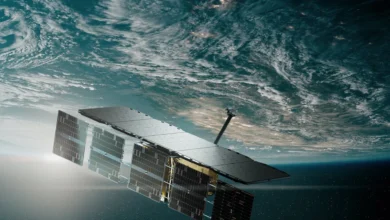
The 20 Starlink V3 satellites deployed during this mission represent a significant evolution in satellite technology. These units are designed to provide data download speeds of up to 1 terabit per second (Tbps), a massive increase over the V2 and V2 Mini models currently comprising the bulk of the Starlink constellation. The V3 satellites are also equipped with advanced "Direct-to-Cell" technology, intended to provide seamless mobile connectivity to standard smartphones in remote areas without the need for specialized ground hardware.
Following deployment, SpaceX engineers conducted a 20-minute window of intensive testing. This included the deployment of solar arrays and the verification of the satellites’ inter-satellite laser communication links. SpaceX engineer Kate Tice confirmed the success of these tests, stating that the team established contact and laser communication with all 20 units. Although these specific satellites were not intended to remain in permanent orbit—they were de-orbited to burn up in the atmosphere following the data collection phase—they proved that Starship is now a viable platform for high-capacity satellite deployment.
Atmospheric Re-entry and the "Softest" Splashdown
After the successful deployment of the Starlink payload, the Starship upper stage prepared for its most daunting challenge: re-entry. The Ship executed a mid-flight relight of one of its six Raptor engines, demonstrating the vacuum-start capability required for future missions that will involve complex orbital maneuvers or lunar landings.
As the Ship descended through the atmosphere toward the Indian Ocean, it was enveloped in a superheated field of plasma. Onboard cameras, transmitting data via the Starlink network itself, captured stunning footage of the heat shield weathering temperatures exceeding 3,000 degrees Fahrenheit. The plasma field created a vibrant light show of oranges and purples as the vehicle’s thermal protection system—composed of thousands of hexagonal ceramic tiles—worked to prevent the hull from melting.
Unlike previous tests where the Ship broke apart or lost control during the final stages of descent, Flight 13 saw the vehicle remain remarkably stable. The Ship performed its landing flip and activated its engines for a vertical descent. It touched down in the Indian Ocean intact, remaining upright for a brief period while venting residual propellant.
"That is a first. That is the softest splashdown we have ever had with a Starship there in the Indian Ocean," Dan Huot remarked. This milestone is particularly significant for the engineering teams focused on heat shield durability. By recovering high-fidelity data from a vehicle that survived the entirety of the re-entry profile, SpaceX can now accelerate the transition from "expendable" testing to "reusable" operations.
Technical Specifications and Comparative Analysis
The success of Flight 13 highlights the iterative improvements made to the Starship V3 architecture. This version of the rocket features a "beefed-up" design with improved structural reinforcements and upgraded Raptor engine manifolds. Compared to the previous test in May, which also followed a similar flight profile, Flight 13 demonstrated better engine consistency and more robust thermal protection.
The Starship system is designed to carry over 100 metric tons to low Earth orbit (LEO) in its fully reusable configuration, and potentially up to 250 metric tons in an expendable mode. This capacity dwarfs that of the Falcon 9 (approx. 22.8 metric tons) and even the retired Space Shuttle (approx. 27.5 metric tons). The ability to launch 20 or more V3 satellites in a single mission—and eventually up to 100 per launch—is the key to SpaceX’s plan to build a constellation of tens of thousands of satellites to provide global high-speed internet.
Broader Implications for the Space Industry and Artemis
The implications of Flight 13 extend far beyond SpaceX’s internal goals. NASA is closely monitoring the progress of the Starship program, as a modified version of the vehicle, known as the Starship Human Landing System (HLS), is slated to return American astronauts to the lunar surface during the Artemis III and IV missions. The successful engine relights and controlled re-entry demonstrated in this flight are critical prerequisites for the lunar landing profile, which requires precision and reliability in extreme environments.
Furthermore, the commercial satellite industry is likely to see a shift in market dynamics. The sheer volume of payload space offered by Starship could lead to a significant reduction in the cost per kilogram to orbit. This could enable new types of orbital infrastructure, including large-scale space stations, orbital manufacturing facilities, and more ambitious deep-space exploration missions to Mars.
Future Outlook: Moving Toward Tower Catches
With the data gathered from the "spicy" booster landing and the "soft" Ship splashdown, SpaceX’s next major milestone will likely involve an attempt to return the Super Heavy booster directly to the launch site for a tower catch. This maneuver, which involves the booster slowing to a hover as the "chopstick" arms of the launch tower close around it, is the final piece of the reusability puzzle.
Elon Musk, CEO of SpaceX, has frequently stated that the goal is to make spaceflight as routine as air travel. Each flight test, regardless of minor engine issues or "spicy" landings, brings the company closer to that reality. Flight 13 has proven that Starship is not just a prototype, but a functioning cargo-delivery system capable of deploying the most advanced telecommunications hardware ever built.
As SpaceX prepares for Flight 14, the focus will remain on perfecting engine reliability and further thinning the heat shield tiles to reduce weight without compromising safety. For now, the successful deployment of the Starlink V3 satellites stands as a clear signal to the global aerospace community: the era of the super-heavy, fully reusable rocket has officially arrived.
Related posts: