Sixty-five years of discovery: How NASA Johnson Space Center transformed Houston into the heart of human spaceflight.

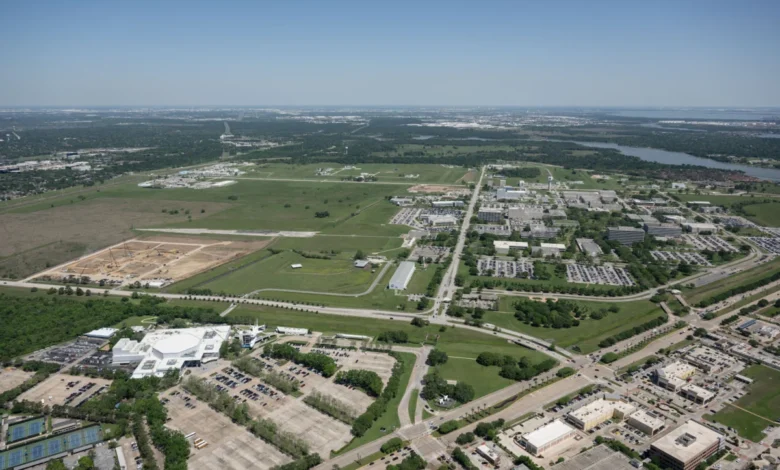
Since its inception over six decades ago, the Lyndon B. Johnson Space Center (JSC) has functioned as the primary nerve center for America’s journey into the cosmos. From the frantic, high-stakes days of the Cold War Space Race to the contemporary era of the Artemis program, this sprawling facility in southeast Houston has remained the heartbeat of human space exploration. As the designated Center of Excellence for Human Spaceflight, JSC serves as the operational headquarters for the astronaut corps, the site of the legendary Mission Control, and the primary testing ground for the hardware that carries humanity into the final frontier.
A Legacy Born from a National Mandate
The genesis of what would become the Johnson Space Center can be traced directly to a singular, monumental promise. On May 25, 1961, President John F. Kennedy addressed a joint session of Congress, issuing a challenge that would redefine the 20th century: the United States would commit itself to the goal of landing a man on the Moon and returning him safely to Earth before the decade was out.
This objective necessitated a dramatic expansion of NASA’s infrastructure. At the time, the Space Task Group, which managed the burgeoning Project Mercury, was operating out of the Langley Research Center in Hampton, Virginia. However, the sheer scale of the lunar landing project—and the need for specialized facilities to manage complex spacecraft development and astronaut training—meant the agency had outgrown its existing footprint.
By September 1961, after a rigorous search across the United States for an optimal site that offered favorable weather, water transport access, and proximity to academic and industrial hubs, NASA announced that the new Manned Spacecraft Center would be built near Clear Lake, Houston. The center was formally established on November 1, 1961. The transition was immediate; while the site was still being developed, staff operated out of 13 leased buildings scattered across southeast Houston. By 1963, the first teams began moving into the permanent Clear Lake campus, marking the beginning of an era of unprecedented engineering achievement.
Chronology of Infrastructure and Innovation
The growth of the Johnson Space Center mirrors the evolution of spaceflight itself. Every decade brought new requirements, demanding the construction of specialized facilities to push the boundaries of what humans could accomplish in harsh environments.
The Foundation Years (1961–1969)
The initial construction phase prioritized the infrastructure necessary to win the Moon race. Building 30, the iconic Mission Control Center, stands as a testament to this period. Construction commenced in June 1963, and by June 1965, the facility assumed full control of the Gemini IV mission. This marked a historic shift: Houston became the permanent "voice" of human spaceflight, a role it has maintained for every crewed NASA mission since.
Simultaneously, the agency addressed the unknown dangers of extraterrestrial environments. The Lunar Receiving Laboratory (Building 37), built in 1966, was designed with extreme biosecurity protocols to ensure that returning lunar samples—and the astronauts themselves—did not introduce unknown pathogens to Earth. It played a critical role in the post-flight quarantine of the Apollo 11, 12, and 14 crews.
The Shuttle and Station Era (1970–2000)
As the focus shifted from lunar exploration to low-Earth orbit (LEO), the center underwent massive renovations. Building 9, the Space Vehicle Mockup Facility, evolved into a massive training ground. Originally built in 1965 as the Technical Services Facility, it was repeatedly expanded to house full-scale mockups of the Space Shuttle, followed by modules for the International Space Station (ISS).
Training methodologies also matured. Recognizing the need to simulate weightlessness, NASA pioneered the use of neutral buoyancy. The Water Immersion Facility of the late 1960s eventually gave way to the Neutral Buoyancy Laboratory (NBL) in the late 1990s. The NBL remains one of the world’s largest indoor pools, providing a critical environment for astronauts to master the complex, physically demanding art of extravehicular activity (EVA).
Data-Driven Excellence: Supporting the Modern Program
Today, the Johnson Space Center’s portfolio is more diverse than at any point in its history. Its operations are categorized into three major domains: Low Earth Orbit (LEO) utilization, lunar exploration, and human health.
- LEO and Commercial Partnerships: Houston manages the International Space Station (ISS) program, which serves as a global laboratory for scientific research. Furthermore, JSC is the hub for emerging commercial space activities, overseeing the development of private-sector orbital destinations that will eventually succeed the ISS.
- The Artemis Program: The Moon Base and Orion programs are currently centered at JSC. These initiatives are not merely about returning to the lunar surface but about establishing a sustainable human presence. The Orion spacecraft, designed for deep-space missions, is managed and tested by teams in Houston to ensure the safety of crews venturing beyond the protection of Earth’s magnetic field.
- Human Health and Performance: Perhaps the most critical, yet understated, work occurs within the Human Health and Performance Directorate and the Human Research Program. As NASA eyes missions to Mars, these teams are focused on mitigating the physiological and psychological stressors of long-duration spaceflight, including radiation exposure, muscle atrophy, and bone density loss.
Official Perspective and Institutional Impact
In honor of his instrumental support for the space program, the facility was officially renamed the Lyndon B. Johnson Space Center in 1973. Throughout its history, the center has functioned as a significant economic engine for the Gulf Coast region. Beyond the financial impact, its cultural footprint is immeasurable; it has inspired generations of engineers, scientists, and students, cementing Houston’s reputation as "Space City."
The leadership at JSC emphasizes that the center is not a historical museum, but an active laboratory. "Our workforce is currently ushering in a Golden Age of discovery," a spokesperson for the center noted recently. "While we honor the legacy of the Gemini and Apollo days, our gaze is firmly fixed on the next 65 years of human expansion."
Analysis: The Strategic Importance of JSC
The strategic importance of the Johnson Space Center cannot be overstated. By centralizing the control of flight operations, the design of spacecraft, and the training of astronauts within one campus, NASA achieved a level of operational synergy that allowed for the rapid iteration of technology.
The integration of the "Mission Control" philosophy—a culture of rigorous, real-time problem solving—has become the gold standard for high-stakes engineering environments globally. This culture was perhaps best epitomized by Christopher C. Kraft, Jr., the father of modern flight control. The renaming of the Mission Control Center in his honor in 2011 serves as a reminder that the center’s greatest asset is not its buildings, but the institutional knowledge and the "can-do" mentality of its workforce.
As we look toward the future, the challenges facing JSC are vastly different from those of 1961. The current focus on international cooperation, commercial integration, and sustainable, long-term deep-space habitation requires a higher degree of agility than the agency has ever demonstrated. However, the infrastructure built over the last six decades—from the massive mockup facilities to the sophisticated health research laboratories—provides the necessary foundation to ensure that the United States remains the global leader in human spaceflight.
The story of the Johnson Space Center is the story of human ambition. From the first Apollo missions that turned a bold presidential speech into a reality, to the upcoming Artemis missions that seek to establish a permanent lunar outpost, the center remains the definitive architect of our future among the stars. It stands as a testament to the belief that when human ingenuity is focused on a singular, audacious goal, the impossible becomes merely the next step in our evolution.
Related posts: