Samsung Galaxy S27 Regulatory Filings Reveal Base Model Will Retain 25W Charging Speeds

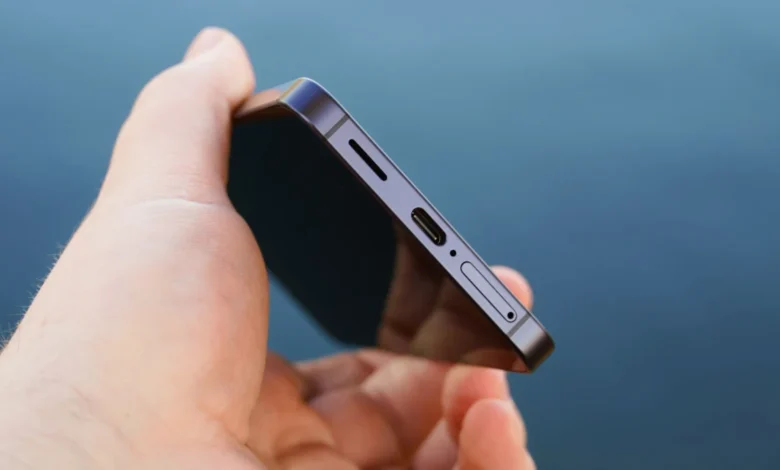
Recent regulatory documentation has shed light on the hardware specifications of Samsung’s upcoming flagship smartphone lineup, indicating that the base model of the Galaxy S27 series will continue to utilize a 25W wired charging ceiling. Certification records uncovered from international safety and compliance databases suggest that Samsung Electronics is maintaining its historical charging constraints for its entry-level flagship device, even as competitors rapidly advance their power-delivery technologies. While higher-tier models within the impending family are anticipated to receive incremental performance and charging boosts, the standard Galaxy S27 appears locked into a technical standard that first debuted globally more than half a decade ago.
The findings stem from recent filings submitted to UL Solutions, a prominent independent safety science company, specifically through its Demko certification body in Denmark. Discovered in late October, the regulatory database entries detail multiple regional variants belonging to the upcoming device family, categorized under the overarching model prefix SM-S952. Among the logged variants are versions destined for major consumer markets including the United States (SM-S952U and SM-S952U1), Canada (SM-S952W), Europe and international territories (SM-S952B), and South Korea (SM-S952N).
According to the technical specifications outlined in certificates DK-187425-UL and DK-187435-UL, the listed power adapters and internal power management circuits are rated for a direct current output of 9 volts at 2.77 amperes. Mathematically, this configuration calculates to approximately 24.93 watts of power delivery, effectively rounding out to the commercial standard of 25W. Because the specifications are applied universally across the global model numbers, industry observers note that Samsung is not reserving faster charging speeds for specific regional markets, nor is it planning a regional hardware divergence for the base model’s power subsystem.
Historical Context and the Evolution of Samsung’s Charging Speeds
To understand the significance of the UL Solutions listing, one must examine the timeline of Samsung’s mobile power architecture. The 25W wired charging threshold has been a foundational pillar for Samsung’s entry-level flagship smartphones since the introduction of the Galaxy S20 series in February 2020. Over successive product cycles—including the Galaxy S21, S22, S23, S24, S25, and S26 lineups—the company consistently limited its standard-tier flagship models to this maximum input threshold.
While Samsung eventually introduced 45W fast charging capabilities for its larger Plus and Ultra variants beginning with the Galaxy S10 5G and expanding in later generations, the base model has remained insulated from these upgrades. By the time the Galaxy S27 reaches store shelves, this specific charging specification will have remained entirely stagnant for seven consecutive product generations. This long-standing plateau stands in stark contrast to the rapid iteration cycles typically observed in the broader consumer electronics industry, where display refresh rates, processing nodes, camera sensors, and artificial intelligence processing units receive major annual overhauls.
The Competitive Landscape: Falling Behind Global Rivals
The decision by Samsung to retain a 25W ceiling on its base flagship places the company in an increasingly isolated position relative to its global competitors, particularly manufacturers originating from mainland China. Over the past several years, brands such as Xiaomi, OnePlus, Vivo, Oppo, and realme have aggressively pushed the boundaries of wired power delivery. Today, many mid-range and flagship devices from these competitors support rapid charging speeds ranging from 60W to well over 120W, enabling complete battery replenishment in under 30 minutes.
Industry analysts point out that while South Korean manufacturers like Samsung and Apple have historically prioritized long-term battery health, thermal management, and strict international safety certifications over raw charging velocity, consumer expectations have shifted. Fast charging has transitioned from a niche enthusiast feature to an expected utility in modern smartphone design. By maintaining a 25W limit, a full charge for a modern flagship battery capacity can take well over an hour, a duration that increasingly lags behind contemporary industry benchmarks.
Disparities Within the Broader Galaxy S27 Family
While the entry-level Galaxy S27 model appears bound to legacy charging speeds, leaked documentation and supply chain reports indicate that the broader device ecosystem will feature tiered improvements. Earlier filings within the Chinese 3C (China Compulsory Certification) database suggest that Samsung intends to differentiate its device lineup more clearly by offering faster power delivery profiles to higher-priced iterations.
According to these preliminary certifications, the Galaxy S27 Plus is anticipated to support wired charging speeds up to 45W, aligning it with the specifications previously reserved for the highest-tier devices. Furthermore, the flagship Galaxy S27 Pro and the top-tier Galaxy S27 Ultra are rumored to push boundaries further, with potential support reaching up to 60W. While a move to 60W does not represent a revolutionary leap compared to ultra-fast international competitors, it nonetheless provides a meaningful improvement for consumers purchasing Samsung’s most expensive hardware configurations.
Beyond raw power output, the internal component architecture of the Galaxy S27 series is expected to introduce notable divergences based on geography. Industry leaks indicate that the standard Galaxy S27 will likely be powered by Samsung’s proprietary Exynos 2700 system-on-chip in select international markets, while variants distributed in North America and select other regions are expected to feature Qualcomm’s Snapdragon 8 Elite Gen 6 platform.
Implications of Improved Power Efficiency
Facing criticism over stagnant charging metrics, Samsung may look to offset slower replenishment times through significant advancements in overall power efficiency. Modern chipsets built on advanced sub-nanometer fabrication nodes require less electrical energy to perform daily computational tasks, gaming, and background processes.
If the Exynos 2700 and Snapdragon 8 Elite Gen 6 processors deliver the expected generational leaps in thermal performance and energy conservation, the physical battery capacity within the Galaxy S27 may yield longer operational periods between charges. Analysts note that while enhanced efficiency does not solve the inconvenience of a lengthy charging cycle, it reduces the frequency with which a user must connect the device to a power source during a standard day of use.
Furthermore, regulatory filings of this nature do not provide a complete picture of a device’s power capabilities. Crucial details—such as the maximum supported wattage for wireless charging protocols (traditionally capped at 15W under the Qi standard for base Samsung models) and the exact physical milliamp-hour (mAh) capacity of the internal battery cell—remain unconfirmed by official documentation.
Anticipated Launch Timeline and Market Outlook
Samsung has not yet made any official public statements or issued press releases confirming the existence, technical specifications, or release date of the Galaxy S27 series. Historically, the conglomerate unveils its primary flagship smartphone generation during dedicated Galaxy Unpacked events held in the first quarter of each calendar year, typically falling between January and February.
As manufacturing partners begin submitting documentation to international regulatory agencies like UL Solutions, the Federal Communications Commission (FCC) in the United States, and similar bodies worldwide, further details are expected to emerge through the public record.
For consumers and industry watchers, the primary takeaway from the latest regulatory filings is one of continuity rather than revolution. If the 25W charging threshold remains fixed through the final retail launch, prospective buyers of the base Galaxy S27 will need to weigh Samsung’s ecosystem integration, software longevity, camera capabilities, and display quality against a charging specification that has remained unchanged for nearly a decade. As the smartphone market continues its rapid evolution, the industry will closely monitor whether Samsung’s conservative approach to power delivery impacts consumer demand for its baseline flagship offering.