Samsung Capitalizes on iPhone Duo Hardware Struggles with Aggressive Marketing Campaign

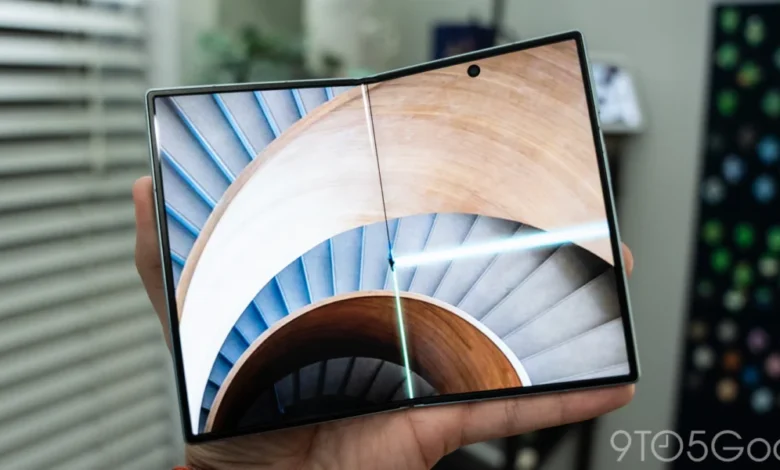
The launch of the iPhone Duo, Apple’s highly anticipated entry into the foldable smartphone market, has been marred by early reports of significant hardware failures. Known colloquially on social media as "crackgate," the issue involves the device’s internal display panel suffering from a uniform failure point directly along the crease. This widespread hardware defect has prompted a swift and uncharacteristically aggressive response from Samsung, the market leader in foldable technology, which has launched a global social media campaign designed to contrast the iPhone Duo’s instability with the mature engineering of the Galaxy Z Fold 8.
The emergence of these hardware issues has created a PR crisis for Apple, forcing the company to initiate an replacement program for affected units. For Samsung, the situation represents a unique opportunity to reinforce its position as the pioneer and definitive expert in the foldable category.
A Chronology of the Hardware Crisis
The controversy began shortly after the iPhone Duo hit retail shelves in late October 2026. Within days, early adopters began posting high-resolution images and video testimonials on platforms such as X (formerly Twitter) and Reddit, documenting a specific failure pattern: the display panel would develop a vertical fracture along the hinge, eventually resulting in a dead zone of pixels or a complete screen blackout.

The consistency of the damage—occurring in the exact center of the screen—suggests a systemic engineering challenge related to the hinge mechanism’s tension or the durability of the Ultra-Thin Glass (UTG) protective layer. By the end of the first week of availability, the term "crackgate" began trending, putting significant pressure on Apple’s support infrastructure.
Apple responded on October 26, 2026, acknowledging that a subset of early-production units experienced display irregularities. While the company did not characterize the issue as a design flaw, it confirmed that affected customers would be eligible for rapid device replacements under standard warranty terms. However, the optics of a first-generation product failing within days of purchase provided an opening for competitors.
Samsung’s Coordinated Global Marketing Strategy
Samsung’s response to the situation has been multi-faceted, utilizing its various regional social media accounts to highlight the maturity of its own hardware. The company’s messaging centers on the narrative that foldable technology is not a "new" endeavor for Samsung, but rather a refined science.
In an advertisement posted by Samsung Canada, the company explicitly referenced the "crackgate" phenomenon, using the slogan "folding is nothing new to us, and we know a thing or eight." The advertisement features imagery that subtly mirrors the visual evidence of the iPhone Duo’s cracked display, urging consumers to switch to the Galaxy Z Fold 8. This sentiment was echoed by Samsung Malaysia, which leveraged a more casual, provocative tone, stating, "Feeling a little FOMO seeing all this talk about durability? Oops, we’ve just been busy folding and getting on with our day."

Samsung Australia took a different approach, focusing on the sensory experience of device usage, running a campaign themed around "how life sounds when your screen doesn’t break when opening your phone." Perhaps the most direct attack came from Samsung Saudi Arabia, which posted content depicting the iconic iPhone Duo "crack" as a mere digital wallpaper on a Galaxy Z Fold 8, effectively mocking the aesthetic of the competitor’s failure.
Industry Context: The Difficulty of Foldable Engineering
To understand why the iPhone Duo is facing such early hurdles, it is necessary to examine the evolution of foldable technology. Samsung’s first attempt at a foldable device, the original Galaxy Fold released in 2019, also faced significant durability challenges. The initial launch was famously delayed due to issues with the screen’s protective layer and debris entering the hinge.
It took Samsung approximately eight generations of iteration to arrive at the current Galaxy Z Fold 8, which features a sophisticated "Flex Hinge" design and a multi-layered display stack designed to distribute stress across the fold. The engineering required to make a screen that is both flexible and durable is immense; the display must withstand hundreds of thousands of fold-and-unfold cycles without the organic light-emitting diode (OLED) material fatiguing or the adhesive layers delaminating.
For Apple, the entry into this space represents a departure from its historical approach of entering a category only when the technology is deemed "perfected." The iPhone Duo suggests that despite Apple’s rigorous testing protocols, the physical constraints of folding displays remain a formidable challenge that even the most well-funded research and development teams struggle to solve on their first attempt.

Market Implications and Consumer Confidence
The public nature of this hardware failure has immediate implications for both companies. For Apple, the challenge is to maintain its reputation for premium hardware quality. Historically, Apple has navigated similar crises—such as the "Antennagate" issue of the iPhone 4—by providing free solutions and emphasizing the product’s overall value proposition. Analysts suggest that if the replacement program is handled efficiently, the long-term impact on brand loyalty will be minimal.
Conversely, Samsung is using this moment to solidify its "pro-consumer" stance among power users. By highlighting the differences between a company in its first iteration and a company in its eighth, Samsung is attempting to capture the segment of the market that prioritizes technical specifications and hardware maturity.
Data from third-party repair firms indicate that foldable devices generally see higher repair rates than traditional "slab" smartphones. According to recent industry reports, the cost of replacing a foldable display can account for up to 40% of the total cost of the device. Consequently, durability is no longer just a marketing talking point—it is a critical financial factor for the consumer. If Apple cannot stabilize the display longevity of the iPhone Duo, it risks high long-term support costs and a potential decline in secondary market value, which is a major driver of iPhone purchasing decisions.
The Road Ahead
As of November 2026, the situation remains fluid. Apple is reportedly investigating the manufacturing batch numbers associated with the failing units to determine if the issue is a systemic design flaw or a localized quality control failure at a specific assembly plant.

Samsung’s marketing blitz, while aggressive, serves a strategic purpose: it forces consumers to compare the two brands on the basis of "experience." By framing the iPhone Duo as a "risky" first-gen device, Samsung is attempting to shift the narrative from "Apple has finally arrived in the foldable space" to "Apple is behind the curve."
The "crackgate" saga serves as a reminder that the transition from rigid to flexible screens is the most significant hardware shift in the smartphone industry since the introduction of the capacitive touchscreen. While the current headlines focus on the failures of the iPhone Duo, the broader implication is that the foldable market is reaching a critical inflection point. As more manufacturers enter the space, the competition will increasingly be decided not just by software features or ecosystem integration, but by the fundamental reliability of the hardware itself.
Moving forward, the industry will be watching to see how Apple adjusts its manufacturing processes for the next iteration of the iPhone Duo. Should the company be forced to issue a hardware recall, it would be a significant blow to its status as the leader in hardware engineering. Until then, Samsung appears intent on ensuring that every prospective buyer of a foldable device is aware of the risks associated with choosing an unproven, first-generation solution.