Navigating the High Cost of Vehicle Ownership: Top SUVs with Lowest Maintenance Costs in 2026

Ensuring that a new vehicle remains affordable to operate over its lifespan has become as critical as the initial purchase price in today’s automotive market. Industry-wide prices for new cars continue to exert upward pressure, with the average cost hovering persistently around the $50,000 mark as of July 2026, a figure corroborated by Kelley Blue Book data. While the sport utility vehicle (SUV) segment offers numerous models priced below this threshold, discerning buyers understand that not all will translate into long-term savings. The true measure of affordability now extends beyond the showroom floor, encompassing the total cost of ownership (TCO), with maintenance expenses representing a significant and often unpredictable component.
The Evolving Landscape of Vehicle Affordability
The automotive industry has witnessed unprecedented shifts in recent years, impacting both vehicle pricing and consumer priorities. Supply chain disruptions, heightened demand, advancements in automotive technology, and broader inflationary pressures have collectively pushed new car prices to historic highs. This economic reality has compelled consumers to look beyond the immediate transaction, focusing intently on factors like fuel efficiency, insurance premiums, and crucially, maintenance and repair costs. For many, the initial investment in a vehicle, particularly an SUV, represents one of the largest financial commitments outside of housing, making the predictability and manageability of ongoing expenses paramount.
SUVs, despite their generally higher purchase prices compared to sedans, maintain immense popularity due to their versatility, spaciousness, and perceived safety. This sustained demand underscores the importance of identifying models that not only meet lifestyle needs but also offer financial prudence over years of ownership. Manufacturers recognized for their unwavering commitment to reliability often stand out in this regard, consistently offering models that translate into lower repair bills. Entry-level SUVs can be acquired for approximately $25,000, and a select few within this category, along with some higher-priced counterparts, distinguish themselves through remarkably low maintenance requirements. Leveraging comprehensive data from trusted automotive analytics platforms such as RepairPal, CarEdge, Edmunds, and J.D. Power, this analysis identifies five SUVs that excel in minimizing long-term maintenance expenditures, ensuring that the initial investment remains sound and sustainable.
Key Industry Trends and the Pursuit of Reliability
The emphasis on vehicle dependability is not a new phenomenon, but its significance has amplified in the current high-cost environment. Automotive reliability studies, such as those conducted by J.D. Power, meticulously track vehicle performance and owner satisfaction over time, providing invaluable insights into brand and model longevity. These studies often highlight engineering prowess, quality control, and the availability of robust, long-lasting components as primary drivers of low maintenance costs. Brands that consistently rank high in these studies tend to feature prominently in lists of vehicles with superior long-term value. This shift in consumer focus has also spurred manufacturers to not only build more reliable vehicles but also to offer extended warranties and comprehensive service plans, further cementing the importance of predictable ownership costs.
Toyota RAV4: A Benchmark in Compact SUV Dependability
The Toyota RAV4 has long been a stalwart in the U.S. compact SUV market, consistently appearing at the pinnacle of sales charts. As of 2026, it remains Toyota’s second-best-selling model, a testament to its enduring appeal. With a starting price for the base 2026 model at $31,900 (inclusive of a $1,595 destination charge), the RAV4 positions itself competitively within its segment. However, its true financial advantage emerges over the course of ownership, particularly concerning maintenance.
Toyota’s sterling reputation for reliability is virtually unmatched in the industry, and the RAV4 embodies this legacy. RepairPal’s analysis indicates an average annual maintenance cost of approximately $429 for the RAV4, a significant $92 below the compact SUV segment average of $521 in 2026. This substantial saving is reinforced by CarEdge’s data, which projects a five-year maintenance cost of just $1,938. Extending this projection, the 10-year cost for a RAV4 is estimated to be around $6,004, a remarkable $2,500 less than the average for SUVs across all segments. This consistent performance is attributed to Toyota’s mature engineering, widespread availability of affordable parts, and a proven track record of durability. The RAV4’s appeal lies not just in its initial value but in the peace of mind it offers owners, knowing that unexpected, costly repairs are less likely to disrupt their budgets. Industry analysts often cite Toyota’s extensive research and development cycles, coupled with stringent quality control, as key factors in their vehicles’ prolonged reliability and lower maintenance burdens.
Hyundai Ioniq 5: Pioneering EV Affordability in Maintenance
Electric vehicles (EVs) represent a rapidly evolving segment, and while they have fewer moving parts than traditional internal combustion engine (ICE) vehicles, their maintenance profiles are distinct. The Hyundai Ioniq 5, launched in 2021, quickly established itself as a frontrunner in the EV crossover space. Initially, Hyundai offered a three-year limited maintenance coverage, a program discontinued in 2026 due to its cost. Despite this change, the Ioniq 5 continues to demonstrate impressive long-term affordability in maintenance.
A crucial point of discussion for the Ioniq 5 platform is the integrated charging control unit (ICCU) issue. While not every Ioniq 5 has been affected, Hyundai has proactively addressed potential faults with this critical component. The company has committed to fixing any ICCU issues free of charge and has significantly extended the warranty for this component to 15 years or 180,000 miles. Furthermore, software updates are routinely deployed to mitigate potential problems, often preventing the need for a full ICCU replacement. This comprehensive manufacturer support significantly reduces the financial burden on owners, transforming a potential high-cost repair into a covered expense.
Beyond specific component concerns, the general maintenance profile of the Ioniq 5 is notably low. CarEdge reports a five-year maintenance cost of just $1,712, positioning it as one of the most economical SUVs to maintain according to their data. Edmunds further supports this, showing initial ownership costs of only about $213 within the first year. The inherently simpler drivetrain of EVs, with no oil changes, spark plugs, or complex exhaust systems, contributes significantly to these lower routine maintenance figures. The focus shifts to tire wear, brake system checks (often less frequent due to regenerative braking), and specialized EV system diagnostics. Hyundai’s aggressive warranty and proactive measures demonstrate a commitment to long-term EV ownership satisfaction, setting a benchmark for other manufacturers entering the electric market. This approach suggests that while initial EV technology might present unique challenges, manufacturers are increasingly stepping up to ensure that these do not translate into prohibitive costs for consumers.
Honda HR-V: Compact Efficiency, Low Costs
For urban dwellers or those seeking a nimble SUV with slightly more space than a traditional car, the Honda HR-V presents a compelling option. Positioned a size smaller than the RAV4, the HR-V is one of the most compact SUVs available, ideally suited for city living. Its starting price of $26,600 (including a $1,450 destination fee) makes it an accessible entry point into the SUV market. While some rivals may offer a lower sticker price, the HR-V distinguishes itself through its long-term operational economy.
Honda, much like Toyota, has cultivated an industry-leading reputation for reliability. RepairPal ranks Honda as the most reliable brand overall, with an average annual repair cost of $428. The HR-V, however, outperforms even this high standard, with an estimated annual maintenance cost of just $301. This exceptional figure places it among the most affordable gas-powered SUVs to maintain. CarEdge’s data reinforces this, projecting a five-year maintenance cost of $2,347. While slightly higher than the RAV4, it remains substantially below many other vehicles in its class. The HR-V’s robust engineering, efficient powertrain, and shared componentry with other reliable Honda models contribute to these low figures. Furthermore, the HR-V offers commendable fuel efficiency, with the EPA reporting an average annual fuel cost of $2,200, which aligns precisely with the average for new cars in 2026. This combined approach to affordability – low maintenance and competitive fuel economy – makes the HR-V a strong contender for budget-conscious buyers seeking practical utility.
Subaru Crosstrek: Rugged Reliability for the Adventurous
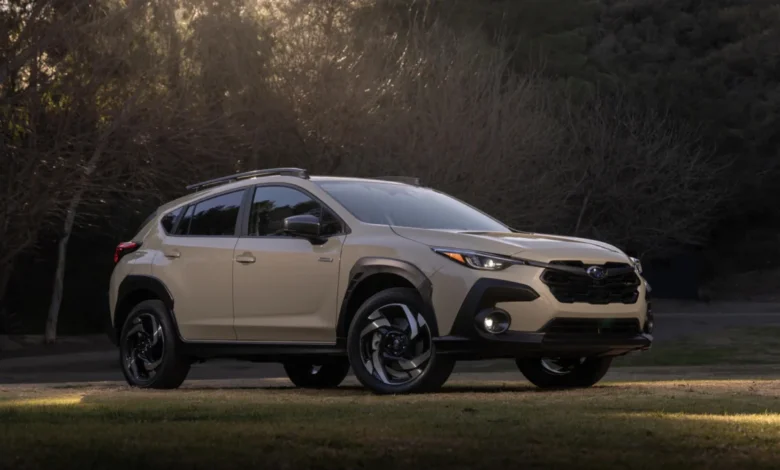
Subaru has carved out a distinct niche in the automotive market, renowned for its standard all-wheel drive, robust build quality, and commitment to safety and reliability. In J.D. Power’s 2026 Vehicle Dependability Study, Subaru secured an impressive sixth place overall among all brands. Within its segment, the compact Crosstrek earned specific accolades, being named the most reliable in its class this year. Starting at $26,995 (with a $1,420 destination charge), the Crosstrek offers standard all-wheel drive and nearly nine inches of ground clearance, features that lean towards light off-roading and adventurous lifestyles. The inherent reliability of the Crosstrek becomes a significant asset for owners who frequently venture off paved roads, minimizing concerns about component failure in challenging conditions.
The Crosstrek’s exceptional reliability naturally translates into low maintenance costs. RepairPal estimates an annual maintenance cost of approximately $492 for the Crosstrek, also placing it first in its segment for reliability. Edmunds’ projections for the initial years of ownership are equally promising, with maintenance costs staying below $750 for the first three years, before a gradual increase as the vehicle ages. This predictable cost structure provides owners with financial stability, particularly appealing to those who depend on their vehicle for both daily commuting and recreational activities. The enduring appeal of Subaru’s Boxer engine, known for its balanced design and longevity, coupled with the brand’s commitment to robust construction, underpins the Crosstrek’s strong performance in maintenance cost assessments. Subaru’s consistent engineering philosophy and focus on owner loyalty are clear drivers behind these impressive figures.
Toyota Highlander: Mid-Size Comfort with Budget-Friendly Upkeep
Returning to Toyota, the Highlander, a larger counterpart to the RAV4, further solidifies the manufacturer’s reputation for dependable and affordable ownership across different segments. Positioned as a mid-size SUV that balances premium features with practical utility, the newest Highlander starts at $46,270, plus a $1,495 destination fee. It is important to note that the anticipated 2027 all-electric redesign is not yet available, and this analysis pertains to the current model year. With standard all-wheel drive across all trims in the U.S. and a generous array of comfort features, the Highlander represents a strong value proposition, particularly when considering its low running costs.
RepairPal reports an average annual maintenance cost of $489 for the Highlander, showcasing its efficiency within the mid-size segment. CarEdge’s data further corroborates this, estimating maintenance costs of approximately $2,048 over five years. Over a decade, the projected cost rises to $6,224, but critically, yearly costs are projected to consistently remain below $1,000. This makes the Highlander an attractive option for families or individuals seeking a more spacious and refined SUV experience without incurring the high maintenance expenses often associated with premium vehicles. The Highlander benefits from Toyota’s scalable engineering principles, which apply the same rigorous reliability standards and utilize similar proven components as found in its smaller siblings. This allows the Highlander to offer a luxury-like feel and robust capability while retaining the brand’s hallmark of affordability in long-term ownership.
Broader Implications and Future Outlook
The consistent performance of these SUVs in terms of low maintenance costs holds significant implications for both consumers and the automotive industry. For buyers, access to transparent and reliable data empowers them to make more informed decisions, moving beyond sticker price to consider the true total cost of ownership. This shift in consumer behavior encourages a more holistic view of vehicle value.
For manufacturers, prioritizing reliability and minimizing long-term costs is no longer just a desirable trait but a crucial competitive advantage. Brands like Toyota, Honda, and Subaru have built their legacies on this principle, and their continued success in reliability rankings reinforces the effectiveness of their engineering and quality control processes. Hyundai’s proactive stance with the Ioniq 5’s ICCU issues also demonstrates an evolving industry response to new technological challenges, where manufacturer support can significantly mitigate owner expenses.
Looking ahead, the landscape of vehicle maintenance will continue to evolve. The increasing proliferation of electric vehicles suggests a future with potentially lower routine service costs, offset by the specialized nature and potential expense of core EV components like batteries and charging systems. Advances in telematics and predictive maintenance, leveraging artificial intelligence and vehicle data, could further reduce unexpected breakdowns and optimize service schedules, leading to even greater cost predictability. The growth of comprehensive service packages and extended warranties offered by manufacturers and third parties also reflects the industry’s adaptation to consumer demand for stable ownership costs. Ultimately, the emphasis on low maintenance costs is not merely a fleeting trend but a fundamental pillar of sustainable vehicle ownership in an era of rising automotive expenses.
Methodology
The selection of these five SUVs was based on a rigorous methodology involving the cross-referencing and analysis of data from several highly reputable and independent automotive sources. These include RepairPal, Edmunds, Kelley Blue Book (KBB), and CarEdge. Each of these platforms collects and analyzes vast amounts of data pertaining to vehicle repair costs, reliability ratings, and projected ownership expenses over various periods (yearly, five-year, and ten-year).
RepairPal, for instance, utilizes a comprehensive database of actual repair orders from certified shops to calculate average annual maintenance and repair costs, providing detailed insights into specific models and comparing them against segment averages. CarEdge employs actuarial science and a broad dataset to project long-term ownership costs, including maintenance, depreciation, and fuel. Edmunds offers detailed "Cost to Own" data, breaking down expenses for specific model years, while KBB provides industry-wide average pricing and cost analysis.
By triangulating data from these diverse sources, we ensured that each SUV selected demonstrated consistently low maintenance costs across multiple independent evaluations. This approach minimizes reliance on single data points and provides a robust, fact-based assessment of each vehicle’s long-term affordability, making this analysis suitable for informed purchasing decisions.