Meta Unveils Muse: A New Era of Secure Personal AI Agents Designed to Automate Daily Life

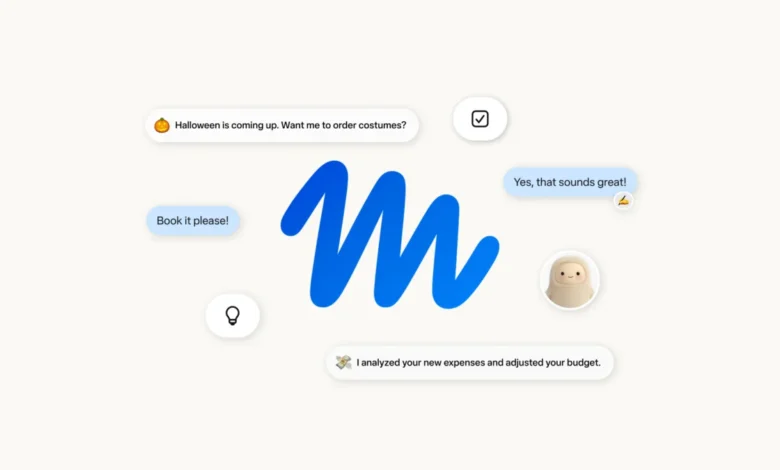
Meta has officially entered the competitive landscape of autonomous AI agents with the launch of Muse, a sophisticated, private, and proactive personal assistant engineered to handle both mundane tasks and complex, multi-step life goals. By integrating its most powerful model to date, Muse Spark, into a dedicated virtual architecture, the company aims to move beyond simple chatbot interactions toward true "agentic" workflows. Unlike standard generative AI models that rely on reactive prompts, Muse is designed to operate continuously, navigating the internet, managing schedules, and executing transactions on behalf of users while maintaining a high standard of privacy through its unique Muse Secure VM environment.
The Evolution of Agentic AI
The introduction of Muse marks a significant pivot in Meta’s artificial intelligence strategy. For years, the industry has focused on Large Language Models (LLMs) capable of generating text, code, and images. However, the next frontier—often referred to as "agentic AI"—involves systems capable of performing actions across various platforms to achieve a specific outcome.
The development of Muse follows a rapid internal timeline. Following the release of the Llama series of open-weights models, Meta researchers identified a bottleneck in real-world utility: users were spending more time prompting models than actually saving time. Muse Spark, the underlying engine powering the new agent, was built specifically to address this. It is optimized for "action-oriented" intelligence, allowing the model to parse intent, break down large objectives into sub-tasks, and execute them across web interfaces, apps, and digital services.
Architecture: The Muse Secure VM
A primary concern surrounding AI agents is the security risk associated with granting an automated system access to personal accounts, emails, and payment methods. To mitigate this, Meta has introduced the Muse Secure VM, a sandbox architecture that houses both the user’s personal data and the agent itself.
This virtual machine approach ensures that the agent operates within a dedicated, encrypted environment. According to technical documentation provided by Meta, this architecture is designed to prevent data leakage and unauthorized access. By keeping the user’s "digital workspace" isolated from the broader internet and other cloud-based processes, Meta claims to offer a level of security previously unavailable in consumer-facing AI. The upcoming "Muse Confidential VM" upgrade, scheduled for release later this year, promises to take this a step further by utilizing hardware-level encryption keys held exclusively by the user, rendering the data indecipherable even to Meta’s own engineers.
Functionality and User Experience
Muse is designed to feel intuitive, functioning much like a messaging interface. Users interact with the agent via the dedicated Muse app or through existing WhatsApp channels. The transition from a chat interface to an agentic workflow is seamless; a user might tell Muse, "I need to plan a trip to Tokyo for under $3,000," and the agent begins researching flights, comparing hotel prices, and eventually proposing a itinerary.
Crucially, Muse does not stop once the user closes the application. The agent remains active in the background, monitoring for changes in pricing or availability. If a flight drops in price or a specific venue becomes fully booked, the agent proactively notifies the user or, if pre-authorized, makes the necessary adjustments.
For commerce-related tasks, Meta has partnered with Stripe to integrate "Link," a secure payment facilitation service. This integration provides a layer of purchase protection, covering issues such as price drops, damaged items, and return guarantees. By generating one-time-use virtual card numbers, Muse ensures that a user’s primary financial credentials remain shielded from the various websites the agent interacts with during a shopping task. Future updates will incorporate Shop Pay and 1Password, allowing Muse to utilize existing credentials to navigate logins and checkout processes without manual intervention.
Data Privacy and the Competitive Landscape
The race to build the "ultimate personal assistant" has seen heavy investment from tech giants. Google’s Project Astra and OpenAI’s ongoing work with GPT-4o-based agents are the primary competitors in this space. However, Meta’s approach differentiates itself through its deep integration with its existing social ecosystem—Instagram, WhatsApp, and Facebook—and its hardware ambitions, including upcoming support for AI-enabled smart glasses.
Industry analysts have noted that the success of Muse will likely depend on its ability to handle "edge cases"—the unexpected variables that occur in real-world scenarios. While an AI can easily book a flight, handling a sudden airline strike or a complex dietary request for a dinner party requires a level of contextual reasoning that has historically challenged even the most advanced models. Meta’s reliance on Muse Spark, a model trained specifically on these types of "real-world" trajectories, is the company’s solution to this challenge.
Implications for the Digital Economy
The shift toward agentic AI has broad implications for the digital economy. If a significant percentage of consumer tasks—ranging from grocery shopping and bill negotiation to travel planning—are offloaded to agents, the nature of web traffic and e-commerce will fundamentally change. Retailers and service providers may need to optimize their websites not just for human users or search engines, but for "agent crawlers" that interact with their interfaces.
Furthermore, the introduction of Muse raises questions about labor and human agency. As these agents become more capable of negotiating on behalf of their users, they may shift the power dynamic in consumer transactions. For instance, an agent programmed to consistently monitor utility bills and automatically switch providers to get the lowest rate could significantly impact the revenue models of subscription-based services.
Availability and Future Roadmap
As of the current rollout, Muse is available to users in the United States across iOS and Android platforms, as well as via the web at muse.ai. While the base functionality is provided free of charge, Meta has signaled that a subscription tier will be necessary for users who require higher-intensity task management or access to advanced features.
Looking ahead, the integration of Muse into AI glasses represents a critical milestone for Meta’s hardware division. By moving the agent from a screen-bound interface to an augmented reality experience, Meta hopes to provide users with a "heads-up" assistant that can identify objects, read physical documents, and offer real-time guidance in the physical world.
A Measured Approach to Superintelligence
Meta leadership has framed the release of Muse as a foundational step toward personal superintelligence. While the current iteration of Muse focuses on efficiency and task completion, the long-term vision is an agent that understands the user’s life in its entirety, providing a proactive layer of intelligence that reduces cognitive load.
Despite the optimism surrounding the release, the company faces the ongoing challenge of balancing user trust with the high degree of autonomy it is granting these agents. The success of Muse will ultimately be measured by its reliability and the degree to which users feel comfortable delegating their personal affairs to a virtual machine. As the technology moves from a curiosity to a utility, the regulatory and ethical discussions surrounding automated agency are likely to intensify, marking a new chapter in the intersection of artificial intelligence and daily life.
Related posts: