Meta Expands Parental Supervision Tools to Threads Across Asia Pacific to Enhance Teen Online Safety

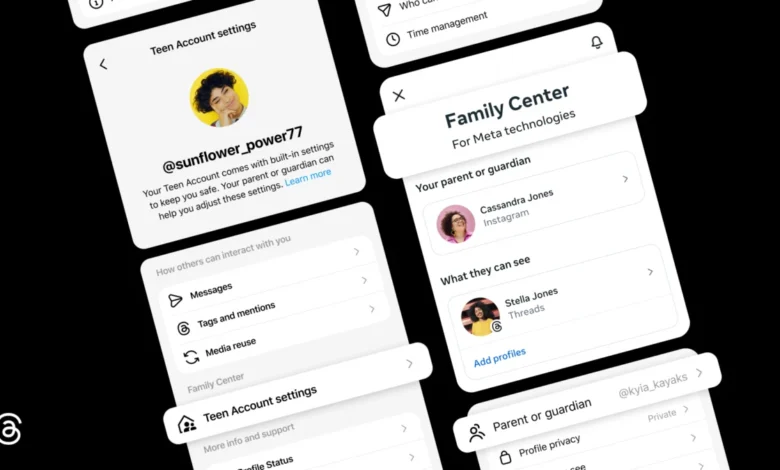
Meta Platforms Inc. has officially announced the integration of its robust parental supervision suite into the Threads application, marking a significant milestone in the company’s broader strategy to secure digital environments for younger users. Starting this week, guardians across the Asia Pacific region will gain access to comprehensive oversight tools within the Meta Family Center, allowing them to monitor and regulate their teens’ interactions on the text-based social media platform. This rollout aligns Threads with the existing safety infrastructure already present on Instagram and Facebook, reflecting Meta’s ongoing effort to standardize safety protocols across its sprawling digital ecosystem.
The introduction of these features follows mounting global pressure from regulators, child safety advocates, and legislative bodies concerned about the impact of algorithmic social media feeds on adolescent mental health and digital security. By extending these controls to Threads, Meta is attempting to preemptively address concerns regarding public discourse and the exposure of minors to potentially harmful content.
A Chronology of Meta’s Safety Integration
The trajectory toward this implementation began in early 2022 when Meta first unveiled its centralized Family Center. Initially designed as a hub for parents to view time limits and account activity on Instagram, the platform was conceived as a response to internal research and external scrutiny regarding the psychological effects of social media usage on teenagers.
Threads, which launched in July 2023, arrived in a market already sensitive to the complexities of teen safety. While Threads initially focused on rapid user acquisition and feature parity with competitors like X (formerly Twitter), the absence of granular parental controls was frequently cited by industry analysts as a notable gap. In late 2023, Meta began testing "Teen Accounts"—a set of default, high-security settings applied to users under 16, which include private profile status and restricted content discovery.
The current deployment in Asia Pacific serves as the next logical step. By incorporating these accounts into the Family Center, Meta is transitioning from a passive approach—where the app simply limits functionality—to an active partnership model between the platform, the teenager, and the parent.
Mechanics of the New Supervision Suite
Under the newly implemented protocols, the oversight tools provide parents with a window into the digital habits of their children without necessarily compromising the privacy of the teen’s communications. Once supervision is established via the Meta Family Center, parents can access insights regarding the amount of time their teen spends on the app.
Furthermore, the controls address the specific issue of content filtering. Because Threads relies on a recommendation algorithm, parents now hold the authority to decide whether teens under the age of 16 can modify their default privacy settings. If a teenager attempts to adjust their account to be less restrictive—for instance, changing from a private account to a public one—parents will be notified or have the ability to restrict such modifications entirely.
This mechanism is designed to mitigate the risks associated with cyberbullying, unsolicited interactions, and exposure to age-inappropriate content. By placing these decisions in the hands of guardians, Meta aims to create a "safety-by-design" framework that adapts to the specific maturity levels of individual users.
The Landscape of Adolescent Digital Safety
The urgency behind this update is underscored by a wealth of data regarding teen internet usage. According to recent surveys by the Pew Research Center, roughly 95% of teens have access to a smartphone, and a significant majority report being online "almost constantly." As digital immersion grows, the correlation between social media consumption and mental health outcomes—including anxiety and body image issues—has become a focal point of public policy.
Industry data indicates that while teens are digitally native, they are often prone to high-risk behaviors when navigating public social media spaces. By mandating private accounts for those under 16, Meta is attempting to reduce the "public exposure" factor, which is frequently linked to increased social pressure.
In the Asia Pacific region specifically, the regulatory environment is rapidly evolving. Countries such as Australia, Singapore, and India have introduced or are actively debating legislation that would impose strict liability on tech companies regarding the safety of minors. Meta’s move to introduce these tools in this specific theater can be viewed as a proactive compliance strategy, aimed at demonstrating that the platform can self-regulate effectively before more restrictive government mandates are codified.
Perspectives from Stakeholders and Analysts
The reaction from digital safety advocacy groups has been one of cautious optimism. Many organizations, such as the Center for Humane Technology, have long argued that mere parental controls are insufficient without fundamental changes to engagement-based algorithms. However, there is a broad consensus that providing parents with visibility is a necessary, if not complete, component of the solution.
From an industry analyst perspective, this update reflects Meta’s "unified stack" strategy. By leveraging the same backend architecture for supervision across Facebook, Instagram, and Threads, the company reduces the operational burden of managing disparate safety systems. This integration also creates a seamless user experience for parents, who can now manage their children’s digital footprint on all three platforms from a single interface at familycenter.meta.com.
Critics, however, point to the potential for "oversight fatigue." As parents are tasked with monitoring an increasing number of apps, the effectiveness of these tools relies heavily on parent-teen communication. Without an open dialogue between family members, the technical controls may offer only a veneer of protection rather than a holistic safety solution.
Broader Implications for the Social Media Industry
The implications of this move extend beyond the immediate features. Meta is setting a de facto industry standard for how social media companies should interact with their youngest users. As the digital economy pivots toward more personalized, AI-driven feeds, the ability to "opt-out" of surveillance or adjust privacy settings becomes a competitive differentiator.
Furthermore, this move may influence how other platforms—such as TikTok, Snap, and Discord—approach their own safety roadmaps. The pressure to mirror Meta’s parental supervision suite is likely to increase as lawmakers look to these tools as the "gold standard" for child protection. If Meta’s implementation proves successful in the Asia Pacific market, a global rollout is all but guaranteed, further cementing the role of the platform provider as a partner in adolescent upbringing.
However, the efficacy of these tools remains to be seen. The core tension between the platform’s need for user engagement and the user’s need for a safe digital environment remains unresolved. Algorithms designed to keep users on the app for as long as possible are inherently at odds with the goal of limiting screen time. While parents now have the power to monitor time, the challenge of navigating the addictive nature of infinite-scroll feeds remains a significant hurdle.
Conclusion and Future Outlook
As Meta continues to refine its supervision tools, the company has signaled that this is not a terminal update. Future iterations are expected to include more granular reporting, AI-driven suggestions for healthy screen habits, and perhaps even collaborative tools that allow parents and teens to set digital wellness goals together.
For families in the Asia Pacific region, the immediate takeaway is a greater degree of control and transparency. For Meta, the move is a strategic consolidation of its safety narrative. As the digital landscape continues to evolve, the ability to balance connectivity with protection will remain the defining challenge for social media giants. Whether these new controls on Threads will suffice to satisfy both parents and regulators remains an open question, but the commitment to providing a centralized, accessible framework is a clear acknowledgement of the platform’s responsibility in the lives of its youngest users.
As the technology continues to roll out, Meta encourages families to visit their dedicated portal to begin the setup process, emphasizing that the first step in digital safety is an informed and proactive conversation within the home. The integration represents a significant shift in the operational philosophy of modern social platforms, moving away from the "wild west" era of the early internet toward a more structured and supervised digital environment for the next generation.
Related posts: