Lockheed Martin Guarantees $500 Million Loan for United Launch Alliance Amid Vulcan Rocket Performance Challenges and Launch Delays

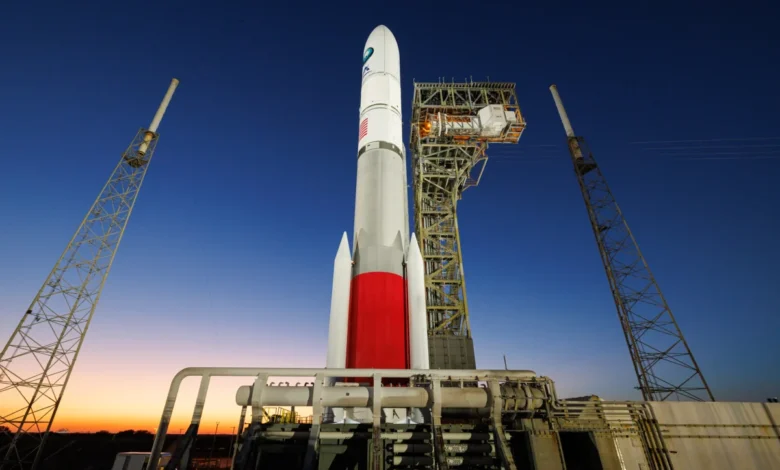
Lockheed Martin has officially moved to stabilize the financial standing of United Launch Alliance (ULA) by providing a bank guarantee for a loan of up to $500 million, according to recent regulatory filings. The move comes as ULA, a joint venture between Lockheed Martin and Boeing, navigates significant "financial challenges" stemming from the grounding of its next-generation Vulcan Centaur rocket. The disclosure, made in a second-quarter Securities and Exchange Commission (SEC) filing on July 23, underscores the mounting pressure on the storied launch provider as it struggles to transition from its legacy fleet to the Vulcan platform, which is critical for both commercial and national security missions.
According to the filing, the performance issues encountered by the Vulcan Centaur rocket during the first half of 2026 have had a deleterious effect on ULA’s operational results and overall liquidity. "During the first quarter of 2026, ULA’s Vulcan Centaur rocket experienced performance challenges that are negatively affecting ULA’s financial condition and results of operations," Lockheed Martin stated. In response to these pressures, the defense giant agreed to guarantee ULA borrowings, recognizing a fair value of the guarantee obligation at $64 million during the second quarter. This financial maneuver effectively increases Lockheed Martin’s investment in the joint venture while providing the necessary capital to sustain operations during a period of limited launch activity.
Technical Anomalies and the Grounding of Vulcan
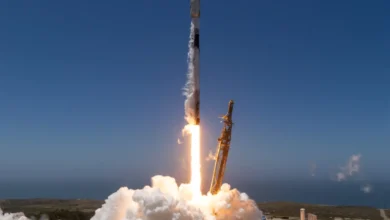
The financial strain reported by Lockheed Martin is directly linked to technical setbacks involving the Vulcan Centaur’s solid rocket boosters (SRBs). The most recent incident occurred in February 2026 during the launch of the USSF-87 mission for the United States Space Force. While the vehicle successfully reached its intended geosynchronous orbit and deployed its payload, an anomaly was detected in one of the solid rocket boosters manufactured by Northrop Grumman.
This was not an isolated event. A similar performance discrepancy was noted during the second Vulcan launch in October 2024. These recurring issues with the booster nozzles have forced ULA to pause its launch schedule to conduct a comprehensive investigation alongside Northrop Grumman. As a result, the Vulcan rocket has remained grounded since the February mission, creating a bottleneck in ULA’s ambitious 2026 manifest.
Northrop Grumman, the supplier of the GEM 63XL solid rocket motors used on the Vulcan, recently informed investors that it has completed a redesign of the problematic components. While a static-fire test has confirmed the efficacy of the new design, the company cautioned that deliveries of the redesigned motors might not commence until the end of the calendar year. This timeline suggests that ULA may face several more months of limited flight activity, further straining its cash flow.

Financial Impacts and Stakeholder Reactions
The financial repercussions of the Vulcan grounding are being felt across the balance sheets of its parent companies. Lockheed Martin’s vice president of investor relations, Mark Kvasnak, confirmed during a July 23 earnings call that the company has revised its profit forecast for its space division downward. The initial projection of $1.385 billion to $1.415 billion has been adjusted to a range of $1.34 billion to $1.38 billion. Kvasnak attributed this reduction directly to "reduced ULA equity earnings because of the ongoing technical investigation of the Vulcan launch anomaly."
While Boeing, which owns the other 50% of ULA, has not yet released its second-quarter results, industry analysts widely expect the aerospace giant to have participated in or provided similar financial support to the joint venture. Lockheed’s SEC filing hinted at this collective responsibility, stating, "We and Boeing expect to provide additional financial support to ULA to support its liquidity or ongoing operations."
ULA itself has acknowledged the difficulty of the current situation but remains publicly confident in the rocket’s long-term viability. In a statement, the company noted that its financial position has been "impacted due to the performance challenges associated with the anomaly," but emphasized that it is "laser-focused on our customers’ needs and achieving a reliable and sustainable manifest."
A Widening Gap in the 2026 Launch Manifest
The timing of the Vulcan grounding is particularly sensitive given ULA’s earlier projections for 2026. At the start of the year, ULA leadership expressed confidence in a "sharp increase" in launch rates, targeting between 18 and 22 missions for the year. This aggressive schedule was intended to include up to 18 Vulcan launches and four Atlas 5 launches.
However, the reality has diverged sharply from these goals. To date, Vulcan has not flown since the USSF-87 mission in February. The company’s legacy Atlas 5 rocket has completed three successful missions this year, primarily carrying satellites for Amazon’s Project Kuiper. The remaining Atlas 5 inventory is largely spoken for, with several vehicles reserved for Boeing’s CST-100 Starliner missions. The Starliner program, however, has faced its own suite of technical delays and schedule uncertainties, leaving ULA with few options to generate revenue while the Vulcan remains on the pad.
National Security and Commercial Implications
The delay of the Vulcan Centaur has broader implications for U.S. space policy and commercial competition. The Vulcan is the cornerstone of ULA’s strategy to compete with SpaceX for high-value National Security Space Launch (NSSL) contracts. The U.S. Space Force relies on a "dual-provider" strategy to ensure redundant access to space, and Vulcan is the designated successor to the Atlas 5 and Delta IV Heavy rockets.

Space Force officials have expressed concern over the delays. In April, service representatives indicated they were evaluating manifest changes, including the possibility of flying Vulcan missions that do not require solid rocket boosters to avoid the current hardware bottleneck. However, many heavy-lift national security payloads require the additional thrust provided by the boosters, making a total bypass of the Northrop Grumman components difficult for the most critical missions.
On the commercial front, ULA holds a massive backlog of more than 80 launches, a significant portion of which are dedicated to Amazon’s Project Kuiper. Amazon is under strict FCC deadlines to deploy half of its 3,236-satellite constellation by July 2026. Any prolonged grounding of the Vulcan fleet threatens Amazon’s ability to meet these regulatory requirements and puts ULA at risk of losing future commercial market share to competitors like SpaceX’s Falcon 9 or Blue Origin’s upcoming New Glenn.
Analysis: The Path Forward for ULA
The $500 million loan guarantee is a clear signal that Lockheed Martin and Boeing view ULA as "too big to fail," given its integral role in the U.S. defense infrastructure. However, the recurring nature of the booster anomalies suggests that the path to a high-cadence launch schedule remains fraught with technical risk.
For ULA to regain its footing, it must achieve three primary objectives in the second half of 2026:
- Successful Return to Flight: Resuming Vulcan launches with the redesigned Northrop Grumman boosters is the most critical milestone. A successful, anomaly-free flight will restore confidence among both government and commercial customers.
- Manufacturing Ramp-Up: Once the design is flight-proven, ULA and its suppliers must demonstrate the ability to produce Vulcan hardware at a rate that supports 1.5 to 2 launches per month.
- Stabilizing Parent Company Confidence: The downward revision of profit forecasts is a rare occurrence for Lockheed Martin’s space division. ULA must demonstrate that the current "liquidity support" is a temporary measure rather than a precursor to a long-term capital drain.
Despite the current hurdles, there is some optimism within the industry. Lockheed Martin’s Mark Kvasnak noted that the second half of 2026 is expected to be "stronger than the first half," suggesting that the company anticipates a resolution to the technical investigations and a resumption of the launch manifest before the end of the year.
As the global launch market becomes increasingly competitive, the pressure on ULA to deliver a reliable, high-capacity rocket has never been higher. The $500 million guarantee provides the financial breathing room necessary to solve these complex engineering problems, but the clock is ticking on Vulcan’s transition from a developmental challenge to an operational workhorse. For now, the aerospace industry and the U.S. military remain in a state of watchful waiting, hoping that the redesigned boosters will finally allow the Vulcan Centaur to reach its full potential.
Related posts: