IBM Navigates Unprecedented Mainframe Slump Amidst Shifting AI-Driven Market Dynamics and Broader Economic Pressures

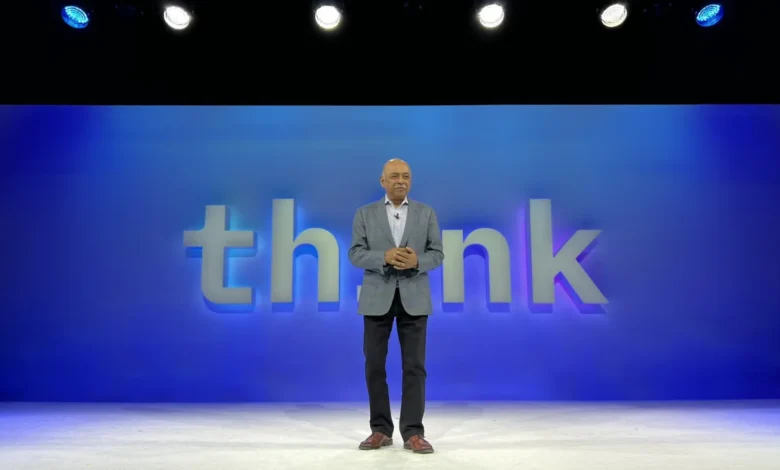
International Business Machines (IBM) officially reported its second-quarter earnings on Wednesday, confirming widespread fears that its financial performance had fallen significantly short of market expectations. Despite its venerable 115-year history and continued ability to generate substantial cash flow – evidenced by $17.2 billion in revenue, $9.9 billion in gross profit, nearly 58% gross margins, and $2.2 billion in net earnings for the quarter – these figures were insufficient to meet Wall Street’s optimistic projections, sending ripples of concern through the investment community.
An Unprecedented Pre-Warning Signals Trouble
The gravity of the situation was underscored by an extraordinary move from IBM’s leadership. Days before the official earnings release, CEO Arvind Krishna and the company’s board took the unusual step of issuing a preliminary warning to investors. In a "letter to investors" published last week, Krishna candidly admitted that the impending earnings report "was worse than our expectations," providing an early glimpse into the challenging quarter. This highly unconventional disclosure, particularly for a company of IBM’s stature and market capitalization, highlighted the severity of the internal assessment. The letter specifically cautioned about "abysmal revenue" within the company’s crucial "infrastructure" category and indicated that profit margins were also expected to take a hit.
The market’s reaction was swift and brutal. Following the pre-warning, IBM’s stock plummeted by 25% in a single day, marking its most significant single-day decline in history. This sharp downturn represented a stark reversal for a company that, under Krishna’s six years of leadership, had largely seen its stock perform robustly, often buoyed by the burgeoning demand for AI data centers that had been lifting many technology sector companies. The pre-announcement effectively set the stage for Wednesday’s official report, confirming what many investors already feared.
Deep Dive into Q2 Performance and the Mainframe Culprit
The official Q2 report elaborated on the challenges. Beyond the headline figures, IBM also revised its full-year growth forecasts downwards, signaling that the difficult second quarter would have a lasting impact on its performance throughout the remainder of the fiscal year. The primary antagonist identified in this disappointing quarter was the company’s mainframe business, a long-standing cash cow, which experienced a precipitous 42% decline in sales.
This decline in mainframe hardware sales is not merely a standalone problem for IBM; it creates a significant cascading effect across its business segments. As CFO Jim Kavanaugh explained during the quarterly investor call, IBM typically generates an additional $3 in software revenue for every $1 of mainframe hardware it sells. This symbiotic relationship means that a substantial drop in hardware sales inevitably translates into a much larger, corresponding hit to the company’s highly profitable software division, amplifying the negative financial repercussions. Mainframes, often referred to as "big iron," are high-performance computer systems designed for large-scale, mission-critical applications such as transaction processing, data analytics, and enterprise resource planning for banks, airlines, governments, and other large corporations. Their high reliability, security, and scalability have made them indispensable for decades, forming the bedrock of many global digital infrastructures and, consequently, a stable revenue stream for IBM.
AI’s Double-Edged Sword: The Underlying Market Dynamics
While the AI data center boom had previously provided a tailwind for IBM, paradoxically, it now appears to be a significant contributor to its recent struggles. CEO Arvind Krishna and CFO Jim Kavanaugh, despite the grim numbers, spent a considerable portion of the investor call insisting that the second-quarter slump was merely a "temporary blip" and that the company’s underlying fundamentals remained sound.
Their explanation for the mainframe decline centered on customer budget reallocations. According to Krishna, "tens" of enterprise customers who were slated to purchase new mainframes during the quarter opted to defer these purchases. While "tens" might not sound like a large number, mainframes are extraordinarily expensive systems, with price tags ranging from hundreds of thousands to several millions of dollars. When factoring in long-term maintenance contracts and associated software licenses, each mainframe sale can generate many millions more in revenue over its lifecycle, making the deferral of even a few dozen such deals profoundly impactful.
The crucial twist in this narrative, as explained by Krishna, is that these clients did not abandon their technology investments entirely. Instead, they redirected their budgets towards other essential hardware, such as data center gear and personal computers (PCs). This shift was necessitated by "astronomically high cost increases" – estimated between 15% and 30% – for these other categories. These price surges are directly attributable to the very AI boom that has otherwise been driving tech sector growth. The explosive demand for specialized components like high-performance GPUs, advanced processors, and high-bandwidth memory (HBM) for AI model training and deployment has created immense pressure on the global semiconductor supply chain. This pressure has not only driven up the cost of these cutting-edge components but has also had a ripple effect, increasing the manufacturing costs for a wide array of other hardware, including servers, storage solutions, and even client devices.
Other major hardware manufacturers have echoed these concerns. Companies like Dell and HP have publicly warned their customers about significant price hikes for their products, citing "memory pricing out of our control" and other component cost increases linked to the AI build-out. Even Apple, typically known for its pricing power, has acknowledged similar pressures, raising prices for its Mac and iPad lines in certain markets. Faced with these unavoidable and steep increases for foundational IT infrastructure and end-user devices, enterprise clients were compelled to reallocate their IT budgets. As Krishna articulated, "When they were faced with that issue, then they decided to move budget to those areas where they were having that extreme price." This prioritization meant deferring less immediately critical, albeit substantial, investments like mainframe upgrades.
IBM’s Optimistic Outlook and the Mainframe’s Enduring Role
Despite the current headwinds, IBM’s leadership remains steadfast in its belief that the mainframe business will rebound. Krishna affirmed his confidence that the customers who delayed their purchases will eventually proceed with their new mainframe acquisitions, along with the associated software contracts. He even indicated that some of these deferred purchases have already materialized in the current quarter, providing an early sign of potential recovery. Crucially, Krishna stated, "We see no evidence of clients moving off the mainframe," addressing a long-standing narrative within the tech industry.
Indeed, the "death of the mainframe" has been predicted for many decades, yet these robust systems continue to be indispensable for countless organizations worldwide. Their unparalleled reliability, security, and ability to process vast volumes of transactions with exceptional speed and integrity make migration to alternative architectures a daunting and costly endeavor. The process of porting legacy applications, retraining staff, and ensuring comparable levels of performance and security on new platforms often outweighs the perceived benefits of moving away from the mainframe. For many mission-critical operations, the risk associated with such a transition is simply too high. This inherent "stickiness" of mainframe technology supports IBM’s argument that the current deferrals are tactical rather than a strategic abandonment of the platform.
Broader Implications and Future Outlook
The situation at IBM highlights several broader trends within the enterprise technology landscape. The intense focus and investment in AI infrastructure are creating significant shifts in IT budget allocations, forcing companies to make difficult choices about where to direct their capital. While AI promises transformative capabilities, its immediate capital expenditure requirements can inadvertently deprioritize other essential, albeit less glamorous, IT upgrades. This dynamic underscores the challenge for established tech giants like IBM, which must continuously adapt their core businesses to the rapidly evolving demands of the digital economy while also embracing new frontiers like artificial intelligence.
For IBM, the coming quarters will be critical in validating management’s "temporary blip" theory. Investors will closely scrutinize mainframe sales figures, software revenue trends, and overall profitability to determine if the Q2 performance was an isolated event or symptomatic of deeper structural challenges. The company’s ability to demonstrate that mainframe customers are indeed returning to their purchasing plans will be key to rebuilding investor confidence and stabilizing its stock performance.
Ultimately, the mainframe, a technology often considered a relic by some, continues to demonstrate remarkable resilience. While the AI boom presents new competitive pressures and budget reallocations, it also offers opportunities for integration and enhancement. The ongoing interplay between the demands of cutting-edge AI, the rising costs of componentry, and the enduring needs of enterprise IT will shape IBM’s trajectory and the broader technology market in the years to come. The question remains whether the mainframe, having weathered many storms, can once again adapt and thrive in an AI-dominated era, or if this latest challenge represents a more fundamental shift in the landscape of enterprise computing.
Related posts: