Google Pixel 11 Pro vs. Google Pixel 10 Pro: A Comprehensive Flagship Comparison

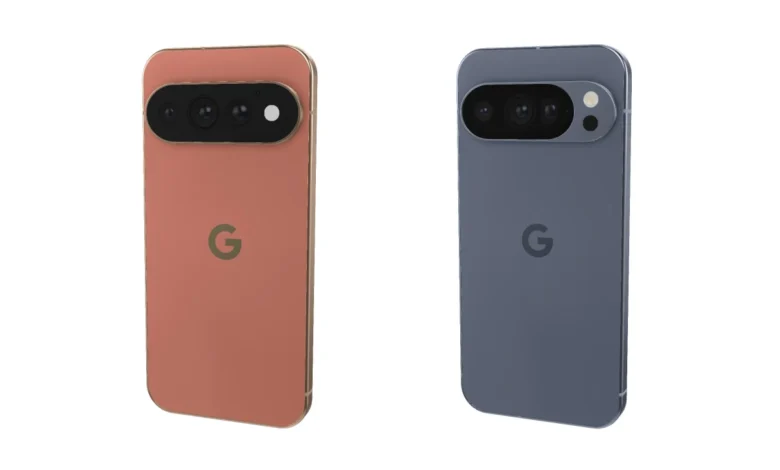
The release of the Google Pixel 11 series has prompted consumers and technology analysts alike to evaluate the tangible advancements made by the tech giant year-over-year. As prospective buyers weigh their options between the newly launched Google Pixel 11 Pro and its predecessor, the Google Pixel 10 Pro, a detailed comparative analysis reveals whether the latest flagship justifies its significant price premium. Market positioning places the 256GB base version of the Google Pixel 11 Pro at approximately €1,100, whereas the 128GB base model of the Google Pixel 10 Pro has seen substantial retail adjustments, currently sitting at a much more accessible €770. This substantial price delta raises a fundamental question for upgraders and new buyers: does the incremental technological progression of the Pixel 11 Pro warrant the extra investment, or does the discounted Pixel 10 Pro represent the more prudent purchase?
Design, Build Quality, and Physical Dimensions

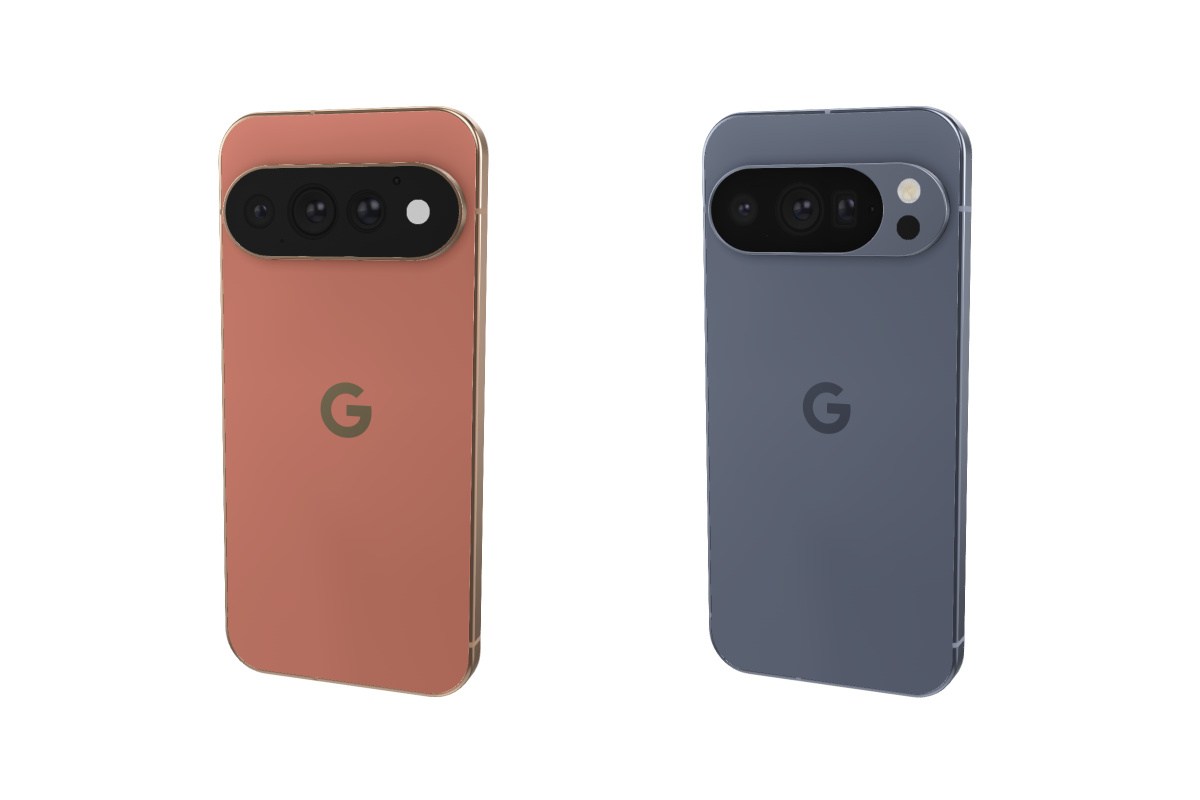
Examining the physical form factors of both devices highlights a strategy of architectural continuity by Google. The Pixel 11 Pro and the Pixel 10 Pro share nearly identical dimensions and weight profiles, making them virtually indistinguishable when held side by side. Both smartphones utilize resilient Gorilla Glass Victus 2 panels on their front and rear surfaces, complemented by a sturdy structural aluminum frame. Durability standards remain uncompromised and equal across both generations, with each device boasting an industry-standard IP68 rating for dust and water resistance.

Subtle differentiators between the two iterations are restricted primarily to aesthetic choices, such as the introduction of a fresh palette of body colors for the Pixel 11 Pro, and minor cosmetic shifts in the edge-to-edge glass framing the camera module. Despite these minor cosmetic updates, industrial design purists will find that handling ergonomics, button placements, and overall tactile impressions remain entirely consistent. Consequently, neither device claims a definitive victory in the physical design category, resulting in a structural tie that shifts the evaluation focus entirely to internal hardware and performance metrics.

Display Engineering and Visual Performance

When evaluating visual output, both the Pixel 11 Pro and the Pixel 10 Pro employ what appears to be the identical 6.3-inch LTPO OLED display panel. This screen architecture delivers a sharp resolution of 1280 x 2856 pixels, incorporates a dynamic 120Hz refresh rate capable of scaling between 1Hz and 120Hz based on on-screen content, and offers robust support for HDR10, HDR10+, and Android Ultra HDR formats across mainstream applications.

Official manufacturer specifications indicate a minor brightness enhancement for the Pixel 11 Pro, claiming an automatic maximum brightness of 2,400 nits (compared to 2,200 nits on the Pixel 10 Pro) and a peak brightness of 3,600 nits (against 3,300 nits). Laboratory display evaluations confirm these nominal gains, measuring the Pixel 11 Pro at 2,426 nits during automatic operation versus 2,351 nits for its predecessor, while peak brightness registers at 3,283 nits and 3,165 nits, respectively. In practical, real-world usage scenarios, these fractional luminescent increases are imperceptible to the human eye. Both screens deliver exceptional clarity, color accuracy, and fluidity, resulting in another dead heat between the two generations.

Battery Endurance and Power Efficiency

Battery performance represents a critical battleground for modern flagship smartphones, and here the hardware changes begin to yield measurable dividends. The Pixel 11 Pro houses a 4,850 mAh battery cell, representing a negligible 20 mAh reduction compared to the 4,870 mAh unit found inside the Pixel 10 Pro. However, raw capacity figures do not tell the entire story; the introduction of Google’s new Tensor G6 processor introduces substantial architectural efficiency gains. Notably, the Tensor G6 streamlines power consumption by utilizing one fewer CPU core than its predecessor.

Real-world battery benchmarking underscores the efficacy of these architectural refinements. The Pixel 11 Pro achieved an impressive Active Use Score of 15 hours and 38 minutes, outperforming the Pixel 10 Pro by a notable margin of 3 hours and 33 minutes. While voice call and web browsing longevity remain largely comparable between the two devices, stamina during video streaming and intense gaming sessions has risen dramatically on the newer model. As a result, the Pixel 11 Pro secures a definitive victory in overall battery endurance.

Charging Capabilities and Power Delivery

In terms of wired charging infrastructure, both the Pixel 11 Pro and the Pixel 10 Pro support 30W wired charging speeds utilizing the USB Power Delivery standard. To modernize the lineup, Google introduced an "Extreme Charging mode" with the Pixel 11 series, designed to be manually toggled for individual charging sessions when battery levels drop below 50%. Despite this software addition, testing reveals that wired replenishment speeds remain virtually identical across both generations, offering no compelling practical advantage for the newer device.

Wireless charging, however, tells a different story. The Pixel 11 Pro introduces support for 25W wireless charging, a significant step up from the 15W ceiling enforced on the Pixel 10 Pro. Exploiting these higher wireless speeds requires compatible magnetic charging accessories that support the Qi2.2 standard. Because of this enhanced wireless throughput, the Pixel 11 Pro claims a narrow victory in the charging category.

Acoustic Profile and Speaker Fidelity

Both generations of Google’s Pro smartphones utilize a hybrid stereo speaker configuration, pairing a dedicated primary loudspeaker at the bottom edge with an earpiece that doubles as the secondary audio channel during media playback and gaming.

Acoustic testing indicates that the Pixel 11 Pro registers slightly lower maximum decibel output than its predecessor, earning a "Good" overall loudness rating. Nevertheless, subjective sound quality demonstrates a modest improvement, characterized by a richer audio presentation and more pronounced low-end bass response. Given that the reduction in raw volume offsets the marginal gains in fidelity, the audio comparison ultimately concludes in a balanced tie.

Processing Architecture and Hardware Performance

Under the hood, the Pixel 11 Pro transitions to Google’s bespoke Tensor G6 silicon. Fabricated on the same advanced 3-nanometer manufacturing node as the preceding Tensor G5 found in the Pixel 10 Pro, the new chipset promises enhanced thermal efficiency and a remarkable 50% increase in dedicated artificial intelligence computational capabilities. Interestingly, Google achieved this efficiency by re-architecting the CPU layout, dropping the core count down to a 7-core configuration.

The Tensor G6 employs a cluster consisting of one primary ARM C1-Ultra core clocked at 4.1 GHz, four ARM C1-Pro cores running at 3.4 GHz, and two additional ARM C1-Pro cores operating at 2.65 GHz. All seven cores feature significantly higher clock speeds than the Tensor G5’s architecture, which utilized a 1+5+2 setup capped at lower frequencies. Conversely, graphical processing duties are handled by Imagination’s IMG CXTP-48-1536 GPU. While the previous generation utilized a more modern Series D graphics architecture, the Tensor G6 reverts to an older Series C design, which lacks hardware-accelerated ray tracing and exhibits historically weaker optimization among mobile game developers.

Memory configurations also differentiate the two devices. The Pixel 11 Pro starts with a more generous 256GB of base storage paired with 12GB of RAM, scaling up to 512GB and 1TB options equipped with 16GB of RAM. The Pixel 10 Pro initiates its lineup at a smaller 128GB baseline, but uniformly equips all storage variants—ranging up to 1TB—with a robust 16GB of RAM.

Synthetic benchmarking illustrates the practical consequences of these architectural shifts. The Tensor G6 delivers one of the most substantial generational CPU performance leaps seen in Google’s custom silicon history, outperforming the Tensor G5 by over 20% in multi-core evaluations and approaching a 20% increase in single-core workloads. Combined diagnostic suites like AnTuTu 11 similarly reflect substantial gains in overall computational throughput.

However, graphical performance remains largely stagnant compared to the previous year, though Google has successfully mitigated many of the game compatibility bugs that plagued the launch of the previous generation. Both devices demonstrate comparable thermal throttling behavior under sustained stress, retaining approximately 60% of peak CPU performance and 70% of graphical capacity. Weighing the vastly superior CPU processing power against the regression in base RAM and a largely static GPU, the Pixel 11 Pro narrowly claims the performance victory.

Camera Hardware and Photographic Evaluation

Both the Pixel 10 Pro and Pixel 11 Pro feature versatile triple-lens rear camera arrays, pairing a primary wide sensor with an ultrawide module and a dedicated telephoto lens. The Pixel 11 Pro introduces a physically larger optical sensor for its telephoto camera, measuring 1/1.95 inches compared to the 1/2.51-inch format utilized on last year’s model. Despite the larger physical sensor, the minimum focusing distance has increased to approximately 39 centimeters. Meanwhile, the primary 50MP wide camera and the ultrawide module—which utilizes a high-resolution sensor often referenced as 48MP—remain largely unchanged across both generations. Front-facing capture relies on the same 42MP ultrawide autofocus selfie camera seen previously.

Software enhancements accompanying the Pixel 11 series include "Magic Capture," an automated capture mode designed to simultaneously record video and extract high-resolution stills of decisive moments, and "Camera Looks," a refined suite of stylistic photographic presets.

In daylight conditions, both smartphones capture exceptional imagery faithful to the established Google photographic science. The Pixel 11 Pro yields marginally finer structural detail, improved edge definition, and slightly more restrained sharpening artifacts. Color rendition exhibits a subtle shift toward warmer tones on the newer hardware. At a 2x zoom level, neither device excels, though the Pixel 10 Pro applies heavier sharpening to foliage, whereas the Pixel 11 Pro leaves natural textures softer while rendering man-made architectural lines with superior accuracy.

At a 5x and 10x telephoto zoom, the Pixel 11 Pro’s larger sensor configuration translates into noticeably cleaner images with reduced digital noise and sharper presentation. Surprisingly, evaluation of low-light ultrawide imagery reveals that the older Pixel 10 Pro consistently produces sharper results than the Pixel 11 Pro, an unexpected regression for the newer flagship. Video capabilities are largely uniform, though the Pixel 11 Pro introduces HDR recording up to 4K at 60 frames per pixel across all focal lengths, whereas the Pixel 10 Pro maxes out HDR video at 4K/30fps. Overall, camera performance results in a technical tie due to the unexpected softness in the Pixel 11 Pro’s ultrawide low-light shots.

Market Implications and Final Verdict

The Google Pixel 11 Pro stands as a thoroughly capable, premium flagship smartphone, offering refined industrial design, an exceptionally bright display, stellar battery longevity, robust AI processing, and Google’s signature software ecosystem. Incremental refinements across the CPU, wireless charging speeds, thermal efficiency, and video capture capabilities demonstrate clear engineering progress over its predecessor.

However, the market reality of the Google Pixel 10 Pro complicates the value proposition for consumers. Now available at significantly discounted retail prices, the Pixel 10 Pro delivers an identical physical form factor, the same display quality, louder onboard audio performance, and a comparable overall camera and software experience. Unless a buyer specifically requires the advanced wireless charging speeds, extended battery stamina, or 4K60 HDR video capabilities exclusive to the newer generation, the financial prudence of purchasing the discounted 2025 model becomes undeniable. For budget-conscious consumers looking for top-tier performance without paying the absolute bleeding-edge price premium, the previous-generation Pixel 10 Pro emerges as the sensible choice.