How The 1965 Chevy Caprice Turned The Impala Into A Working-Class Cadillac

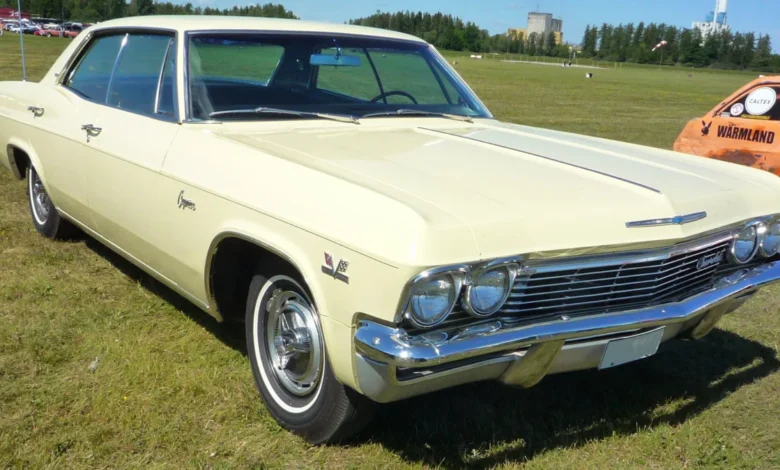
The mid-1960s represented a zenith in the American automotive industry, a period defined by rapid innovation, shifting consumer tastes, and an unprecedented expansion of the domestic market. Amidst the birth of the muscle car era—led by the 1964 Pontiac GTO—and the technical experimentation seen in the Oldsmobile Toronado and the rear-engined Chevrolet Corvair, a nameplate emerged that would anchor General Motors’ full-size offerings for decades: the Caprice. Originally introduced in 1965 as an upscale trim level for the Chevrolet Impala, the Caprice quickly transcended its role as an option package to become the definitive "working-class Cadillac," offering a level of refinement that challenged the luxury hierarchy of the era.
The Genesis of the Caprice Trim
In the mid-1960s, the automotive market was undergoing a subtle, yet significant, structural change. While the youth market was captivated by high-performance coupes, a substantial segment of the American population remained loyal to the full-size sedan. However, these buyers were beginning to demand more than basic transportation; they sought the comfort and prestige traditionally reserved for premium marques like Cadillac or Lincoln, but at a price point accessible to the middle class.
General Motors responded in 1965 by introducing the Caprice Custom Sedan. It was, in essence, an Impala Sport Sedan equipped with a higher level of interior trim and enhanced mechanical specifications. The move mirrored modern automotive strategies where manufacturers take a high-volume platform and "fully load" it with bespoke bodywork, advanced sound-deadening materials, and top-tier powertrain options. By branding the Caprice as a premium extension of the Impala, Chevrolet effectively captured the buyer who wanted the reliability of a mass-market sedan but the interior ambiance of a luxury vehicle.
Technical Specifications and Mechanical Upgrades
The 1965-1966 Caprice was not merely an aesthetic exercise; it featured tangible mechanical enhancements designed to elevate the driving experience. Recognizing that the standard full-size sedan could feel "boaty" or disconnected, Chevrolet engineers implemented several upgrades. These included heavy-duty coil suspension, reinforced body mounts, and a more robust frame design. These modifications were paired with extensive sound-deadening insulation, which significantly reduced road noise and vibration, providing a cabin environment that felt markedly more expensive than the standard Impala.
Under the hood, the Caprice offered a spectrum of power that catered to various needs, from cruising efficiency to high-speed performance. The engine lineup began with the 283-cubic-inch Turbo-Fire V8, producing 195 horsepower. Moving up the range, buyers could opt for the 327-cubic-inch engine rated at 250 horsepower. For those seeking genuine muscle-car performance, the 396-cubic-inch Turbo-Jet V8 was available in two configurations: a 325-horsepower variant and a high-performance 425-horsepower version.
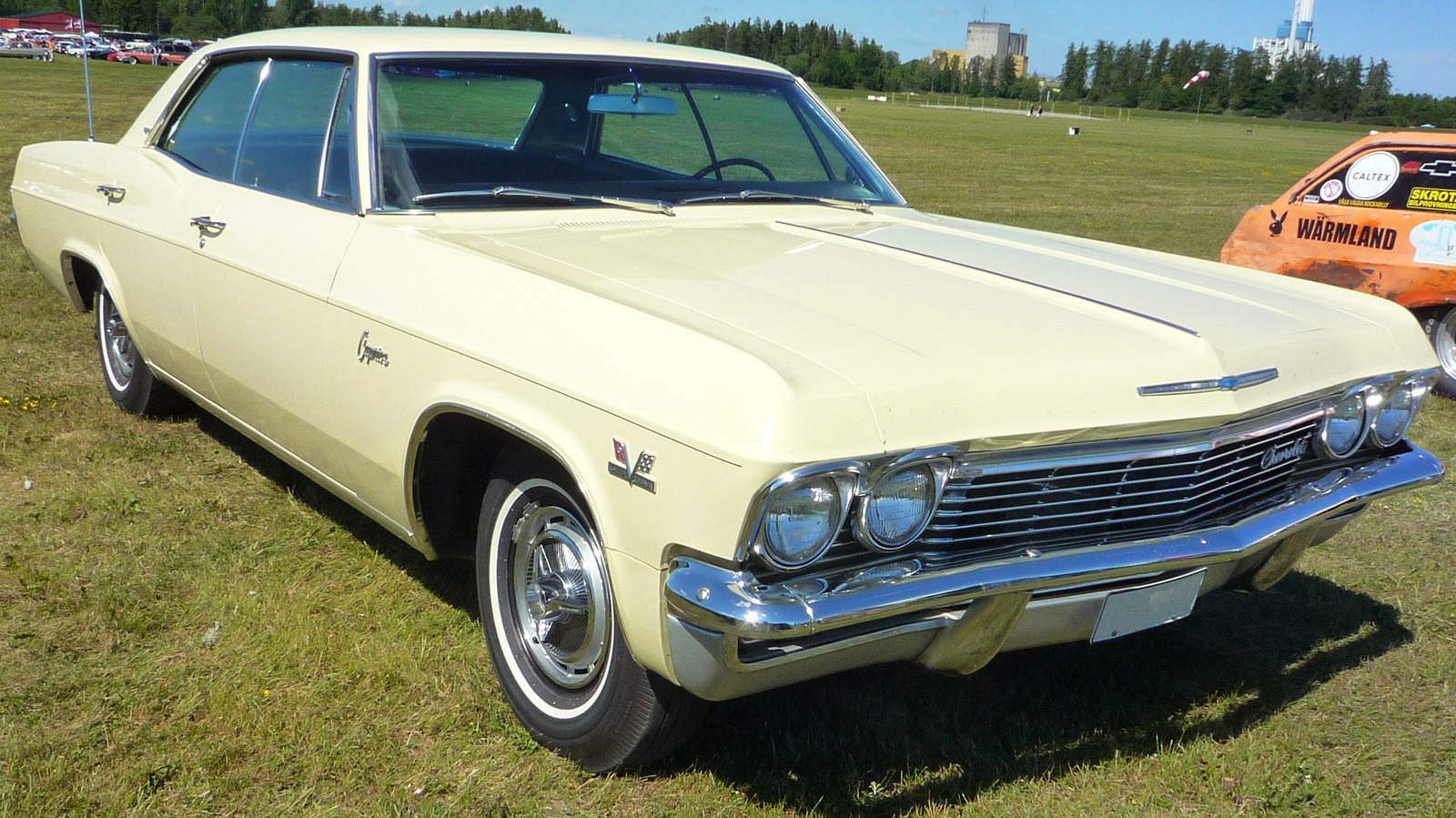
Transmission options were equally diverse, ranging from a standard three-speed manual column shift to a four-speed floor-mounted manual. Automatic transmission buyers could choose between the proven, albeit aging, Powerglide or the more sophisticated Turbo-Hydramatic, the latter being restricted to the 325-horsepower 396 engine. While the braking systems and overall handling characteristics remained largely consistent with the era’s full-size sedans, the addition of the Posi-traction 12-bolt rear end on high-output models ensured that the Caprice could effectively translate its power to the road.
Market Context and Strategic Competition
The success of the Caprice did not occur in a vacuum. Ford, General Motors’ primary rival, recognized the same shift in consumer sentiment and launched the LTD as a trim level for the Galaxie 500 in 1965. This direct competition between the Chevrolet Caprice and the Ford LTD catalyzed a transformation in the industry; both companies quickly realized that these "luxury trims" were lucrative enough to warrant their own dedicated production lines. By 1966, the Caprice was spun off as a standalone model, solidifying its position at the top of the Chevrolet hierarchy.
The economic value proposition of the Caprice was a masterclass in market positioning. In 1966, a Cadillac Fleetwood—the pinnacle of the General Motors luxury pyramid—carried a base price of approximately $6,695. Adjusted for inflation, that equates to roughly $71,000 in today’s currency. Conversely, a base Caprice could be acquired for $3,000. While the Cadillac offered superior materials and prestige, the Caprice provided an astonishing 80% of the luxury experience for less than half the price. Given that the average annual income for a single person in 1966 was roughly $7,400, the Caprice represented a tangible aspiration for the average American worker, offering a sense of upward mobility without the prohibitive cost of a luxury-brand vehicle.
A Chronology of the First Generation
- 1965: The Caprice is introduced as a high-end luxury option package for the Chevrolet Impala four-door hardtop sedan. It is immediately met with strong consumer interest, particularly among buyers looking for a more formal and quiet ride.
- 1966: Recognizing the sales success, Chevrolet elevates the Caprice to a standalone model line. The range expands to include a two-door coupe and eventually, station wagon variants, catering to families who demanded both luxury and utility.
- 1967–1968: Chevrolet refines the aesthetic of the Caprice, introducing more pronounced styling cues that distinguish it further from the Impala. The interior continues to evolve with higher-quality fabrics, wood-grain accents, and optional "Strato-Bucket" seats.
- 1969–1970: The final years of the first generation see the Caprice reaching its maturity as a primary luxury offering. By this time, the "working-class Cadillac" moniker is firmly cemented in the public consciousness.
Implications and Legacy
The significance of the Caprice lies in its role as a bridge between the mass market and the premium luxury sector. It proved that American consumers were willing to pay a premium for features that were once exclusive to high-end brands—specifically improved NVH (noise, vibration, and harshness) levels, sophisticated interior appointments, and increased powertrain options.
However, the era of the massive, personal luxury sedan was not destined to last forever. By the 1990s, changing fuel economy standards, shifting demographics, and the rise of Japanese and European competitors began to erode the market share of the traditional American full-size sedan. The Caprice, once the crown jewel of Chevrolet, was eventually relegated to fleet work, serving predominantly as police vehicles and taxi cabs. This transition was a practical acknowledgement of the model’s durability and spaciousness, but it stood in stark contrast to its origins as an icon of middle-class luxury.
From a historical perspective, the 1965-1966 Caprice represents a pivotal moment when Chevrolet effectively democratized luxury. It challenged the notion that high-end features were the sole domain of the wealthy. By offering a refined, quiet, and powerful vehicle at an accessible price, General Motors did more than just sell cars; they captured the American dream of progress. While the model eventually faded into the annals of history, its influence remains visible in every modern "premium" trim level currently found on dealer lots. The Caprice served as the blueprint for the modern, feature-laden sedan, proving that with the right combination of engineering and marketing, a mainstream brand could provide an experience that felt, for all intents and purposes, like a luxury car.
Related posts: