Five Husqvarna leaf blower features that provide a competitive edge in professional and residential landscaping

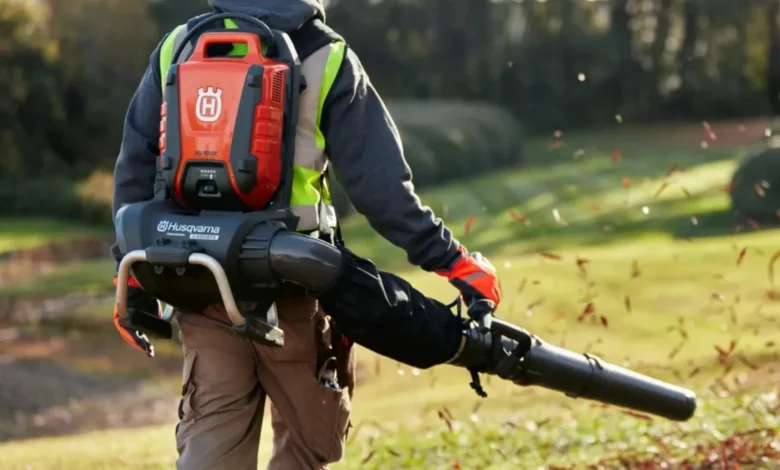
Choosing the right leaf blower involves balancing technical specifications like cubic feet per minute (CFM), air speed, battery voltage, and weight, but for many professional landscapers and discerning homeowners, the deciding factor often lies in the secondary features that enhance workflow efficiency. Husqvarna, a Swedish manufacturer with roots dating back to 1689, has consistently leveraged its extensive history in power equipment manufacturing to integrate ergonomic and functional enhancements into its modern blower lineup. These features, while appearing peripheral at the point of purchase, frequently represent the difference between a tool that is merely functional and one that significantly reduces operator fatigue and task duration.
The Evolution of Outdoor Power Equipment
The shift in the outdoor power equipment industry over the last decade has been characterized by a transition from traditional two-stroke gasoline engines toward high-output lithium-ion battery platforms. As Husqvarna has pivoted to meet the growing demand for electric tools, the engineering focus has moved toward maximizing the output of battery-powered motors to match the force of legacy gas-powered models. This transition has necessitated the development of sophisticated power management systems, vibration-dampening chassis, and specialized attachments. Historically, lawn care equipment prioritized raw power above all else; today, the market reflects a more nuanced approach, where "intelligence" in design—such as automated power management—is as vital as the engine’s displacement.
Enhancing Surface Clearing with Integrated Scraper Technology
Among the most common challenges in property maintenance is the removal of debris that has adhered to hard surfaces due to moisture, compaction, or environmental adhesives like sap. Traditional blowers often require the user to switch tools, reaching for a rake or a physical floor scraper to break the bond between the debris and the ground. Husqvarna addressed this operational bottleneck by introducing a built-in debris scraper on specific models, such as the 230iB.
This component, typically a durable plastic attachment secured to the end of the blower nozzle, allows the operator to mechanically dislodge stubborn material while simultaneously utilizing the airflow to move it. From a mechanical standpoint, this feature minimizes the transition time between different yard work stages. However, engineering data suggests a trade-off: because the scraper is composed of impact-resistant polymers, its longevity is finite when subjected to abrasive surfaces like rough concrete or asphalt. Professional users are advised to view this as a surgical tool for specific, high-friction areas rather than a heavy-duty demolition implement. Despite these physical limitations, the inclusion of the scraper demonstrates an understanding of the end-user’s need for "all-in-one" utility.
Boost Mode and Power Management Dynamics
The implementation of "Boost Mode" represents Husqvarna’s response to the fluctuating power demands of varying landscape conditions. While standard operational modes are sufficient for dry, loose leaves, wet or heavy organic matter requires a significantly higher threshold of force. By allowing the operator to bypass standard power constraints via the trigger, models like the 530iB provide a temporary surge in airflow.
Analysis of the electrical systems in these units reveals that Boost Mode essentially pushes the lithium-ion battery discharge rate to its thermal and electrical limits. While this is highly effective for clearing saturated turf or deep mulch, it creates a quantifiable impact on battery runtime. Internal testing from the manufacturer indicates that sustained use of maximum power modes can reduce total battery life by 20% to 35% compared to eco-mode settings. For the commercial operator, this means that while Boost Mode is a potent tool for efficiency, it requires a strategic approach to power management to ensure the user does not run out of charge before the project is completed.
Sustaining Momentum with Automated Battery Switching
One of the primary historical criticisms of battery-powered equipment is the "down-time" associated with depleted energy cells. In large-scale professional applications, the requirement to stop and manually exchange batteries can disrupt the rhythm of a work site and decrease overall productivity. Husqvarna’s solution for this, featured in models like the 340iBT, involves the integration of dual-battery slots with automated switching technology.
The mechanism functions by monitoring the voltage levels across the connected batteries. When the active battery reaches a predetermined discharge threshold, the tool’s onboard controller automatically shifts the draw to the secondary battery. This seamless transition allows for continuous operation, effectively doubling the runtime of the unit without manual intervention. This design feature serves as a critical bridge between the high-capacity, heavy weight of commercial-grade gasoline tanks and the lightweight, limited-duration nature of early-generation electric tools. It is an example of how modern power electronics are effectively solving the "range anxiety" that has long plagued electric outdoor power equipment.
Ergonomics and the Role of Cruise Control
The utility of a blower is often negated by the physical strain placed on the operator during extended use. Maintaining constant, high-pressure airflow requires continuous engagement of the trigger, which can lead to hand fatigue, cramping, and inconsistent power delivery. Husqvarna’s adoption of Cruise Control in its blower series aims to standardize the user experience.
By allowing the operator to lock the blower at a specific RPM, the cruise control feature mimics the functionality found in automotive engineering. This is particularly advantageous for tasks that require long, sweeping motions across large lawns or parking lots. Furthermore, this feature promotes consistent power output, which is essential for uniform debris clearing. From a maintenance perspective, this consistency can also help in prolonging the life of the blower’s motor, as it prevents the constant cycling of the power system that occurs when an operator is manually modulating the trigger.
Mitigating Fatigue with LowVib Technology
Vibration exposure is a significant concern for professional landscapers, with long-term exposure linked to various musculoskeletal issues. The physical oscillation generated by the combustion engines in traditional gas-powered backpack blowers can be severe. Husqvarna’s "LowVib" technology is designed to decouple the engine from the backpack frame through a series of vibration-dampening rubber mounts and springs.
This technology is a vital component of the 590BFS and similar models. By isolating the engine’s kinetic energy, the system prevents the transmission of high-frequency tremors to the operator’s back and shoulders. When combined with modern, high-density foam harnesses and breathable back padding, LowVib significantly increases the duration a user can operate the equipment without requiring a rest period. Data indicates that reducing vibration does more than just improve comfort; it improves the precision of the operator. A user who is not struggling to stabilize a vibrating unit is more capable of controlling the nozzle with accuracy, leading to a cleaner end result and higher productivity in the field.
Broader Industry Implications
The integration of these five features—debris scrapers, Boost Mode, auto-switching, cruise control, and vibration reduction—signals a broader trend in the power tool industry: the shift from "hardware-only" design to "system-integrated" design. Manufacturers are no longer just selling a motor and a fan; they are selling a holistic workflow solution.
As urban and suburban property management becomes more complex, and as regulations surrounding noise and emissions continue to tighten, the value of electric-powered, feature-rich tools is likely to rise. Husqvarna’s approach highlights the necessity of human-centric engineering. By focusing on the small, high-impact pain points of the operator—such as the need to switch batteries, the need for increased power on demand, and the need for physical comfort—the company is positioning its equipment to remain relevant in a market that increasingly prizes both sustainability and high-performance efficiency.
While these features may not appear on a standard specification sheet as prominently as wattage or airspeed, their practical application in the field is undeniable. Whether for the weekend enthusiast looking for a more comfortable experience or the professional contractor aiming to optimize the efficiency of a crew, these design choices represent a maturation of power tool technology. The future of the leaf blower is not just in how much air it can push, but in how effectively it can be managed, maintained, and operated over long, intensive work cycles.