Exploiting the Early Access Loophole: How Malicious Actors are Weaponizing Google Play to Deliver Deceptive Content

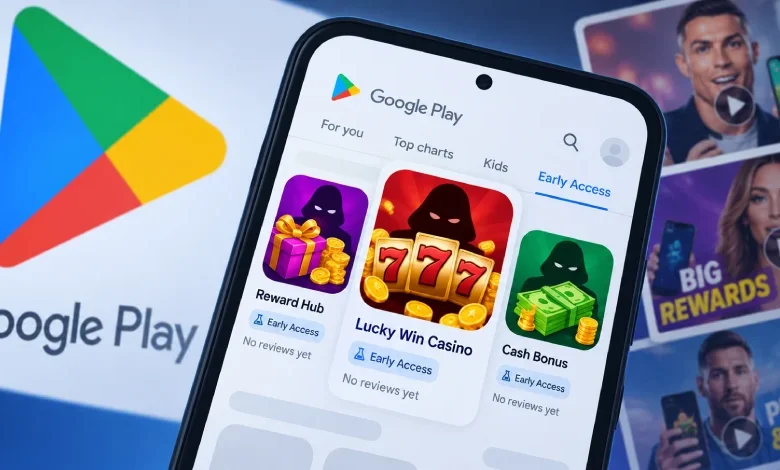
The Google Play Store’s Early Access program, originally designed as a collaborative sandbox for developers to refine new applications through community feedback, has become a primary vector for a sophisticated wave of digital fraud. Security researchers have uncovered a systemic abuse of this platform, where threat actors are bypassing standard moderation and community-driven trust signals to distribute deceptive apps—ranging from fraudulent casino games to illicit financial reward platforms—to millions of unsuspecting users.
The Mechanism of the Vulnerability
The Early Access program functions as a pre-release testing ground, allowing developers to deploy apps before they are fully vetted for the broader market. A critical design feature of this program is the suspension of public reviews and star ratings. While intended to shield legitimate developers from "review bombing"—a phenomenon where coordinated groups leave negative feedback to unfairly damage an app’s reputation—this safeguard has inadvertently created an ideal environment for bad actors.
Without the ability to see user ratings or read critical commentary, prospective users are deprived of the most effective, crowdsourced early-warning system on the Android ecosystem. By operating within the Early Access framework, these malicious applications effectively vanish from the accountability cycle. They can accumulate hundreds of thousands, or even millions, of downloads without a single public warning surfacing to caution potential victims.

Chronology of the Deceptive Campaign
The surge in these malicious applications follows a pattern of high-frequency deployment and strategic obfuscation. Throughout mid-2026, researchers observed a significant uptick in apps mimicking popular titles, such as "Vice Streets: Open World," a clear attempt to capitalize on the branding of established franchises like Grand Theft Auto.
- Initial Deployment: Threat actors launch apps under the guise of casual, unfinished, or "in-development" projects. These apps are often listed under categories that appear benign, such as utility, productivity, or casual gaming.
- Social Media Amplification: The discovery phase relies heavily on targeted social media advertising. Campaigns on platforms such as TikTok and Facebook utilize highly polished, often AI-generated, video content. These ads frequently feature deepfakes of celebrities or trusted public figures, creating a false sense of legitimacy and urgency.
- The Engagement Loop: Once installed, users are often met with a "hook"—small, immediate, and fake virtual rewards. This creates a dopamine-driven engagement loop designed to keep the user active.
- The Monetization Phase: As the user nears a payout threshold (e.g., a cash prize or a gift card), the application shifts its behavior. Progression becomes intentionally difficult or impossible, and the promised rewards never materialize. The primary objective is to force the user to watch an endless stream of intrusive advertisements, generating revenue for the malicious operator with every impression.
Supporting Data and Statistical Context
Cybersecurity firm Bitdefender has highlighted that this is not an isolated incident but a widespread, automated effort. The scale of the problem is reflected in the download figures associated with identified malicious apps. For instance, the "Vice Streets" application had reached over 1 million downloads before it was eventually removed from the store.
The breadth of the deceptive lures is expansive. Data analysis reveals that beyond casino-themed games, the campaign includes:
- Utility Fraud: Fake PDF readers, QR code scanners, and device performance optimizers that act as ad-delivery engines.
- Financial Lures: Apps promising cryptocurrency earnings, PayPal payouts, and instant gift cards, which function as phishing or data-harvesting portals.
- Trademark Infringement: Titles that mimic high-profile games to lure users into downloading clones that are riddled with hidden malicious behaviors or excessive advertising modules.
Official Stance and Regulatory Challenges
The challenge for Google, and for the broader Android ecosystem, lies in balancing the need for an open, experimental development environment with the necessity of user safety. Removing the ability to rate Early Access apps was a decision rooted in protecting the creative process, but it has now become a liability.

While Google maintains robust automated scanning systems—such as Google Play Protect—these systems often struggle to identify deceptive intent in apps that appear functional on the surface. Because these apps often do not contain traditional malware payloads, they may pass initial binary analysis. Instead, the "malice" lies in the business model: the deception of the user through false promises and the circumvention of gambling regulations.
Legitimate gambling apps are subject to strict licensing, age verification, and geofencing requirements. By masquerading as "casual puzzle games" or "early access prototypes," these fraudulent developers effectively bypass the regulatory hurdles that keep the gambling industry transparent and compliant.
Broader Implications for Mobile Security
The abuse of the Early Access program coincides with a broader, more dangerous trend in Android security. The emergence of sophisticated malware families—such as the Gigabud banking trojan and the "Vwork" weaponized fork of the Shelter application—suggests that mobile threat actors are becoming increasingly creative in how they use legitimate Android features to achieve malicious ends.
The use of "work profiles" to isolate and clone banking applications is a particularly alarming development. By creating a sandbox within a sandbox, attackers can conduct financial transactions directly on a victim’s device while a black screen overlay conceals the activity from the user. This level of technical sophistication indicates that the threat landscape is moving beyond simple ad-fraud toward deep, persistent, and highly damaging financial exploitation.

Implications for the User and Future Outlook
The current situation poses a fundamental question regarding the future of app store moderation. If the "trust metrics" (ratings and reviews) are removed from the user experience, the burden of verification falls entirely on the platform operator.
Recommendations for users include:
- Heightened Skepticism: If an app is in Early Access, treat it with extreme caution. Avoid installing it unless it comes from a verified, reputable developer.
- Verify the Source: Do not click on ads from social media platforms that promise large financial rewards or "get rich quick" schemes.
- Check Developer Information: Investigate the developer profile. A lack of contact information, a suspicious website, or a history of low-quality, generic apps is a red flag.
- Monitor Permissions: Even if an app appears to be a simple game, be wary of excessive permission requests, such as access to accessibility services, contacts, or financial information.
The incident highlights a critical vulnerability in the mobile application lifecycle. While developers require a space for innovation and feedback, the current implementation of the Early Access program has become a liability that favors malicious actors over the security of the end user. As cybersecurity researchers continue to map the scope of these deceptive networks, it is likely that Google will be forced to revisit the architecture of its review system to strike a more effective balance between supporting innovation and preventing the exploitation of the Android community. Until such changes are implemented, users remain the final line of defense against an increasingly deceptive digital marketplace.
Related posts: