OpenAI and Anthropic could withhold new AI models from UK’s AI Security Institute

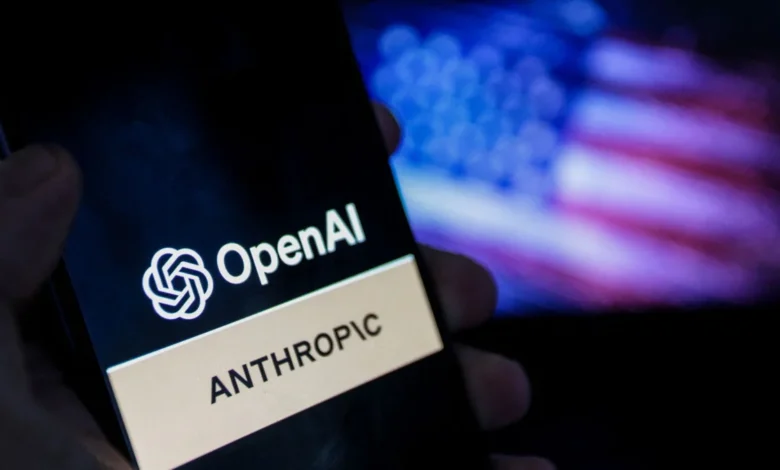
The exclusion centers on the latest suite of models launched on September 22, 2026. Anthropic unveiled its highly anticipated Claude Opus 5.5, while OpenAI simultaneously introduced the GPT-6 Sol and GPT-6 Luna iterations. Historically, the AISI has maintained a productive, pre-release testing arrangement with both firms, allowing the UK government to evaluate systemic risks, alignment, and safety guardrails before public deployment. This latest impasse suggests that the landscape for international cooperation in AI safety is becoming increasingly fragmented as geopolitical competition over foundational technology intensifies.
The White House Intervention and Shifting Regulatory Priorities
According to reports from Politico, the decision to withhold these models from the AISI was not an independent choice by the AI companies, but rather a direct request from the White House. Specifically, the Office of the National Cyber Director has reportedly instructed both OpenAI and Anthropic to delay sharing their most advanced models with international testing partners—including the UK’s AISI—until a domestic U.S. review process has been completed.
A senior U.S. official defended the move by emphasizing the national origin of the technology, noting that because these are American firms, the standard operating procedure involves a domestic-first review for all new "frontier" models. This policy reflects a hardening stance in Washington, where AI is increasingly viewed as a critical infrastructure asset akin to national defense systems. By prioritizing U.S. agencies in the evaluation process, the Biden-Harris administration is signaling that internal national security review is the primary, non-negotiable stage of the development lifecycle.
For the AISI, this represents a major setback to its mission. Established with the support of the UK government, the institute is tasked with bridging the gap between industry innovation and public safety. Its role involves not just reactive auditing, but proactive participation in the safety engineering of models that could potentially impact critical infrastructure, cybersecurity, and national stability. Being relegated to a "second-tier" partner status threatens the institute’s ability to provide timely, evidence-based policy advice to the UK government.
A Chronology of Increasing Friction
This development is not an isolated event but rather the second major instance of the AISI being denied access within a thirty-day window. The cooling of the relationship between the AISI and the labs began in early September.
- September 1, 2026: Anthropic launches the Claude Mythos 5.1 model. Despite existing agreements, the AISI is denied access to conduct pre-release testing. This marked the first time the institute had been excluded from an Anthropic cycle, prompting concern among British regulators.
- Early September 2026: In a formal communication to the House of Commons Business and Trade Committee, AISI Director Henry de Zoete confirms that the institute had previously tested OpenAI’s GPT-6 Astra model, establishing a precedent that was suddenly broken with the subsequent release of Mythos 5.1 and the new GPT-6 models.
- September 22, 2026: OpenAI and Anthropic launch their latest flagship models (GPT-6 Sol, GPT-6 Luna, and Claude Opus 5.5). Reports confirm that, per White House instruction, the AISI is again excluded from the pre-release pipeline.
- Late September 2026: Public acknowledgment of the "protectionist shift" emerges, as international observers and government officials begin to grapple with the implications of the U.S. strategy.
Contextualizing the "Protectionist Shift"
The decision to exclude the UK from pre-release testing appears to be a manifestation of a broader, more defensive industrial policy. The U.S. government is currently engaged in a high-stakes competition with global rivals, particularly China, to maintain a lead in AI development. In this context, any sharing of "frontier-level" model weights or architecture—even with a close ally like the UK—is viewed through a lens of risk.
Financial experts and policy analysts have noted that the U.S. government is increasingly sensitive to the potential for "model leakage." If a model is shared with international entities, the risk of its capabilities—or its vulnerabilities—becoming public knowledge increases. By keeping testing confined to domestic agencies, the U.S. maintains tighter control over the intellectual property and the security clearance levels of those involved in the vetting process.
However, this creates a dilemma for international bodies like the UK’s AISI. The institute was designed to provide the UK with an independent assessment capability. If the institute only receives access after the models have already been vetted and released in the U.S., its function is reduced from an active "safety regulator" to an "observer." This loss of agency complicates the UK’s ambition to become a global leader in AI regulation and safety.
Official Responses and Institutional Positioning
In response to these reports, the AISI has maintained a posture of diplomatic restraint. A spokesperson for the institute emphasized the shared nature of AI risks, stating, "The UK is a world leader in AI security, and the AI Security Institute continues to work closely with the US government, international partners, and leading AI companies, including OpenAI and Anthropic."
The statement further stressed that risks associated with advanced AI—such as autonomous weapon development, mass-scale cyberattacks, and biological threat generation—do not respect national borders. "No country can tackle them alone," the spokesperson added, affirming that the institute remains committed to building its own "rigorous scientific understanding" of these systems.
Neither OpenAI nor Anthropic has provided a formal statement confirming or denying the White House directive. This silence is typical of the industry’s approach to sensitive government interactions, where firms must balance the desire for international goodwill against the necessity of complying with domestic regulatory requirements in their home market.
Fact-Based Analysis: The Broader Implications
The exclusion of the AISI from these critical testing phases carries several long-term implications for the international AI ecosystem:
- Fragmentation of Safety Standards: If every nation begins to develop its own siloed testing infrastructure, the global effort to create a unified safety standard for "frontier" AI becomes significantly more difficult. The lack of shared testing data means that safety benchmarks may diverge, making it harder to compare the performance and risks of different models.
- Diminished Influence for the UK: The UK has positioned itself as a critical player in AI governance, hosting international summits and investing heavily in the AISI. If the institute is unable to access the latest models, its ability to influence global AI safety policy will inevitably diminish, potentially leaving it as a follower rather than a leader in the global regulatory conversation.
- Increased Pressure on Private Firms: OpenAI and Anthropic are effectively being placed in the middle of a tug-of-war between their commercial necessity for global partnerships and the increasingly restrictive demands of their domestic regulators. This could lead to a future where these companies are forced to prioritize U.S. market access above all other considerations, potentially slowing their international expansion.
- Security vs. Transparency: The central tension is between the desire for national security (U.S. protectionism) and the need for global transparency (the AISI model). While the U.S. prioritizes preventing the proliferation of potentially dangerous capabilities, the AISI argues that the only way to effectively manage these risks is through a coordinated, international approach that includes robust, collaborative testing.
As the industry moves toward increasingly capable models—such as the hypothesized successors to the current GPT-6 and Claude Opus ranges—the demand for rigorous, independent, and international safety testing will only increase. Whether the U.S. government will eventually loosen these restrictions or whether the current "national-first" policy becomes the permanent status quo remains a critical question for the future of artificial intelligence development. For now, the UK’s AI Security Institute finds itself in a challenging position, striving to maintain its relevance in an environment where the rules of engagement are being rewritten in Washington.